How Does Ultrafiltration Differ From Reverse Osmosis? Struggling to pick between UF and RO for your business? A wrong choice can be costly. Let's clarify which system is right for your industrial water treatment needs.
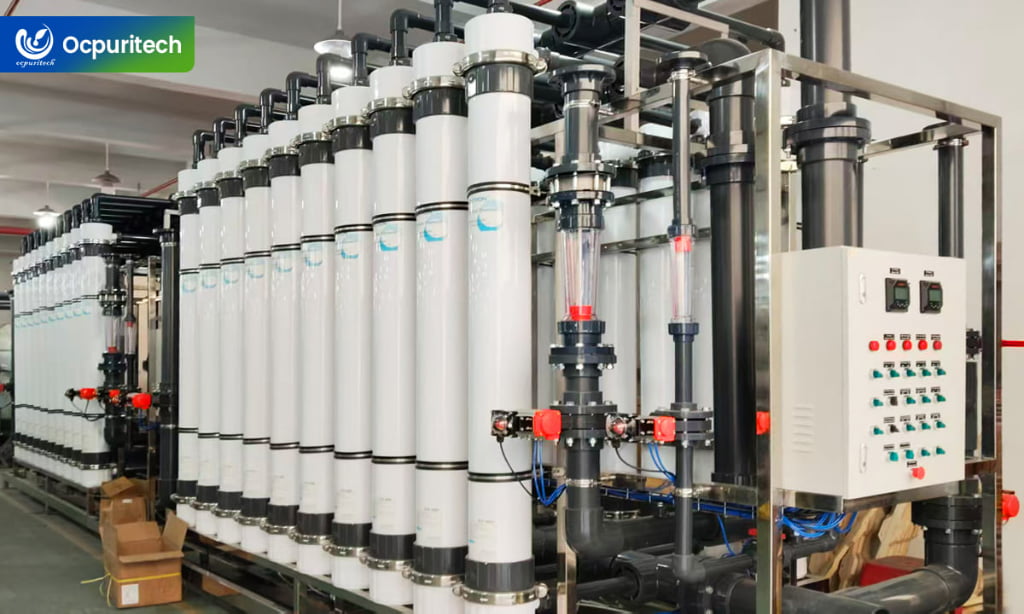
Ultrafiltration (UF) uses a wider pore membrane to remove suspended solids, bacteria, and viruses while leaving dissolved minerals1. Reverse osmosis (RO) uses a much tighter membrane to remove nearly all dissolved contaminants, including salts and metals, for the highest purity water.
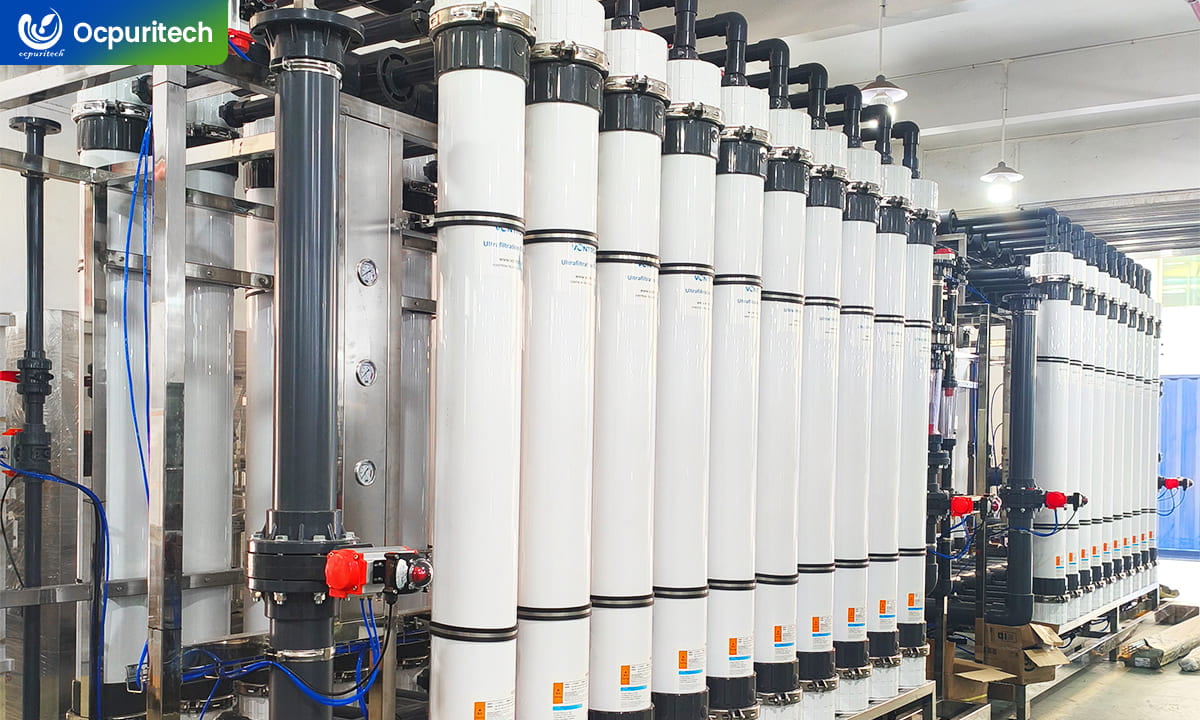
You now have the basic answer. But the details are what really matter for your business. Let's dive deeper into how these two technologies compare in real-world industrial applications2. This will help you make the best choice for your company's future.
What's the Real Difference in How UF and RO Filter Water?
Both UF and RO use membrane technology3, which can be confusing. But their filtering precision is vastly different, impacting your final water quality. Let’s explore their core technical differences.
The key difference is membrane pore size. Ultrafiltration uses a 0.01-micron membrane, acting as a physical barrier to larger contaminants like bacteria. Reverse osmosis4 uses a 0.0001-micron membrane, removing even dissolved salts and heavy metals under high pressure for ultimate purity.
The technology behind each system defines its capability. Think of it as two different types of strainers.
Ultrafiltration: The Precise Sieve
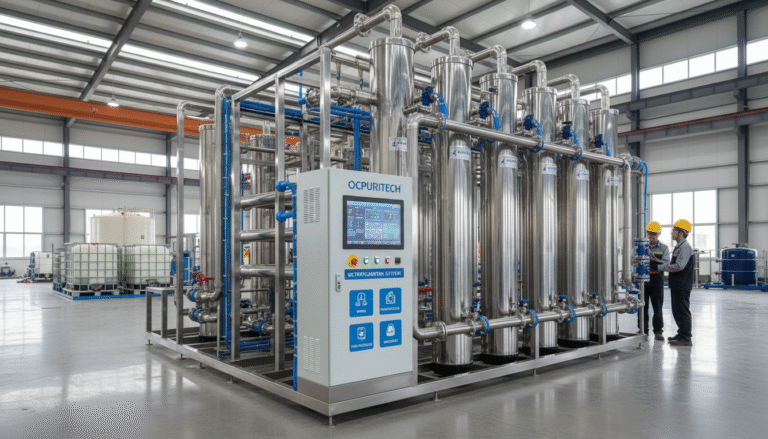
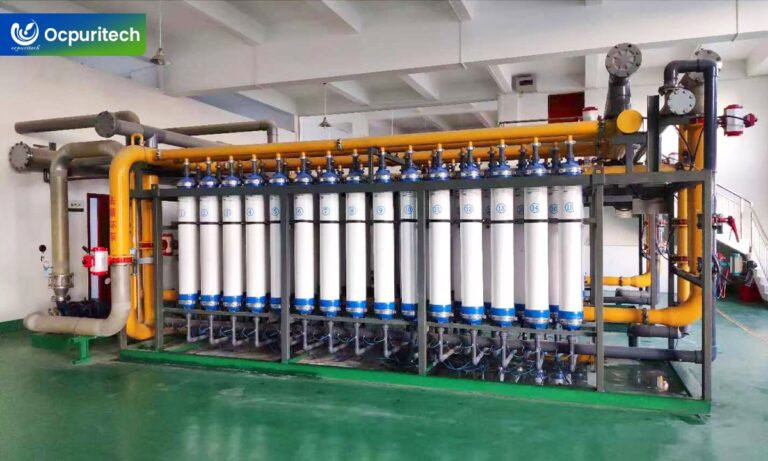
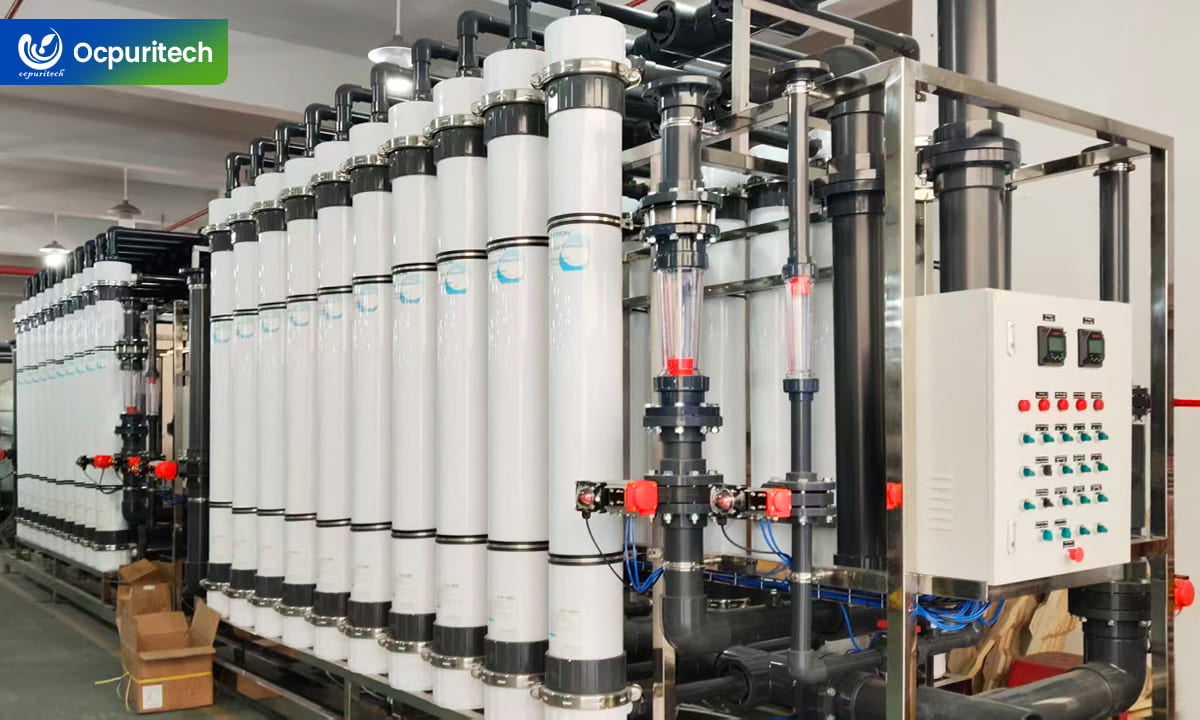
An ultrafiltration system works like a very fine physical filter. Its membrane has pores of about 0.01 microns. This size is small enough to catch and remove suspended solids, colloids, bacteria, and other large-particle impurities. However, smaller dissolved minerals can pass through with the water molecules. This makes UF excellent for pre-treatment5, clarifying water without stripping it of all its mineral content.
Reverse Osmosis: The Molecular Gatekeeper
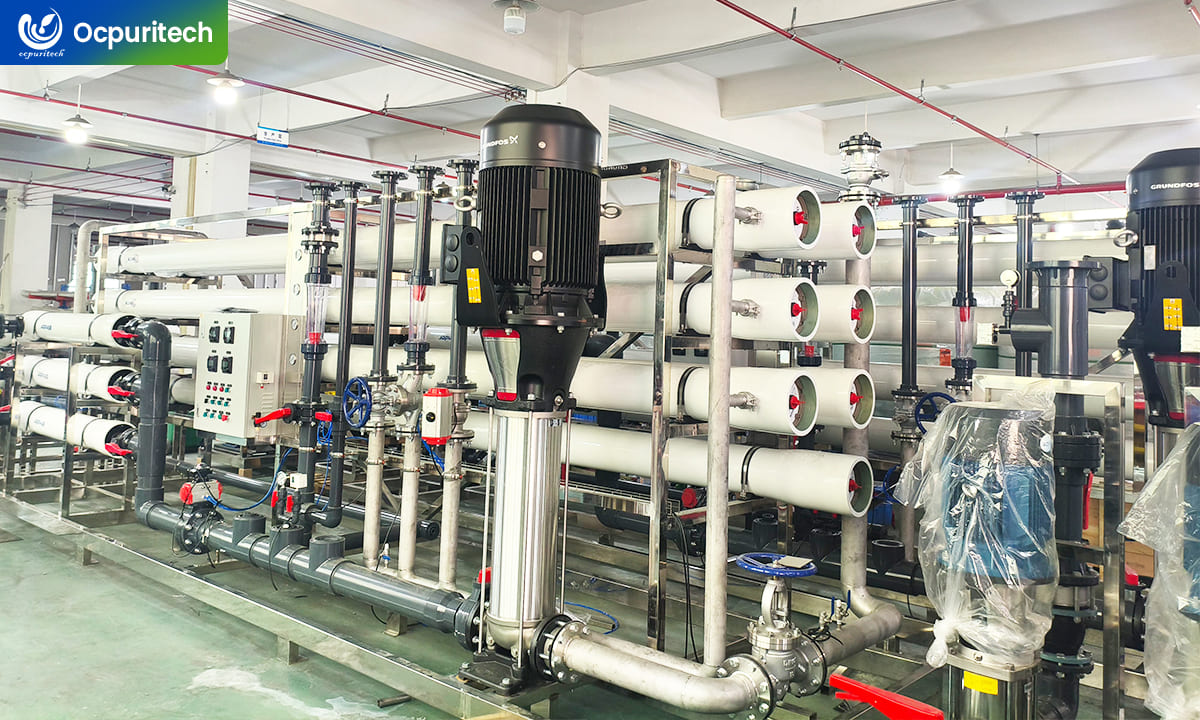
Reverse osmosis goes a step further. It uses a much denser membrane, with pores around 0.0001 microns. To get water through such a tight filter, the system uses high pressure. This pressure forces water molecules through but leaves almost everything else behind. This includes dissolved salts, heavy metals, and viruses. The result is extremely pure water. Based on our engineers' 28 years of experience, if you need to remove suspended solids while keeping minerals, UF is your answer. If you need the highest purity, RO is the right choice.
| Feature | Ultrafiltration (UF) | Reverse Osmosis (RO) |
|---|---|---|
| Pore Size | ~0.01 micron | ~0.0001 micron |
| Removes | Suspended solids, bacteria, colloids | Dissolved salts, metals, viruses |
| Keeps | Dissolved minerals | Almost nothing |
| Mechanism | Physical sieving | High-pressure separation |
Which Industries Are Best Suited for UF vs. RO Systems?
You understand the technology, but which one fits your industry? Choosing incorrectly can mean inefficient operations or failing to meet critical water quality standards. Let's match the system to the job.
Ultrafiltration is perfect for pre-treating source water or for industries like food and beverage where removing solids is key. Reverse osmosis is critical for high-purity applications like electronics, pharmaceuticals, and producing distilled-quality water6, where dissolved solids must be removed.
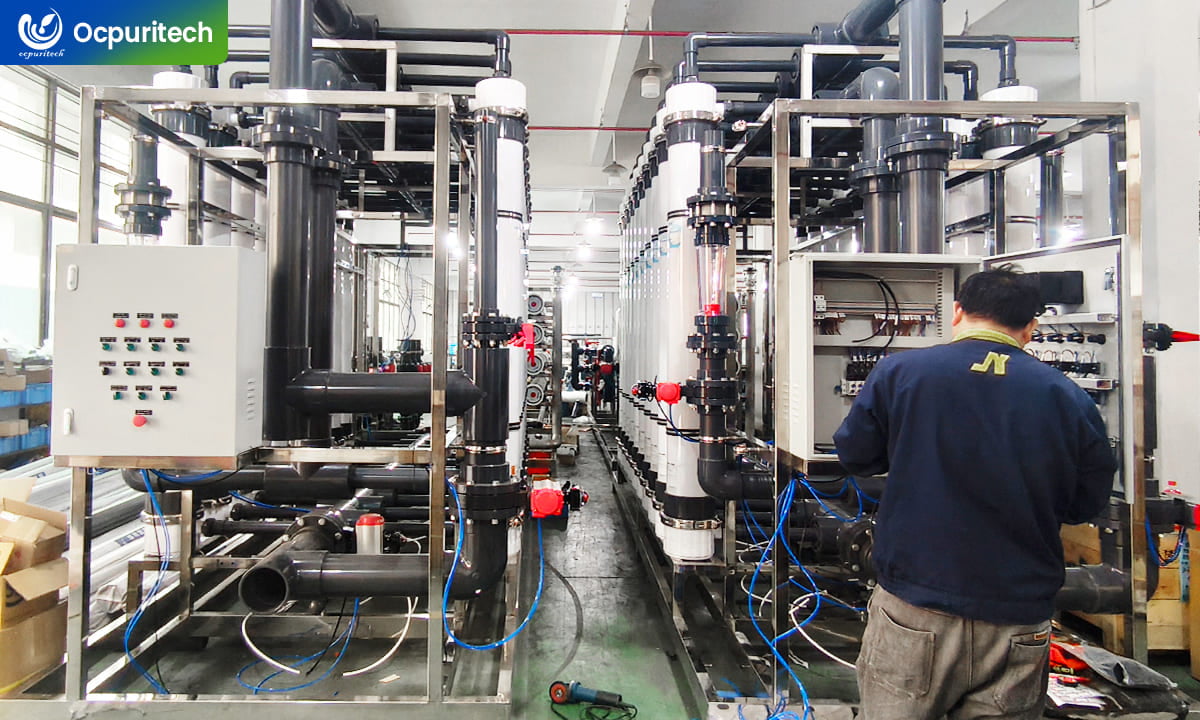
Choosing the right system depends entirely on what you need the water for. The application dictates the technology.
Common Uses for Ultrafiltration (UF)
We often recommend UF systems as a robust pre-treatment step. For example, if your source water comes from a river or well, it likely contains a lot of sediment and bacteria. A UF system cleans this up effectively, protecting more sensitive equipment downstream, like an RO system. It's also widely used in industries that don't need sterile, demineralized water. Think of the food and beverage industry7, where removing turbidity is important, or in paper manufacturing. The main goal is clarification and microbial reduction8.
When to Choose Reverse Osmosis (RO)
Reverse osmosis4 is the solution for applications with zero tolerance for impurities. The electronics industry needs ultra-pure water to wash microchips. The pharmaceutical industry requires it for manufacturing sterile products. Power plants need it for boiler feed to prevent scaling and corrosion. In these cases, even the smallest dissolved mineral can cause major problems. RO delivers the high-purity water these critical processes demand. With our experience customizing over 8,000 systems annually, we know that matching the tech to the application is the first step to success.
How Much Water Do UF and RO Systems Waste?
Water is a valuable resource for any business. Wasting it means higher bills and a larger environmental footprint. Let’s see how UF and RO compare on water efficiency.
Ultrafiltration is extremely efficient, with nearly 100% water recovery9 and almost no wastewater. Reverse osmosis, by design, produces a reject stream of concentrated waste. Traditional systems could waste one liter for every three liters of pure water produced, but modern systems are much better.
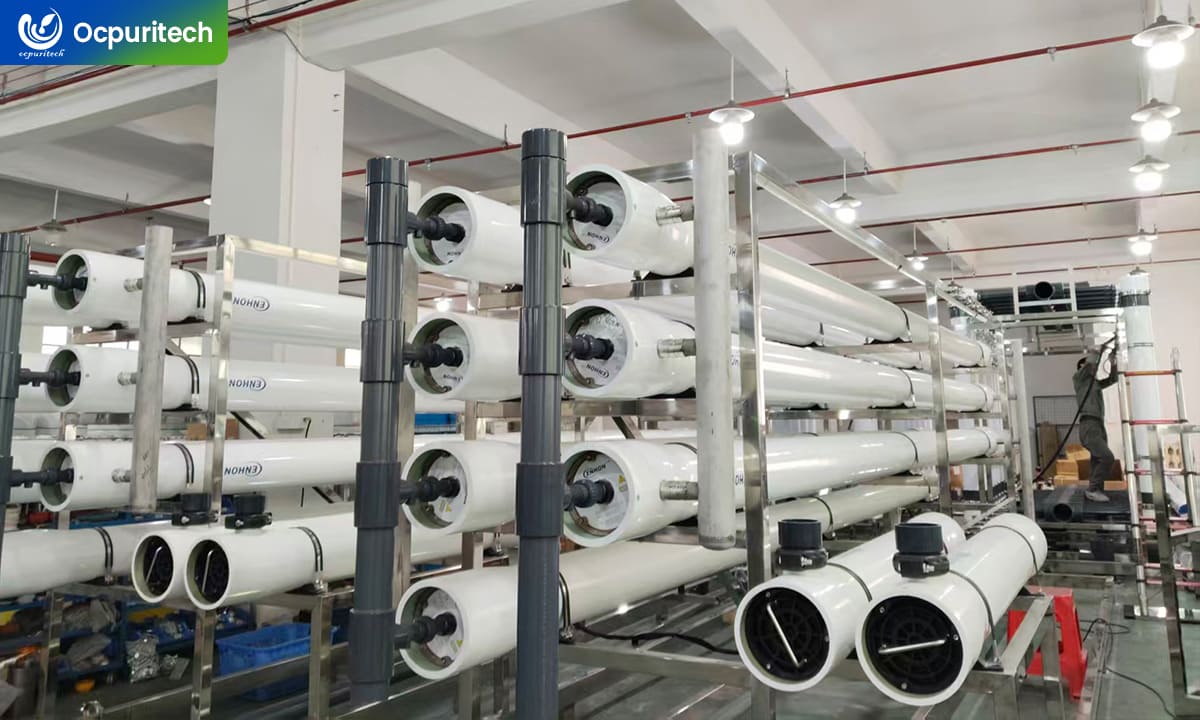
Water efficiency is a major factor, affecting both your operational costs and your company's sustainability goals. The difference between UF and RO here is significant.
The High Recovery of Ultrafiltration
An ultrafiltration system is very direct. Water flows through the membrane, and impurities are left behind. Most of the water that enters the system becomes treated water. The system only needs a periodic backwash or flush to clean the membranes, using a small amount of water. This results in a very high water recovery rate, often above 95%. For businesses in water-scarce regions or those focused on sustainability, this is a huge advantage.
The Reject Stream of Reverse Osmosis
Reverse osmosis works differently. As pure water passes through the membrane, the rejected contaminants (like salts) become highly concentrated on the other side. To prevent these contaminants from clogging the membrane, a continuous stream of water, called brine or reject, must flush them away. This stream is the "wastewater." While older systems had low recovery rates, modern RO systems are much more efficient. We design systems with features like brine recycling to maximize water use, but some wastewater10 production is unavoidable. If your priority is maximum water recovery, UF is the clear winner.
What Are the True Costs of Owning a UF vs. an RO System?
The initial price of a water system is only part of the story. Hidden operational and maintenance costs can quickly add up. Let’s compare the total financial commitment for UF and RO.
Generally, ultrafiltration systems are cheaper to buy and run. They don't need high-pressure pumps and their membranes last longer. Reverse osmosis systems have a higher initial cost, use more energy, and require more frequent, expensive membrane replacements, increasing the total cost of ownership11.
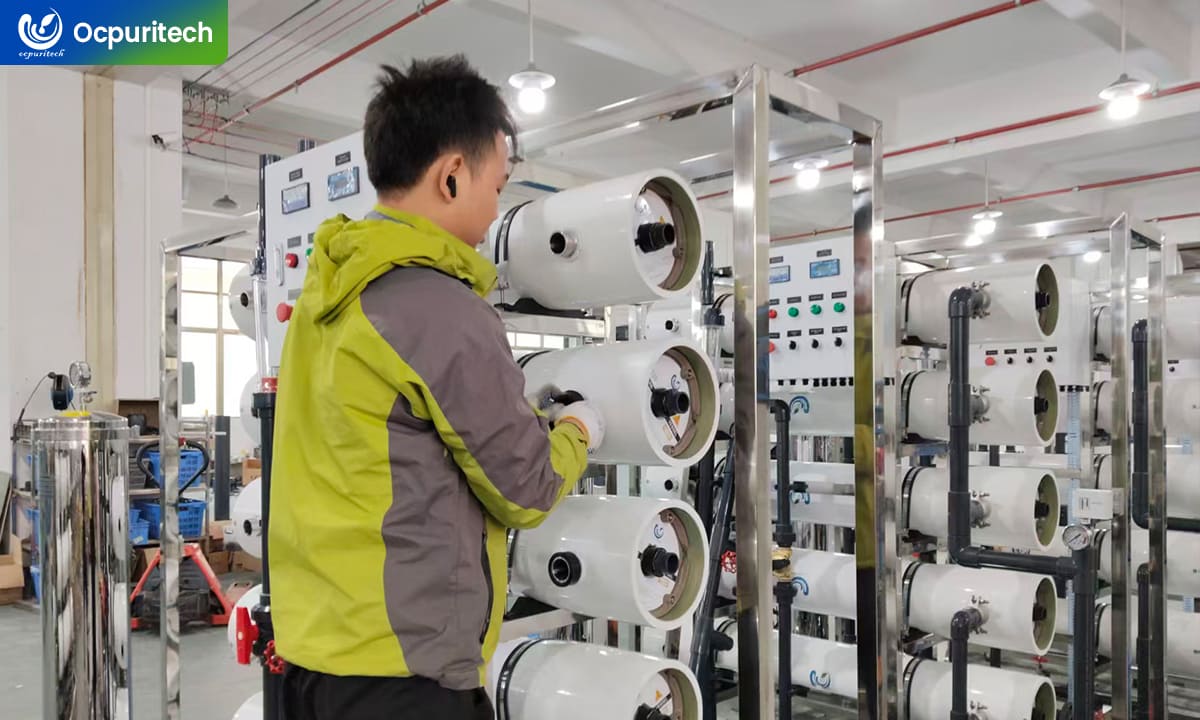
To make a smart investment, you need to look beyond the initial purchase price. Let's examine the capital and operational expenses for both systems.
Initial Investment
Ultrafiltration systems are structurally simpler. They operate at low pressure and don't require expensive high-pressure pumps. This makes the initial equipment cost significantly lower. A reverse osmosis system, on the other hand, needs a powerful pump to create the pressure necessary for filtration. This, along with more complex controls and instrumentation, leads to a higher upfront investment.
Long-Term Operating Costs
This is where the differences really show.
- Energy: The high-pressure pump on an RO system is a major energy consumer, leading to higher electricity bills. UF systems use much less energy.
- Maintenance: RO membranes are delicate and can be fouled by chlorine or hardness, requiring careful pre-treatment and more frequent replacement. UF membranes are more robust.
- Water Bills: The wastewater from an RO system adds to your water consumption costs.
Our engineers always advise clients: if your budget is a key concern and UF meets your water quality needs, it is almost always the more cost-effective choice over the long term.
How to Choose the Best Water Treatment Equipment: Ultrafiltration vs Reverse Osmosis Systems?
When deciding between ultrafiltration (UF) systems and reverse osmosis (RO) systems, there is no definitive "best" choice — only the technology that best suits your specific needs. The final decision should be based on your industry requirements, budget, and water quality expectations.
If your application requires efficient removal of suspended solids and particles while preserving beneficial minerals in the water and emphasizing environmental sustainability12 and improved water resource utilization, an industrial ultrafiltration system is undoubtedly the better option. On the other hand, if you are seeking ultra-pure water with the removal of almost all harmful substances and are prepared to incur higher equipment and maintenance costs, a reverse osmosis (RO) system would be the ideal choice for your needs.
Still unsure which system fits your specific water profile and output goals? Contact our engineers for a free assessment.
Explore the role of dissolved minerals in water treatment and their importance for various industries. ↩
Explore the various industries that benefit from these advanced water treatment technologies. ↩
Discover various membrane technologies and their applications in industrial water treatment. ↩
Learn about Reverse Osmosis technology and its significance in achieving high purity water. ↩
Explore the importance of pre-treatment processes in enhancing filtration efficiency. ↩
Learn about the production of distilled-quality water and its applications. ↩
Discover the specific water treatment needs and solutions for the food and beverage sector. ↩
Learn about the methods used to reduce microbial contamination in water. ↩
Understand the significance of water recovery rates in optimizing water treatment processes. ↩
Explore the implications of wastewater management in industrial water treatment. ↩
Get insights into the financial aspects of owning and operating water treatment systems. ↩
Discover strategies for making water treatment processes more sustainable. ↩