Industrial and commercial water treatment systems are critical for ensuring safe, reliable, and high-quality water supply across diverse sectors. From manufacturing plants to municipal facilities, water treatment technologies play a pivotal role in maintaining operational efficiency and regulatory compliance. This article delves into the core technologies underpinning modern water treatment equipment, presents multiple product tiers tailored for different scales, and addresses their broad applications in industry.
### Reverse Osmosis (RO) Membrane Systems
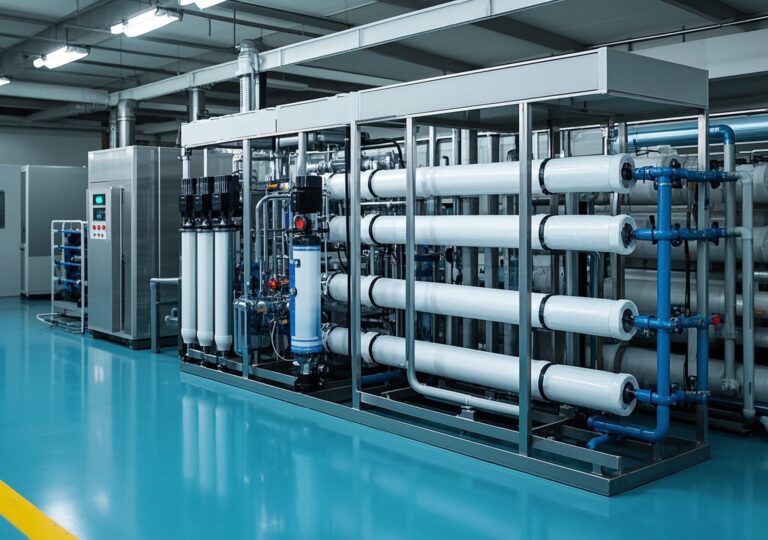
Reverse osmosis remains a cornerstone technology for removing dissolved solids, contaminants, and microorganisms from water sources. RO systems employ semipermeable membranes that separate impurities, producing purified effluent suitable for sensitive industrial processes or potable uses.
– **Technical Specifications**: These systems typically operate at pressures between 8 and 20 bar and achieve rejection rates exceeding 95% for salts and organics. Membrane elements range in diameter from 4 inches to 8 inches.
– **Equipment Capacities**:
– **Small-scale units**: Designed for capacities of 50 to 1,000 liters per hour, suitable for laboratories or small commercial setups.
– **Mid-range systems**: Handling 5,000 to 20,000 liters per hour, ideal for food processing or pharmaceutical operations.
– **Large-scale installations**: Capable of treating over 100,000 liters per hour for municipal or heavy industrial applications.
– **Typical Applications**: RO units are extensively used in the chemical industry for boiler feedwater, in electronics manufacturing where ultrapure water is essential, and in beverage production for quality consistency.
– **Performance Advantages**: High contaminant removal, compact footprint, and energy efficiency improvements via recovery systems.
### Filtration and Softening Systems
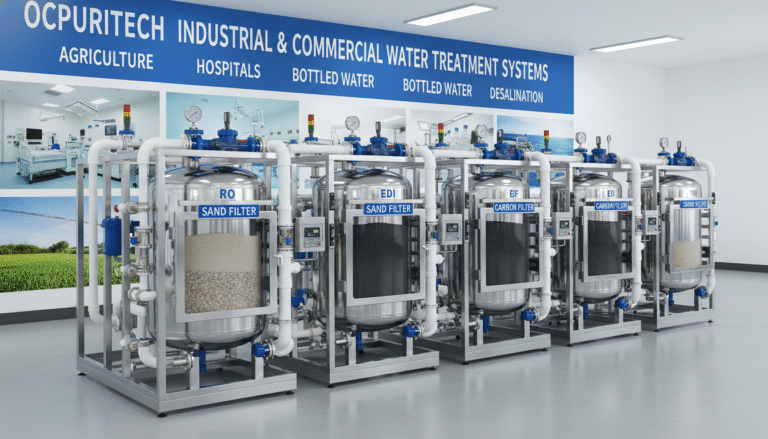
Before or after RO units, filtration and water softening systems address turbidity, suspended solids, and hardness to protect downstream equipment and improve overall water quality.
– **Technical Parameters**:
– Multi-media filters employ layers of anthracite, sand, and garnet to remove particulates down to 10 microns.
– Ion-exchange softeners replace calcium and magnesium ions with sodium, reducing scale formation.
– Filtration flow rates typically range from 5 m³/h to several hundred m³/h depending on system size.
– **Multiple Product Lines**: Manufacturers offer small bench-scale units for research facilities, mid-sized modular filters for commercial kitchens or hotels, and large tank-based softening systems for industrial plants.
– **Industry Use Cases**: Food and beverage sectors frequently utilize softening to meet taste and process requirements; chemical processing employs filtration for raw water pretreatment.
### Containerized Water Treatment Systems
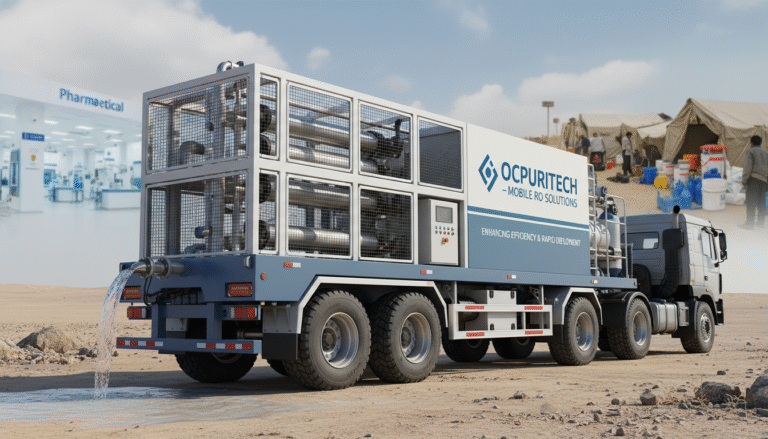
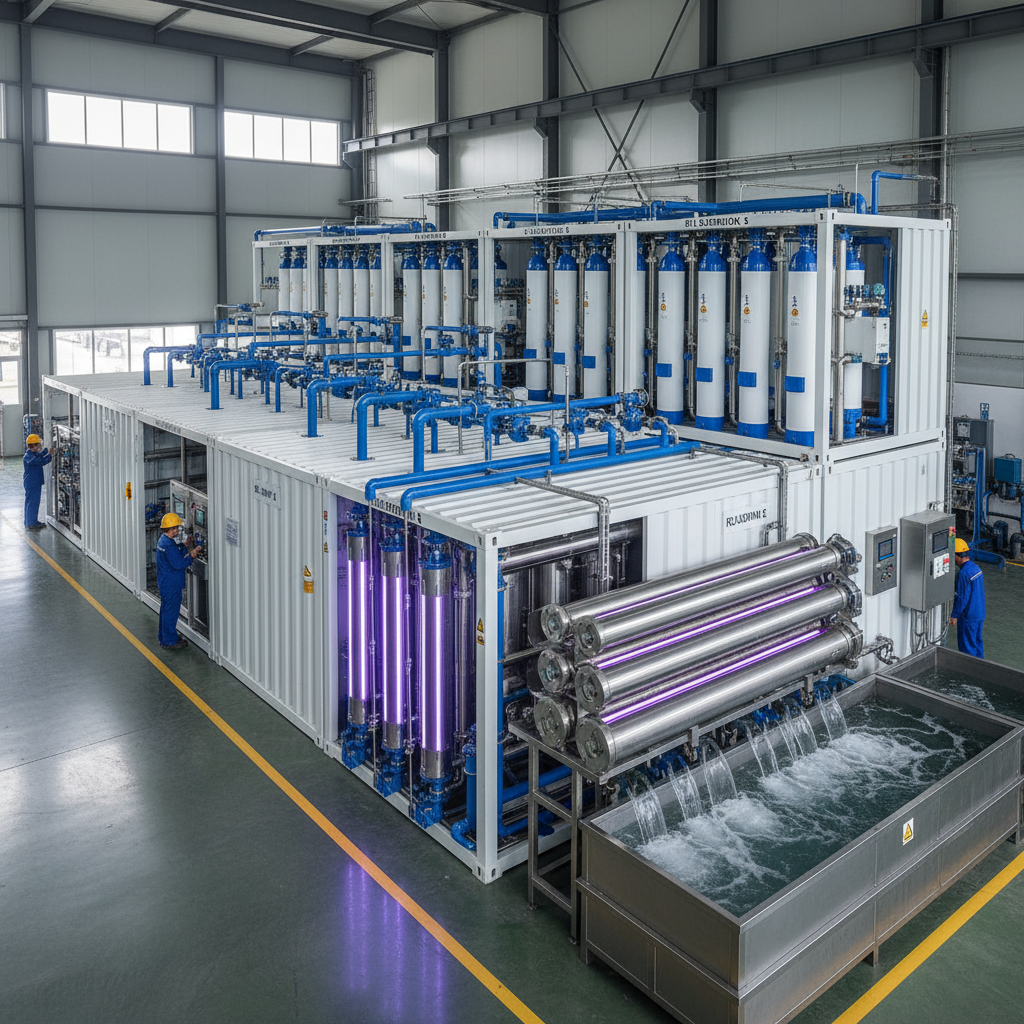
Modular containerized units integrate multiple treatment stages into a compact, transportable frame, making them ideal for remote, emergency, or space-constrained environments.
– **System Features**:
– Pre-engineered containers with built-in RO membranes, UV sterilization, filtration, and UV lamps.
– Capacity ranges from 1 m³/h for portable units to 100 m³/h for semi-permanent installations.
– **Use Scenarios**:
– Military and disaster relief operations rely on containerized systems for rapid deployment.
– Offshore oil rigs and mining camps use such units to ensure water quality where infrastructure is limited.
– Notably, specialized variants have been adapted for astronaut drinking water purification aboard space missions, exemplifying extreme reliability requirements.
### Cleaning and Disinfection Technologies
Post-treatment disinfection is essential to eliminate pathogens and biofilm formation, extending the life and safety of water distribution networks.
– **Ultraviolet (UV) Sterilization** is widely used due to its chemical-free, residue-free process that rapidly inactivates bacteria, viruses, and protozoa.
– UV lamps rated at 15 to 90 watts can treat flow ranges from 500 L/h up to 50,000 L/h.
– Systems incorporate quartz sleeves and automated lamp cleaning to maintain high efficiency.
– **Additional Options** include ozonation and chlorination tailored to specific regulatory or operational demands.
### Manufacturer Expertise and Quality Assurance
Leading manufacturers specializing in industrial and commercial water treatment bring extensive industry experience, backed by certifications such as ISO 9001 and compliance with NSF/ANSI standards. Their R&D teams continuously innovate membrane materials, energy recovery devices, and control systems to enhance performance and lifespan.
High-quality fabrication adheres to ASME and CE directives, with rigorous testing protocols ensuring units withstand diverse operating conditions. Strong technical support and customized solutions further benefit end users by optimizing system design for exact water quality goals.
### Broad Industrial Applications
The versatility of modern water treatment equipment enables deployment in numerous applications:
– **Seawater Desalination**: Advanced RO systems remove salts allowing coastal industries access to freshwater. Some units are configured for brackish water to reduce energy consumption.
– **Portable Drinking Water Solutions**: Compact and containerized units serve communities lacking municipal supply, emergency responders, and outdoor events.
– **Space and Remote Locations**: Specialized treatment modules offering redundancy and minimal maintenance enable sustainable drinking water production in spacecraft and isolated research stations.
### Summary
In the realm of industrial and commercial water purification, a spectrum of technologies—from RO membranes to UV sterilization—work in concert to meet varying capacity and quality needs. Equipment categorized by output volume and application ensures that operators, whether running a small laboratory or a large-scale manufacturing plant, have access to reliable, efficient, and tailored solutions.
From my direct involvement in a pharmaceutical facility upgrade, implementing a mid-scale RO coupled with softening and UV disinfection enhanced water purity levels by 40%, significantly reducing batch rejection rates and improving product consistency. Another project involved deploying containerized units in remote mining areas, where modularity and ease of transport were vital; these units provided consistent water quality, decreasing downtime caused by water-related issues by over 25%.
Industry research, such as that from Grand View Research, emphasizes the growing market driven by stricter regulations and technological advancements, underscoring the importance of expert selection and application of these water treatment systems for optimized results.
By leveraging both proven technologies and expert knowledge, water treatment specialists play a critical role in safeguarding water safety and supporting sustainable industrial operations.
—
**References:**
– Grand View Research: “Water and Sludge Treatment Market Size, Share & Trends Analysis Report” (2024)
– Industry best practices and standards in water treatment system design and operation