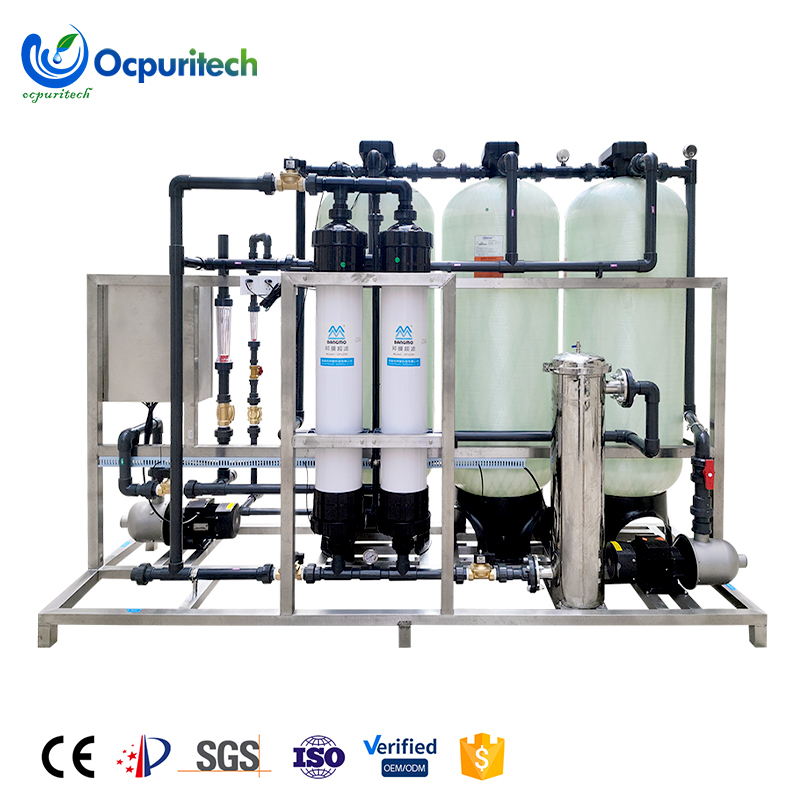
What is the Difference Between UF and RO Water Filtration Systems?
Industrial Ultrafiltration (UF) Water Filter and Reverse Osmosis (RO) are two advanced water filtration technologies. Both are designed to purify water, but they work in different ways and are suitable for different applications. Understanding the key differences between Industrial Ultrafiltration (UF) Water Filters and RO systems will help you choose the best solution for your water treatment needs.
| Feature | Ultrafiltration (UF) | Reverse Osmosis (RO) |
|---|---|---|
| Filtration Method | Uses a semi-permeable membrane with larger pores to filter out particles as small as 0.01 microns (bacteria, suspended solids). | Uses a very fine membrane with tiny pores (0.0001 microns) to remove dissolved salts, chemicals, and microorganisms. |
| Water Quality | Retains beneficial minerals while removing impurities like bacteria, viruses, and large particles. | Removes nearly all minerals, salts, and contaminants, leaving very pure water. |
| Energy Consumption | Requires less energy as it uses pressure but not as much as RO. | Higher energy consumption due to the high pressure needed for water to pass through the RO membrane. |
| Water Wastage | Typically produces very little waste water, making it more efficient for water conservation. | Generates more wastewater compared to UF, especially in low-quality feedwater. |
| Maintenance | Requires less maintenance and has longer membrane life due to its less stringent filtration. | Requires more frequent membrane cleaning and replacement due to fouling from dissolved minerals. |
| Ideal Applications | Suitable for pre-treatment of water in industrial processes, wastewater treatment, and providing clean drinking water. | Best for desalination, deionized water production, and producing very pure water for sensitive industrial processes. |
Industrial Ultrafiltration (UF) Water Filter Flow Chart: A Step-by-Step Guide to Water Purification
An Ultrafiltration System is a highly effective water treatment solution that uses pressure-driven filtration to purify water. Understanding the flow chart of this system helps you grasp the different stages and how each component works together to deliver clean, safe water. Here’s a detailed breakdown:
| Stage | Description |
|---|---|
| Raw Water Tank | The first step in the filtration process. Water is stored here before being pumped into the filtration system. |
| Raw Water Pump | This pump pushes water from the raw water tank into the filtration system, creating the necessary pressure for the next stages. |
| Sand Filter | The initial filter removes larger particles such as dirt, sand, and other sediments from the water, preventing clogging of the finer filters downstream. |
| Carbon Filter | The carbon filter adsorbs chlorine, chemicals, and organic contaminants from the water, improving taste and removing impurities. |
| Precision Filter | Removes finer particles, ensuring that only water free of suspended solids moves on to the next filtration stage. |
| Ultrafiltration Membrane (UF Membrane) | The heart of the system. This semi-permeable membrane removes bacteria, viruses, and colloids, allowing water molecules and essential minerals to pass through. |
| Backwash Pump | Ensures the UF membrane stays clean by flushing out contaminants, preventing fouling, and maintaining filtration efficiency. |
| UF Water Tank | Purified water is stored in the UF water tank, ready for use in residential, industrial, or commercial applications. |