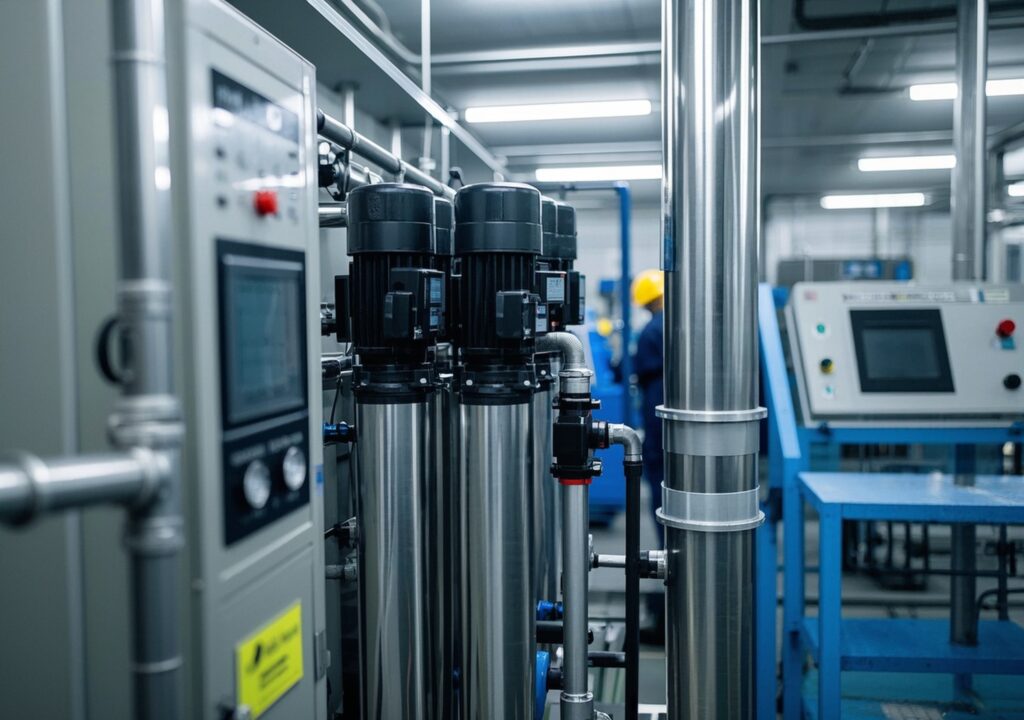
Success Stories: Industrial Water Treatment Solutions in Real RO Cases
In today’s water-sensitive industrial landscape, effective water treatment is not just a regulatory compliance measure but a business imperative. Water treatment solutions leveraging reverse osmosis (RO) technology have emerged as a leading approach to purify and recycle water, preserving resources while enhancing operational efficiency. As commercial and industrial users face increasing pressures from water scarcity, environmental regulations, and quality demands, robust RO systems offer a reliable path toward sustainable water management.
1. Introduction to Industrial RO Water Treatment
Reverse osmosis (RO) systems utilize semi-permeable membranes to remove dissolved solids, microorganisms, and chemical contaminants from water. Originally applied in desalination, these systems have evolved into versatile solutions adapted for a diverse range of industrial applications — from food and beverage production to pharmaceuticals and mining. The core advantage lies in their ability to consistently deliver high purity water conforming to stringent industry standards.
Industrial RO units are designed for high throughput and durability, supporting continuous or batch operation while optimizing energy consumption. This technology’s growing adoption aligns with market trends showing the global industrial water purification market valued at USD 8.67 billion in 2023 and projected to grow to USD 15.16 billion by 2032 with a CAGR of 6.4% (Zion Market Research).
2. Overview and Performance Advantages of Industrial RO Systems
Typical industrial RO equipment processes thousands to tens of thousands of gallons per day, with system capacities ranging from small modular units (thousands of gallons) to large-scale installations exceeding 1 million gallons daily. Key performance indicators include:
- Rejection Rate: 95-99% removal of total dissolved solids (TDS)
- Recovery Rate: Up to 85%, minimizing waste brine
- Energy Efficiency: Optimized pumps and energy recovery devices reduce operational costs
- Scalability: Modular design facilitates capacity matching and future expansion
Compared with conventional filtration, RO offers superior contaminant removal including salts, organic molecules, and microbial cysts. This makes it ideal for producing process water, boiler feed water, and ultrapure water required for sensitive manufacturing processes.
3. Process Flow Explanation
The complete industrial RO water treatment process typically comprises the following stages:
| Stage | Description |
|---|---|
| Pre-Treatment | Removal of suspended solids, chlorine, and hardness via multimedia filters, activated carbon, and water softeners to protect RO membranes. |
| High-Pressure Pumping | Pressurizes feed water to overcome osmotic pressure, ensuring efficient membrane separation. |
| Reverse Osmosis Membrane Filtration | Water passes through semi-permeable membranes—retaining contaminants, allowing permeate (clean water) to pass through. |
| Post-Treatment | Adjusts pH, adds disinfectants or performs further deionization to meet water quality requirements. |
Below is an illustrative simplified flow diagram:

4. Key Components Explained
Multimedia Filters
These filters remove suspended solids, turbidity, and large particles through layers of sand, gravel, and anthracite, preventing membrane fouling.
Activated Carbon Filters
Effective in adsorbing chlorine, chloramines, and organic compounds which can degrade RO membranes.
Water Softeners
Exchange calcium and magnesium ions to reduce water hardness, reducing scaling risks on membranes.
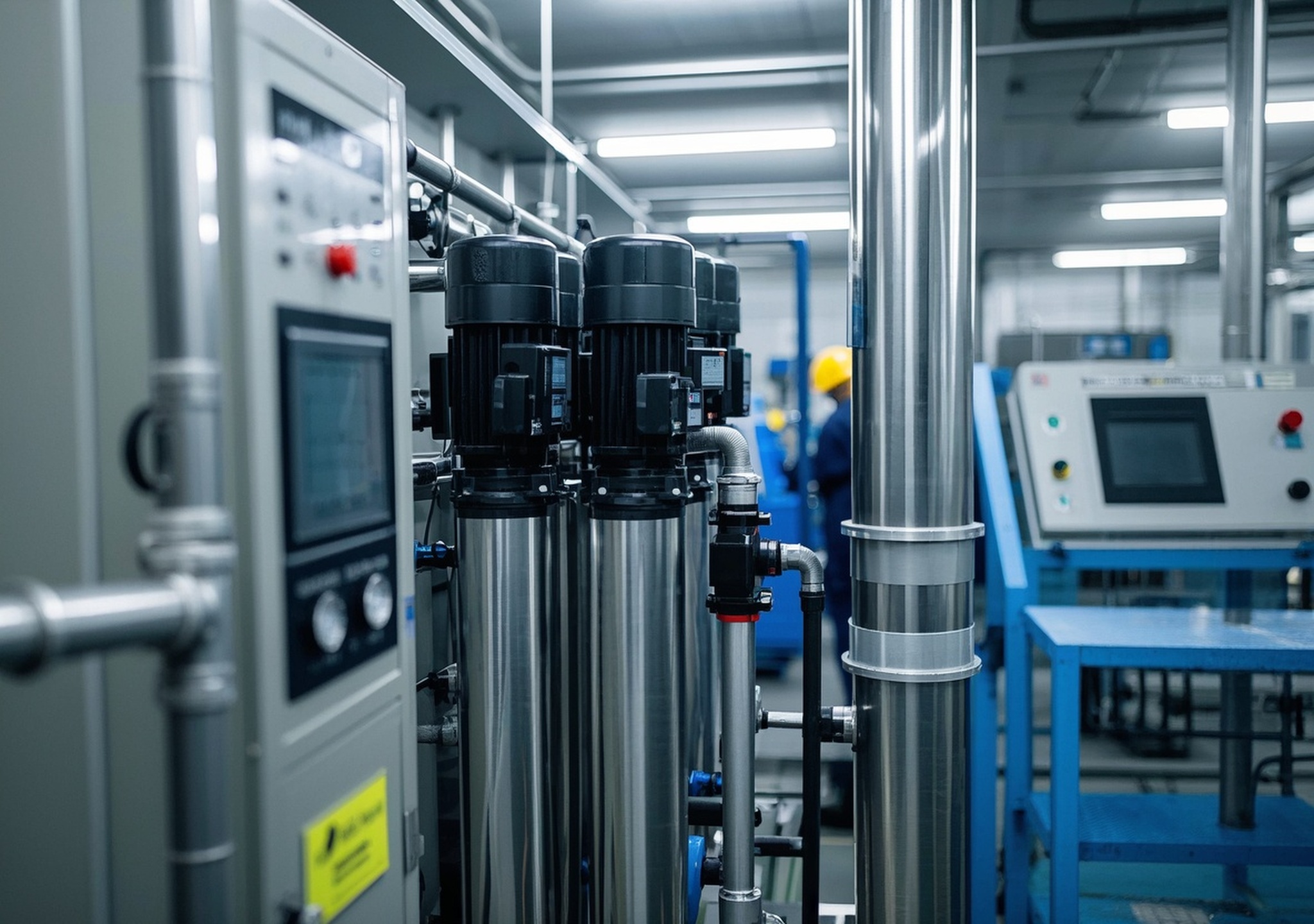
High-Pressure Pumps
These robust pumps elevate feed water pressure to required levels (typically 150-600 psi) depending on feedwater salinity, enabling efficient RO membrane operation.
RO Membrane Elements
The heart of the system, membranes made from thin-film composite materials allow permeate flow while blocking contaminants. Membrane arrangement, element spacing, and housing design optimize system throughput and recovery.
5. Membrane Technology Features and Maintenance
Different membrane types (e.g., brackish water RO, seawater RO, and nanofiltration) offer varying efficiency and salt rejection suited to specific industrial needs. Key membrane performance aspects include:
- Salt rejection >99% for most salts and organics
- Broad pH tolerance (typically 2-11)
- Chlorine sensitivity requiring pre-treatment
Maintenance is critical to prolong membrane lifespan (typically 3-5 years), involving regular cleaning for scaling and fouling using chemical cleaning protocols. Monitoring differential pressure and permeate flow rates assists early fault detection, reducing downtime.
6. Post-Treatment Technologies
Effluent from the RO system often requires further conditioning to meet industry-specific standards:
- Mixed Bed Deionization: Polishes permeate by removing residual ions, ideal for ultrapure water in pharmaceutical and microelectronics.
- Electrodeionization (EDI): Continuous ion removal using electricity and resins, reducing chemical use and operational costs.
- UV Disinfection: Eliminates microbial contaminants ensuring microbial-free water supply.
7. Real-World Application Examples
Food and Beverage Industry
In a beverage bottling plant I consulted for, an industrial RO system replaced outdated sand filters, improving water purity to meet NSF/ANSI 61 standards. The system delivered 150,000 gallons/day with 85% recovery, reducing water waste and brine disposal costs by 30% annually. This upgrade directly improved product taste consistency and extended equipment lifespan.
Pharmaceutical Manufacturing
I recently advised a pharmaceutical manufacturer integrating RO systems with mixed bed DI units to produce water for injection-grade purity. The system handled 50,000 gallons/day with continuous online monitoring. The RO membranes operated for 4 years before scheduled replacement, significantly reducing compliance risk.
Textile Dyeing Operations
At a large textile mill, using industrial RO allowed recycling of cooling and process water, cutting fresh water consumption by 40%. The fine removal of salts and organics improved dyeing uniformity, cut chemical consumption, and lowered effluent treatment costs.
Hospitality Sector
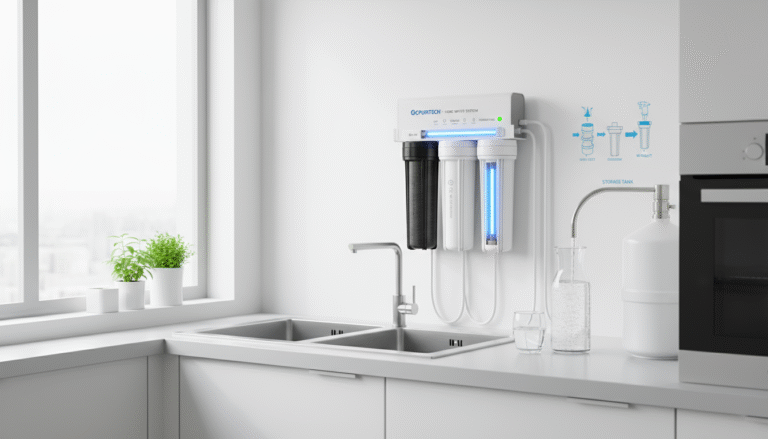
I oversaw an RO retrofit for a hotel chain to improve drinking water quality. Installation of point-of-use RO units supplemented with UV disinfection ensured guest safety and reduced bottled water dependence, enhancing sustainability credentials.
8. Pricing Factors and Investment Considerations
Industrial RO system costs range broadly based on capacity and complexity:
| Factor | Impact on Pricing |
|---|---|
| Membrane Quality and Quantity | Higher-grade membranes increase upfront costs but lower operational downtime |
| Customization Level | Tailored systems adapt to feedwater variability but require higher engineering investment |
| Energy Efficiency Components | Incorporating energy recovery devices reduces life cycle costs but raises capital expenditure |
| Automation and Monitoring | Advanced PLC controls and sensors improve reliability, increasing system cost |
Operational expenses including energy, membrane replacements, and chemical use must be evaluated alongside capital costs to determine total cost of ownership. Financing options like leasing or pay-per-use models are becoming popular among industrial users to ease upfront investment.
9. Installation and After-Sales Support
Successful deployment of industrial RO systems depends heavily on professional installation and commissioning:
- Site assessment and feedwater analysis prior to installation
- Pre-installation infrastructure preparations (plumbing, electrical)
- System startup and calibration with factory-trained technicians
- Operator training on system operation, maintenance, and troubleshooting
- Ongoing maintenance contracts and remote monitoring support ensure continuous uptime
10. Maintenance and Troubleshooting Guidance
Routine upkeep encompasses:
- Scheduled cleaning protocols based on feed water quality and performance metrics
- Membrane integrity tests via salt rejection and flow rates
- Pressure differential monitoring across filters and membranes
- Timely replacement of consumables like filters, membranes, and chemical dosing pumps
Common issues such as scaling, biofouling, or membrane damage require quick diagnosis and response. Keeping a ready inventory of critical spare parts minimizes downtime in industrial environments.
11. Manufacturer Profiles and Market Position
Leading industrial RO system manufacturers focus on delivering certified, scalable, and customizable solutions. International certifications such as ISO 9001 for quality management and NSF/ANSI standards attest to product reliability. Most manufacturers support global supply chains and offer modular designs to cater to various industrial sectors.
12. Conclusion and Call to Action
Choosing the right reverse osmosis water treatment system is crucial for industries aiming to optimize water use, ensure quality, and comply with regulatory standards. Integrating advanced RO technologies with tailored pre- and post-treatment solutions presents a powerful strategy for sustainable and cost-efficient water management.
Drawing from authoritative market data and real industrial case experiences, water treatment solutions based on RO technology stand out for their versatility and proven success across sectors. I encourage facility managers and engineers to undertake comprehensive water audits and consult with experienced suppliers to identify systems that deliver the best ROI and environmental benefits.
For further information or to discuss your specific industrial water treatment needs, professional consultation is highly recommended to ensure optimal design, integration, and support.
Reference Sources:
- Grand View Research – Point Of Use Water Treatment Systems Market Report, 2030
- Zion Market Research – Industrial Water Purification System Market Size, Share & Forecast 2032