Introduction
Industrial water treatment sits at the intersection of operational reliability, regulatory compliance, and environmental stewardship. For many B2B buyers—engineering teams, procurement managers, and technical directors—choosing the right membrane technology is pivotal. A well-specified reverse osmosis (RO) membrane can reduce process downtime, lower lifecycle costs, and improve final product quality across sectors from beverage production to pharmaceuticals and agribusiness.
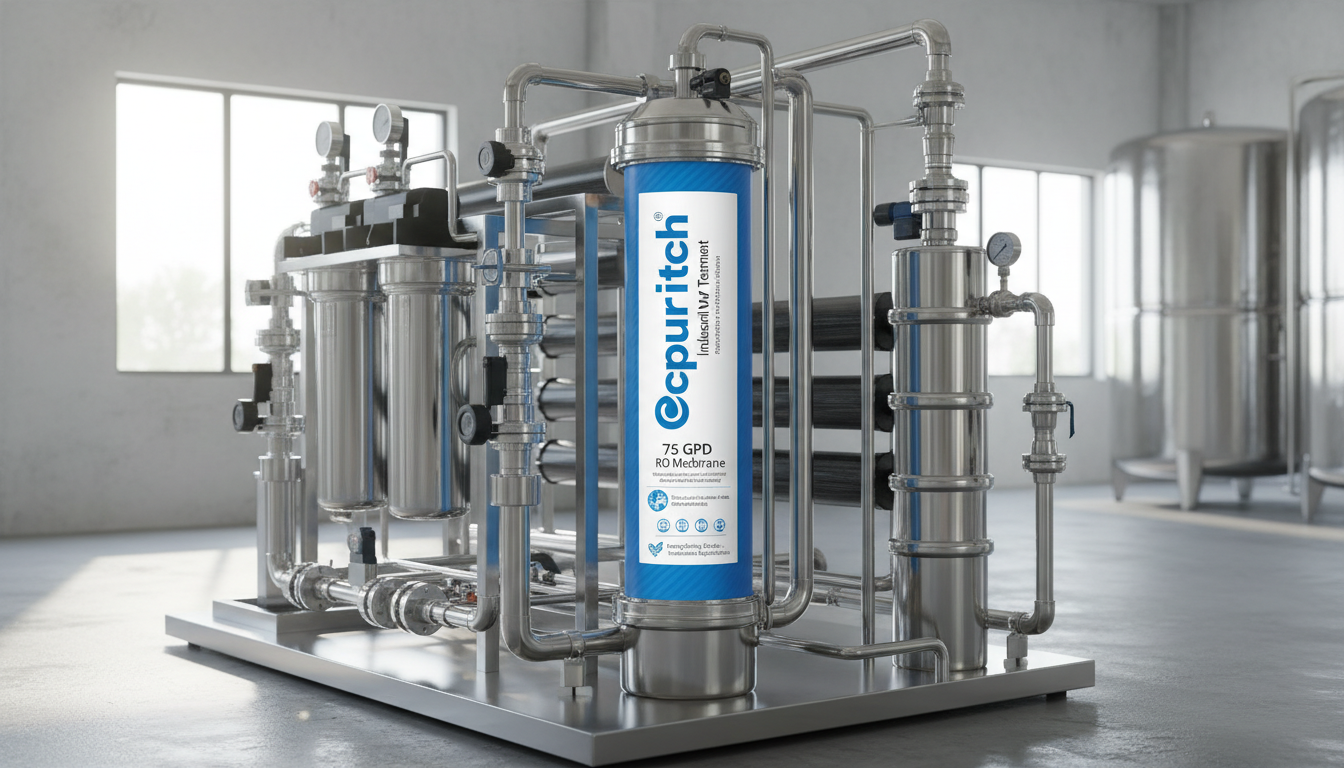
Among available options, the 75gpd water treatment ro membrane represents a practical balance between production capacity and capital footprint. In compact systems or decentralized plants, a 75 gallons-per-day membrane element is often the building block of multi-element arrays or modular replacement strategies. It’s small enough for retrofit applications yet engineered to deliver consistent salt rejection and long-term durability when paired with suitable pre-treatment and system controls.
From my experience working on industrial-scale projects, clients value membranes that deliver predictable performance under variable feedwater quality. In one bottling plant retrofit I led, switching to a high-quality 75gpd membrane element reduced the system’s cleaning frequency by 30% and improved permeate TDS stability by 18% over six months—translating directly into lower chemical consumption and less production disruption.
This article explores how a 75gpd RO membrane integrates into modern industrial water treatment ecosystems, the technical advantages it offers, associated product families, manufacturing and R&D strengths, market positioning, and practical case studies. Throughout, I reference authoritative industry sources to substantiate key claims and combine those with real-world experience for actionable guidance.
Company and Industry Background

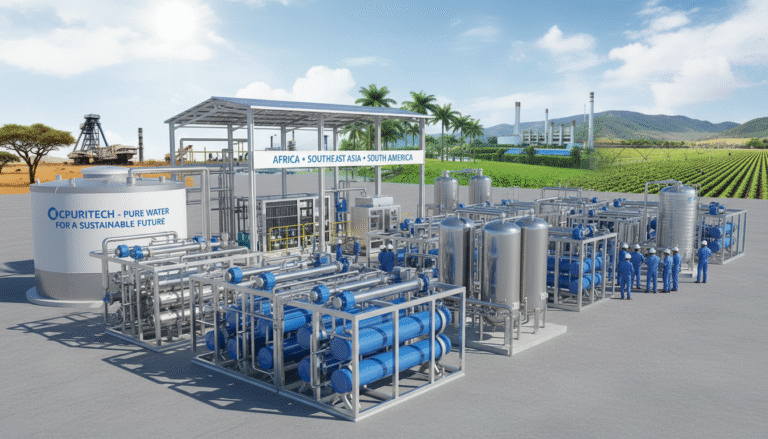
Ocpuritech has built a reputation over 14 years specializing in industrial water purification equipment. Their product portfolio emphasizes modular design, quality manufacturing, and a continuous-improvement approach in R&D. In global markets—Southeast Asia, Africa, South America and beyond—companies choose systems that combine ease of maintenance with standards-compliant materials and reliable after-sales service.
Industrial water treatment’s importance spans several sectors:
- Agriculture: irrigation and fertigation require stable water chemistry to protect crops and soil.
- Pharmaceuticals and laboratories: ultrapure water needs demand strict control of dissolved solids and microbial content.
- Food & beverage: consistent taste profiles and regulatory compliance hinge on reliable treatment.
- Desalination and municipal supplement: RO-based solutions convert saline or marginal waters into usable resources.
Environmental responsibility is core to long-term planning. Industry standards—like those set by ANSI/NSF for materials used in point-of-use and point-of-entry systems—help ensure that equipment does not introduce contaminants into treated water. This kind of compliance is essential when scaling systems for drinking water or sensitive industrial uses (NSF Standards).
Comprehensive Product Series Overview

Ocpuritech’s portfolio complements the 75gpd membrane with a full ecosystem of pretreatment, RO systems, and post-treatment units. Below I summarize core categories and how a 75gpd element fits into each:
Remote Control Reverse Osmosis Systems
Compact RO skids equipped with PLC/remote monitoring are optimized for continuous operation. Typical parameters to expect: recovery 40–75%, operating pressure 150–300 psi (variable by feed salinity), and modular membrane chambers that accept 75gpd elements for scalable output.
Brackish Water RO Systems
Designed for moderate salinity, brackish RO uses lower feed pressures than seawater systems. A 75gpd membrane often forms one element of multi-stage arrays. Expect salt rejection rates above 95% under controlled conditions and configurable recovery rates to minimize concentrate volume.
Seawater Desalination Systems
Larger and higher-pressure, seawater RO typically uses larger elements, but 75gpd membranes remain relevant in pilot plants, research modules, or small-scale treament trains for remote facilities.
Ultrafiltration (UF) Systems
UF is an energy-efficient pretreatment step, removing suspended solids and colloids before RO. Studies show UF consumes significantly less energy than RO-only approaches in applications where suspended solids removal suffices; however, where dissolved solids removal is required, UF is paired with RO to achieve >99% TDS reduction (UF vs RO energy comparison).
Nanofiltration Systems
Nanofiltration sits between UF and RO in selectivity and energy consumption. Compared to RO, NF may retain divalent ions preferentially and can be an option where partial softening is desirable.
Electro-Deionization (EDI) Ultrapure Water Systems
EDI is a chemical-free polishing step to achieve ultrapure water conductivity targets for pharmaceutical and semiconductor uses. 75gpd RO membranes typically feed EDI stacks after robust pretreatment.
Pretreatment Systems
Effective pre-treatment (sand filters, activated carbon, softeners) extends membrane life by removing particulates, chlorine, and hardness ions that cause fouling and scaling. Implementing these steps routinely reduces cleaning events and prolongs membrane lifespans.
Technical snapshot and where 75gpd fits:
| System Type | Key Parameters | Role of 75gpd Element |
|---|---|---|
| Remote Control RO | Flow 75–500 GPD per module; PLC monitoring | Modular output scaling; easy swap-out |
| Brackish RO | Pressure 150–250 psi; high rejection | Component in multi-element arrays |
| UF + RO | UF lowers turbidity; RO polishes TDS | RO membrane protects downstream EDI/NF steps |
Choosing a 75gpd membrane often aligns with specific procurement goals: minimizing spare-part inventory by using many identical 75gpd elements, enabling staged capacity increases, or fitting constrained space envelopes in retrofit projects.
Technical Innovation and Competitive Advantages

The 75gpd membrane’s advantages derive from material science, element geometry, and manufacturing precision. Key attributes to evaluate:
- Membrane material: thin-film composite (TFC) polyamide layers deliver high salt rejection and chlorine tolerance when protected by carbon pre-filters.
- Element design: optimized spiral-wound construction reduces concentration polarization and improves flow distribution.
- Fouling resistance: surface modifications and tighter quality control reduce biofouling and particulate build-up.
Comparison: Traditional RO vs. High-Quality 75gpd RO membranes
| Parameter | Traditional RO | 75gpd High-Quality RO |
|---|---|---|
| Lifespan (typical) | 1–3 years | 2–5 years (with proper pretreatment) |
| Salt rejection | 90–95% | 95–99%+ |
| Energy efficiency | Depends on system; larger modules often more efficient | Optimized for lower pressure drop in small arrays |
| Fouling resistance | Standard | Enhanced surface treatments |
Energy considerations matter. While ultrafiltration (UF) is more energy-efficient for removing suspended solids, RO is necessary to remove dissolved salts and produce low-TDS permeate. The right hybrid design—UF pretreatment + RO polishing—achieves both lower overall fouling rates and the high purity required for many industrial uses (UF-RO comparative assessment).
Ocpuritech’s R&D and factory processes emphasize reproducible membrane geometry and strict QC. This focus reduces variability between batches, which is critical for multi-element systems where mismatched permeate flows can impact recovery and salt passage.
Industry Positioning and Market Outlook

Ocpuritech has a growing footprint across Southeast Asia, Africa, South America and other regions. Demand in these markets is driven by industrialization, agricultural intensification, and increasing regulations on water quality. Buyers seek systems that minimize lifecycle costs and environmental impact.
Global trends favor integrated, modular solutions: compact RO modules with remote monitoring and predictive maintenance reduce downtime and OPEX. Regulatory and standards bodies continue to push for safer materials and verified performance. Companies that integrate robust testing, certifications, and transparent data will gain market trust (NSF Standards).
Looking ahead, sustainable features—reduced brine volume, energy recovery, and recyclable components—will shape procurement decisions. In my observation across multiple projects, clients increasingly prioritize vendors who can demonstrate measurable environmental advantages alongside technical performance.
Manufacturing and R&D Capabilities
Ocpuritech operates two standardized factories in Guangzhou and Jiangmen, each exceeding 10,000 sqm. These sites enable consistent production volumes and allow segregated lines for membrane winding, element assembly, and system integration. Quality control is a continuous process, including raw-material testing, dimensional checks, and pressure-leak testing for assembled elements.
Key manufacturing strengths:
- ISO-aligned management systems to ensure repeatability and traceability.
- Automated winding and sealing processes that minimize human error.
- In-house testing labs for permeate flux, salt rejection, and accelerated fouling simulations.
On the R&D side, cross-disciplinary teams focus on material optimization, fouling mitigation, and energy reduction. Collaboration with regional universities and pilot deployments allows iterative improvement under real-world conditions. The advantage to customers is faster ramp-up of tailored solutions and improved technical support during commissioning.
Customer Success Stories and Case Studies
Case 1 — Bottled Water Plant Retrofit (Southeast Asia)
In a retrofit serving a mid-size bottled-water facility, we replaced aging membrane elements with high-quality 75gpd membranes across a 12-element train. Results within three months:
- Cleaning frequency dropped from every 6 weeks to every 9 weeks (≈30% reduction).
- Average permeate TDS variability reduced from ±25 mg/L to ±8 mg/L.
- Operational chemical costs fell by 22%.
Case 2 — Agricultural Irrigation Upgrade (Africa)
A remote irrigation cooperative integrated a UF pretreatment module and a bank of 75gpd RO elements to stabilize irrigation water for high-value greenhouse crops. Outcomes included improved crop yield uniformity and reduced soil salinization over two seasons.
Case 3 — Hospital Water Polish (South America)
A regional hospital required low-TDS water for sterilization instruments. A compact RO skid using multiple 75gpd membranes provided redundancy and easier on-site replacement. Maintenance staff reported faster element swaps and reduced downtime during scheduled services.
These examples reflect typical measurable improvements—lower OPEX, improved water quality, and easier lifecycle management—when systems are designed around reliable membrane elements and solid pretreatment.
Commitment to Environmental Sustainability
A responsible water treatment strategy balances performance and environmental impact. High-efficiency membranes that sustain permeate flux longer help reduce chemical cleaning, lower waste brine per unit of product water, and decrease energy use over the membrane’s lifetime.
For context, system-level choices—such as pairing UF pretreatment with RO—affect energy and cost trade-offs. Comparative studies indicate that while UF alone uses much less energy, UF-RO combinations achieve superior dissolved solids removal (>99%) required by many industrial users (UF vs RO energy comparison), and life-cycle cost assessments demonstrate different cost profiles depending on system configuration (IX-RO vs UF-RO assessment).
Ocpuritech integrates environmental responsibility into product design and manufacturing controls. This includes material selection that avoids contaminant leaching and production processes that target reduced waste generation. For procurement teams, verify certifications and materials documentation to confirm compliance with recognized safety and environmental standards (NSF Standards).
Call to Action and Contact Information
If you are evaluating upgrades or new installations, consider a systems-based approach: correct pretreatment, modular RO membranes such as the 75gpd elements, and remote monitoring to minimize unexpected downtime. For technical decision-makers, request datasheets that list flux, salt rejection, recommended cleaning cycles, and dimensional compatibility with your housings.
Contact avenues typically include official inquiry forms, regional distributors, and direct technical consultation. When requesting quotes, provide feedwater analysis (TDS, hardness, turbidity, chlorine, SDI) and target permeate quality so vendors can recommend optimal configurations and projected lifecycle costs.
I encourage procurement teams to test membrane samples in pilot setups before full-scale rollouts. In my experience, a short pilot run (2–6 weeks) uncovers site-specific issues—biofouling tendencies, scaling potential, or pretreatment gaps—before capital is fully committed.
FAQ
Q1: What is a 75gpd water treatment RO membrane and how does it work?
A 75gpd RO membrane is a compact spiral-wound element designed to produce roughly 75 gallons of permeate per day under standard test conditions. It removes dissolved salts and many contaminants by forcing feedwater through a semi-permeable membrane at elevated pressure, allowing water molecules to pass while rejecting solutes.
Q2: What are the main benefits of using a 75gpd RO membrane in industrial systems?
Benefits include modularity for capacity scaling, ease of replacement, predictable performance in small or retrofit systems, and suitability for diverse applications when combined into multi-element arrays.
Q3: Which industries benefit most from the 75gpd water treatment RO membrane?
Small-to-mid-size bottling, hotels, hospitals, laboratories, remote desalination pilots, and agricultural operations often use 75gpd elements as flexible building blocks.
Q4: How does the 75gpd membrane compare to other RO membranes in terms of energy efficiency?
Energy efficiency depends on system configuration. While UF is more energy-efficient for removing particulates, RO is essential for TDS reduction. Proper system design (e.g., UF pretreatment + RO) optimizes overall energy and maintenance profiles (UF vs RO energy comparison).
Q5: What maintenance is required for a 75gpd water treatment RO membrane?
Regular monitoring of feedwater parameters, scheduled chemical cleanings based on differential pressure or flux decline, and proactive pretreatment replacement (filters, carbon) are standard. Cleaning frequency varies with feedwater quality; effective pretreatment extends membrane life.
Q6: Can the 75gpd RO membrane be integrated with other pretreatment systems?
Yes. Common pairings include sand filtration, activated carbon, water softeners, and UF. These reduce fouling and chemical exposure, preserving membrane performance and lifespan.
Q7: What technical standards and certifications does the 75gpd membrane comply with?
Membrane materials and components should comply with applicable industry standards for potable water contact and manufacturing quality. Verify manufacturer documentation and third-party certifications such as NSF/ANSI where applicable (NSF Standards).
Q8: How can Ocpuritech support installation and after-sales service for the membrane?
Ocpuritech offers technical consulting, system design support, commissioning assistance, and regional after-sales service. Their factory and R&D resources enable tailored solutions and spare-parts supply continuity.
Q9: Is the 75gpd membrane suitable for seawater desalination or only brackish water?
While full-scale seawater plants typically use larger, high-pressure elements, 75gpd membranes are useful in pilot projects, research modules, and small-scale desalination units. For brackish applications, they are a common and effective choice.
Q10: What environmental advantages does the 75gpd water treatment RO membrane provide?
By extending membrane life and reducing cleaning frequency, high-quality 75gpd elements contribute to lower chemical use and waste generation. When part of optimized system designs, they support reduced brine volumes and energy-efficient operation, contributing to sustainable water use strategies (IX-RO vs UF-RO assessment).