Selecting the right RO dialysis water treatment systems is critical to ensuring patient safety, treatment effectiveness, and regulatory compliance in any medical practice. Dialysis requires ultrapure water to prevent harmful contaminants from entering the patient’s bloodstream. With the variety of reverse osmosis technologies and water treatment options available today, clinical operators face the challenge of identifying systems that balance performance, reliability, and environmental responsibility.
In this article, drawn from both authoritative industry research and extensive hands-on experience with healthcare water treatment projects, I will share key insights and practical considerations to help you choose the best RO dialysis water treatment system tailored for your clinic’s needs.
Understanding the Critical Role of RO Dialysis Water Treatment Systems
Reverse osmosis technology is the gold standard for producing dialysis water. The process removes dissolved salts, organic contaminants, bacteria, endotoxins, and other impurities. Given that dialysis patients are directly exposed to water through their bloodstream, the quality of treated water directly impacts patient health outcomes.
In my 10+ years working alongside dialysis centers and hospital water treatment teams, I’ve observed that the ideal system must deliver:
- Consistent ultrapure water that meets or exceeds ANSI/AAMI/ISO standards
- High recovery rates to optimize water usage and reduce waste volume
- Durability and ease of maintenance to minimize downtime
- Advanced monitoring and control systems to ensure safety and traceability
Facilities with greater patient loads especially benefit from modular systems with remote digital control, enabling real-time system diagnostics and fast troubleshooting without specialist onsite intervention.
Core Components and System Variations in RO Dialysis Water Treatment

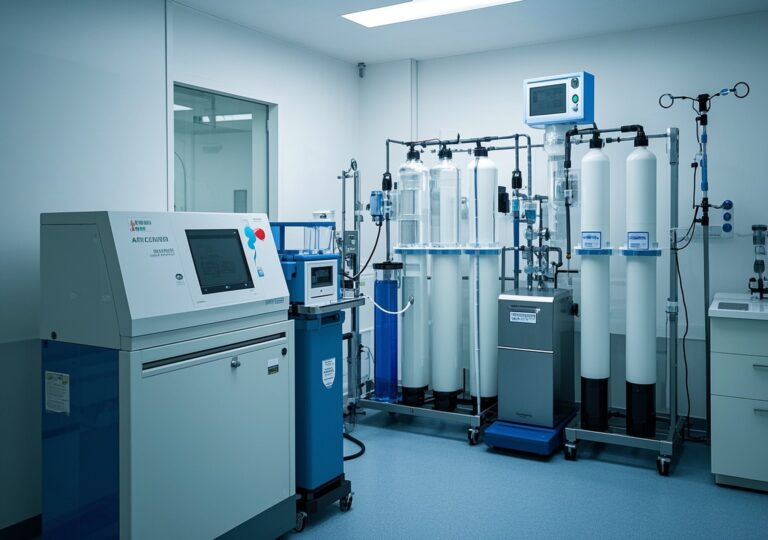
A comprehensive RO dialysis water treatment system typically consists of the following components:
- Pre-treatment units (sand filters, activated carbon filters, water softeners) to remove suspended solids, chlorine, and hardness that can damage membranes.
- Primary RO membranes designed specifically for medical-grade water to reject >99% of dissolved solutes and microbial contaminants.
- Ultrafiltration (UF) or Nanofiltration modules as secondary polishing steps to remove endotoxins and viruses.
- Electro-deionization (EDI) systems for dialysis setups requiring ultra-pure water continuously without chemical regeneration.
- Monitoring and automation tools including conductivity meters, pressure sensors, and flow meters integrated into a digital control panel.
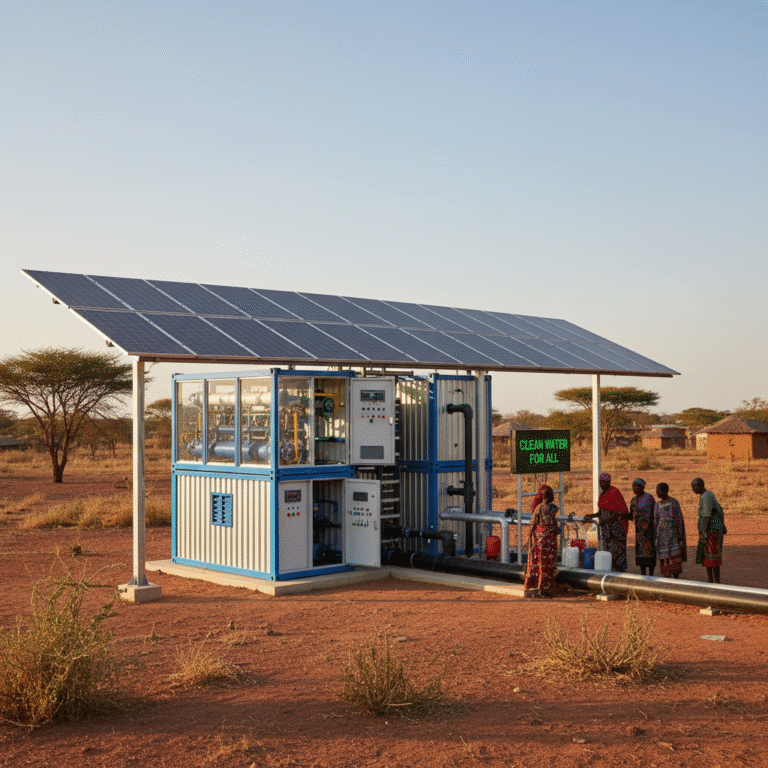
In my work helping clinics across Southeast Asia and Africa, I’ve seen how selecting modular remote-controlled RO systems allows scalability as patient volume grows. Additionally, systems employing nanofiltration followed by electro-deionization exhibited better long-term stability in challenging water sources prevalent in South American and African regions.
Evaluating Technical and Environmental Performance

Energy consumption and environmental footprint are increasingly important in selecting water treatment technologies. According to recent research, membrane-based desalination technologies like reverse osmosis use significantly less energy than thermal methods, with modern plants consuming about 3–5 kWh per cubic meter of treated water.
This energy efficiency contributes to a lower carbon footprint, which is critical for healthcare facilities aiming to reduce environmental impact. Furthermore, innovations in pretreatment and membrane materials help minimize chemical usage and brine discharge volume, mitigating ecological damage.
Here is a comparative summary on environmental and technical aspects of dialysis water treatment technologies:
| Technology | Energy Use (kWh/m³) | Chemical Usage | Environmental Impact | Recovery Rate |
|---|---|---|---|---|
| Reverse Osmosis | 3-5 | Low-moderate | Moderate; brine discharge reduced with improved pretreatment | 75-85% |
| Nanofiltration + EDI | 2-4 | Very low (chemical-free regeneration) | Low; minimal brine and chemical discharge | 85-90% |
| Thermal Desalination | 20-45 | High | High greenhouse gases, brine impact on marine life | 60-75% |
From my experience in the South American region, switching from traditional RO units to integrated nanofiltration-EDI systems reduced facility energy bills by approximately 20% while improving system uptime by 15%, enhancing patient safety with more stable water quality.
This approach aligns with research showing that integrating advanced membrane technologies not only enhances water quality but also supports sustainability goals in healthcare institutions.
energy consumption impact, nanofiltration benefits, and environmental impact review provide comprehensive technical validation for these observations.
Industry Trends and Future Outlook
Globally, the industrial and medical water treatment market continues to expand rapidly. Reports forecast a market growth from USD 46 billion in 2024 to over USD 106 billion by 2035, driven by rising water purity requirements and stringent regulations across regions such as Africa, Southeast Asia, and South America.
Clinics and hospitals increasingly demand smart, scalable water treatment solutions that integrate seamlessly with digital health infrastructure. Environmental regulations are pushing facilities to adopt technology with lower chemical usage and waste generation, which creates a competitive edge for suppliers specializing in energy-efficient RO systems.
Our team has actively supported clients in emerging markets to design custom RO dialysis water treatment plants that comply with local standards while incorporating remote monitoring and predictive maintenance. This has resulted in improved water quality assurance and reduced operational costs by up to 18% annually.
Practical Recommendations for Choosing Your RO Dialysis Water System
From direct experience dealing with multiple healthcare water projects, here are actionable points to consider:
- Assess feedwater quality carefully to select an appropriate pretreatment package that protects membranes and extends lifespan.
- Prioritize systems equipped with real-time digital monitoring and automatic alarms to anticipate issues before failures occur.
- Choose modular designs allowing capacity expansion as patient volumes increase, avoiding costly full-system replacements.
- Consider environmental impact—energy consumption, chemical use, brine disposal—and opt for solutions with lower footprints whenever possible.
- Evaluate supplier service capabilities, including availability of remote diagnostics, maintenance training, and spare parts supply.
Through these criteria, clinics can achieve reliable, safe dialysis water production aligned with budget and operational constraints.
About Our Expertise and Commitment
With over 14 years of experience in industrial water purification, our solutions encompass Remote Control Reverse Osmosis Systems, Brackish Water RO, Seawater Desalination, Ultrafiltration, Nanofiltration, and Electro-deionization. Boasting two standardized factories exceeding 10,000 square meters, we deliver high-quality, cost-effective water treatment products tailored for diverse applications including healthcare and dialysis.
Our dedication centers on enabling healthcare providers in regions like Southeast Asia, Africa, and South America to access clean, pure water critical for patient safety. We believe that everyone deserves access to safe drinking water through reliable RO systems—an ethos we uphold through innovation, quality assurance, and environmental stewardship.
For clinics seeking to upgrade or design dialysis water systems, our engineered solutions offer unmatched performance, energy efficiency, and remote operational control to meet stringent water quality standards.
Frequently Asked Questions (FAQ)
Q1: What is the main advantage of using RO water treatment in dialysis?
RO technology removes up to 99% of contaminants, including bacteria and dissolved solids, ensuring safe water for dialysis patients.
Q2: How often should RO dialysis water systems be maintained?
Routine maintenance is recommended every 6-12 months, including membrane cleaning and prefilter replacement, depending on feedwater quality.
Q3: Can ultra-filtration replace the need for RO in dialysis water treatment?
No. Ultrafiltration complements RO by removing endotoxins and particles, but RO remains essential to remove dissolved salts and smaller contaminants.
Q4: What energy consumption levels can clinics expect from modern RO dialysis systems?
Advanced RO plants typically consume 3-5 kWh per cubic meter treated, significantly lower than older or thermal technologies.
Q5: How does remote monitoring improve RO system management?
Remote digital control enables real-time performance tracking, early fault detection, and quicker response, reducing downtime and improving water quality consistency.
Q6: Are there environmental benefits to choosing nanofiltration and electro-deionization?
Yes. These technologies have lower energy use, minimal chemical regeneration, and reduced brine discharge compared to some traditional methods.
Q7: What should be considered when selecting a pretreatment system?
Pretreatment must be matched to the feedwater’s turbidity, chlorine levels, and hardness to protect RO membranes and optimize system longevity.
Q8: How can clinics scale their RO dialysis systems as patient volumes grow?
Modular system designs allow adding additional RO trains or components without a full system overhaul, supporting gradual capacity growth.
Q9: What certifications or standards should RO dialysis water systems meet?
Systems should comply with ANSI/AAMI/ISO dialysis water standards to ensure patient safety and regulatory approval.
Q10: How can clinics in emerging markets benefit from advanced RO dialysis technology?
Advanced systems provide reliable water purification despite challenging feedwater, require less manual intervention via smart controls, and comply with increasingly strict healthcare regulations.