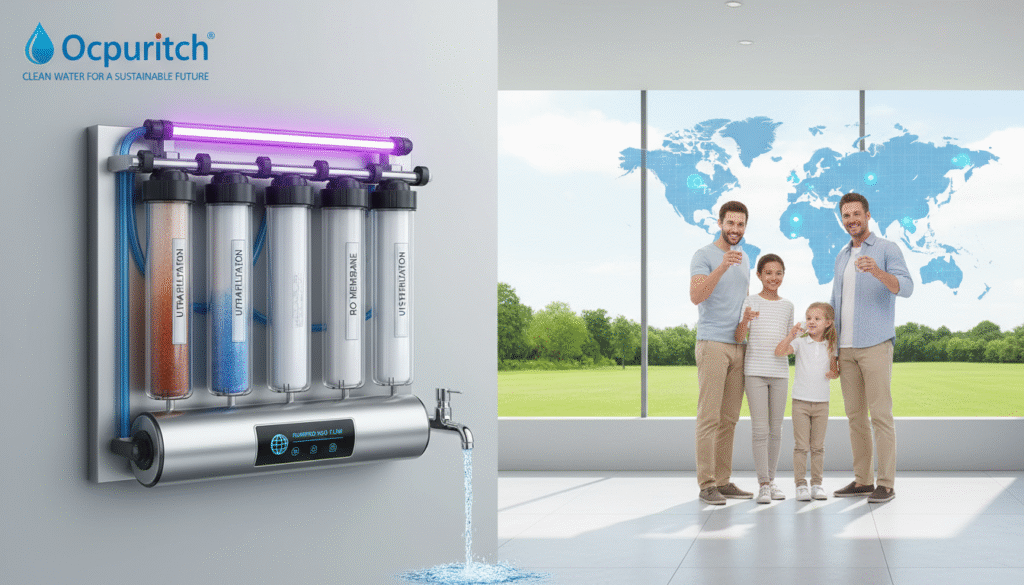
Clean, safe drinking water is not just a luxury; it’s a fundamental necessity for health and well-being. With growing concerns about water quality, many homeowners are exploring advanced filtration solutions. Among these, the whole house reverse osmosis water filter system stands out as a powerful option for comprehensive water purification. But is it the right choice for your home?
1. Introduction: Understanding Whole House Reverse Osmosis Systems
In an era where water quality is increasingly compromised by various pollutants, securing access to truly clean water has become a top priority for families worldwide. From agricultural runoff to industrial chemicals and aging infrastructure, the complexity of contaminants present in our water sources demands robust filtration solutions. A whole house reverse osmosis water filter system offers a comprehensive approach, treating all the water entering your home to ensure purity at every tap. This guide will delve into the intricacies of these systems, helping you determine if such an investment aligns with your water quality goals and lifestyle needs.
1.1. The Growing Need for Advanced Water Purification
The global water crisis is a stark reality, impacting millions. According to the WHO and UNICEF, as of 2025, 1 in 4 people globally still lack access to safe drinking water, highlighting persistent challenges in water accessibility worldwide. Moreover, the World Bank reports that water scarcity affects more than 40% of the global population, with water pollution being a major contributor. These statistics underscore the critical importance of effective water treatment. While municipal water treatment plants strive to meet safety standards, issues like aging pipes, localized contamination, and emerging pollutants can still affect tap water quality. This necessitates home-based solutions like a whole house reverse osmosis water filter system to provide an extra layer of protection and peace of mind.
1.2. What is a Whole House Reverse Osmosis System?
A whole house reverse osmosis water filter system is a sophisticated water purification unit designed to treat all the water that flows into your home. Unlike point-of-use filters that treat water at a single tap, a whole house system ensures purified water for drinking, bathing, cooking, and all household uses. At its core, RO technology employs a semi-permeable membrane to remove ions, unwanted molecules, and larger particles from drinking water. This process effectively filters out a wide array of contaminants, including dissolved solids, heavy metals, industrial chemicals, sediment, and even some bacteria and viruses. The result is exceptionally clean and clear water throughout your entire property, offering unparalleled purity and safety for your family.
2. Key Components and Technology Behind Whole House RO

Understanding the technology behind a whole house reverse osmosis water filter system is crucial for appreciating its effectiveness. These systems are not just a single filter but a multi-stage purification process, each part playing a vital role. The heart of the system is the RO membrane, but its performance relies heavily on effective pre-filtration and post-treatment stages. This synergy ensures the longevity of the membrane and the superior quality of the treated water. My experience working with large-scale industrial RO systems has shown me firsthand how critical each component is to the overall efficiency and reliability of the purification process.
2.1. The Core RO Membrane Technology
The reverse osmosis membrane is the star of any RO system, including a whole house reverse osmosis water filter system. This semi-permeable membrane, often made from advanced materials like polyether sulfone or polyvinylidene fluoride, works by allowing water molecules to pass through while effectively rejecting most dissolved solids and contaminants. ResearchGate details technical specifications for these advanced membranes, highlighting their precision in water treatment. Water is forced under pressure through this membrane, leaving behind impurities that are then flushed away. This process is incredibly effective, capable of removing up to 99% of dissolved salts, lead, fluoride, chlorine, chloramines, pesticides, herbicides, and many other pollutants, providing water of exceptional purity. In my experience, selecting the right membrane type and quality is paramount for system performance and lifespan.
2.2. Essential Pre-filtration and Post-filtration Stages
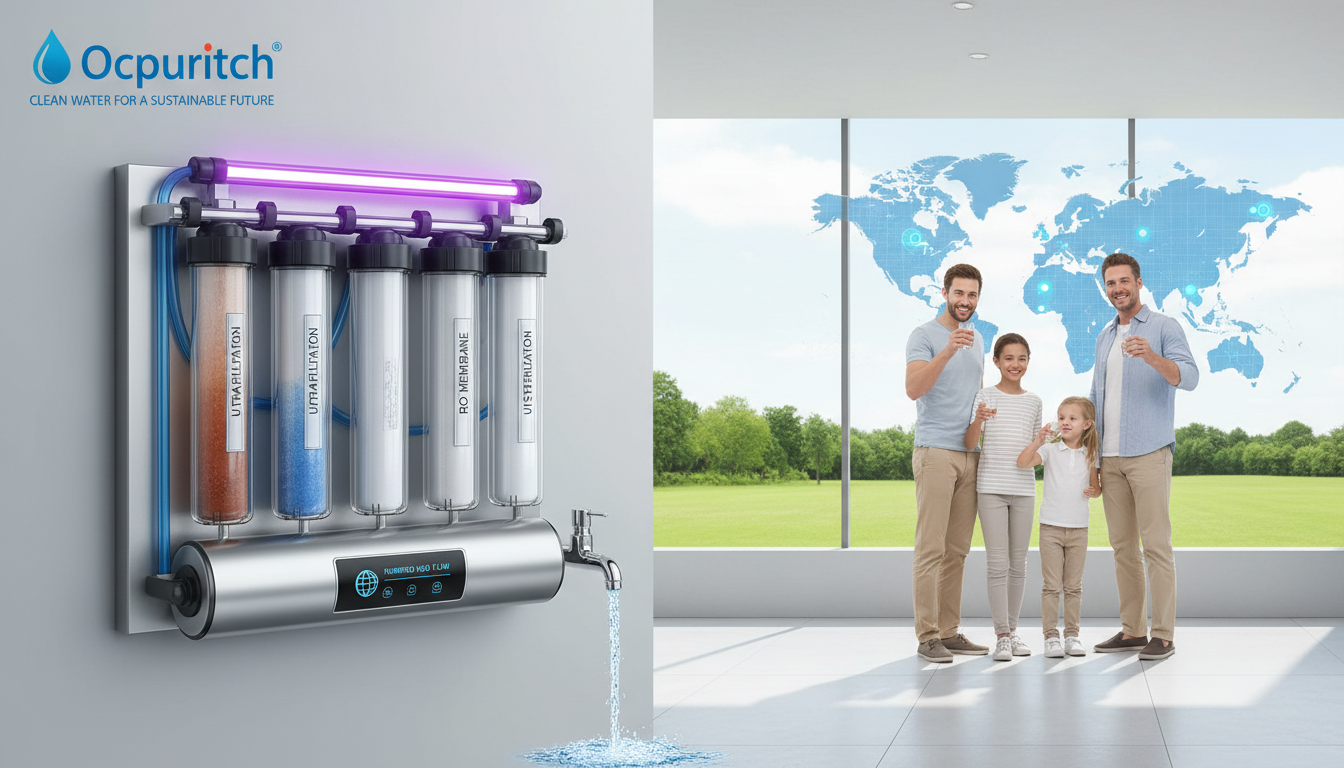
For a whole house reverse osmosis water filter system to operate efficiently and have a long lifespan, robust pre-filtration is indispensable. This typically involves sediment filters to remove larger particles like sand and rust, and activated carbon filters to remove chlorine and other chemicals that could damage the delicate RO membrane. Without proper pre-treatment, the RO membrane can quickly foul or degrade, leading to reduced performance and costly replacements. Following the RO process, post-filtration stages are often included for further refinement, such as remineralization filters to add beneficial minerals back into the water, and UV sterilizers for enhanced disinfection against bacteria and viruses. NSF International establishes standards for these various water treatment systems, ensuring safety and performance. This multi-stage approach ensures not only purity but also palatability and safety.
3. Evaluating if Whole House RO is Right for Your Home
Deciding whether a whole house reverse osmosis water filter system is the right choice for you involves a careful consideration of your specific needs, water quality, and expectations. It’s an investment that offers significant benefits, but it also comes with considerations regarding installation and maintenance. From my years in the water treatment industry, I’ve observed that the most satisfied customers are those who clearly understand their water challenges and how an RO system effectively addresses them. It’s not a one-size-fits-all solution, but for many, it provides an unparalleled level of water purity.
3.1. Assessing Your Water Quality and Contaminants

The first and most critical step in determining the suitability of a whole house reverse osmosis water filter system is to conduct a thorough water quality assessment. This means understanding exactly what contaminants are present in your water supply. Are you on municipal water, or do you have a private well? Municipal reports provide some insight, but a professional water test offers a detailed breakdown of specific impurities like heavy metals, nitrates, PFAS, and total dissolved solids (TDS). For example, if your water has extremely high TDS or specific problematic contaminants that other filtration methods can’t adequately address, then a whole house reverse osmosis water filter system becomes a much more compelling solution. I once worked on a project in a high-density industrial area where the well water was laden with heavy metals and chemical residues; only a robust RO system could effectively purify it to safe drinking standards for the residential community.
3.2. Benefits of a Whole House RO System
The benefits of a whole house reverse osmosis water filter system extend far beyond just clean drinking water. With RO-treated water flowing through every tap, you experience improved water quality for all household activities. This includes better-tasting food and beverages, softer skin and hair after showering (due to the removal of hard water minerals), and extended lifespan for appliances that use water, as mineral buildup is significantly reduced. More importantly, it offers comprehensive protection against a broad spectrum of pollutants, ensuring peace of mind for your family’s health. The UN World Water Development Report 2025 provides an overview of the global water situation, underscoring the increasing need for advanced treatment options, even in developed regions.
4. Considerations for Installation and Maintenance
Implementing a whole house reverse osmosis water filter system involves more than just purchasing the unit; it requires thoughtful planning for installation and a commitment to ongoing maintenance. These are not set-it-and-forget-it systems, but with proper attention, they deliver consistent, high-quality water for years. It’s crucial to consider these practical aspects upfront to ensure a smooth integration into your home and to maximize your investment. From my perspective, many challenges with RO systems stem from inadequate planning or neglecting routine checks.
4.1. Space Requirements and System Sizing

Installing a whole house reverse osmosis water filter system demands adequate space, typically in a utility room, garage, or basement. These systems are larger than point-of-use filters due to multiple pre-filters, the RO membrane housing, a high-pressure pump, and a pressurized storage tank. Proper sizing is also critical; an undersized system won’t meet your household’s daily demand, leading to performance issues, while an oversized one might be an unnecessary expense. Factors like the number of residents, daily water usage, and incoming water pressure all influence the appropriate system capacity. Moreover, you’ll need access to a drain for the concentrate (rejected water) and an electrical outlet for the pump. Planning these logistics meticulously ensures efficient operation and avoids costly modifications down the line.
4.2. Longevity and Cost-Effectiveness

While the initial investment in a whole house reverse osmosis water filter system can be significant, its long-term cost-effectiveness often justifies the expense. The lifespan of various components impacts the overall maintenance cost. Prefilters typically need replacement every 3-6 months, carbon filters every 6-12 months, and the RO membrane itself can last 2-5 years, depending on water quality and usage. Regular maintenance, including filter changes and system checks, is vital for ensuring optimal performance and extending the system’s life. Considering the cost of bottled water or multiple point-of-use filters, a whole house system can offer substantial savings over time, alongside the invaluable benefit of superior water quality throughout your home. For example, a large food production facility I consulted for, Simplot, along with Lucid Motors, won an award for their industrial water treatment systems and effective water reuse. This commitment to water treatment showcases long-term savings and environmental benefits even at an industrial scale.
5. Ocpuritech: Your Partner in Advanced Water Purification
At Ocpuritech, we understand the critical role that clean water plays in everyday life, both for residential purity and industrial efficiency. Our mission goes beyond merely selling water treatment systems; we aim to be your trusted partner in achieving optimal water quality. With decades of expertise in reverse osmosis technology, we have developed a reputation for innovative solutions, robust engineering, and unwavering commitment to customer satisfaction. Whether you require a sophisticated whole house reverse osmosis water filter system or a large-scale industrial solution, our comprehensive approach ensures that you receive the most effective and reliable purification technology tailored to your unique needs.
5.1. Our Commitment to Clean Water

Our commitment at Ocpuritech extends to ensuring everyone has access to safe, high-quality water. We invest heavily in research and development to continuously improve our RO technology, making our systems more efficient, sustainable, and user-friendly. Each whole house reverse osmosis water filter system we design is a testament to our dedication to excellence, built with premium components and engineered for long-lasting performance. We believe that superior water quality should not be a luxury but an attainable standard for every household and industry. This ethos drives us to provide not just products, but complete clean water solutions backed by expert support and service.
5.2. Ocpuritech’s Diverse Solutions for Residential and Industrial Needs

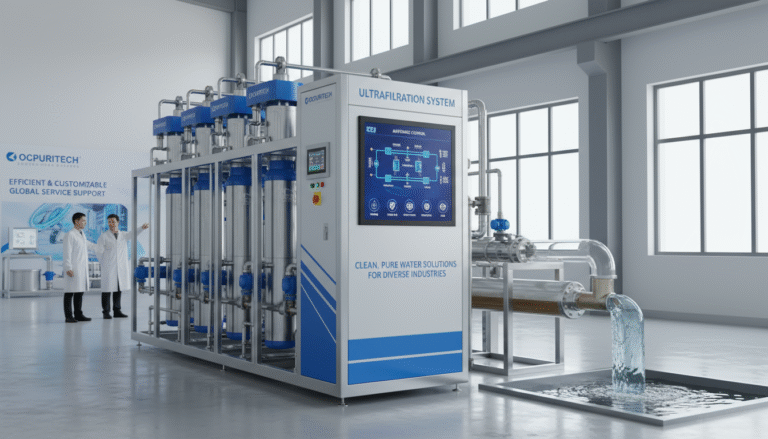
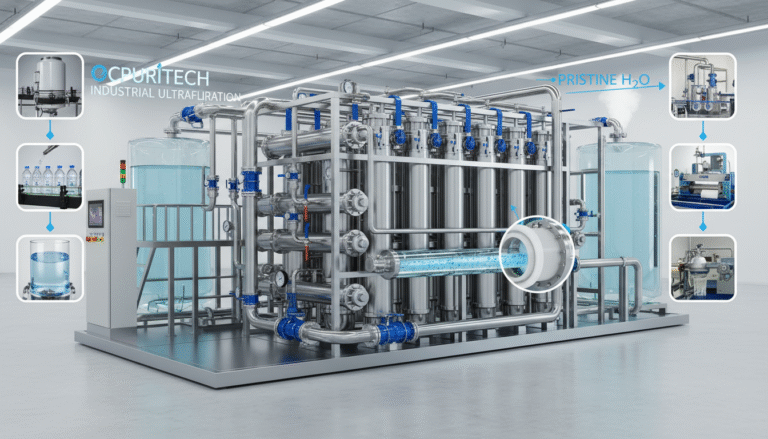
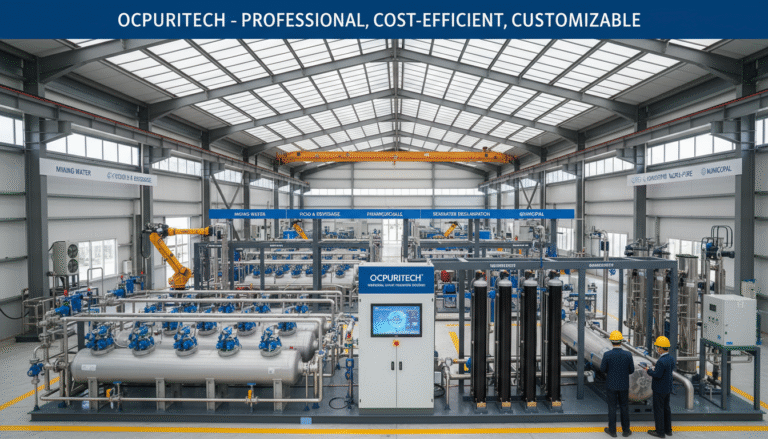
Ocpuritech offers a comprehensive range of water purification solutions that cater to both residential and diverse industrial needs. For homeowners seeking the ultimate in water purity, our whole house reverse osmosis water filter system is engineered to deliver exceptional quality throughout the entire property. Beyond residential applications, we provide advanced industrial RO systems, ultrafiltration skids, EDI ultrapure modules, and specialized seawater desalination units. Our solutions are deployed globally, from Southeast Asia to Africa and South America, addressing complex water challenges with cutting-edge technology. Whether it’s ensuring potable water for a family or providing ultrapure water for a manufacturing facility, Ocpuritech has the expertise and robust systems to meet demanding water quality requirements.
6. Conclusion: Making an Informed Decision for Your Home’s Water
Choosing a whole house reverse osmosis water filter system is a significant decision that impacts the health and well-being of your entire household. By understanding your specific water quality needs, the technology involved, and the commitment to installation and maintenance, you can make an informed choice that aligns with your priorities. While the initial investment might seem substantial, the long-term benefits of consistent, high-quality water throughout your home often outweigh the costs. As an expert in the field, I firmly believe that investing in superior water purification is investing in your family’s health and the longevity of your home’s plumbing and appliances. Consider your options carefully, and when in doubt, seek professional advice to ensure you select the best solution for your unique situation.
FAQs About Whole House Reverse Osmosis Water Filter Systems
Q1: What is a whole house reverse osmosis water filter system?
A whole house reverse osmosis (RO) water filter system is a multi-stage purification unit that treats all water entering a home, removing dissolved solids, heavy metals, chemicals, and some microbes to ensure clean water at every tap for drinking, bathing, and cooking.
Q2: How does the filtration process work in a whole house reverse osmosis system?
Pre-filtration involves sediment and activated carbon filters to remove particles and chemicals that could damage the RO membrane. Water is then forced through the semi-permeable RO membrane, removing up to 99% of contaminants. Post-filtration may include remineralization and UV sterilization for improved taste and disinfection, ensuring comprehensive purification.
Q3: How to plan the installation and maintenance of a whole house reverse osmosis system?
To install a whole house RO system, first assess your home's water quality with professional testing. Next, choose an appropriately sized system based on household water usage. Plan installation location with space, access to drain, and power outlet. Finally, hire a certified installer for plumbing and electrical work, and schedule regular maintenance like filter replacements and system checks to ensure longevity.
Q4: How to assess your home's water quality for deciding on a whole house RO system?
Assessing water quality involves collecting water samples and testing for contaminants such as heavy metals, nitrates, PFAS, and total dissolved solids (TDS). This can be done using certified laboratories or professional water testing services. Understanding your water source, whether municipal or well water, guides the decision for an RO system’s necessity and configuration.
Q5: Why choose a whole house reverse osmosis system over point-of-use filters?
Whole house RO systems purify all household water, improving water taste, reducing mineral buildup in appliances, and protecting against a broad range of pollutants. This results in better skin and hair health, prolonged appliance life, and comprehensive health safety—not just at a single tap but throughout your home.
Q6: What is the difference between whole house and point-of-use reverse osmosis water filtration?
Whole house RO systems filter all water entering the home, whereas point-of-use filters treat water at a single faucet. Whole house systems offer comprehensive purification for drinking, bathing, and cleaning, requiring more space and maintenance. Point-of-use units are simpler and cheaper but only improve water quality at selected taps, lacking full-home contamination protection.
Q7: What is the role of the RO membrane material in a whole house reverse osmosis system?
The reverse osmosis membrane is made from durable materials like polyether sulfone, designed to allow water molecules to pass while blocking dissolved solids and contaminants. Membrane quality influences filtration efficiency and lifespan. Proper pre-filtration is crucial to prevent fouling, which could degrade membrane performance, so selecting membranes from reputable manufacturers like Ocpuritech ensures reliability.
Q8: How to determine the right size and space requirements for a whole house RO system installation?
Whole house RO systems require space typically in utility areas due to multiple filters, pumps, and storage tanks. Proper system sizing depends on household water demand, pressure, and contaminant levels. An undersized system fails to meet needs, while oversizing increases costs unnecessarily. Considering installation logistics, including drainage and electrical access, is essential for efficient operation.
Q9: Why is regular maintenance vital, and what are the typical component lifespans in whole house RO systems?
Replacing prefilters every 3-6 months and carbon filters every 6-12 months prevents membrane damage, while the RO membrane typically lasts 2-5 years depending on water quality. UV lamps require annual replacement. Although initial costs are high, long-term savings arise from reducing bottled water expenses and extending appliance life, as seen in industrial applications by companies like Simplot and Lucid Motors.