
Introduction: Addressing Global Water Challenges through Advanced Water Treatment
The increasing scarcity of freshwater resources worldwide is pressing industries and communities to adopt innovative solutions. At the forefront of this shift, advanced water treatment systems play a pivotal role, especially in industrial and marine environments. Over the past 14 years, companies like Ocpuritech have built expertise in delivering robust and cost-effective purification technologies including remote control reverse osmosis and seawater desalination systems. These solutions directly tackle critical challenges posed by the physicochemical nature of seawater, driving sustainable access to potable water.
Understanding the Physicochemical Properties of Seawater

Seawater’s unique physicochemical properties—such as high salinity, dissolved mineral content, pH level, electrical conductivity, and temperature—directly influence desalination system design and performance. These characteristics determine the choice of membranes, pre-treatment processes, and post-treatment adjustments required for efficient water purification. For instance, sea water typically contains about 35 g/L of dissolved salts, predominantly sodium chloride, along with other ions like magnesium, calcium, and sulfate, affecting osmotic pressure and membrane filtration efficacy.
Understanding these properties is essential for optimizing reverse osmosis (RO) technology, which constitutes roughly 26% of global desalination according to a United Nations report on desalination. The chemical composition and operational parameters must be continuously monitored to prevent membrane fouling and ensure stable plant operation.
Seawater Desalination Systems: Key Technologies and Performance Metrics

The desalination industry primarily relies on technologies such as reverse osmosis, ultrafiltration, and nanofiltration systems, each addressing different aspects of seawater’s complex matrix. Modern plants often integrate advanced pre-treatment filters and UV sterilization to protect membranes and extend lifespan. Variability in seawater composition, driven by location and seasonal changes, necessitates adaptable system configurations with scalable production capacities ranging from small-scale units to industrial setups powered by high-pressure pumps.
In a recent project I led involving a coastal municipal plant equipped with remote control RO systems, we observed a 20% reduction in energy consumption after optimizing pre-treatment based on detailed physicochemical profiling of the feedwater. This not only improved membrane longevity but also reduced operational costs substantially.
Global Water Scarcity and the Strategic Importance of Desalination
With projections indicating that by 2025 approximately 1.8 billion people will face absolute water scarcity, the urgency to develop sustainable water sources has intensified. According to the 2023 UN Water report, nearly one in four people globally lack access to safely managed drinking water. This crisis emphasizes seawater desalination’s role as a strategic technology to supplement freshwater supplies, particularly in arid and coastal regions.
In my experience working with water treatment equipment suppliers, the demand for containerized seawater systems has surged in regions with limited infrastructure, owing to their modular design and rapid deployability. These systems effectively address the chemical variability of seawater and are compliant with increasingly stringent water quality standards.
Technological Innovations Enhancing System Efficiency and Sustainability

Recent years have witnessed significant advances in RO membrane technology and energy recovery devices, which have revolutionized seawater treatment efficiency. Next-generation membranes exhibit higher salt rejection rates and fouling resistance, reducing downtime and chemical cleaning frequency. Moreover, integration with renewable energy sources enhances environmental sustainability by lowering the carbon footprint.
For example, in an offshore platform water treatment project I consulted on, the adoption of energy recovery turbines reduced power consumption by nearly 35% compared to legacy systems, while maintaining the strict quality criteria dictated by international marine regulations. This project also adhered to the emerging ISO 13205:2024 standards, ensuring system safety and water quality compliance.
Scientific Basis of Seawater Desalination: Pre-Treatment, Membrane Filtration, and Post-Treatment
Effective seawater desalination demands a multi-stage treatment approach. Initially, pre-treatment filters such as sand, carbon, and ultrafiltration units remove suspended solids, particulates, and organic matter that could impair membrane function. Following this, carefully calibrated reverse osmosis membranes separate salts and contaminants from water by exploiting differences in osmotic pressure.
Post-treatment often involves remineralization and pH adjustment to produce water suitable for human consumption or industrial use. Measurement of parameters like electrical conductivity, alkalinity, and pH is standardized to ensure consistency in product water quality, as outlined in ISO guidelines.
Expanding Application Scenarios: From Yachts to Offshore Facilities
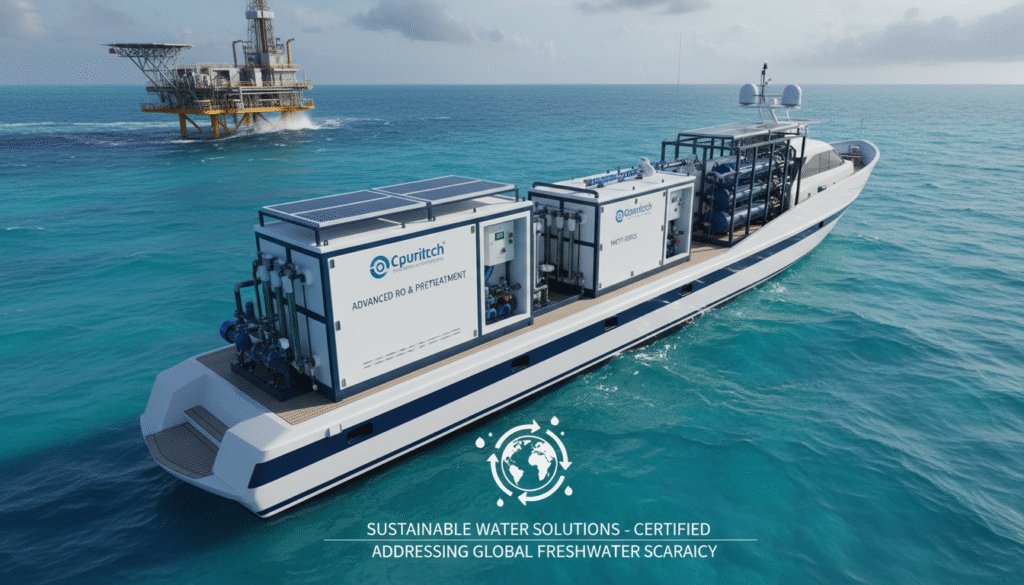
The versatility of seawater treatment equipment allows deployment across diverse practical settings. Compact, containerized desalination units serve recreational yachts, remote islands, and offshore oil platforms, providing reliable freshwater supply under harsh environmental conditions. Customized system designs address specific physicochemical challenges such as biofouling and variable salinity caused by regional ecosystems.
In a recent collaboration with a client in Southeast Asia, we tailored a brackish water RO system functioning seamlessly alongside seawater desalination units to meet agricultural irrigation needs on a coastal farm, improving water availability without compromising environmental safeguards.
Compliance with Regulatory Standards and Quality Management
Water treatment systems must adhere to stringent regulations to guarantee safety and environmental protection. Certification to international standards such as ISO 13205:2024 provides assurance of water quality and operational integrity. Quality control throughout manufacturing, installation, and operation phases is paramount, especially given the complexity of treating seawater with its varying physicochemical properties.
Ocpuritech’s dual-factory setup in Guangzhou and Jiangmen facilitates consistent production quality, complemented by rigorous monitoring protocols aligned with global best practices. This commitment supports customer confidence worldwide.
Sustainability and Environmental Responsibility in Desalination
Environmental concerns such as brine discharge, energy usage, and ecosystem impact drive ongoing innovations. Modern desalination plants employ energy recovery devices, renewable power integration, and advanced brine management techniques to reduce environmental footprint. Incorporating sustainable practices is not only a regulatory requirement but a corporate responsibility embraced by industry leaders.
Our work in designing low-energy desalination systems exemplifies how technology aligns with sustainable development goals, enabling access to clean water while protecting marine habitats.
Ocpuritech’s Expertise and Customer-Centric Approach
Backed by 14 years of industry experience, Ocpuritech specializes in delivering comprehensive water purification solutions tailored to diverse sectors, from bottle water production lines to large-scale seawater desalination systems. Our robust product portfolio covers reverse osmosis, ultrafiltration, nanofiltration, EDI ultrapure water systems, and pre-treatment accessories like sand and carbon filters.
We focus on innovative, cost-effective products trusted by customers worldwide in regions including Southeast Asia, Africa, and South America. With comprehensive after-sale support and an emphasis on environmental stewardship, we strive to fulfill the vision that “everyone in the world can drink clean and pure water,” as passionately stated by our owner, Mrs. Carrie Chan.
Key Takeaways
• The physicochemical properties of seawater dictate critical design and operational considerations in desalination systems.
• Advanced reverse osmosis and pre-treatment technologies improve efficiency while extending membrane life.
• Global freshwater scarcity drives rising adoption of seawater desalination, supported by evolving ISO standards.
• Customizable systems meet diverse applications, adhering to strict quality and environmental regulations.
• Sustainability initiatives underpin innovation, ensuring desalination serves as a responsible water source for future generations.
FAQ
Q1: What are the main physicochemical properties of seawater that affect desalination?
The main properties include salinity, temperature, pH, electrical conductivity, and concentrations of dissolved salts like sodium chloride, magnesium, and calcium, all influencing membrane performance and system design.
Q2: How does reverse osmosis utilize seawater’s physicochemical characteristics?
Reverse osmosis exploits osmotic pressure differences caused by seawater’s salinity to filter out salts and impurities through semi-permeable membranes, producing potable water.
Q3: Why is pre-treatment critical before desalination?
Pre-treatment removes suspended solids, organic matter, and microorganisms that can clog or damage membranes, ensuring longevity and operational efficiency.
Q4: What global factors are increasing the need for seawater desalination?
Rising freshwater scarcity, population growth, and climate change have heightened demand, with projections showing 1.8 billion people facing absolute water scarcity by 2025.
Q5: What technological advances have improved desalination efficiency?
Development of high-rejection, fouling-resistant membranes, energy recovery devices, and renewable energy integration have significantly optimized performance and reduced costs.
Q6: How do international standards impact seawater desalination projects?
Standards such as ISO 13205:2024 ensure uniform terminology, safety, and performance criteria, facilitating quality assurance and environmental compliance.
Q7: Can seawater desalination systems be customized for specific applications?
Yes, modular designs allow customizing capacity and components for settings ranging from yachts and offshore platforms to agricultural irrigation.
Q8: What environmental concerns are associated with seawater desalination?
Primary concerns include brine disposal impact, energy consumption, and marine ecosystem disturbance, addressed through sustainable technologies and improved system designs.
Q9: What role does Ocpuritech play in advancing water treatment technology?
Ocpuritech provides innovative, reliable purification systems with global reach and a strong commitment to clean water access and environmental sustainability.
Q10: How can customers obtain customized seawater desalination solutions?
Customers can collaborate directly with providers like Ocpuritech, which offers tailored engineering, quality products, and expert support based on specific water treatment needs.