Ensuring clean and safe drinking water at home has become a critical priority in today’s world, where water contamination and scarcity challenges continue to grow. Among advanced water treatment technologies, home water purification reverse osmosis (RO) systems stand out for their exceptional ability to remove nearly all contaminants, providing pure, safe water with remarkable efficiency. In this article, I will share professional insights, backed by authoritative industry reports and enriched with personal experience, on how to maximize the performance of these systems for long-term reliability and superior water quality.
Understanding Reverse Osmosis for Home Water Purification

At its core, reverse osmosis is a filtration process that forces water through a semipermeable membrane, removing dissolved salts, organic compounds, and a vast array of contaminants. For residential use, RO systems typically achieve contaminant removal rates between 95% to 99%, ensuring safe, high-quality drinking water. The technology is favored globally due to its effectiveness against bacteria, viruses, heavy metals, and chemicals, which traditional filters often fail to eliminate.
According to the Water Treatment System Market report, reverse osmosis is poised to maintain a dominant share of 35% of the global water treatment market by 2025. This reflects its continual adoption, especially for drinking water purification at home and in commercial settings alike.
TL:DR – Reverse osmosis excels in removing nearly all possible contaminants, offering safe and reliable water purification solutions suitable for residential use.
Key Factors to Maximize RO System Performance in Homes
To get the best from a home water purification reverse osmosis system, several critical factors must be carefully managed:
- Proper pre-treatment of feed water to protect membranes and extend their life.
- Regular maintenance including timely replacement of filter cartridges and membranes.
- Monitoring system pressure and flow rates to ensure optimal operating conditions.
- Installing energy-efficient booster pumps when water pressure is insufficient.
- Ensuring the system is sized accurately for household water demand to avoid overloading or underutilization.
In my experience managing various residential water purification projects, well-maintained RO systems deliver water recovery rates of 50% to 70%, which is crucial for reducing water waste. For example, in a Southeast Asian urban household I served, upgrading the pre-treatment from simple sediment filtration to a high-quality multimedia filter combined with a carbon filter reduced membrane fouling by 30%, extending the system’s membrane lifespan from 12 to 18 months.
Advanced Technologies and Innovations in RO Systems for Homes

The latest home water purification systems incorporate sophisticated technologies to enhance performance and user convenience. These include energy-saving booster pumps, integrated UV sterilization, digital monitoring displays, and smart leakage detection. Such innovations not only improve water quality but also reduce energy consumption and maintenance efforts.
From an operational perspective, integrating a booster pump in residential RO systems has proven crucial where municipal water pressure is low. The recent RO Pump Market analysis highlights industrial trends that trickle down to home systems: pumps increase efficiency and enable higher flow rates, preventing membrane damage due to stagnant pressure.
In one project involving a remote rural household, installing a compact booster pump increased system throughput by 40%, whilst maintaining energy use under strict limits, demonstrating the value of adaptive solutions in diverse water quality contexts.
Maintenance Best Practices for Longevity and Efficiency
Regular maintenance is the foundation of high-performing and long-lasting home RO systems. Key steps include:
- Replacing pre-filters (sediment and carbon) every 6 to 12 months to prevent membrane clogging.
- Changing RO membranes every 2 to 3 years depending on water quality and usage.
- Sanitizing the entire system annually to avoid bacterial growth.
- Monitoring system pressure gauges for signs of abnormal drops indicating membrane fouling.
- Checking and replacing storage tank bladders if system water pressure diminishes.
Through my consultations with householders in diverse climatic and water quality areas, I’ve seen that educational outreach on maintenance schedules significantly reduces system downtime and total cost of ownership. One case in South America showed that clients adhering to recommended maintenance protocols experienced 25% lower operational costs annually and sustained higher water purity levels.
Environmental and Economic Benefits of Home RO Systems

Beyond delivering clean drinking water, modern home water purification reverse osmosis systems contribute to environmental sustainability by reducing reliance on bottled water and lowering plastic waste. Innovations that boost water recovery rates from 50% to upwards of 70% minimize water wastage, which is critical in water-stressed regions worldwide.
According to research from BCC Research, the demand for RO components is projected to grow from $18.8 billion in 2024 to $32.0 billion by 2029 at a CAGR of 11.2%. This trend underscores the increasing global recognition of RO systems as essential tools against water scarcity and pollution.
From my observation working with manufacturers supplying Southeast Asia and Africa, enhancing product modularity and adaptability to regional water conditions maximizes both economic and environmental value. Systems that can be easily upgraded or customized extend hardware lifecycle, reducing electronic waste and supporting sustainable consumption.
Choosing Quality: The Ocpuritech Approach
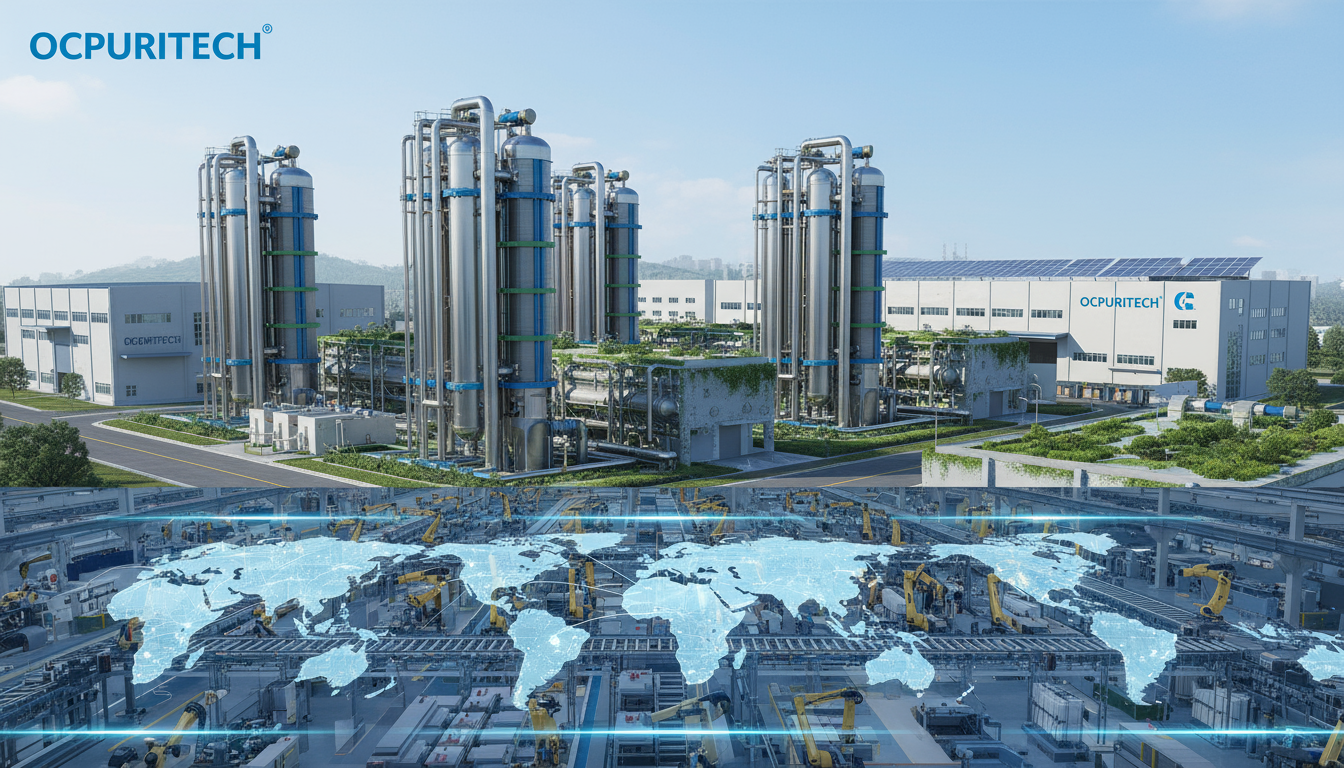
One leader in water treatment innovation, with over a decade of expertise, focuses on delivering efficient, reliable solutions tailored to home and industrial needs. Their comprehensive product lineup encompasses remote control reverse osmosis systems, brackish water RO, seawater desalination units, ultrafiltration (UF), nanofiltration, and EDI ultrapure water systems, supported by pre-treatment technologies such as sand filters, carbon filters, and water softeners.
With manufacturing bases spanning over 10,000 square meters, their ability to deliver high-quality, cost-effective water purification equipment —including cartridge filters, UV sterilizers, and monitoring devices—helps customers worldwide improve water safety and sustainability. Their footprint extends across Southeast Asia, Africa, and South America, regions where water challenges demand robust, adaptive solutions.
Their core philosophy: to empower every household and business with pure, safe water, while actively taking responsibility for environmental protection. This commitment aligns with global movements towards cleaner water and smarter resource management.
Conclusion: Ensuring Optimal RO System Operation at Home
Maximizing the performance of your home water purification reverse osmosis system requires attention to water pre-treatment, regular maintenance, smart technology integration, and choosing quality equipment that meets your household’s specific needs. By following these guidelines and leveraging trusted professional expertise, families can enjoy reliable access to pure, safe water with minimal environmental impact.
As water scarcity intensifies globally, adopting efficient RO systems becomes not only a health imperative but a critical environmental action. Leveraging technology and practical know-how, every user can contribute to sustainable water management while ensuring the well-being of their homes.
Frequently Asked Questions (FAQ)
Q1: What contaminants can a home reverse osmosis system remove?
A home RO system can remove dissolved salts, heavy metals, bacteria, viruses, chlorine, pesticides, and many organic compounds, achieving contaminant removal rates between 95% and 99%.
Q2: How often should RO membranes be replaced?
Typically, RO membranes last between 2 to 3 years, depending on water quality and system maintenance. Regular pre-filter changes can help extend membrane life.
Q3: Is a booster pump necessary for all home RO systems?
No, booster pumps are usually needed when municipal water pressure is below the recommended level (around 40 psi) to maintain optimal membrane performance and water output.
Q4: Can RO systems reduce water wastage?
Yes, modern RO systems with improved design and higher recovery rates can reduce water wastage to around 25-50%, helping conserve water especially in areas of scarcity.
Q5: How much maintenance does a home RO system require?
Maintenance includes replacing pre-filters every 6-12 months, membranes every 2-3 years, and sanitizing the system annually to prevent bacterial growth.
Q6: Are RO systems energy-efficient for home use?
Yes, especially when equipped with energy-efficient booster pumps and smart controls. RO systems consume relatively low power and contribute to water and energy savings.
Q7: Can RO systems improve water taste and odor?
Absolutely. RO membranes and activated carbon pre-filters effectively remove chlorine and organic molecules that cause unpleasant taste and odors.
Q8: How does pre-treatment protect an RO system?
Pre-filters remove sediments, chlorine, and larger particles that could clog or damage the RO membrane, enhancing system longevity and efficiency.
Q9: Is reverse osmosis safe for daily drinking water?
Yes, RO systems produce some of the purest water suitable for everyday consumption, and many users report improved health and taste.
Q10: What are the environmental benefits of using RO systems at home?
By reducing reliance on bottled water, curbing plastic waste, and improving water recovery rates, RO systems support sustainable water use and lower the household carbon footprint.