Ultrapure Water EDI System for Pharmaceutical and Industrial Applications
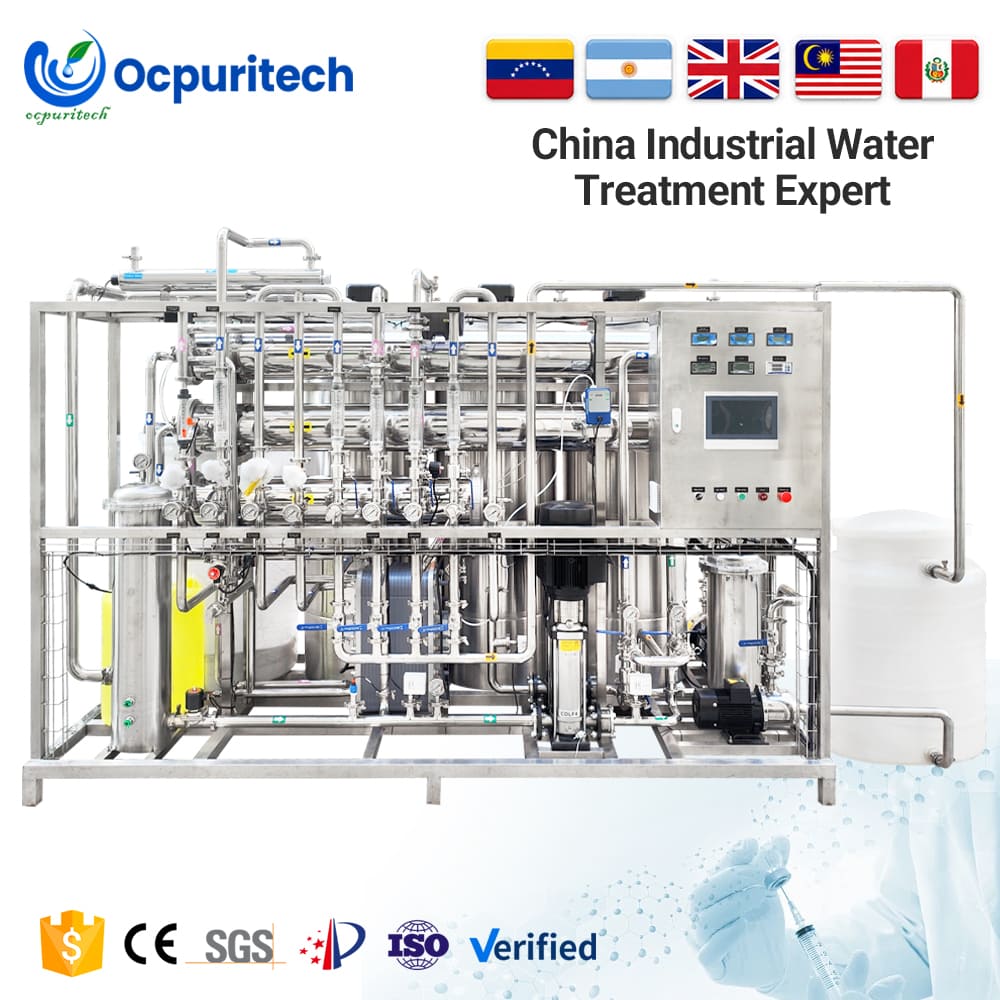
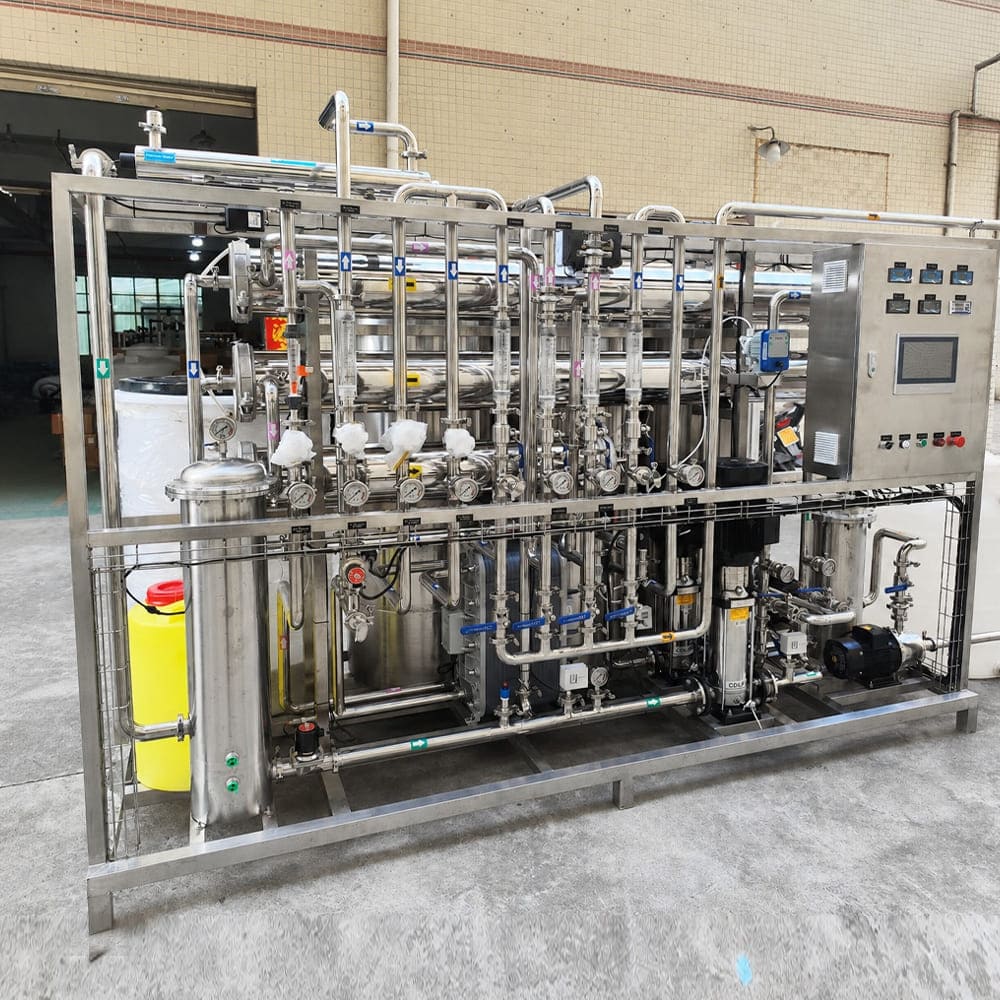
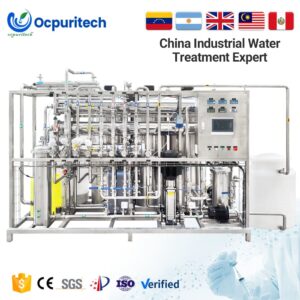
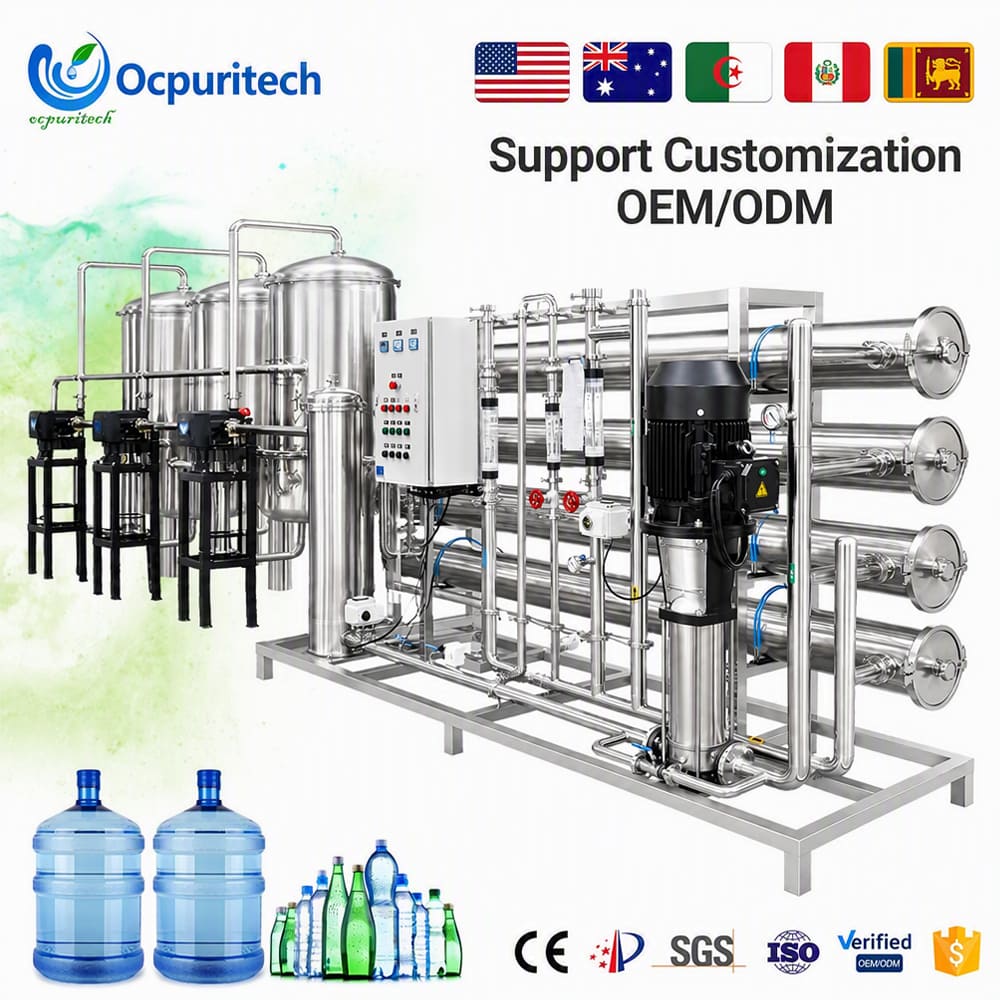
Ocpuritech’s Ultrapure Water EDI System combines double-pass reverse osmosis (RO) and continuous electrodeionization (EDI) technology to produce 18.2 MΩ·cm ultrapure water at a capacity of 2T/H without chemical regeneration. The system adopts a 3T/H first-pass RO stage, followed by a 2T/H second-pass RO stage and a 2T/H EDI polishing unit to achieve stable high-purity water production.
The UL-HRO-3T-A3-2T-EDI-2T is designed for applications where extremely low ionic contamination is required, including pharmaceutical API synthesis, semiconductor wet benches, power generation boiler feedwater, laboratory instrument supply, and biotechnology process water. Residual ions such as sodium, chloride, silica, and carbon dioxide are continuously removed through the EDI module, eliminating the need for acid and caustic regeneration.
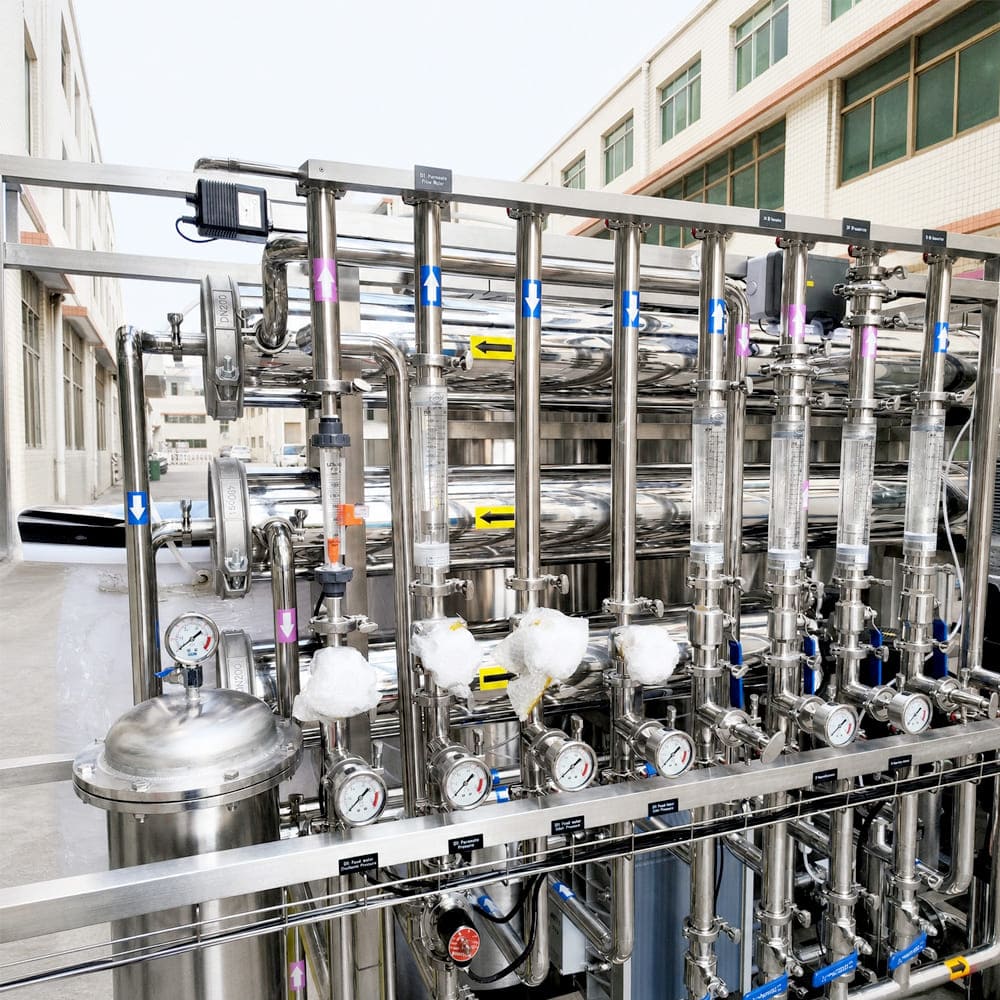
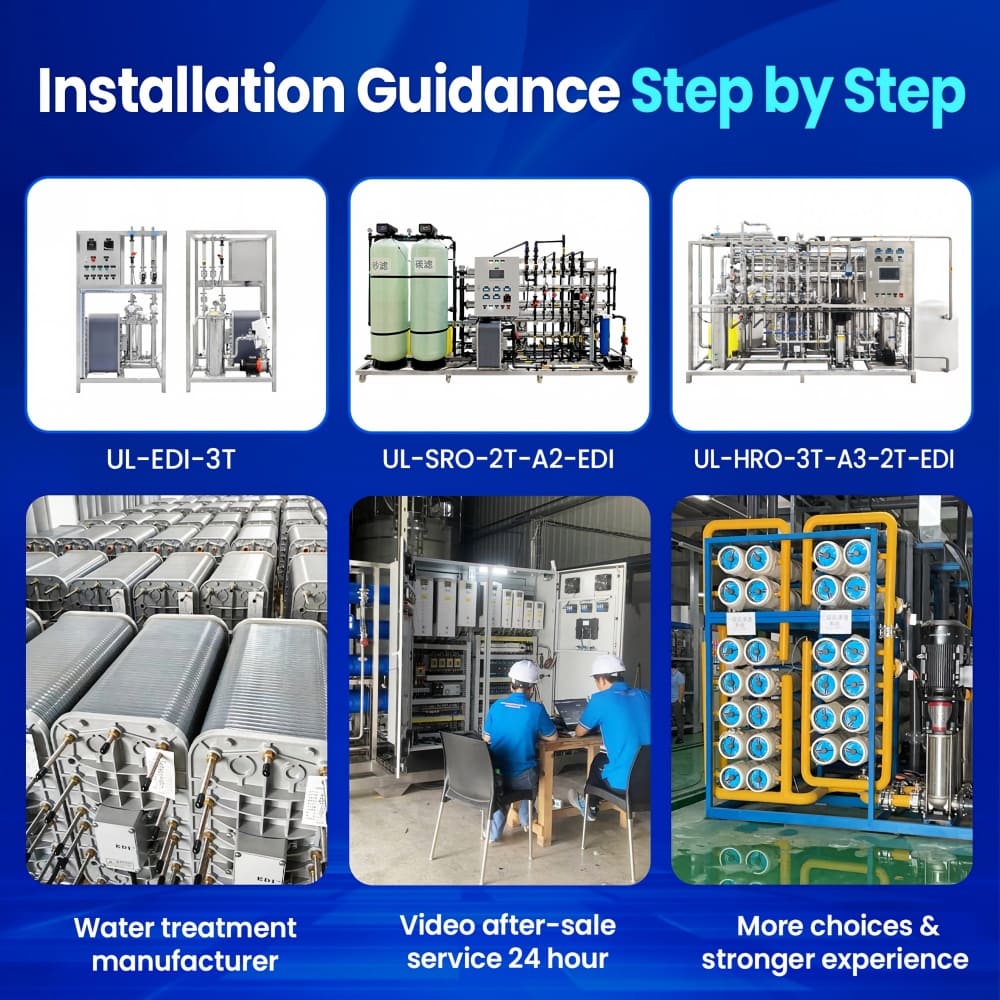
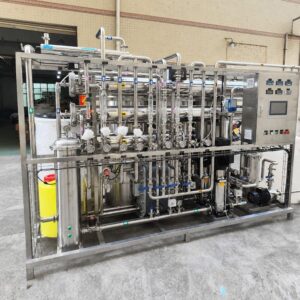
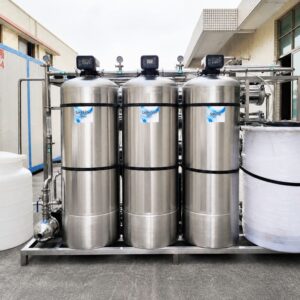
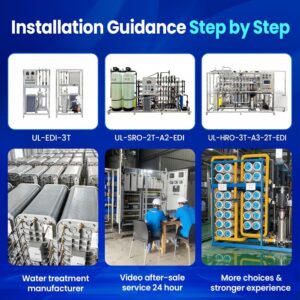
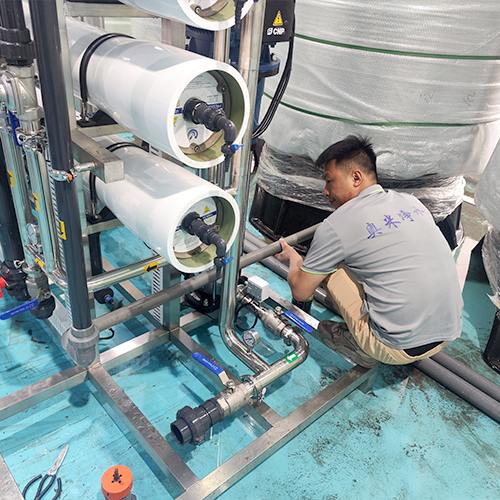
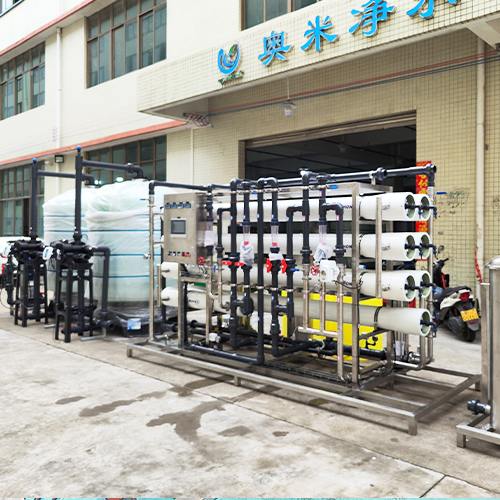
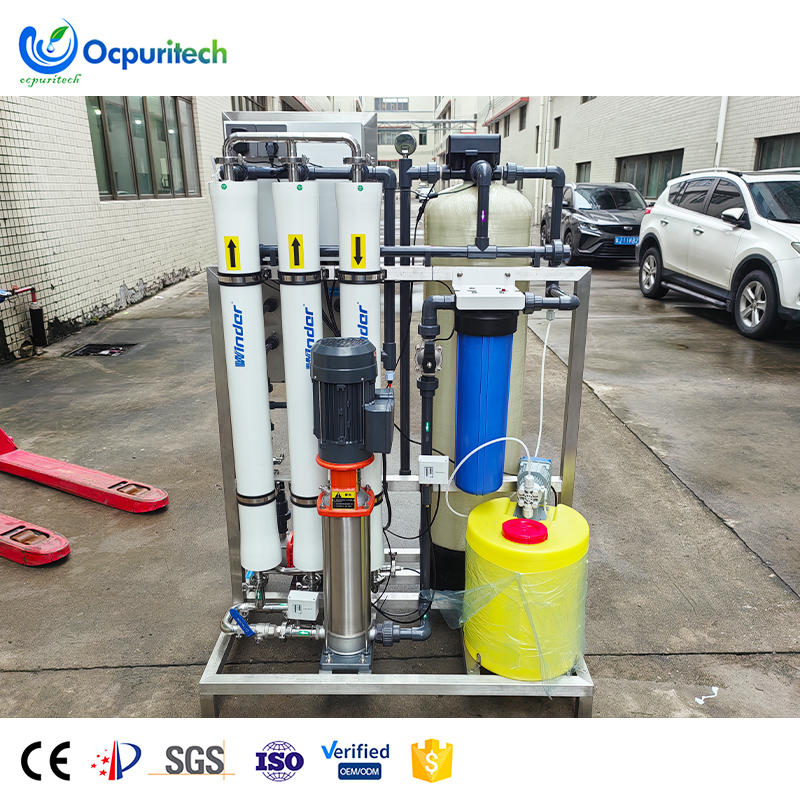
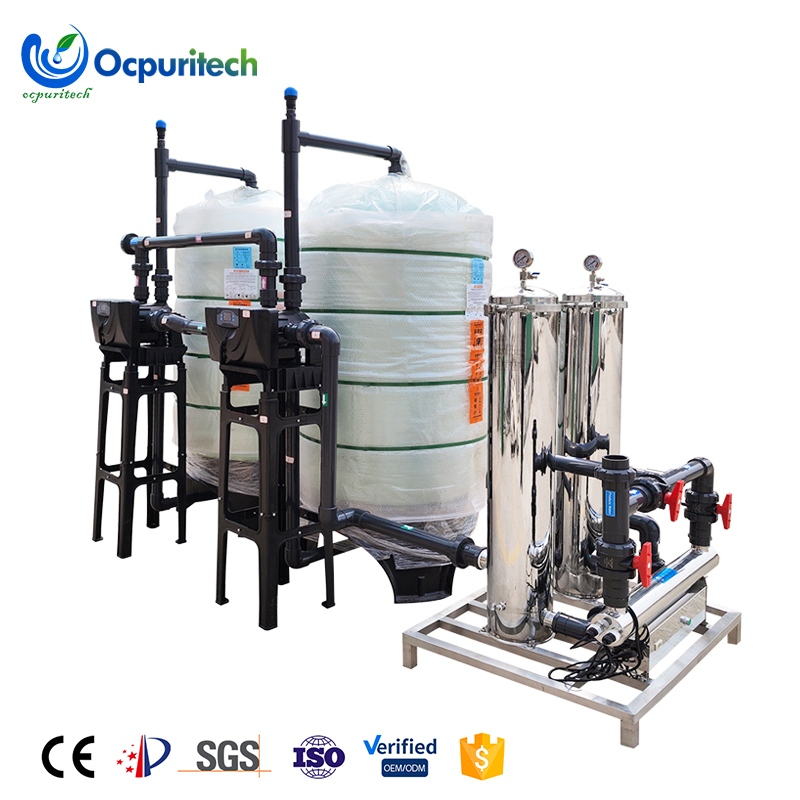
The complete system is supplied as a fully integrated skid — pre-assembled, pre-wired, and pre-tested. This modular design reduces installation time and ensures reliable commissioning after delivery.
Ultrapure Water EDI System Performance and Water Quality
| Parameter |
Feed (typical) |
Product (guaranteed) |
| Conductivity |
Municipal / RO permeate |
0.06 µS/cm |
| Resistivity |
— |
18.2 MΩ·cm (25 °C) |
| TOC |
Varies |
< 1 ppb |
| Particles |
Varies |
< 0.2 µm filtered |
| Dissolved gases |
CO₂, O₂ present |
Substantially removed |
| Bacteria / endotoxins |
Varies |
Removed |
Why 18.2 MΩ·cm Matters
Ultrapure water at 18.2 MΩ·cm is not a marketing specification — it is the theoretical resistivity maximum of pure H₂O at 25 °C. At that value, ionic contamination is effectively zero. Any process step sensitive to trace ions — semiconductor lithography rinses, HPLC mobile-phase preparation, cell culture media, pharmaceutical reagent dissolution — needs water that is undetectable as a variable. 18.2 MΩ·cm is the proof point.
Conventional RO, even at 99.7% rejection, delivers permeate in the 1–10 µS/cm range — four to five orders of magnitude away from 18.2 MΩ·cm. The EDI stage closes that gap without chemicals, without batch cycles and without the conductivity spikes that accompany resin regeneration in mixed-bed deionisation.
How It Works — The RO + EDI Process Chain
Process overview
Raw feed water passes through three sequential stages. Each stage removes a distinct class of contaminant, and each hands off a cleaner stream to the next. Together they convert ordinary municipal or pre-treated feed into pharmaceutical-grade ultrapure water at a continuous 2T/H rate.
Stage-by-stage breakdown
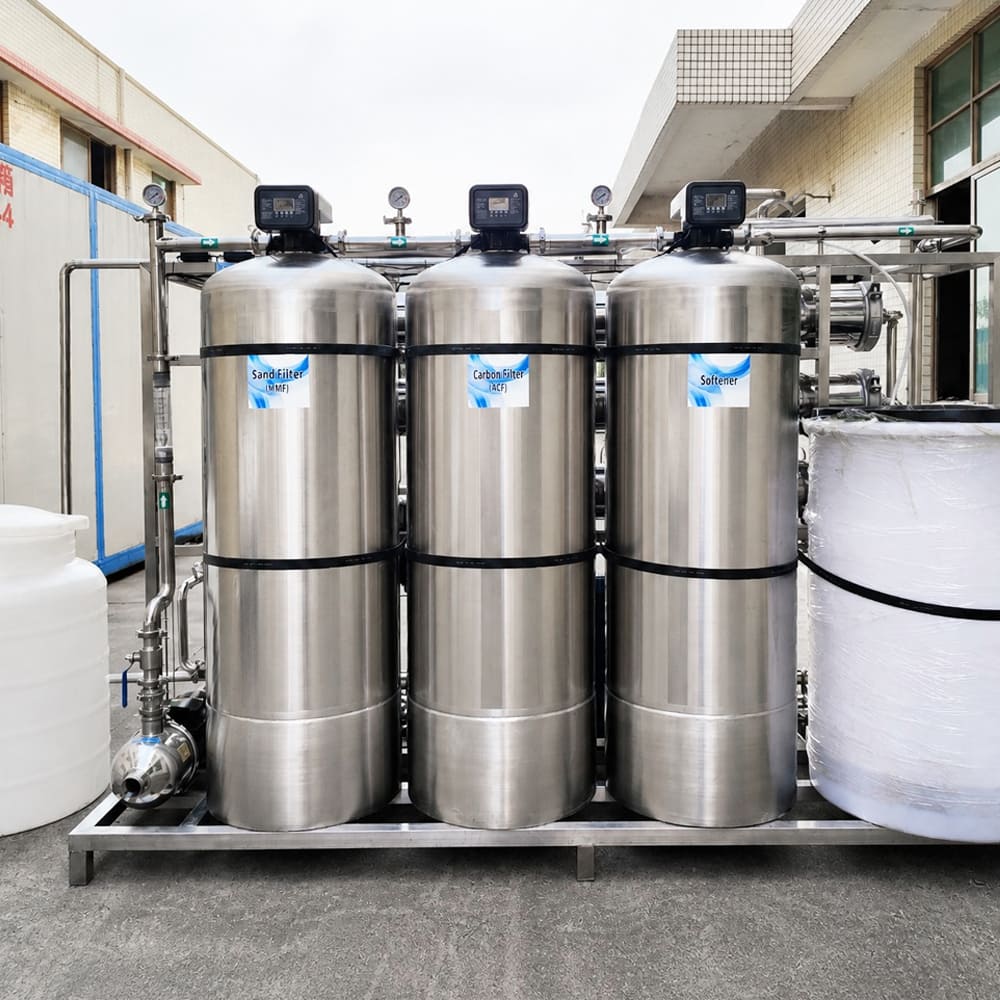
Stage 1 — Pre-treatment Turbidity, suspended solids and fouling-potential organics are reduced to membrane-safe levels. Pre-treatment protects the capital investment in RO membranes and extends the EDI module service life by preventing particulate ingress into the ion-exchange stack.
Stage 2 — Double-pass reverse osmosis (RO) The pre-treated feed enters a 3T/H RO system built around four 8040-format elements. At 99.7% salt rejection, the permeate that exits the RO stage carries less than 0.3% of the ionic load in the feed. Bacteria, endotoxins, particles above 0.2 µm and the majority of organic compounds are removed here. The double-pass configuration means the permeate from the first pass is re-processed, reducing conductivity further before the water enters the EDI module.
Stage 3 — Electrodeionization (EDI) EDI is a continuous, chemical-free ion-removal technology. The RO permeate — already low in ions — enters a stack of ion-exchange membranes and resin channels. A low-voltage DC field drives residual cations toward the cathode and anions toward the anode, continuously transferring them into concentrate channels that flush them to drain. The product stream exits the stack at 18.2 MΩ·cm, with TOC below 1 ppb.
Why EDI outperforms mixed-bed deionisation for continuous production:
Stage 4 — PLC automatic control All process parameters — feed pressure, product conductivity, recovery rate, flush cycles — are monitored and adjusted by the PLC. Alarms trigger before a quality deviation reaches the product stream. The operator monitors; the system manages.
Where the 2T/H EDI Specification Pays Back Fastest
Three conditions accelerate payback on the EDI architecture relative to mixed-bed alternatives:
- High duty hours — three-shift pharmaceutical operations, continuous biotech processes and 24/7 power generation boiler feeds benefit most, because the chemical savings and downtime elimination compound across every shift.
- Strict TOC limits — processes where TOC above 1 ppb is a deviation trigger gain a stable, auditable water supply instead of a post-regeneration conductivity spike risk.
- Chemical handling restrictions — sites where acid and caustic storage requires permitting, secondary containment or EHS oversight eliminate those infrastructure costs entirely with EDI.
Advantages:
- Fresh water quality, transparent processing, clean, health, and meet GB requirements
- High technical, stable operation, easy to maintain, long life time
- We can design upon customers requirement
- Competitive price, more profit
Why Choose Ocpuritech as Your Ultrapure Water System Manufacturer?
- Manufacturer since 2011, not a trading intermediary. Guangzhou Aomi Water Purification System Manufacture Co., Ltd. has built ultrapure water treatment systems under the Ocpuritech brand for over a decade.
- 4 in-house engineering disciplines. Design engineers (CAD/SolidWorks 3D models and fabrication drawings), R&D engineers (EDI process development and module selection), electrical engineers (PLC system build and commissioning), and test engineers (product quality, system validation and pre-shipment testing).
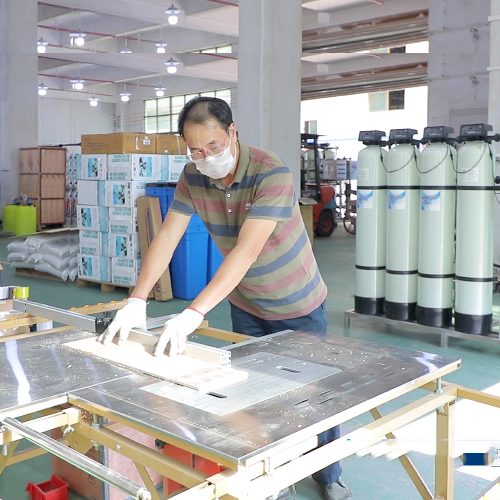
- Pre-tested before shipment. The assembled skid runs a full production cycle in the factory before it leaves.
- Certified and independently audited. ISO 9001:2015 quality management system, with CE, NSF and SGS credentials and Ocpuritech patents covering key process innovations.
- Customisation is standard, not premium. Recovery rate, EDI module count, pre-treatment depth, control logic, cabinet format and documentation package are all configurable at the design stage.