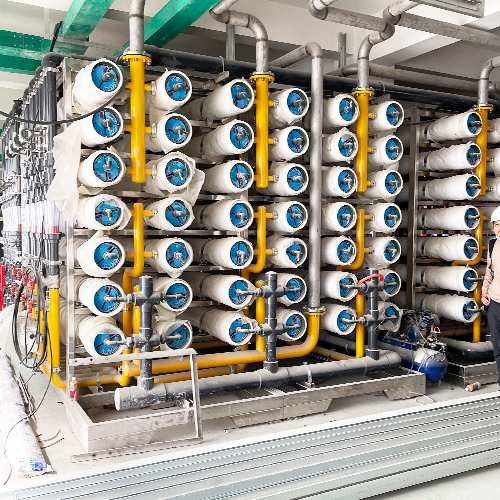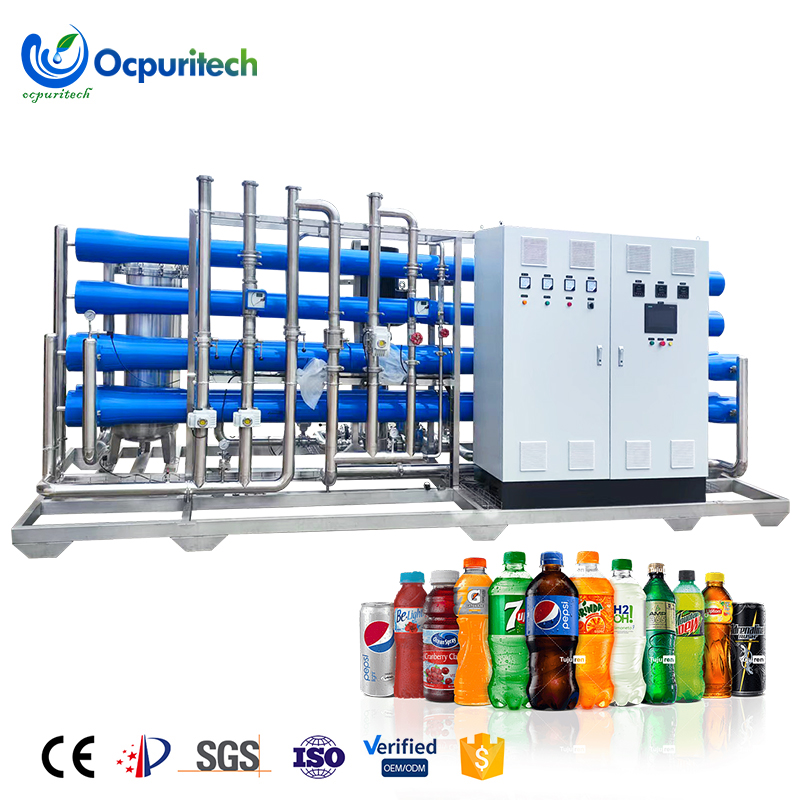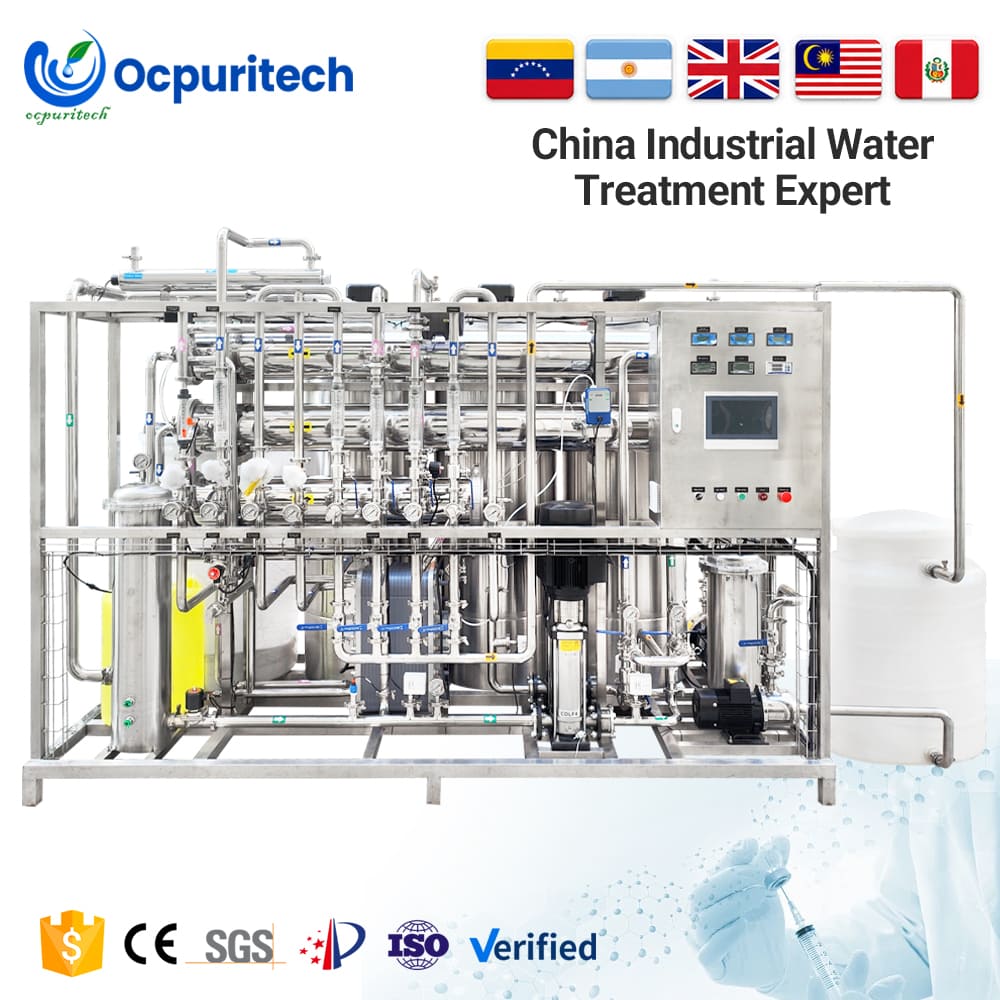
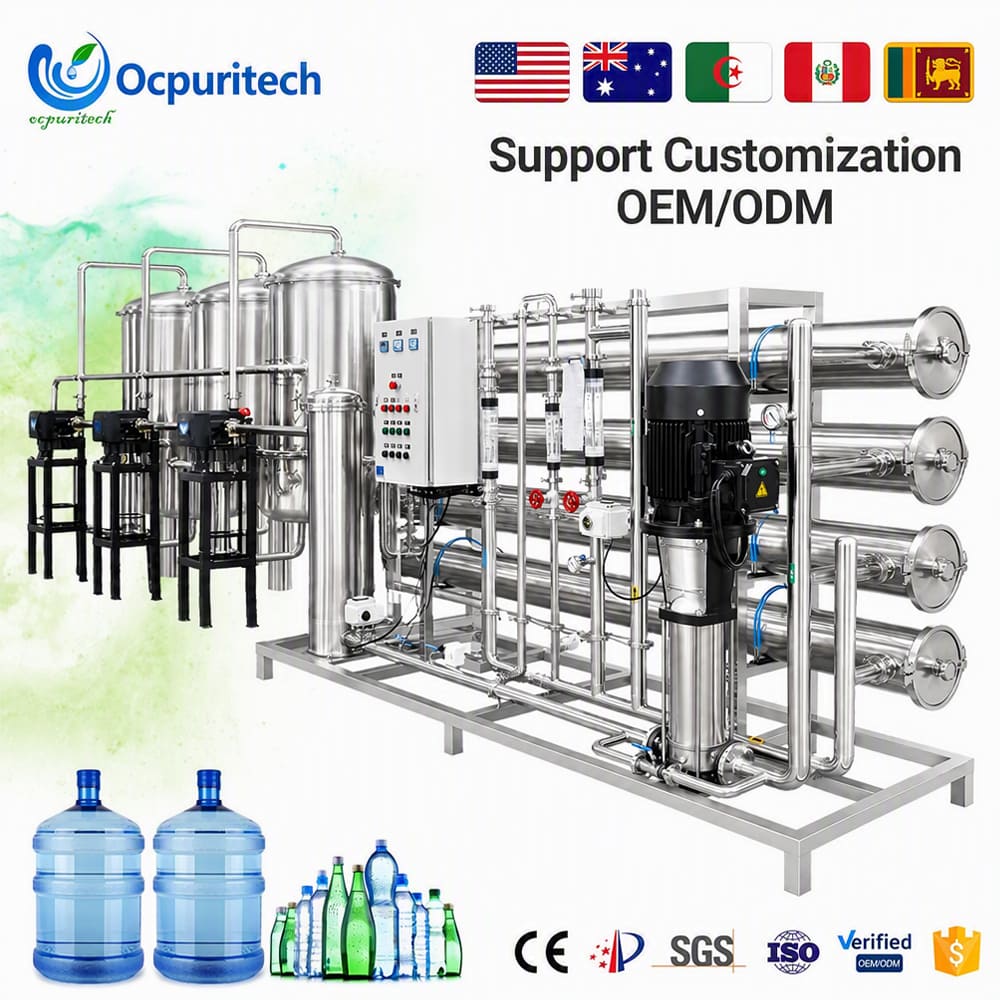
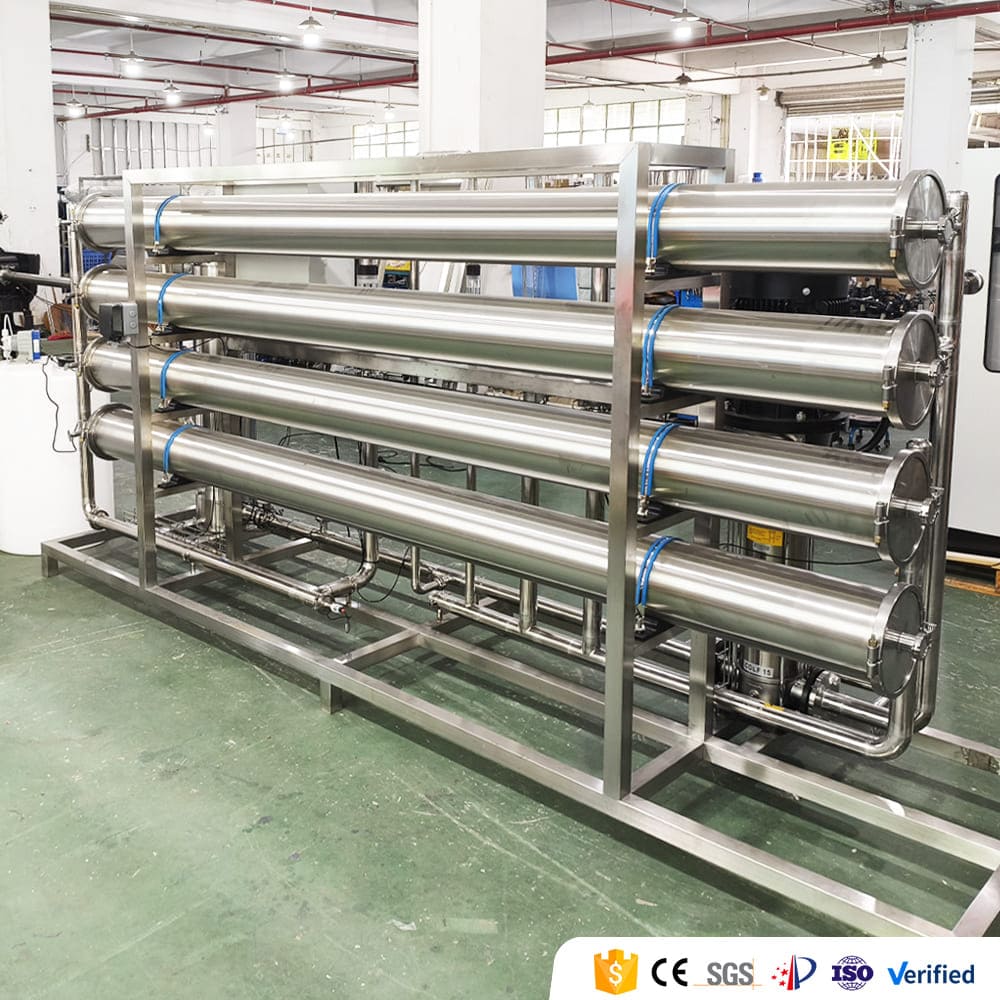
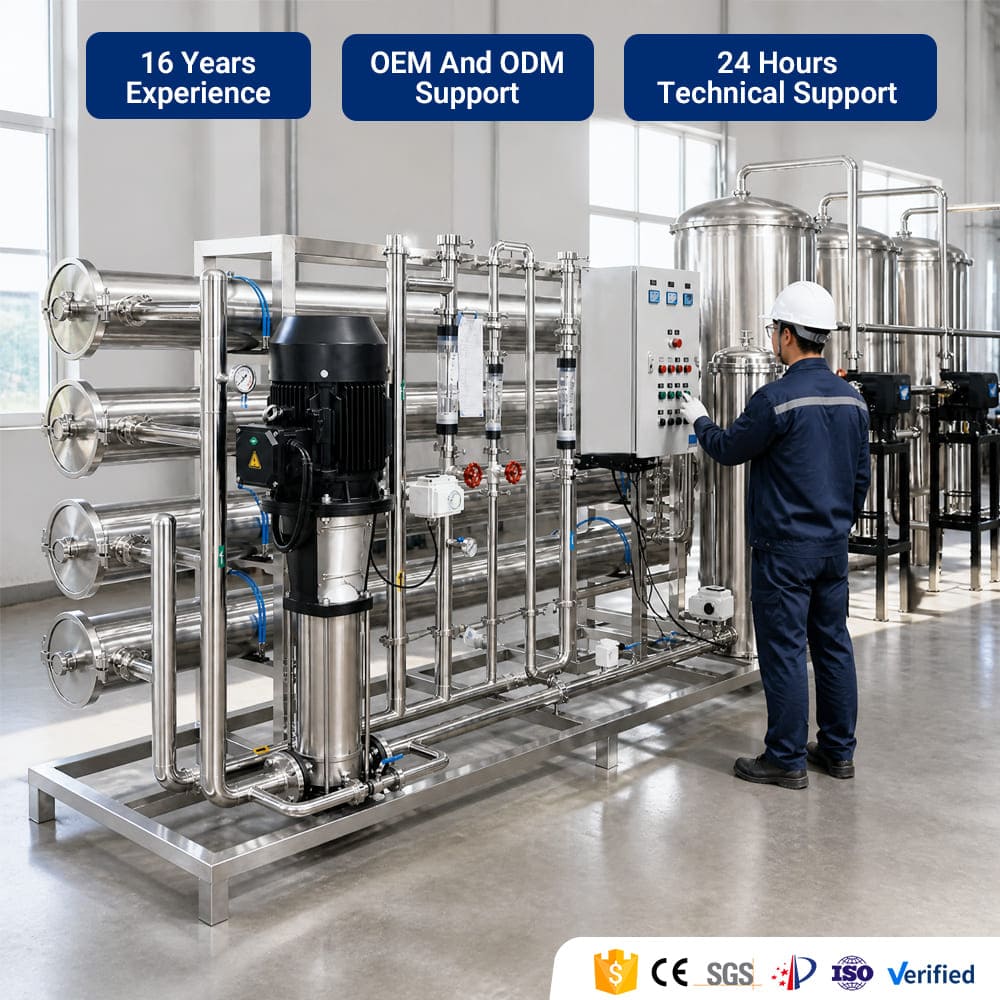
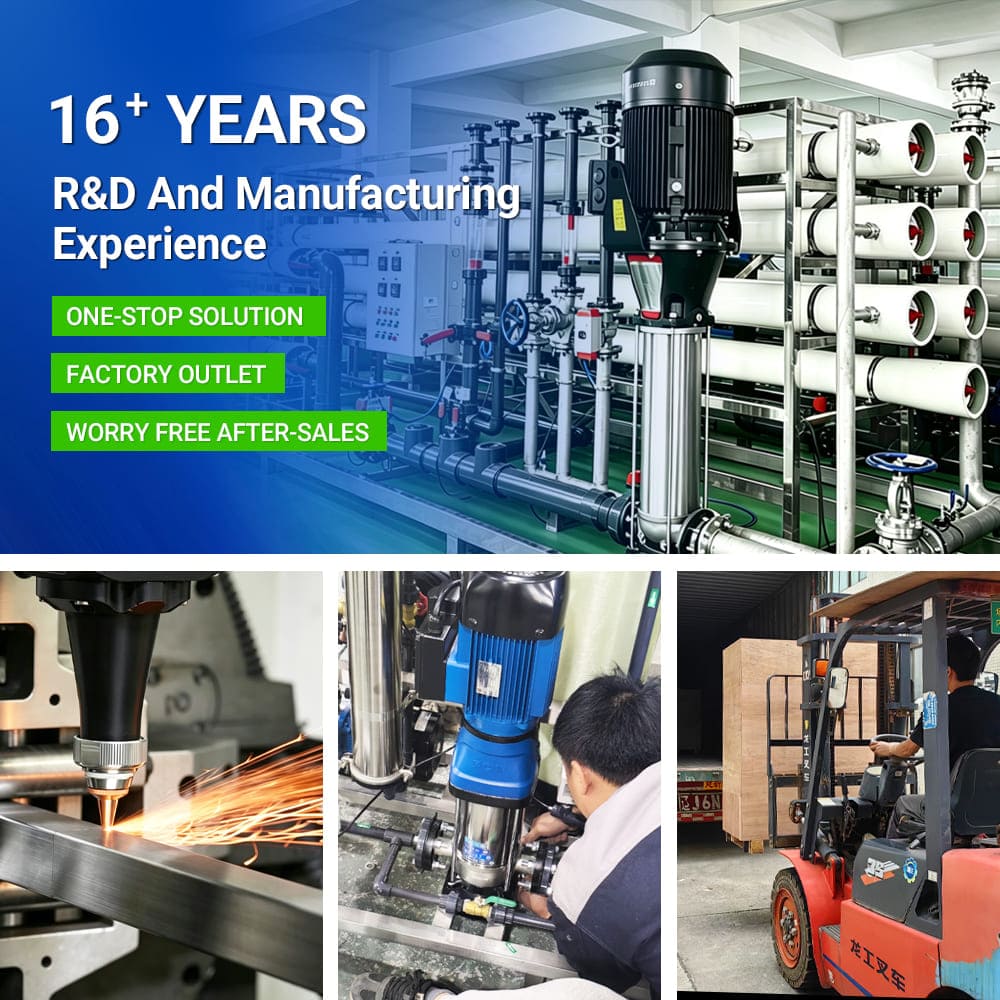
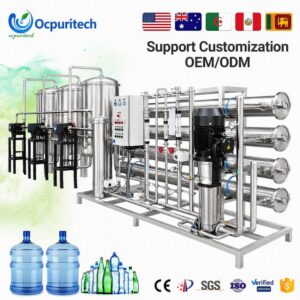
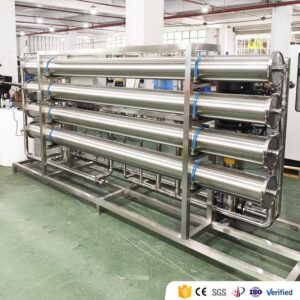
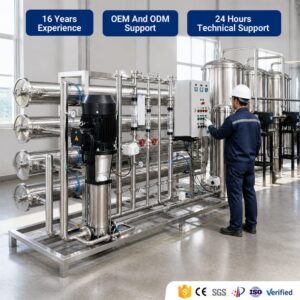
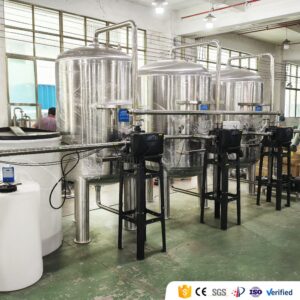
On the performance side, this RO water treatment plant takes feed water with TDS up to 30,000 ppm and delivers product water below 500 ppm, with a guaranteed salt rejection rate of 98% or higher. Equally important, the 50–60% recovery rate means every cubic meter of raw water is used efficiently — a direct saving on your source water and wastewater bill, year after year.
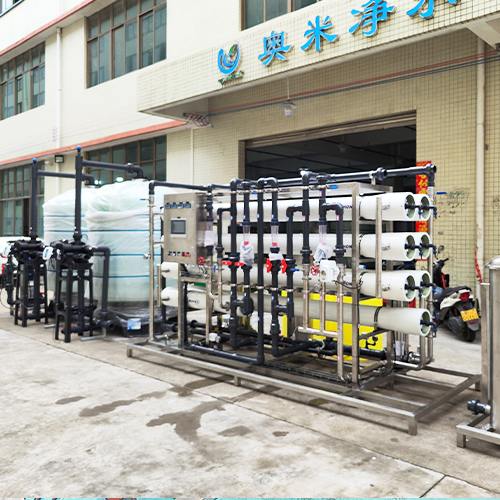
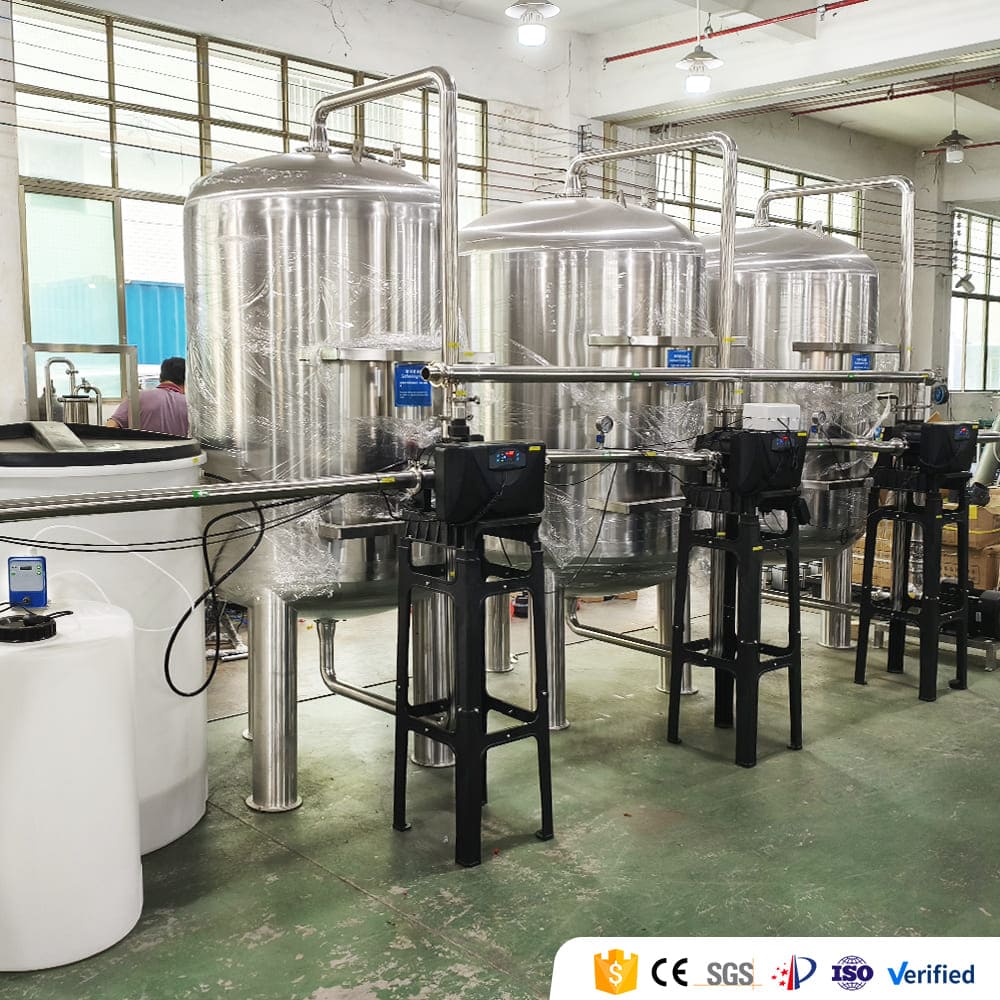
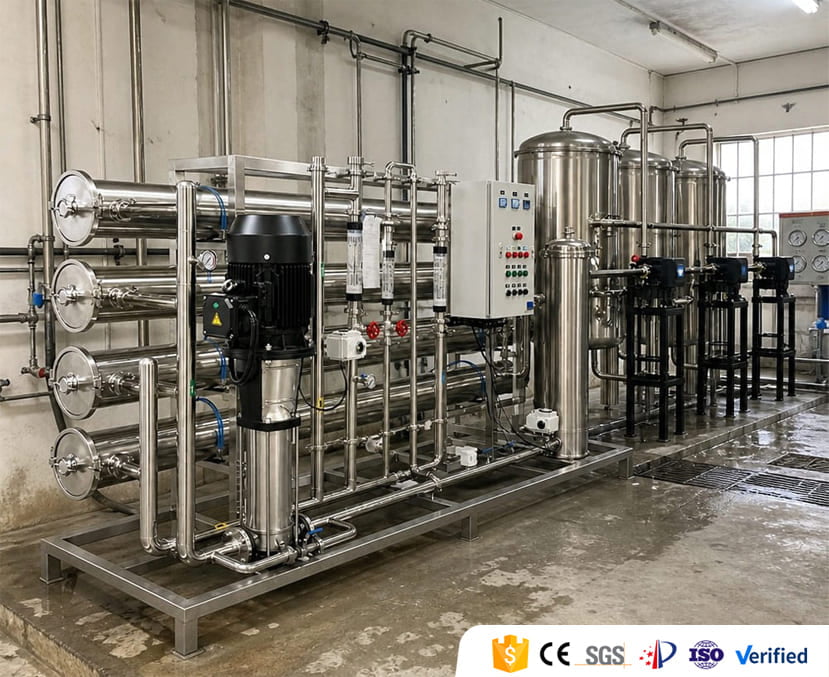
Beyond the numbers, the build quality is engineered to last. Constructed entirely with SUS304 stainless steel and PLC + touch screen control, the system is corrosion-resistant, fully automated, and simple to operate. In addition. In addition, a complete pretreatment train of quartz sand, activated carbon and water softening protects the membrane elements before they even see the feed stream, while automatic flushing keeps the membrane surface clean between production cycles.
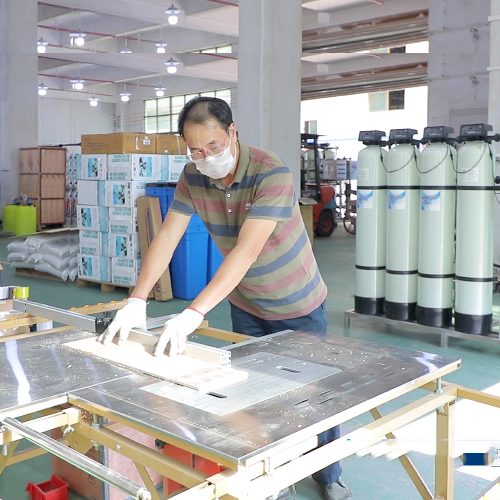
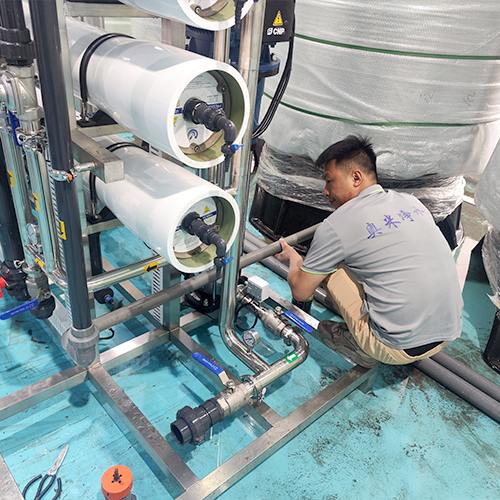
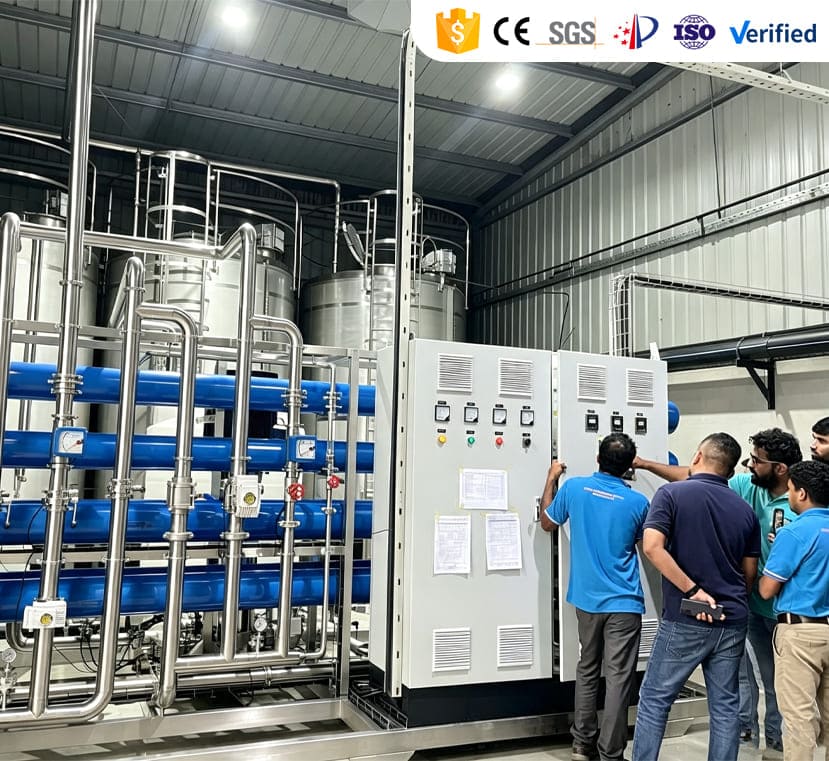
To back up these claims, every reverse osmosis water treatment equipments passes a 48-hour high-pressure performance test before shipping, and is backed by CE certification and NSF-standard components. As a result, it arrives fast, installs quickly, and our OEM/ODM engineering team supports it for the life of the plant through remote video guidance. Whether you are expanding a bottling line or building a new RO water treatment plant from scratch, this stainless steel reverse osmosis system is the reliable core your project needs.
Key Specifications
The tables below detail the key specifications of this RO water treatment plant, grouped for quick reference.
| Parameter | Specification |
|---|---|
| Production Capacity | 12,000 L/H (12 TPH) |
| Feed Water TDS | ≤ 30,000 ppm |
| Product Water TDS | < 500 ppm |
| Frame & Structure | SUS304 stainless steel |
| Pressure Vessels | SUS304 stainless steel, industrial‑grade |
| Pretreatment Train | Quartz sand filter, activated carbon filter, water softener |
| Piping | Food‑grade, corrosion‑resistant |
| Option | Description |
|---|---|
| Containerized Design | 40ft / 20ft container‑mounted plant |
| Higher Recovery | Concentrate recycle loop (energy recovery) available on request |
| Post‑Treatment | UV sterilizer, ozone generator, remineralization |
| Remote Monitoring | Optional IoT / remote data access |
How This RO Water Treatment Plant Works
Step 1 – Pretreatment. Raw water first passes through the quartz sand filter to remove suspended solids, then the activated carbon filter to eliminate residual chlorine and organic matter, and finally the water softener to reduce hardness. This protects the RO membranes from scaling and fouling — the single most important factor for membrane lifespan.
Step 2 – High-Pressure RO Separation. A high-pressure pump drives the pretreated water across the semi-permeable RO membranes. Water molecules pass through the membrane as product water (permeate), while dissolved salts and impurities leave as concentrated brine.
Step 3 – Automatic Flushing & Monitoring. Meanwhile, the PLC continuously monitors pressure, flow and conductivity, and triggers automatic membrane flushing to keep the system running at peak efficiency between production batches.
Worked Example 1 — Salt Rejection Calculation
For example, let us walk a typical feed water with 20,000 ppm TDS (well within the 30,000 ppm design limit):
- ■ Feed water TDS: 20,000 ppm
- ■ Guaranteed salt rejection: 98%
- ■ Product water TDS = 20,000 × (1 − 0.98) = 400 ppm
Therefore, 400 ppm < 500 ppm — comfortably within the product water specification. For feed water approaching the 30,000 ppm ceiling, the system can be configured with high‑rejection membrane elements or a two‑pass RO layout to hold the same < 500 ppm guarantee.
Worked Example 2 — Recovery & Flow Balance
At the typical 55% recovery rate for 12,000 L/H production:
- ■ Product water: 12,000 L/H
- ■ Feed water required: 12,000 ÷ 0.55 = 21,818 L/H
- ■ Brine discharged: 21,818 − 12,000 = 9,818 L/H
The recovery rate is adjustable within the 50–60% range to match your source water cost and discharge permit conditions.
TCO Analysis — What This RO Water Treatment Plant Really Costs You
For a B2B buyer, the purchase price is only the beginning. Here is how this RO water treatment plant lowers total cost of ownership:
1. Water efficiency saves source water & discharge fees. Running at 55% recovery instead of 50% cuts feed water demand from 24,000 L/H to 21,818 L/H — a saving of 2,182 L/H. At 8,000 operating hours per year, that is approximately 17,456 m³ of water saved annually (example calculation; actual figures depend on your operating schedule). On both your water bill and your wastewater treatment cost, this is a recurring saving that compounds every year of the plant’s life.
2. Pretreatment + automatic flushing extend membrane life. The three-stage pretreatment (quartz sand → activated carbon → softening) removes the fouling and scaling agents that kill membrane elements prematurely, while automatic flushing prevents concentration polarization between cycles. Longer membrane element intervals mean fewer membrane purchases and less labor — the two largest recurring costs after electricity.
3. 48-hour factory testing eliminates commissioning surprises. Every unit is pressure-tested at high pressure for 48 hours before shipping. What this means on your side: fewer field failures, faster startup, and less production loss during commissioning — the hidden cost that never appears on the invoice but always hits the P&L.
4. Built-in quality protects your product. CE certification and NSF-standard components mean the plant meets the compliance requirements of bottled water and food & beverage customers — protecting your market access as much as your water quality.
Product Applications
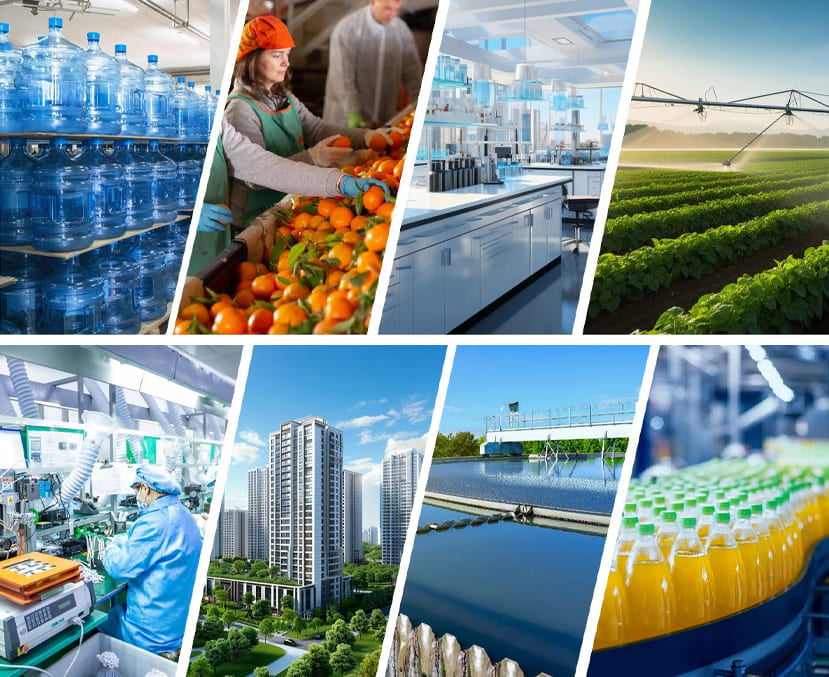
This 12,000 LPH industrial RO water treatment plant is deployed across:
- ■ Bottled water & drinking water plants — stable permeate below 500 ppm TDS for filling lines
- ■ Food & beverage production — process water, ingredient water and wash‑down water
- ■ Hotels, restaurants & catering — high‑volume kitchen and drinking water supply
- ■ Schools & hospitals — safe direct‑drinking water for large populations
- ■ Agriculture & aquaculture — irrigation water and aquaculture make‑up water
- ■ Chemical, cosmetic, power plant & electronics industries — process water with consistent quality
Wherever your project is, a customized RO water treatment plant can be configured around your feed water analysis and target water quality.
Why Choose Ocpuritech for Your RO Water Treatment Plant
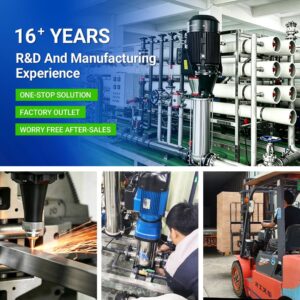
- ■ 16 years of RO plant manufacturing experience — a water treatment plant manufacturer, not a trading company. We have completed 1,000+ projects in 80+ countries.
- ■ CE certified, NSF-standard components — compliance built in, from the first drawing to final testing.
- ■ 48-hour high-pressure performance test on every unit — no unit leaves our factory without proof it can run.
- ■ SUS304 stainless steel construction — corrosion resistance for harsh feed water and long service life in demanding environments.
- ■ Genuine customization (OEM/ODM) — capacity, pretreatment, control and footprint configured around your site and water source.
- ■ Fast delivery, simple installation—skid-mounted design with quick-connect piping minimizes on-site work.
- ■ Lifetime remote video technical support — our engineers guide your team through installation, commissioning, and troubleshooting — free, for the life of the equipment.
FAQ About This 12,000 LPH RO Plant
Q1: What feed water quality does the HRO-12T-A3 accept? The HRO-12T-A3 RO water treatment plant accepts raw water with TDS up to 30,000 ppm, producing product water below 500 ppm with ≥98% salt rejection. For difficult water sources, we adjust the pretreatment and membrane configuration based on your water analysis.
Q2: What is the delivery time? We maintain fast delivery on our standard configurations. The exact lead time depends on your reverse osmosis machine configuration and destination — contact us with your project details and we will confirm a schedule.
Q3: How is installation handled? The system arrives pre-assembled on a skid with quick-connect piping. Your local technicians install it with our remote video guidance, which typically means minimal on-site engineering and a fast startup.
Q4: How often do the membranes need maintenance? Thanks to the three-stage pretreatment and automatic flushing, membrane cleaning intervals are extended compared with systems without proper protection. Replacement frequency depends on raw water quality and operating hours — our engineers provide a maintenance schedule with your quotation.
Q5: Can you customize the system for my project? Yes. We offer full OEM/ODM services: capacity, pretreatment, post-treatment (UV, ozone, remineralization), containerized layouts, and power supply options are all configurable around your feed water analysis and target water quality.
Q6: What after-sales support do you provide? Every customer receives lifetime remote video technical support from our engineers, plus system documentation and guidance on spare parts. We also support annual maintenance programs for larger projects.
Request a Customized RO Water Treatment Plant
Tell us your raw water quality and target output — we will send you a technical proposal with a full calculation chain, including recovery rate, membrane configuration and estimated operating cost.
- WhatsApp: +86 13751887537
- Email: [email protected]
- Website: www.aomiwater.com
Every inquiry is answered by an engineer, not a sales script — within 24 hours.