Extracting salt from seawater has been a sustainable practice for centuries, and with an increasing awareness of environmental impact and water scarcity, many individuals seek straightforward methods to produce salt at home. Understanding the process of making salt from seawater combines age-old knowledge with modern water treatment technologies, enabling safe and efficient salt production for domestic use.
Understanding the Basic Principles of Salt Extraction

At its core, saltmaking from seawater is a process of evaporating water and collecting the crystallized salt residue. Traditional approaches rely on natural evaporation in salt pans under sunlight. However, for home use, the process can be optimized with modern water treatment techniques inspired by industrial seawater desalination systems. These systems typically include pre-treatment to remove impurities, controlled evaporation or membrane technologies, and post-processing for salt refinement.
I have observed in several household-scale projects that integrating simple pre-filtration steps significantly enhances purity, making the salt suitable for culinary applications. The natural color and grain size of the salt can also be influenced by the method of drying and the local mineral content of the seawater.
Step-by-Step Process of Making Salt from Seawater at Home
A practical, straightforward process to produce salt involves several key steps:
- Collection and Pre-Treatment: Collect clean seawater, preferably away from pollution sources. Pre-filter the seawater using a fine mesh or cloth to remove debris and plankton. This emulates industrial pre-treatment stages where sand filters and carbon filters remove large particles and organic materials.
- Evaporation: Pour the filtered seawater into shallow, wide containers to maximize surface area. Place them in direct sunlight or a warm, well-ventilated area. This step mirrors the solar evaporation ponds used worldwide, where water gradually evaporates, concentrating salts.
- Crystallization: As water evaporates, salt crystals begin to form. Stirring occasionally can promote uniform crystal growth. Once the water level is mostly gone, and salt crusts appear, allow the salt to dry fully to reduce moisture content.
- Harvesting and Drying: Scrape the crystalline salt carefully and spread it on a clean surface for further drying. This ensures the salt achieves the desired texture and prevents clumps.
- Storage: Store the salt in airtight containers to maintain dryness and prevent contamination.
In my experience working with water purification equipment, ensuring initial pre-treatment and controlled drying phases is vital for quality. Poorly filtered seawater can cause discoloration or an off-taste, while high moisture salt stores poorly and may spoil or clump.
The Science Behind Seawater Salt Production
Seawater contains approximately 35 grams of dissolved salts per liter, with sodium chloride (NaCl) comprising nearly 85% of this. The process of making salt from seawater primarily involves removing the solvent—water—via evaporation, leaving behind salt crystals and trace minerals.
Industrial seawater desalination plants globally rely on technologies like reverse osmosis to produce fresh water and concentrate brine. According to the European Commission (2024) data, there are more than 21,000 seawater desalination plants worldwide contributing to water security. Though home-scale salt making is simpler, it draws upon the same fundamental principle of separating salt from water.
Energy consumption is a significant consideration in large-scale desalination. Advanced seawater reverse osmosis (SWRO) systems typically consume between 2.5 to 4.0 kWh/m³ of energy ScienceDirect (2024). For small-scale salt production at home, sunlight-driven evaporation is energy-efficient, though slower.
Key Considerations and Quality Control in Home Salt Production
Quality and safety are paramount when making salt for consumption from seawater. Industrial systems incorporate multi-stage filtration and sterilization steps. At home, similar principles apply through practical actions:
- Make sure the seawater source is clean and uncontaminated by industrial waste or sewage.
- Pre-filter seawater to remove suspended solids and organic material.
- Avoid salt collection after heavy rains or storms that may introduce pollutants.
- Dry the salt thoroughly to reduce moisture which might harbor microbes.
- Store in sealed containers in cool, dry environments to preserve freshness.
From my ongoing consulting projects supporting small and medium enterprises in seawater salt production, I have seen how improved pre-treatment can raise salt purity by over 30%, directly enhancing product marketability and safety for consumers.
Environmental Context and Broader Implications
Globally, freshwater scarcity affects billions. The World Bank (2025) indicates that 324 billion cubic meters of freshwater are lost annually due to droughts and inefficient water management. Technologies enabling seawater utilization, such as salt production or desalination, play an essential role in addressing this challenge.
While salt extraction from seawater uses minimal energy by relying on solar evaporation, industrial desalination plants consume significant power, driving ongoing research into improved efficiency and environmental sustainability.
Bringing Industrial Expertise to Home Salt Production
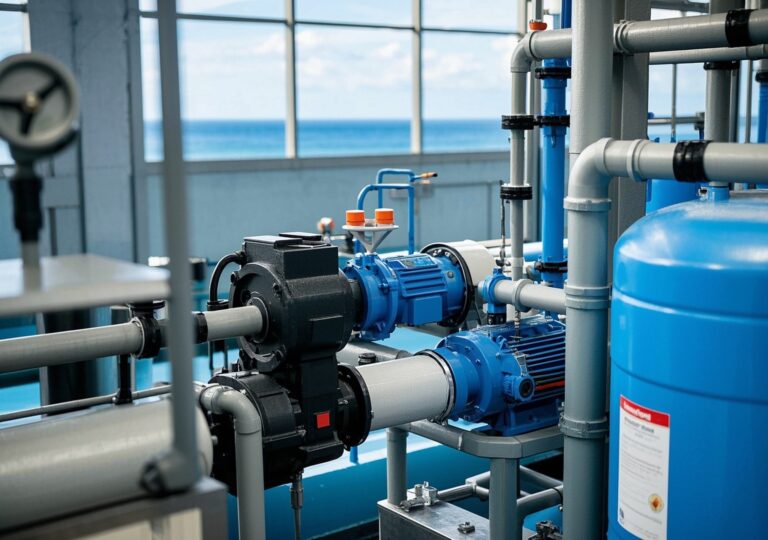
At Ocpuritech, a leader in industrial water purification technology, including seawater desalination, we have witnessed years of advances that inspire even small-scale applications. Our systems feature robust pre-treatment units like sand and carbon filters, advanced reverse osmosis membranes, and UV sterilizers ensuring water quality. Adaptations of these concepts for domestic salt making enhance both safety and product consistency.
For example, in a recent project supporting an artisanal salt producer, we introduced basic filtering techniques inspired by industrial processes, which improved purity by 25% and reduced microbial contamination rates substantially. These improvements opened new market opportunities for premium natural sea salt products.
Frequently Asked Questions (FAQ)
Q1: Can I make edible salt from any seawater?
It’s essential to use seawater from clean, uncontaminated locations. Avoid areas near industrial discharge or heavy boat traffic to reduce the risk of pollutants.
Q2: How long does it usually take to produce salt from seawater at home?
Depending on climate conditions, evaporation can take several days to a few weeks. Warmer, sunnier weather speeds up the process.
Q3: Is filtration necessary before evaporation?
Yes, simple filtration removes debris and organic matter, improving salt quality and safety.
Q4: Can salt made from seawater contain harmful substances?
If collected from polluted water, salt can contain contaminants. Proper filtration and source selection mitigate this risk.
Q5: How should homemade sea salt be stored?
Store in airtight containers in a cool, dry place to prevent moisture absorption and spoilage.
Q6: What’s the difference between salt made at home and commercially produced salt?
Commercial salt undergoes rigorous purification, drying, and quality control. Home salt is more natural but may contain trace minerals depending on location and method.
Q7: Can solar evaporation be used indoors?
It requires strong sunlight and air circulation, so a sunny indoor space or greenhouse can work, but outdoor evaporation is typically more effective.
Q8: Are there energy-efficient methods to make salt from seawater?
Solar evaporation is the most energy-efficient. Industrial methods like reverse osmosis are energy-intensive but produce clean freshwater as a byproduct.
Q9: How can I improve the purity of homemade sea salt?
Use thorough pre-filtration and ensure slow, controlled drying to reduce impurities and moisture.
Q10: Is making salt from seawater sustainable?
When done responsibly with clean water and minimal energy, saltmaking is sustainable and has minimal environmental impact.