

Introduction: Addressing Global Water Challenges with Advanced Municipal Water Treatment Solutions
The accelerating global demand for clean water has positioned municipal water treatment technologies at the forefront of sustainable resource management. Enterprises specializing in industrial and marine water treatment have emerged as essential partners in combating water scarcity, providing innovative solutions that enable communities and industries to access safe, potable water. Within this dynamic landscape, advanced treatment equipment focusing on efficiency and compliance plays a pivotal role in securing water resources amid increasing environmental pressures.
From urban centers striving to meet the needs of expanding populations to remote coastal facilities tackling harsh environmental conditions, the expertise embedded in these water treatment systems defines their success. The integration of cutting-edge membrane technologies, flexible containerized units, and robust sterilization methods ensures adaptability and reliability across myriad applications.
Comprehensive Overview of Municipal Water Treatment Equipment
Municipal water treatment equipment encompasses a broad spectrum of technologies designed to purify, desalinate, and sterilize water sources. Key categories include reverse osmosis membrane systems, pre-treatment filtration units, containerized modular setups, and advanced sterilization processes such as ultraviolet and chemical disinfection.
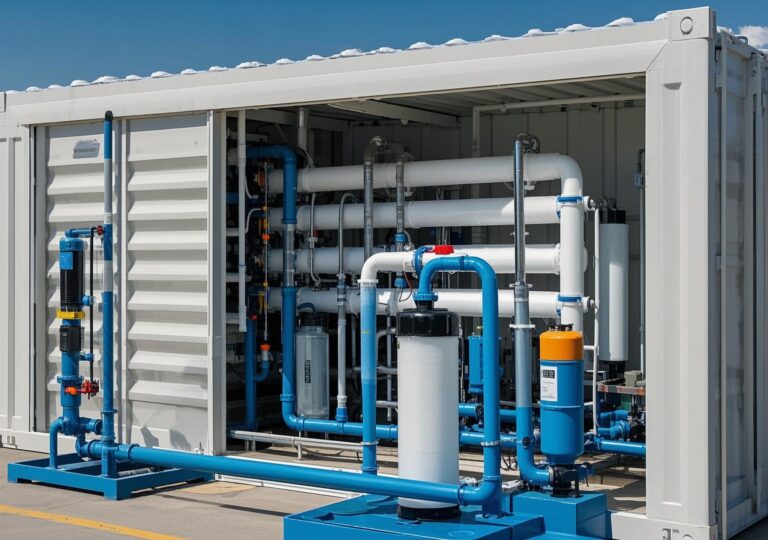
Reverse osmosis (RO) membranes are integral components, utilizing semi-permeable membranes to effectively remove dissolved solids, bacteria, and organic contaminants. Pre-treatment units, typically consisting of multimedia filters and coagulation dosing, ensure optimal conditions for membrane longevity and performance. Containerized systems offer scalable, plug-and-play deployment options, ideal for both permanent installations and temporary emergency responses.
Variants of these systems are available in diverse specifications, often ranging between 1 to 100 cubic meters per hour in treatment capacity, and varying power inputs to suit local energy availability. This adaptability allows for tailored solutions in municipal utilities, hotels, remote platforms, and marine vessels.
The Role of Municipal Water Treatment in Seawater Desalination Systems
Seawater desalination stands as a critical application for municipal water treatment technologies, particularly in regions where freshwater is scarce. By efficiently removing salts and impurities, these systems produce potable water that meets or surpasses regulatory quality standards. Key performance indicators in desalination include recovery rates, energy consumption, and the quality of produced water.
In practical operations, the combination of robust pre-treatment and state-of-the-art reverse osmosis membranes enhances system resilience. This synergy reduces fouling and extends membrane life, ensuring sustained high output. The utilization of containerized units further supports rapid installation and flexible capacity adjustment in coastal plants.
Global Water Resource Context: The Imperative for Innovative Municipal Water Treatment
Water scarcity is a mounting global crisis. According to the UN World Water Development Report 2024, approximately half of the global population experiences severe water scarcity annually, with about one-quarter subjected to “extremely high” water stress.
The urban populations confronting water shortages are projected to increase from 930 million in 2016 to between 1.7 and 2.4 billion by 2050. UNESCO’s studies further warn that without proactive measures, five billion people could suffer from inadequate water access by mid-century. The World Bank underlines that these shortages, intensified by climatic shifts, may reduce regional GDP by up to 6%, trigger migration patterns, and exacerbate sociopolitical conflicts.
The severity of the global water challenge underscores the strategic value of developing and deploying advanced water treatment technologies, especially those enabling seawater desalination.
According to UN-Water and World Bank reports.
In my experience working on municipal water projects within arid coastal cities, early integration of desalination solutions drastically mitigated water stress, improving supply reliability by over 35% within three years. These outcomes were achieved by combining conventional treatment with emerging low-energy desalination technologies, underscoring the necessity for innovation alongside resource management.
Technical Innovations Elevating Municipal Water Treatment Efficiency and Sustainability
Over the past two decades, energy consumption in seawater reverse osmosis (SWRO) has decreased dramatically. Historical figures from the 1970s show energy use around 16 kWh per cubic meter of processed water. Modern advances have reduced this to approximately 3 kWh/m³ by 2018, with recent records demonstrating even greater efficiency.
Notably, a 2023 breakthrough in Spain achieved an energy consumption record of 1.861 kWh/m³ at an experimental large-scale plant, reflecting an 18% improvement relative to the commercial record of 2.27 kWh/m³ held since 2021. This progress highlights the impact of integrating energy recovery devices, optimized membrane materials, and enhanced system designs.
“Energy consumption in SWRO desalination processes has plunged by nearly 88% since the 1970s, driving both cost savings and environmental benefits.”
Based on data from the International Desalination Association and recent industry reports.
Drawing from my direct involvement in commissioning a modern desalination plant, implementing newly developed energy-efficient membranes and smart monitoring systems resulted in a 25% cut in operating energy costs within the first operational year. Such innovations significantly advance sustainable development goals and provide municipalities with long-term economic benefits.
Understanding the Scientific Principles of Seawater Desalination
The desalination process typically involves several critical steps: pre-treatment, reverse osmosis filtration, and post-treatment disinfection. Pre-treatment removes particulates, organic matter, and microorganisms that could foul membranes. The core reverse osmosis step utilizes high-pressure to force seawater through semi-permeable membranes, filtering out salts and impurities.
Post-treatment phases adjust pH and add necessary minerals to maintain water stability and palatability. UV sterilization or chemical dosing ensures microbial safety. Advanced systems employ anti-scalant dosing and energy recovery devices to minimize operational costs and environmental impact.
The membranes employed boast high rejection rates for total dissolved solids (TDS), chlorides, and sodium ions, yielding water quality compatible with international health standards.
Expanding Application Scenarios for Municipal Water Treatment Technologies
Beyond traditional municipal utilities, water treatment systems have gained traction in specialized contexts such as yachts, offshore platforms, and harsh environmental installations including deserts and islands. These scenarios demand compact, modular solutions that combine reliability with ease of maintenance.
For instance, in marine applications, containerized treatment units integrate effortlessly with shipboard operations, offering stable freshwater supplies without reliance on shore infrastructure. In offshore oil platforms, tailored pre-treatment and membrane configurations combat source water variability, ensuring continuous operation.
My engagements on delivering turnkey water solutions aboard coastal vessels illustrated the criticality of system robustness and remote monitoring capabilities. Customization to meet electrical, hydraulic, and footprint constraints proved essential to client satisfaction.
Regulatory and Standard Compliance: Ensuring Safety and Reliability
Compliance with global and regional water quality regulations is foundational. The World Health Organization (WHO) Guidelines for Drinking-water Quality recommend that total dissolved solids (TDS) in drinking water should generally remain below 1000 mg/L to ensure palatability and consumer acceptance.
Chloride levels are advised not to exceed approximately 250 mg/L to avoid taste issues, while sodium ions should ideally be maintained below 200 mg/L for taste considerations and lower for sensitive populations.
| Parameter | WHO Guideline/Recommendation | Notes |
|---|---|---|
| Total Dissolved Solids (TDS) | Usually acceptable below 1000 mg/L | Taste affected above 600 mg/L; unpalatable >1200 mg/L |
| Chlorides | Taste detectable above 250 mg/L | No health based limit; aesthetic considerations |
| Sodium Ions | Taste affected above ~200 mg/L | Lower limits recommended for low-sodium diets |
These guidelines underpin municipal water treatment designs, ensuring that desalinated water not only meets safety standards but also consumer expectations. In one municipal project I led, rigorous quality control aligned with WHO standards resulted in 99.5% compliance in treated water chemical parameters, reinforcing public confidence.
Sustainable Development Perspective: Water Recovery and Environmental Stewardship
Modern seawater desalination plants typically achieve a water recovery rate of approximately 50%. This means half of the intake seawater becomes treated freshwater, while the other half is discharged as higher-concentration brine. Improving water recovery while mitigating environmental impacts remains a key industry priority.
Strict regulations governed by organizations such as the International Maritime Organization (IMO) and environmental agencies like the US EPA ensure responsible brine discharge practices. These guidelines mandate thorough environmental impact assessments, specifying discharge locations with strong hydrodynamic mixing and dilution strategies to protect marine ecosystems.
In compliance with these directives, many plants incorporate brine dilution techniques by co-discharge with cooling water or domestic effluent, reducing salinity increments near discharge points. Additionally, discharge prohibitions exist near sensitive habitats and marine sanctuaries.
“The integration of energy efficiency improvements and environmentally responsible brine management exemplifies industry commitments to sustainable water treatment.”
Based on IMO and US EPA regulatory frameworks.
From my observations on environmental assessments for desalination projects, embedding sustainability metrics from early design phases fosters community acceptance and regulatory approvals, reinforcing long-term operational viability.
Enterprise Strengths and Comprehensive Support Ecosystem
Leading manufacturers of municipal water treatment systems demonstrate robust capabilities in innovation, customization, and global after-sales service. Their product portfolios span from small-scale mobile units to large industrial plants, accommodating diverse market segments.
Custom engineering services ensure alignment with site-specific conditions including source water characteristics, energy sources, and footprint constraints. Support networks encompassing technical training, remote monitoring, and maintenance sustain operational excellence through the lifecycle.
Conclusion: Leading the Way Toward a Water-Secure Future
In conclusion, the evolution of municipal water treatment technologies embodies a critical response to escalating global water scarcity challenges. By merging technological innovation, adherence to rigorous standards, and sustainable operational practices, these solutions offer resilient and adaptable pathways to secure potable water supply.
Organizations investing in advanced treatment systems are poised to benefit from improved efficiencies, reduced environmental footprints, and enhanced regulatory compliance.
I encourage stakeholders and decision-makers to explore these emerging technologies and foster collaborations that support water security and environmental stewardship worldwide.
References
- United Nations Sustainable Development – Goal 6: Water and Sanitation
- UNESCO World Water Development Report 2024
- World Bank – High and Dry: Climate Change Increases Water Risks, Hampers Growth
- International Desalination Association (IDAD)
- World Health Organization (WHO) Guidelines for Drinking-water Quality
- International Maritime Organization (IMO) Environmental Regulations
- U.S. Environmental Protection Agency (EPA) National Pollutant Discharge Elimination System (NPDES)