Introduction — Why industrial and commercial well water treatment matters
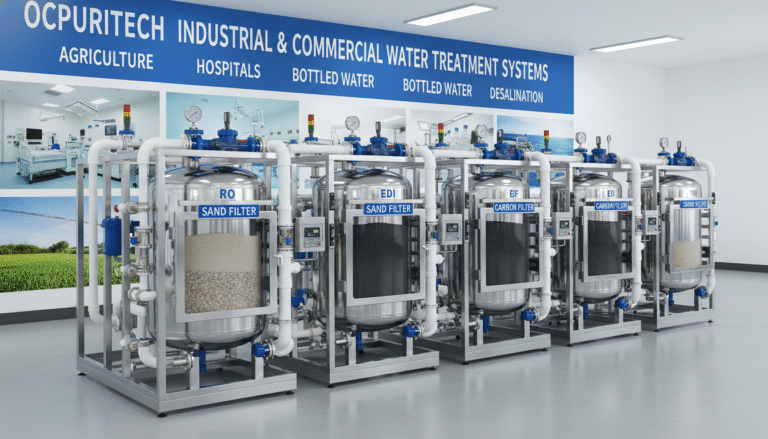
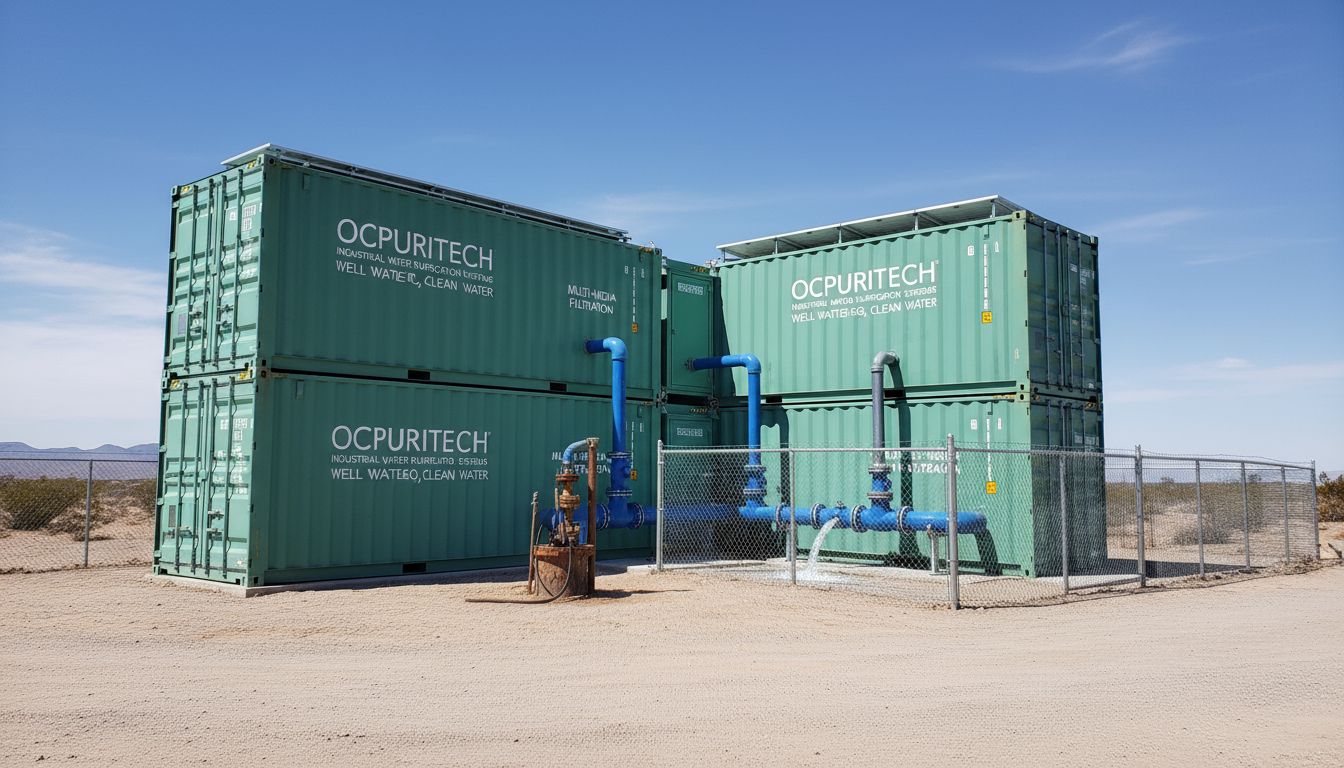
Untreated well water can vary widely in turbidity, mineral load, microbes and dissolved organics. For industrial and commercial operations, inconsistent feedwater means process downtime, product quality loss and compliance risk. This article focuses on pragmatic system choices and multi-scale equipment options for reliable water treatment for well water in industrial settings. I describe core modules (RO, filtration & softening, containerized systems, and disinfection), offer technical ranges and share field cases from projects I’ve led.
TL;DR — Key authority points to keep in mind:
• Turbidity: normally ≤1 NTU (max 5 NTU in special cases).
• TDS: palatability benchmarks: excellent <300 mg/L; acceptable up to 1000 mg/L. (WHO Guidelines for Drinking-water Quality)
• UV disinfection: Class A systems require ≥40 mJ/cm² at 254 nm. (NSF/ANSI 55)
Reverse Osmosis (RO) Membrane Systems — core specs and capacity tiers
RO is the backbone for achieving low TDS and consistent product water in many industrial uses. Typical RO systems for well water are provided across multiple capacity tiers to match demand and pretreatment quality.
- Small commercial: 0.5–5 m³/day (household/office drinking, labs)
- Medium industrial: 5–100 m³/day (food & beverage, small factories)
- Large process: 100–2,000+ m³/day (boiler feed, beverage bottling, cooling towers)
Key technical parameters to specify:
• Recovery rate: 50–85%