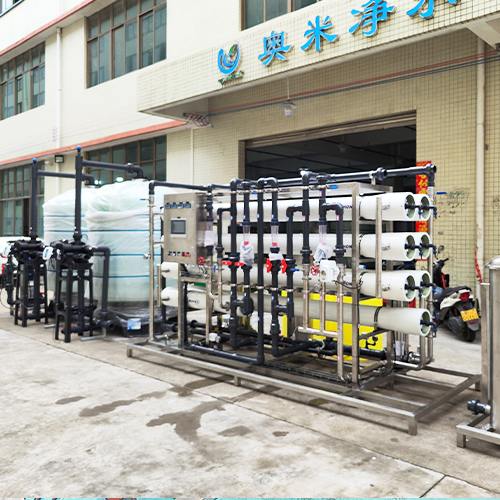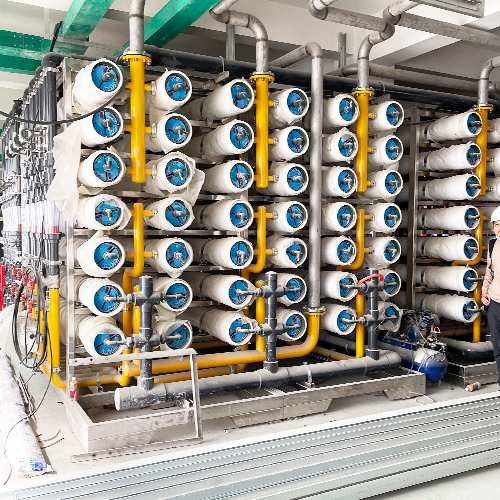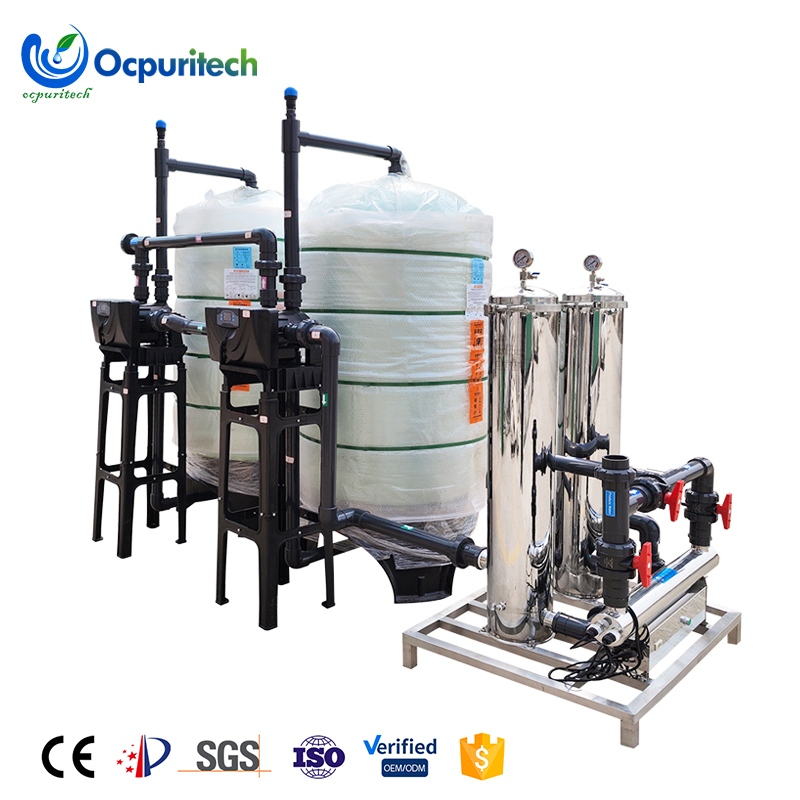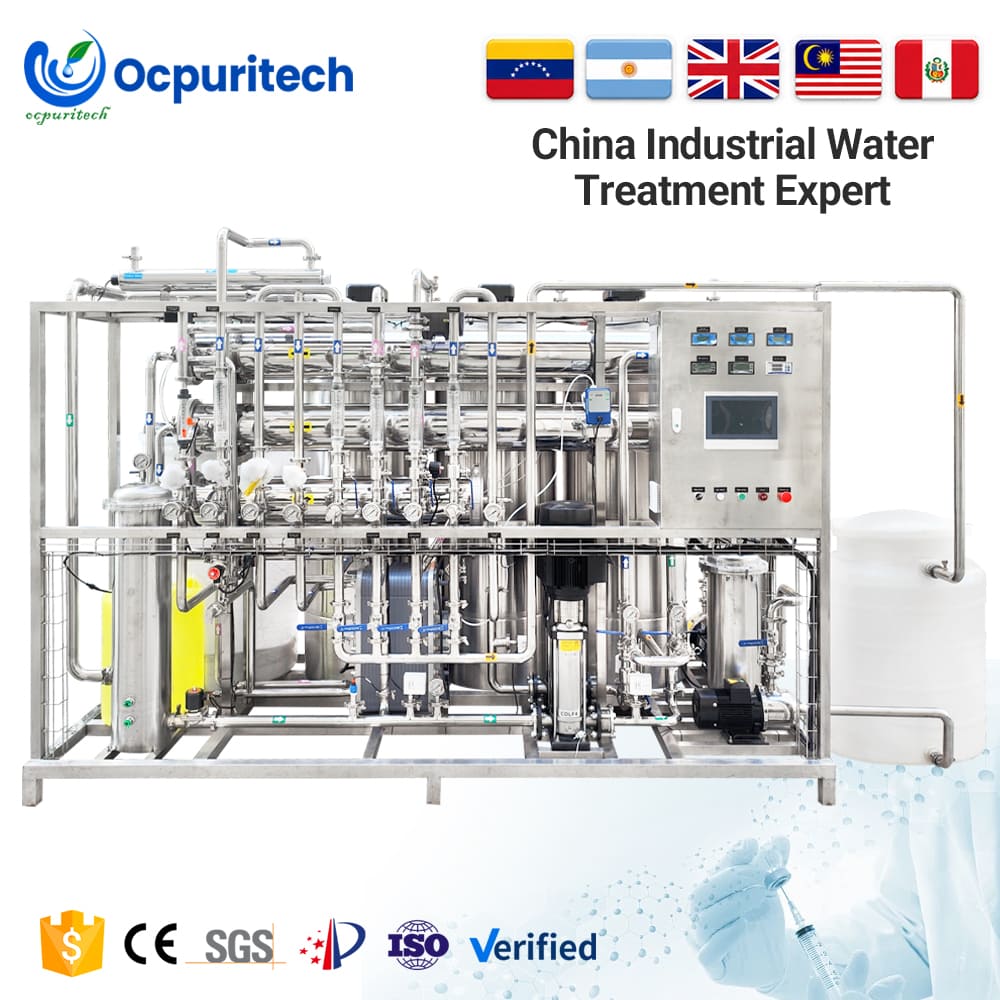
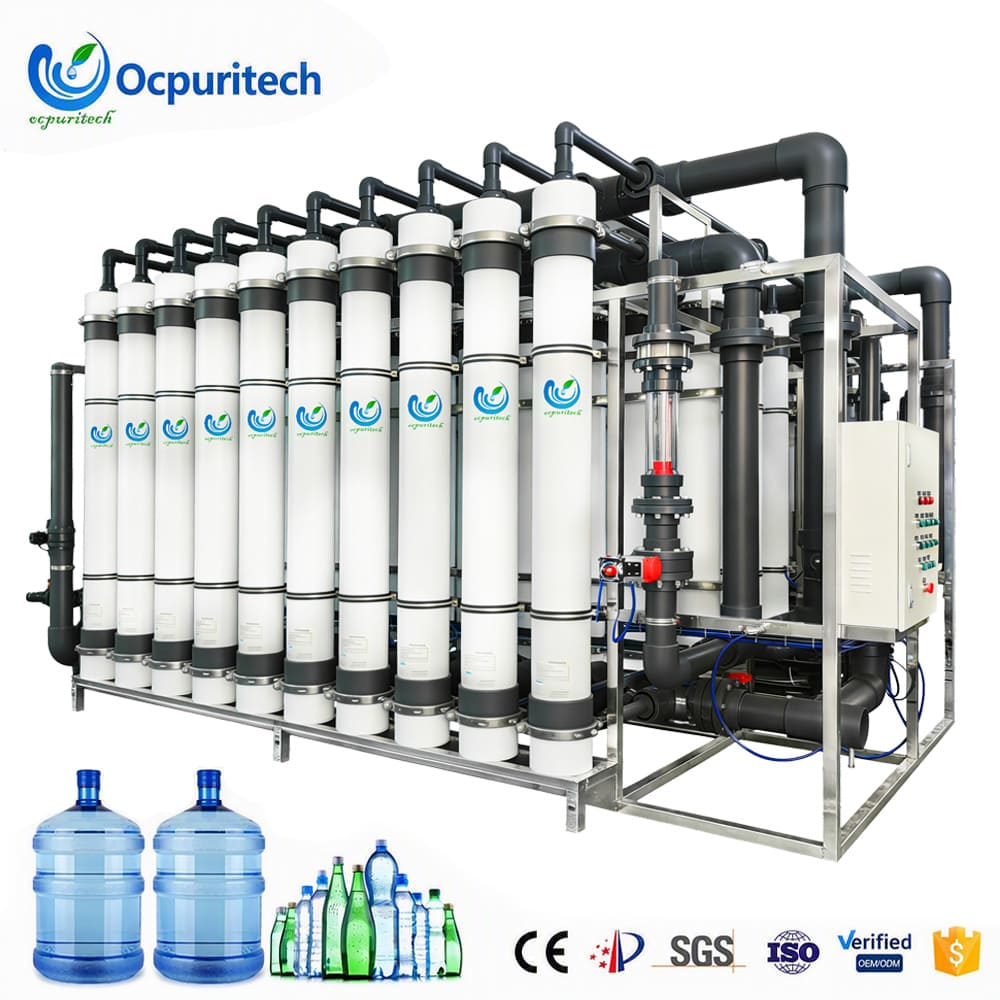
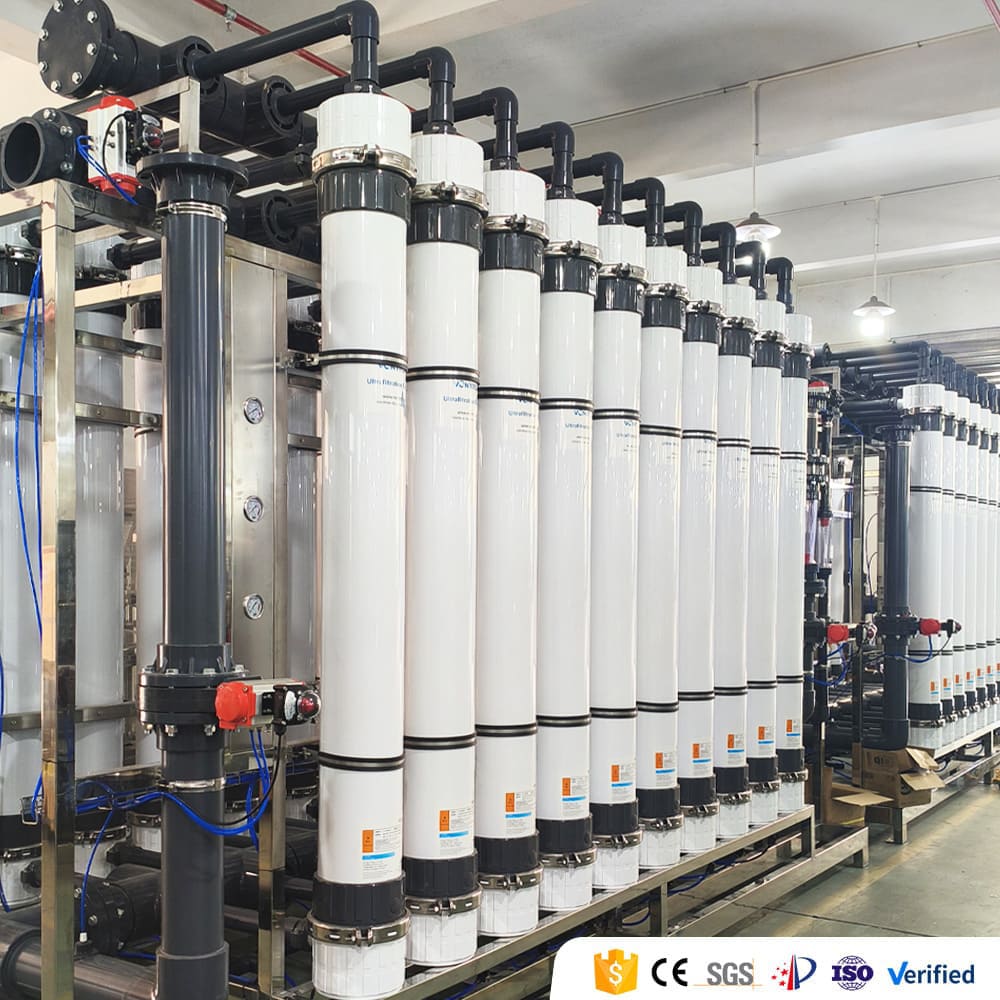
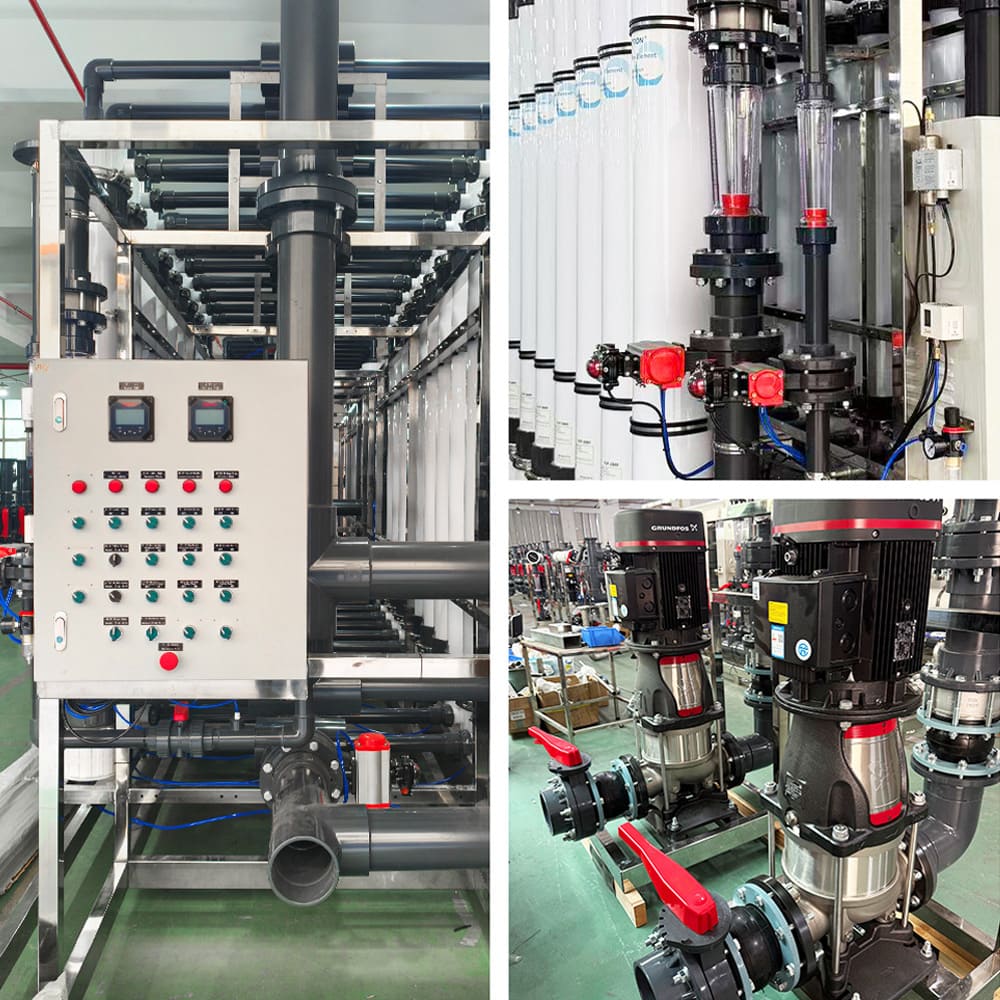
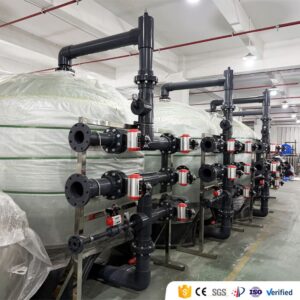
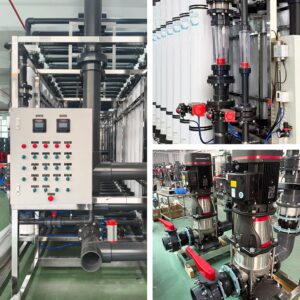
Ocpuritech’s 60T industrial UF water purification system is a high-capacity ultrafiltration solution designed to produce up to 60 T/H (60,000 L/H) of filtered water. It uses hollow-fiber PVDF/PES membranes with a nominal pore size of 0.1 μm to reduce suspended solids, colloids, turbidity, bacteria, algae, and other larger contaminants.
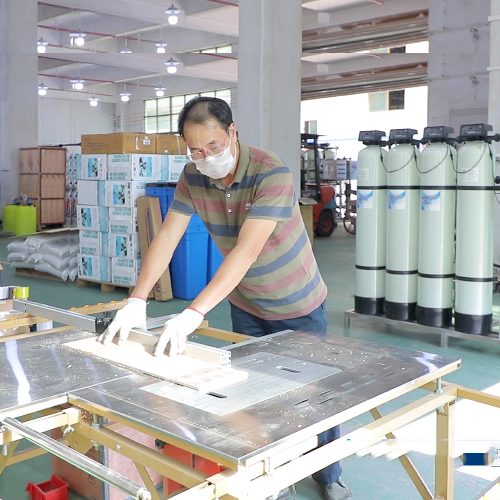
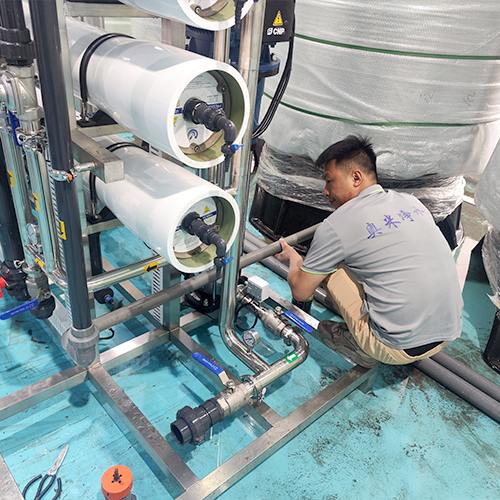
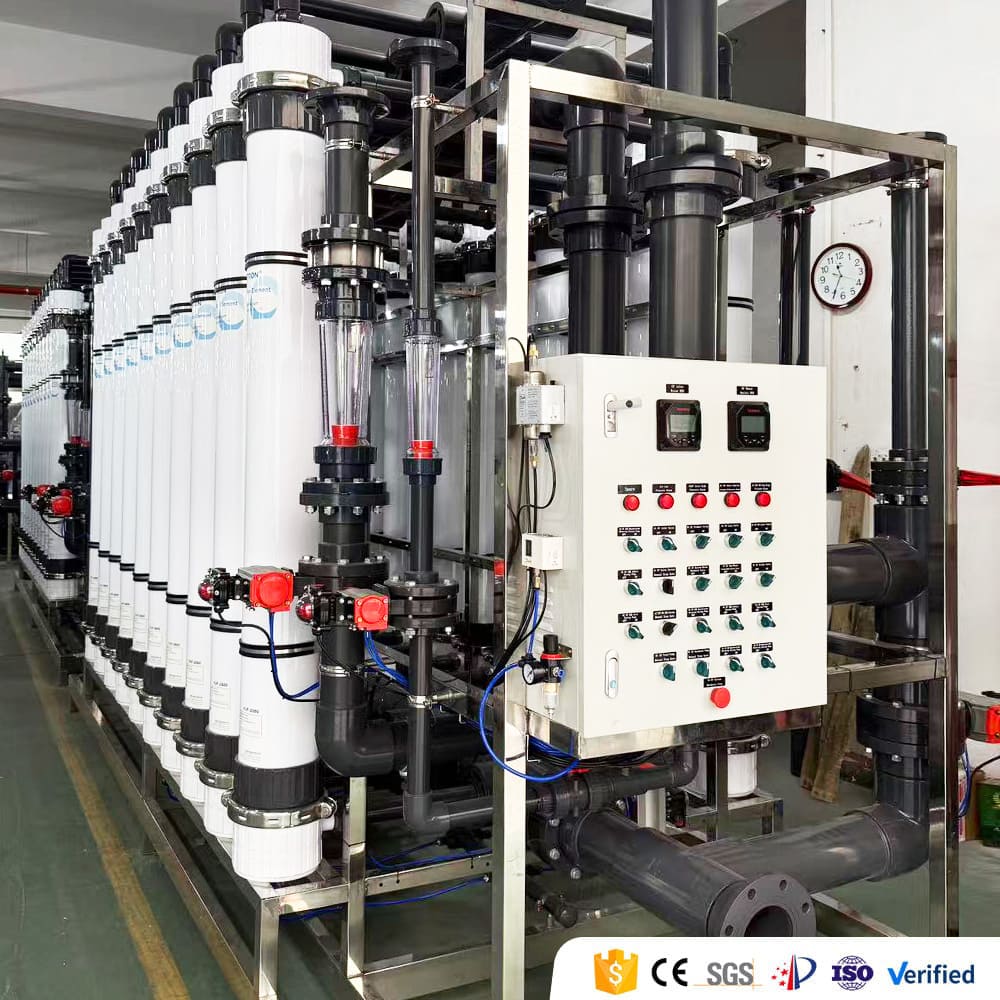
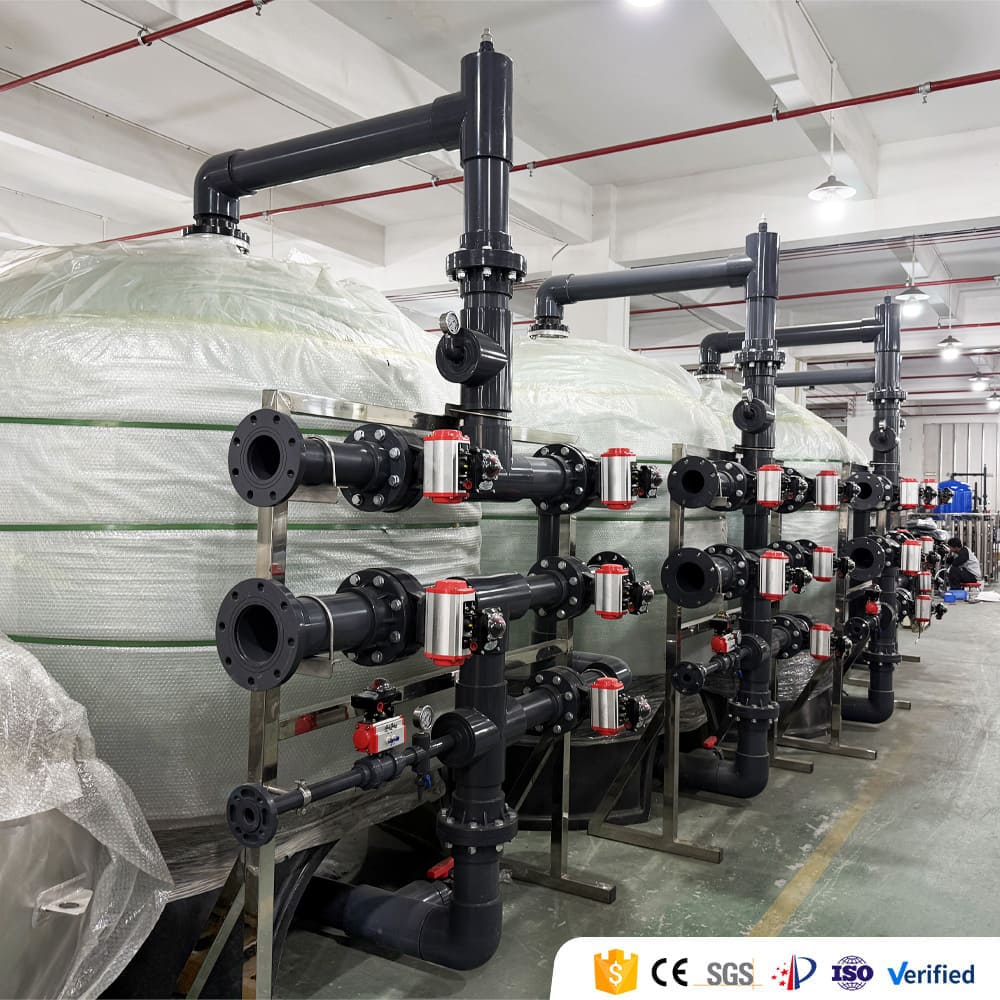
The skid is welded 304 stainless steel with schedule-80 UPVC pipework, sized to fit a standard process bay. Control is handled by a Siemens PLC with HMI touchscreen covering filtration, backwash, and CIP cycles; the panel logs differential pressure and run-hours continuously for maintenance forecasting.
The system is suitable for bottled water production, RO pretreatment, food and beverage process water, cooling tower makeup water, water reuse, and aquaculture applications. Automatic backwashing, PLC control, and skid-mounted construction simplify continuous operation and maintenance.
Documentation for applicable CE, ISO 9001:2015, SGS, and NSF-compliant components is provided as standard, where applicable.
Key Specifications
| Parameter | Value | Parameter | Value |
|---|---|---|---|
| Model | CPUF-60T-A3-B | Water Recovery Rate | ≥ 90% |
| Nominal Capacity | 60 T/H (60,000 L/H) | Permeate SDI | < 3 (suitable for RO pre-treatment) |
| UF Membrane Type | Hollow-fiber PVDF / PES | Bacteria Removal | ≥ 99.9% |
| Membrane Pore Size | 0.1 µm (nominal) | Turbidity Removal | ≥ 99% (effluent ≤ 0.1 NTU typical) |
| Molecular Weight Cutoff | 100,000 Dalton | Backwash Frequency | Every 30 – 60 min (auto) |
| Operating Pressure | 0.1 – 0.3 MPa (1 – 3 bar) | CIP Cleaning Interval | Every 30 – 90 days (application-dependent) |
| Max. Feed Turbidity | ≤ 100 NTU (optimal ≤ 50 NTU) | Feed Water TSS | ≤ 100 mg/L |
| Feed Water TOC | ≤ 40 mg/L | Feed Pump | Grundfos (standard) / CNP / Ebara (optional) |
| Feed Water pH | 6 – 9 (CIP: 2 – 11) | Frame / Pipe Material | 304 SS frame / Schedule-80 UPVC pipe |
| Valve Actuation | Pneumatic / electric actuated valves | Lead Time | 15 – 25 working days |
| Certifications | CE / ISO 9001:2015 / SGS / NSF-compliant | Warranty | 1 year on system; 3–5 years on membranes |
How Does a 60T Industrial UF Water Purification System Work?
Process Flow
The 60 TPH UF system uses hollow-fiber PVDF/PES membranes as the main filtration barrier. Feed water passes through the membrane under low operating pressure, while suspended solids, colloids, turbidity, bacteria, algae, and other larger contaminants are retained.
At the same time, Most dissolved salts and low-molecular-weight dissolved substances pass through the UF membrane. Therefore, UF is mainly used for physical filtration and RO pretreatment, rather than TDS removal.
Automatic Backwashing
During operation, retained solids gradually build up on the membrane surface. To prevent excessive fouling, the Siemens PLC monitors operating conditions and initiates an automatic backwash according to preset time or differential-pressure settings.
A typical backwash cycle lasts 60–90 seconds, after which filtration resumes automatically.
For feed water with biological growth or elevated organic loading, Chemically Enhanced Backwash (CEB) can also be configured using suitable cleaning chemicals such as sodium hypochlorite or citric acid.
Performance Calculation Example
Site scenario: Municipal surface water pre-treatment for a bottled-water plant in Southeast Asia.
| Parameter | Feed Water | UF Permeate |
|---|---|---|
| Flow rate | 63.2 T/H (inlet) | 60 T/H (output) |
| Turbidity | 45 NTU | ≤ 0.08 NTU |
| TSS | 28 mg/L | < 0.5 mg/L |
| Bacteria (TVC) | 1,200 CFU/mL | < 1 CFU/mL (>99.9% reduction) |
| SDI₁₅ | 5.2 | < 3.0 (RO-ready) |
| Water Recovery | – | 94.9% |
In practice, UF performance depends on feed-water quality, membrane condition, operating pressure, pretreatment, and system configuration.
Applications of a Industrial UF Water Purification System
| Application Area | Function & Benefit |
|---|---|
| Bottled Water Production | The UF membrane provides a physical barrier for suspended solids, colloids, turbidity, and microorganisms while retaining most dissolved minerals. This makes UF suitable for mineral-water production and other bottled-water applications. |
| RO System Pretreatment | A 60 TPH UF system can provide low-turbidity, low-SDI feed water for downstream RO systems. This helps reduce colloidal fouling and protects RO membranes during continuous operation. |
| Food & Beverage Process Water | UF can be used to remove suspended particles, colloids, and microorganisms from process water where consistent filtration quality is required. |
| Cooling Tower Makeup Water | UF pretreatment can reduce suspended solids and biological loading in cooling tower makeup water, helping reduce fouling in downstream equipment. |
| Water Reuse | For selected municipal and industrial wastewater applications, UF can serve as a tertiary filtration or polishing step before reuse in applications such as irrigation and industrial cooling. |
| Aquaculture & Hatchery Water Treatment | UF can reduce suspended solids and microbial loading in aquaculture and hatchery water treatment systems, including selected recirculating aquaculture applications. |
UF or RO: Which System Do You Need?
Both ultrafiltration and reverse osmosis use membrane filtration as their core mechanism. The main difference is membrane separation capability, which affects what each technology can remove and where it fits in the treatment process.
UF (Ultrafiltration) membranes in this system use hollow-fiber modules with a nominal pore size of 0.1 micron. At that scale, the membrane physically intercepts bacteria, microorganisms, colloids, suspended solids, and high-molecular-weight organics. What passes through unaffected: dissolved minerals, TDS, and low-molecular-weight ions. This is not a limitation to work around — it is the intended behavior. Water treated by UF retains most dissolved minerals, making it suitable for applications where preserving the mineral profile of the treated water is important.
By comparison, RO (Reverse Osmosis) membranes operate at a pore size of approximately 0.0001 micron — roughly 100 times tighter than UF. At that threshold, the membrane rejects nearly everything except water molecules: dissolved salts, heavy metals, nitrates, and trace ionic contaminants. The output is high-purity or demineralized water. However, the trade-off is higher operating pressure, greater energy consumption, and the removal of beneficial trace elements alongside contaminants.
| Treatment Requirement | Ultrafiltration | Reverse Osmosis |
|---|---|---|
| Suspended solids removal | ✓ | ✓ |
| Turbidity reduction | ✓ | ✓ |
| Colloid removal | ✓ | ✓ |
| Bacteria reduction | ✓ | ✓ |
| Dissolved salt removal | — | ✓ |
| TDS reduction | — | ✓ |
| Mineral retention | ✓ | — |
| Typical application | Filtration / RO pretreatment | Desalination / demineralization |
UF can also serve as an effective RO pretreatment stage by reducing turbidity and SDI, helping limit colloidal fouling and protect downstream RO membranes.
In many large-scale water treatment projects, an industrial UF system and a reverse osmosis system are not competing choices. They are often used in series, with UF providing pretreatment for the RO stage.
Frequently Asked Questions
What Feed Water Quality Does this System Require?
The system can be configured for municipal water, surface water, river water, well water, and other suitable sources. Feed-water quality should be reviewed before final membrane and pretreatment selection. Typical feed-water limits include turbidity ≤100 NTU, TSS ≤100 mg/L, TOC ≤40 mg/L, and pH 6–9.
How Much Does a 60T UF System Cost?
The cost of an ultrafiltration system depends on the membrane type, system capacity, skid and pipe materials, pretreatment requirements, automation level, customization, and feed-water quality. Because each project has different water conditions and treatment requirements, we provide a free customized quotation based on your water analysis and project specifications.
How Often Does the UF Membrane Need Cleaning?
With regular backwash and scheduled CIP, PVDF/PES hollow-fiber modules typically run 3 to 5 years. Replacement is drop-in — no welding, no re-piping.
Does Ultrafiltration (UF) Remove TDS?
No. UF primarily removes suspended solids, colloids, turbidity, bacteria, and other larger contaminants. It does not provide significant dissolved-salt or TDS removal. For low-TDS water, the UF system can be used as pretreatment for a downstream RO system.
What are the Lead Time and Shipping Terms?
Production takes 15 to 25 working days from deposit receipt and confirmed specs. Equipment ships FCL sea freight ex-works Guangzhou. We can work on FOB, CIF, or DDP terms.
Need a 60 TPH UF System for Your Project?
Send us your raw-water analysis, required flow rate, application, and target water quality. Our engineering team will review your requirements and provide a customized UF system proposal within 24 hours — free of charge.