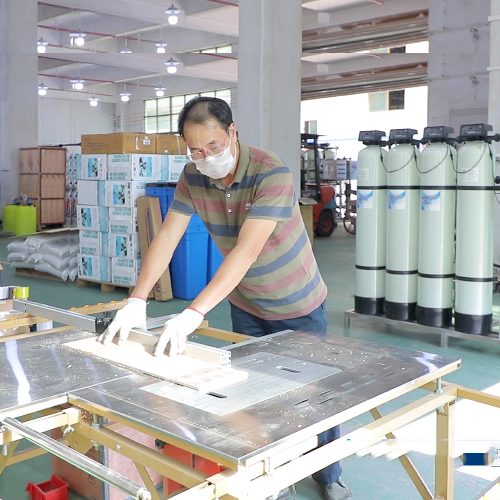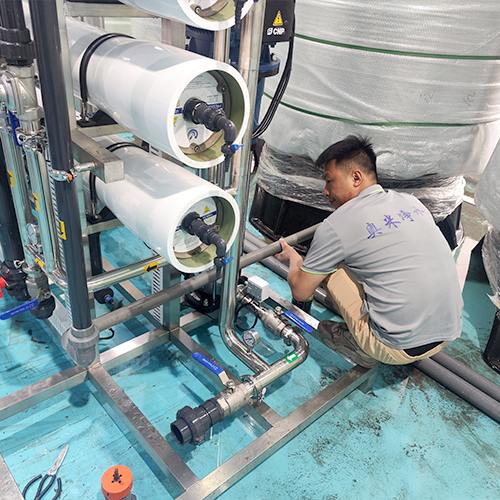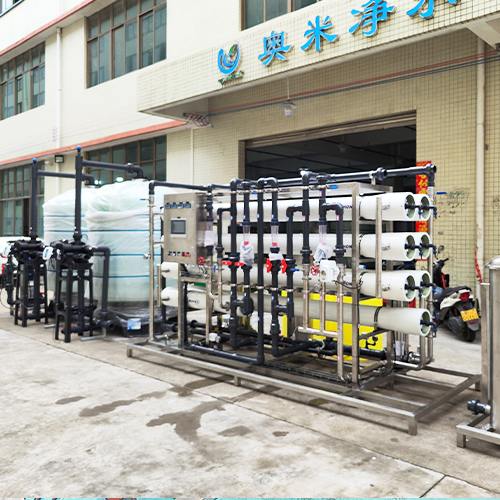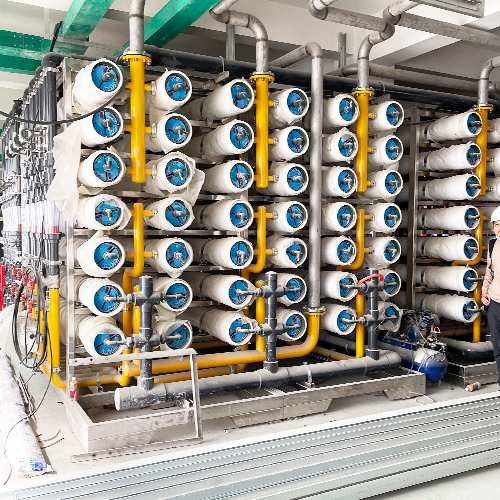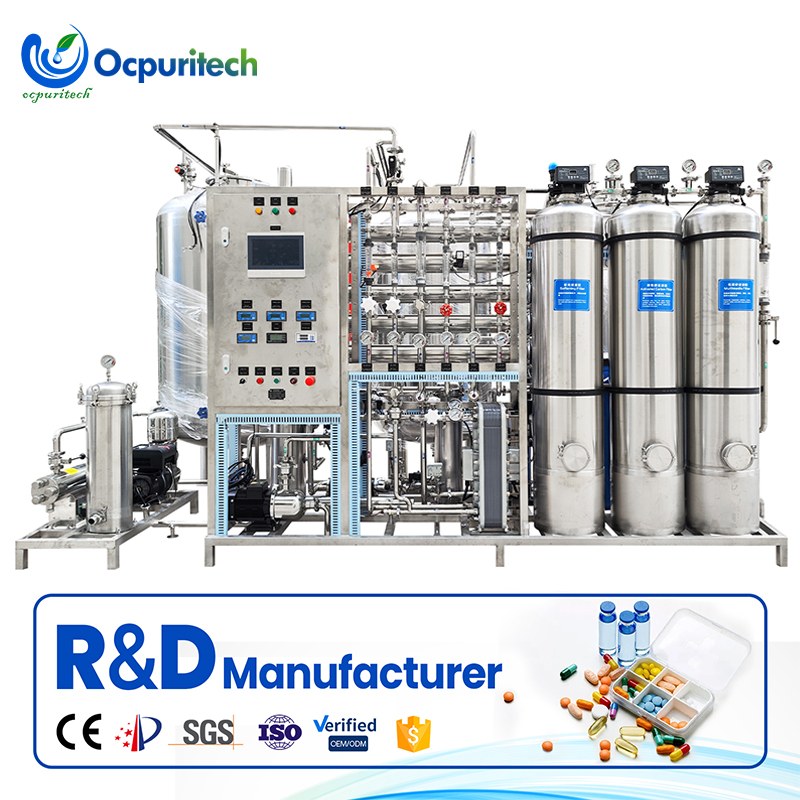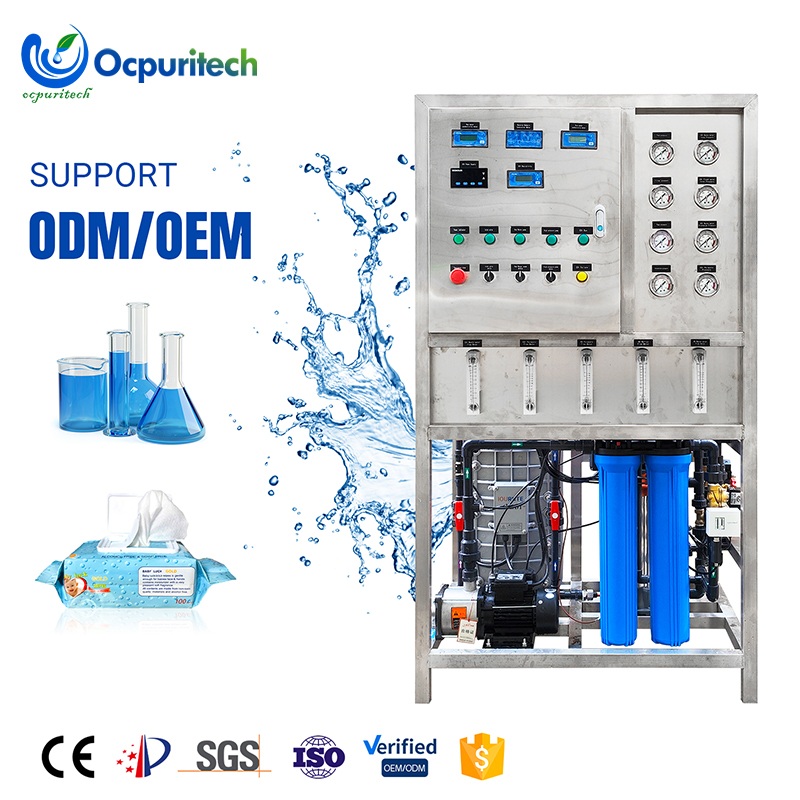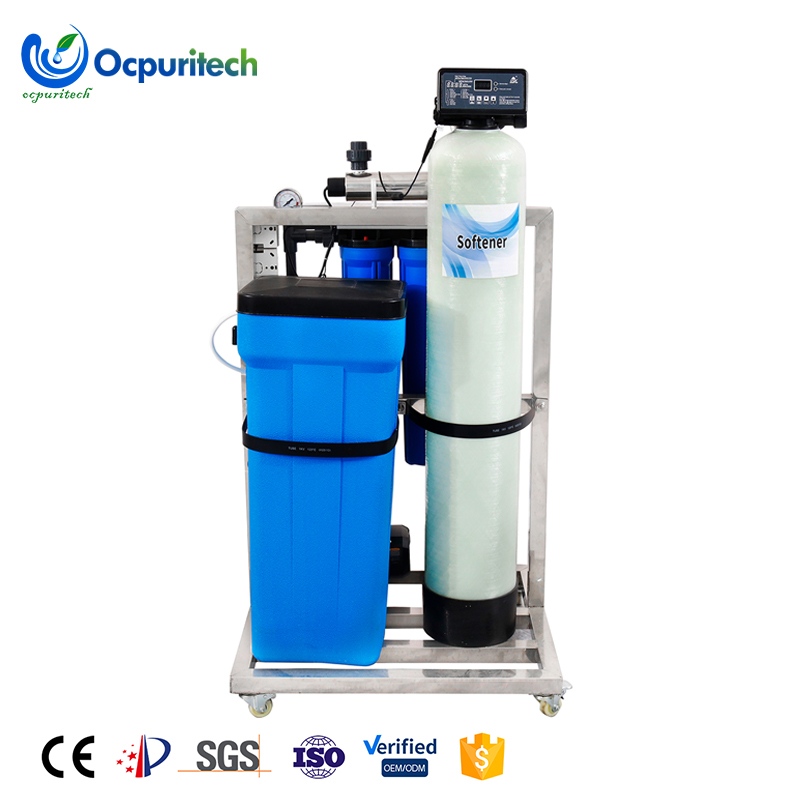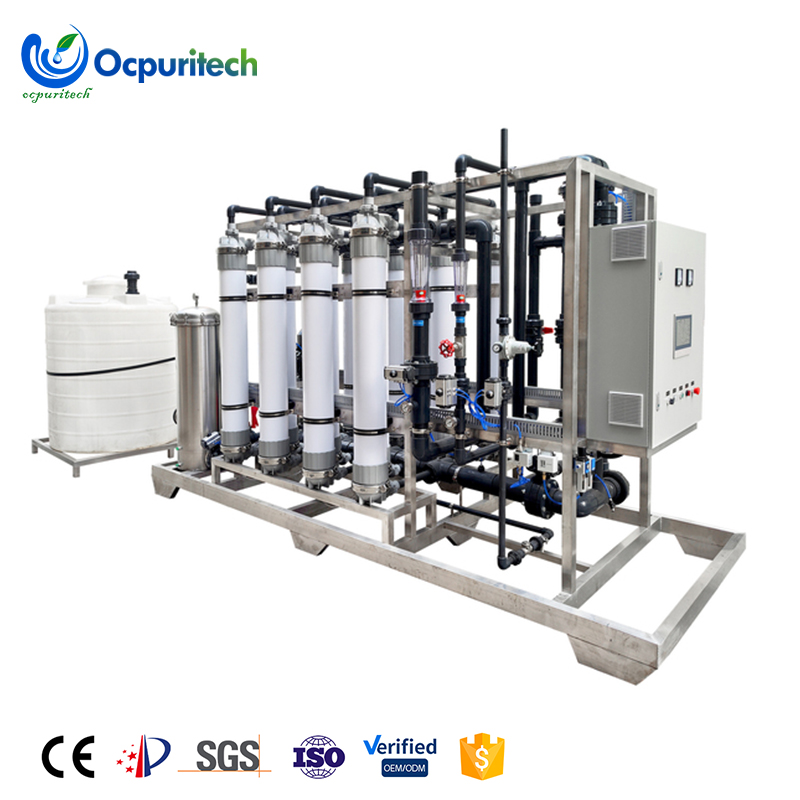
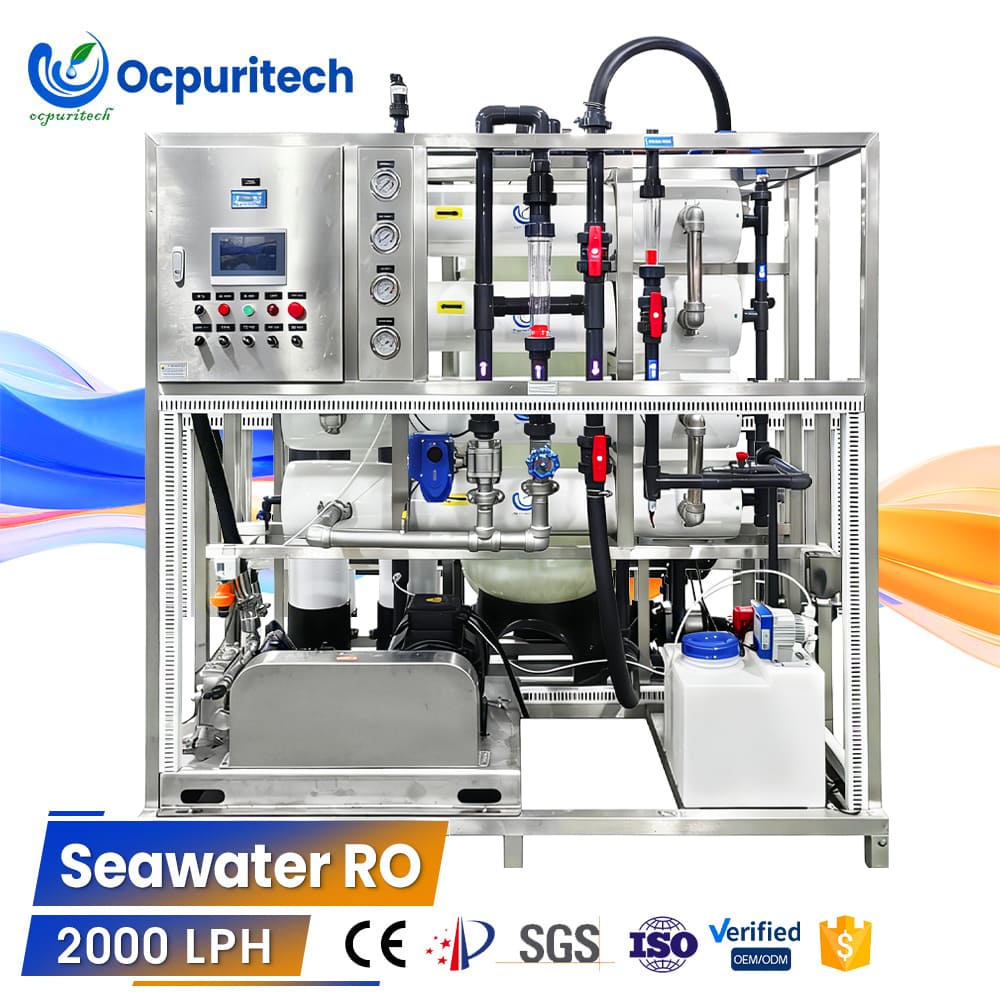
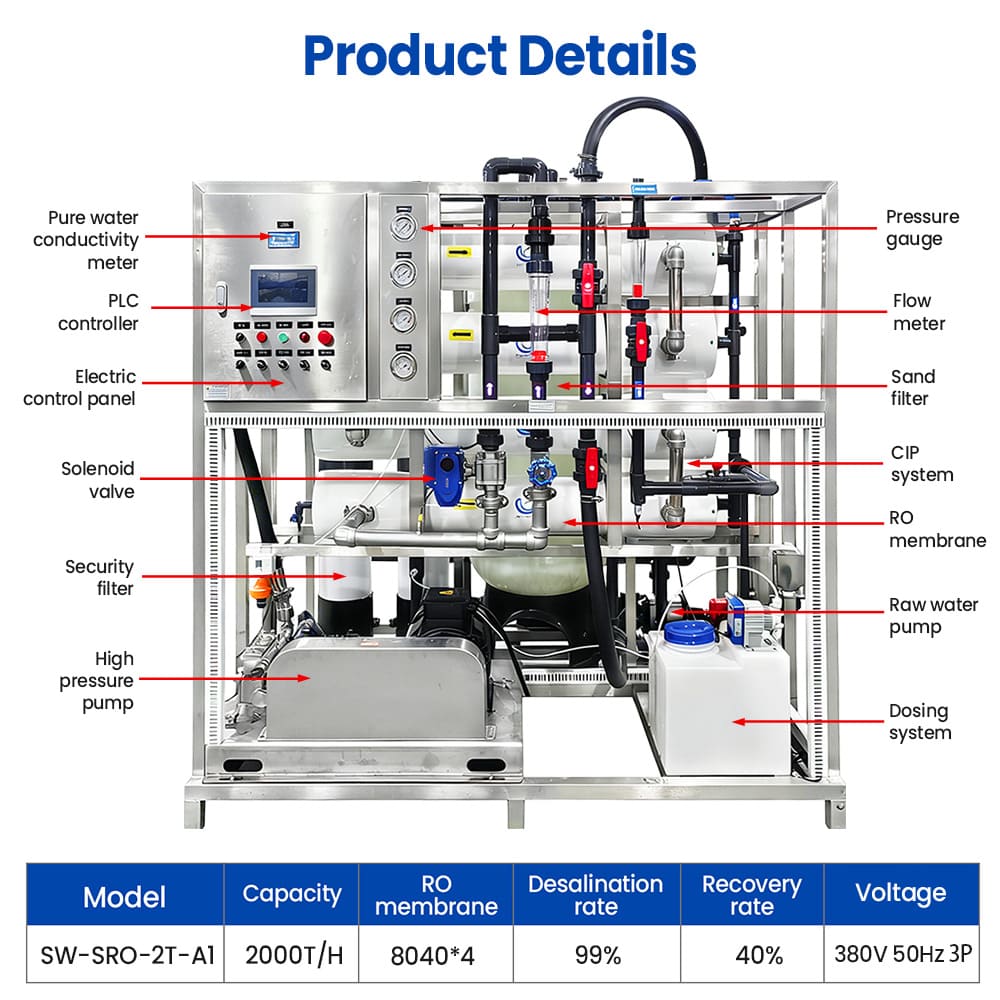
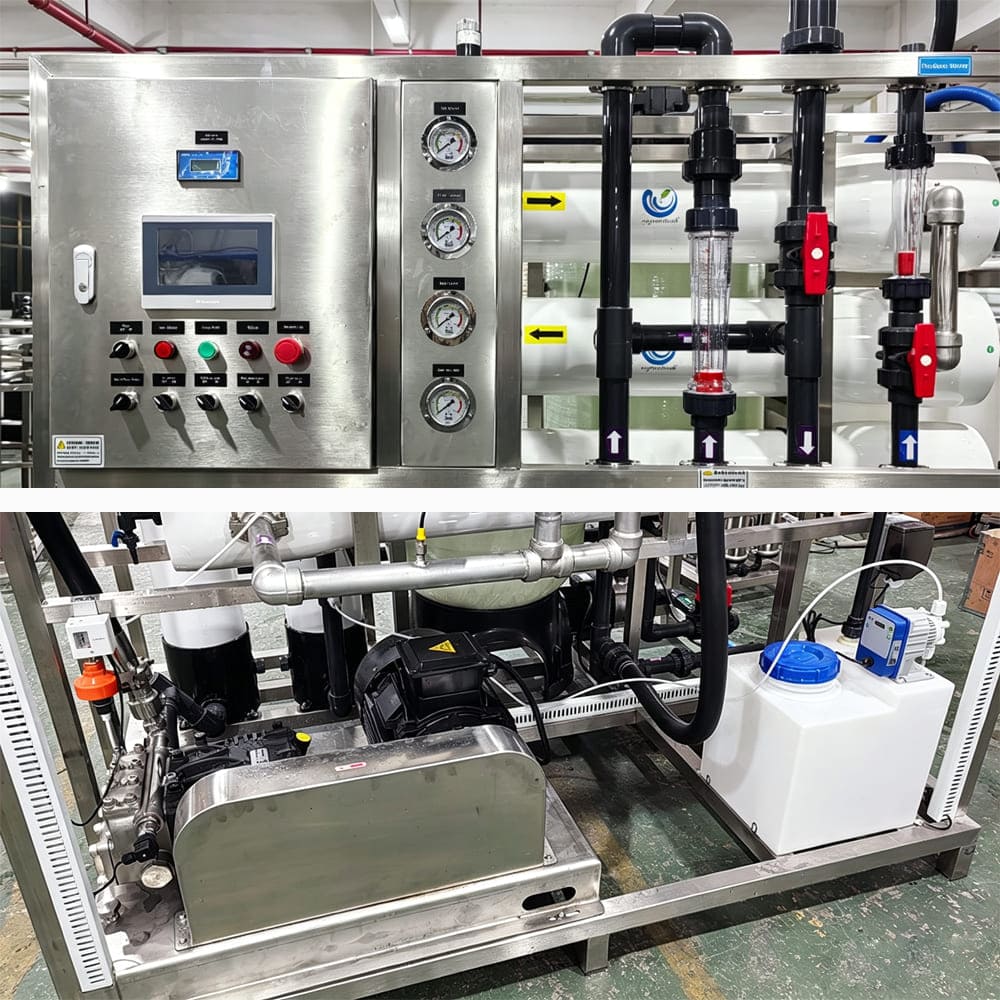
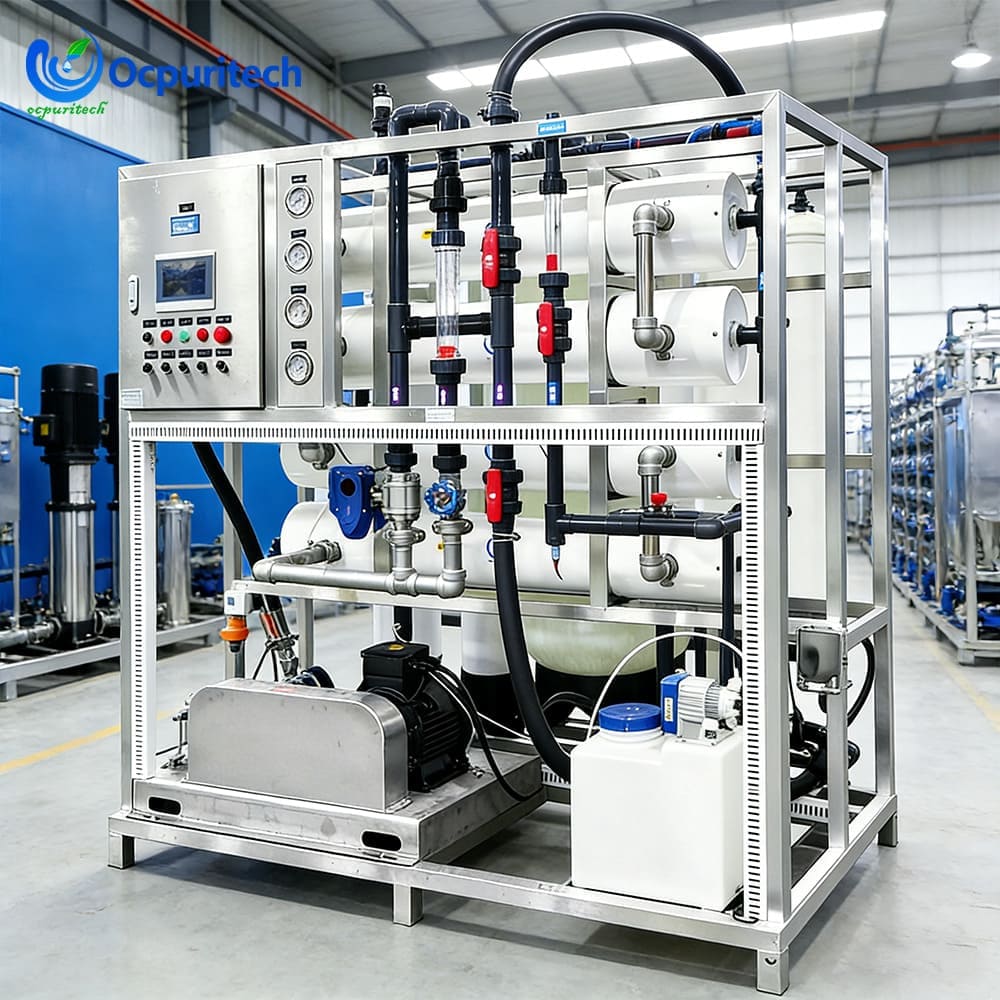
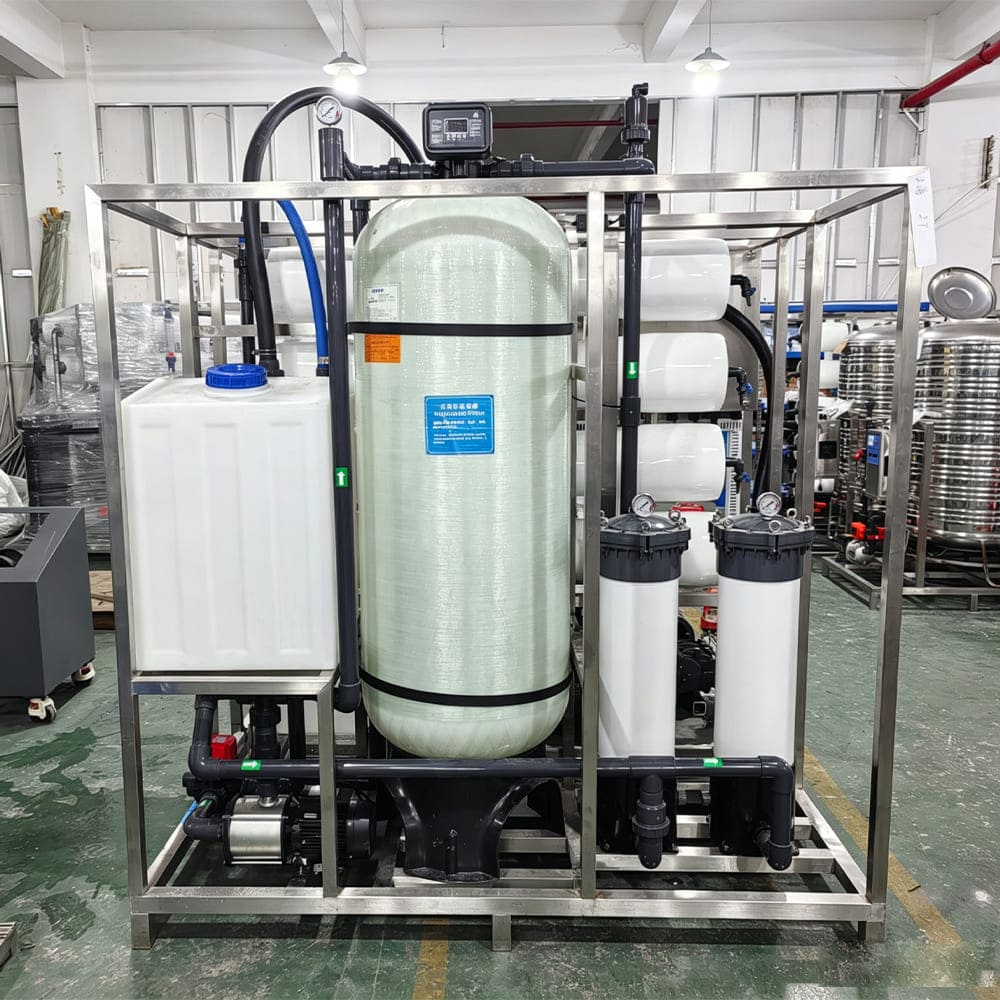
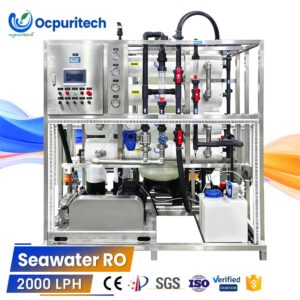
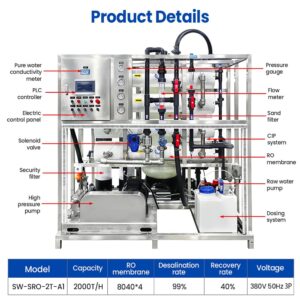
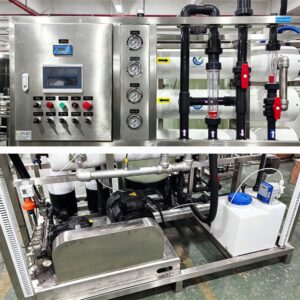
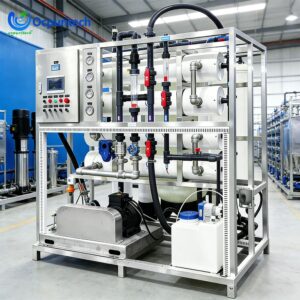
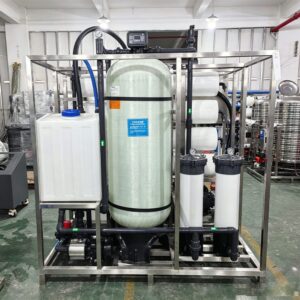
Every seawater desalination project has different challenges — from salinity levels and temperature changes to installation limitations. Our SWRO systems are engineered according to your actual feed water analysis, required capacity, and operating environment. Our custom sea water reverse osmosis plants integrate high-rejection membranes, energy recovery devices, and multi-stage pretreatment to deliver reliable freshwater production at the lowest lifecycle cost — whether for a remote island resort, an offshore platform, or a municipal-scale desalination facility.
Technical Specifications of Our Seawater Reverse Osmosis System
| Parameter | Specification |
|---|---|
| Capacity Range | 120 LPH – 300000 LPH (Custom-engineered according to project requirements) |
| Maximum Feed TDS | Up to 35,000 ppm (Suitable for Red Sea / Arabian Gulf-grade seawater) |
| Salt Rejection Rate | ≥99.5% (Individual membrane element); ≥99.7% (System nominal performance) |
| Membrane Configuration | Single-pass or two-pass SWRO system; DOW FilmTec, Toray, Hydranautics membrane options available |
| Energy Recovery Device | PX pressure exchanger or turbocharger ERD (Standard for systems above 50 m³/h) |
| Specific Energy Consumption | 2.5 – 3.5 kWh/m³ (with ERD); 4.0 – 6.0 kWh/m³ (without ERD) |
| Power Supply | 220V – 480V, 50Hz / 60Hz, Three-phase; Solar-hybrid option available |
| Recovery Rate | 35% – 50% (Single-pass); Up to 65% (Two-pass configuration) |
| Product Water TDS | ≤500 ppm (WHO drinking water standard); ≤10 ppm with second-pass treatment |
| Membrane Housing Material | FRP (Fiberglass Reinforced Plastic), available in 300 / 450 / 600 / 1000 PSI ratings |
| Skid / Frame Material | SS304, SS316L, or Duplex Stainless Steel (Customized based on project requirements) |
| Control System | PLC control with HMI touchscreen; Optional SCADA / IoT remote monitoring system |
| Installation Format | Skid-mounted, containerized (20ft / 40ft ISO container), or building-installed configuration |
Custom Sea Water Reverse Osmosis SWRO System Process Flow
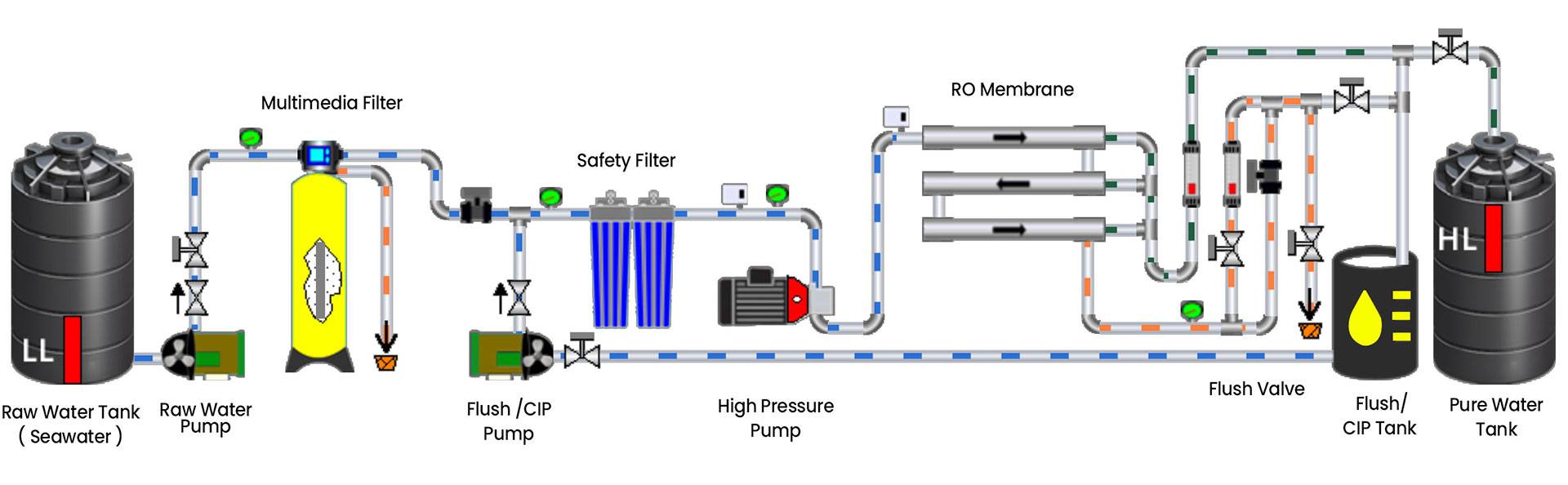
A custom seawater reverse osmosis plant is not a single piece of equipment — it is an integrated multi-stage treatment train. Each stage is engineered to your site conditions and required permeate quality.
-
1. Pre-Treatment Stage
Multimedia filtration (anthracite, silica sand, garnet) followed by activated carbon filtration for chlorine and organics removal. For high-fouling seawater, ultrafiltration (UF) membranes replace or supplement conventional media filters to achieve SDI < 3 — a prerequisite for reliable RO membrane performance.
-
2. Micron Cartridge Filtration
5-micron security filters act as the final barrier before the high-pressure membrane stage, capturing any residual particulates that could damage the RO membranes.
-
3. High-Pressure Pump & Energy Recovery Device
Axial piston or multi-stage centrifugal high-pressure pump delivers feed water at 55–70 bar to the membrane array. An energy recovery device (ERD) — either a PX pressure exchanger or turbocharger — recaptures hydraulic energy from the brine stream, reducing total energy consumption by up to 60%.
-
4. Reverse Osmosis (SWRO) Membrane Assembly
Spiral-wound polyamide thin-film composite membranes arranged in a single-pass or two-pass configuration within FRP pressure vessels. Our custom sea water RO systems are designed with optimal flux rates (typically 12–15 LMH) to balance permeate quality with long membrane service life. Membrane brands include DOW Filmtec SW30HRLE, Toray UTC-80, and Hydranautics SWC5 — selected based on your feed salinity and recovery targets.
-
5 Permeate Post-Treatment & Storage
Permeate passes through remineralization (calcite or lime dosing) for pH stabilization, followed by UV sterilization or sodium hypochlorite disinfection. Treated water is stored in food-grade tanks before distribution.
-
6. Chemical Dosing System
Automated injection of antiscalant, coagulant, sodium bisulfite (dechlorination), and pH adjustment chemicals. Precise dosing prevents CaCO₃ and CaSO₄ scaling on membrane surfaces while minimizing chemical consumption.
-
7. Clean-in-Place (CIP) System
An integrated CIP skid enables periodic membrane cleaning with alkaline and acidic solutions, restoring membrane performance and extending operational life to 5–7 years under normal conditions.
Typical single-pass custom SWRO desalination system process flow. Two-pass configurations are available for applications requiring permeate TDS below 10 ppm.
Industries & Applications for Seawater Desalination RO Plants
| Application Area | Typical Applications |
|---|---|
| Municipal & Urban Water Supply | Desalination plants, city water supply projects, and large-scale public water infrastructure |
| Industrial Facilities | Factories, manufacturing plants, and industrial process water supply |
| Offshore & Marine Applications | Offshore oil & gas platforms, marine vessels, cargo ships, and naval ships |
| Coastal & Island Developments | Coastal residential communities, resorts, hotels, and island water supply projects |
| Power Generation Facilities | Boiler feed water, cooling water, and auxiliary water treatment systems |
| Bottled Water & Beverage Production | Pre-treatment and purified water production for bottled water and beverage factories |
Request a Custom Seawater Reverse Osmosis System Proposal
Every custom seawater desalination project starts with your water analysis. To receive a detailed technical proposal with performance guarantee, CAPEX estimate, and OPEX projection, please provide:
- Feed water source and TDS (ppm or mg/L)
- Required product water flow rate (m³/day or LPH)
- Target product water quality (TDS or conductivity)
- Site location and available utilities (power, footprint)
- Preferred installation format (skid / container / building)
FAQ About Seawater Desalination Reverse Osmosis Systems
What is a custom sea water reverse osmosis system?
A custom SWRO system is an engineered-to-order desalination plant designed to match specific feed water conditions, required output capacity, and site constraints — rather than an off-the-shelf configuration.
What capacity range do your seawater RO systems support?
Our custom seawater reverse osmosis plants range from compact 120 LPH containerized units to large-scale 300,000 LPH (300 m³/h or 7,200 m³/day) municipal desalination facilities.
What is the lifespan of an SWRO membrane?
Under normal operating conditions with proper pretreatment and periodic CIP cleaning, SWRO membranes typically last 2–3 years.
What is the difference between SWRO and BWRO?
SWRO systems are engineered for seawater with high salt concentrations, typically around 10,000–35,000 ppm TDS. BWRO systems are designed for brackish water sources such as wells, rivers, and underground aquifers, where TDS levels are generally between 2,000–10,000 ppm.
Can you design a containerized seawater RO plant?
Yes. Our containerized custom SWRO solutions are fully integrated plug-and-play units housed in standard 20ft or 40ft ISO containers.
Do you provide after-sales support and spare parts?
Yes. We supply a comprehensive commissioning spare parts kit with every system, plus ongoing technical support via remote diagnostics or on-site service engineers.
How long does it take to design and deliver a custom SWRO plant?
Typical project timelines: 4–6 weeks for a containerized custom SWRO unit (120–50,000 LPH); 6–10 weeks for a mid-scale skid-mounted plant (50,000–300,000 LPH); Timeline depends on membrane and pump lead times, material specification, and third-party certification requirements (CE, ISO9001, ASME).