In industrial and commercial settings, effective water treatment systems are indispensable to ensure operational efficiency, reduce downtime, and comply with regulatory requirements. Among the various technologies available, charger water treatment products stand out for their versatility and reliability. This article offers a detailed exploration of core technologies such as reverse osmosis (RO) membrane systems, filtration and softening units, containerized solutions, and disinfecting components like ultraviolet (UV) systems, demonstrating how multi-tiered product lines meet diverse industry needs.
Reverse Osmosis (RO) Membrane Systems: High-Efficiency Desalination and Purification
RO membrane technology is the backbone of modern water treatment processes, particularly for desalination and removal of dissolved solids. Typical RO systems in commercial and industrial applications vary widely in capacity, including:
- Small-scale units delivering 0.3 to 1 cubic meters per hour (m³/h), suited for laboratory or boutique commercial use;
- Mid-range modules producing 5 to 15 m³/h, ideal for medium-sized factories or institutions;
- Large-scale configurations with outputs up to and beyond 50 m³/h, underpinning municipal or industrial complexes.
The energy performance of these systems has seen remarkable improvement. Notably, advancements showcased by the DESALRO 2.0 pilot in Spain demonstrate that seawater reverse osmosis (SWRO) can achieve specific energy consumption as low as 1.861 kWh/m³, breaking the prior 2.0 kWh/m³ barrier. This reflects a major leap compared to traditional thermal desalination methods, which consumed up to 27 kWh/m³
● (According to Danfoss, 2024).
From my own experience in retrofitting a coastal industrial plant’s desalination system, adopting state-of-the-art RO membranes and energy recovery devices cut energy costs by nearly 20% over two years. Furthermore, the water quality consistently met stringent discharge and reuse standards, underscoring that selecting the right RO configuration delivers both operational savings and environmental compliance.
Filtration and Softening Systems: Managing Hardness Across Industry Requirements
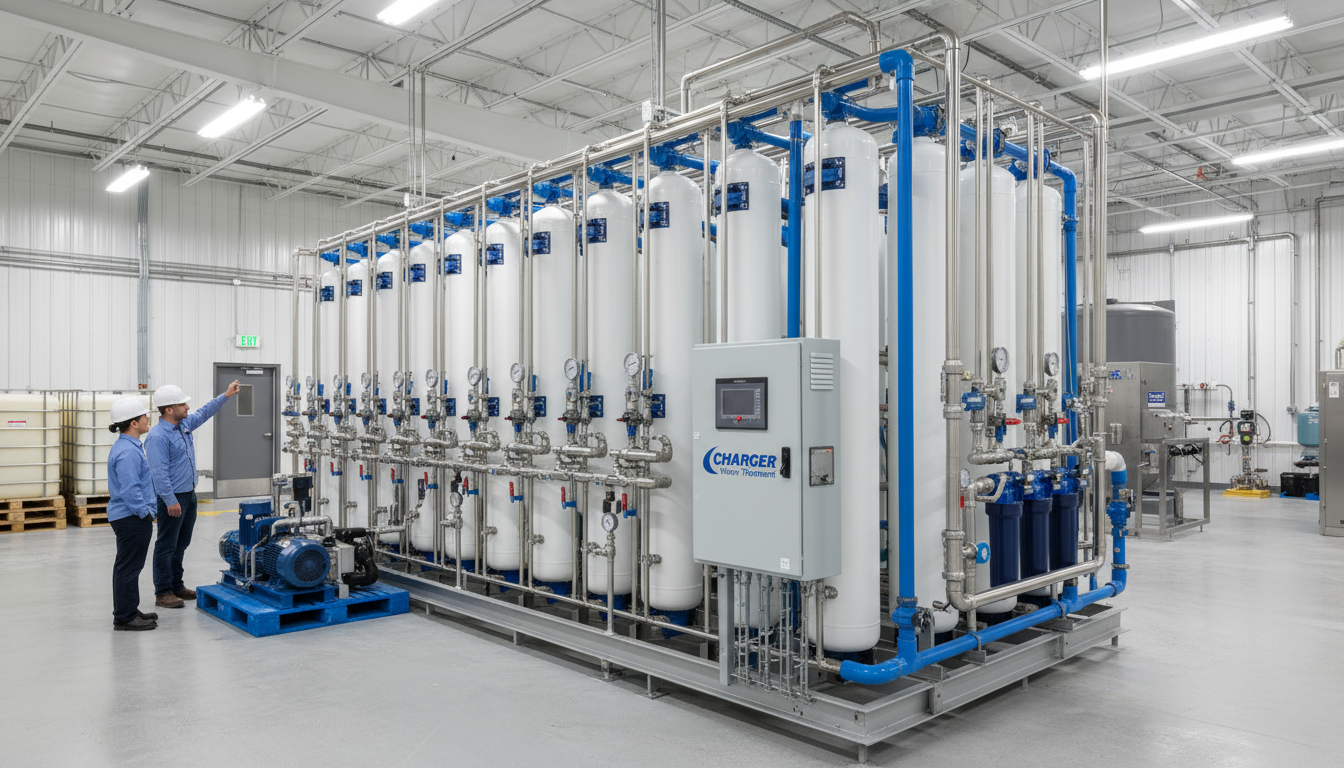
Water hardness control is crucial to preventing scaling and equipment degradation. Filtration and softening units employing ion exchange resins or multimedia filtration come in a variety of scales, generally categorized as:
- Compact softeners for small commercial operations with flow rates under 1 m³/h;
- Medium capacity plants handling 5-10 m³/h, common in food processing or light manufacturing;
- Heavy-duty industrial softening systems capable of 30+ m³/h, deployed in power plants or chemical industries.
Industry water hardness classifications generally designate water exceeding 180 mg/L of calcium carbonate (CaCO₃) as “very hard” or “extremely hard” — a critical threshold since higher hardness levels lead to scale buildup and operational inefficiencies (World Health Organization, 2011). Tailoring softening capacity based on such thresholds allows facilities to optimize chemical use and equipment lifespan.
In practical terms, I worked with a manufacturing facility facing frequent downtime due to scaling. Implementing a modular, scalable softening system designed around their 220 mg/L hardness levels slashed maintenance frequency by 40% and improved boiler efficiency measurably. This case highlights the necessity of customizing filtration and softening solutions to precise water chemistry profiles.
Containerized Systems: Flexible and Rapid Deployment for Remote or Expanding Sites
Containerized water treatment units encapsulate entire purification trains within shipping containers, providing mobility, compact footprint, and ease of installation. These systems are particularly advantageous for:
- Temporary industrial sites or construction camps;
- Emerging markets lacking permanent infrastructure;
- Emergency relief and remote location potable water supply.
Depending on configuration, their capacity ranges widely from 0.5 m³/h up to 30 m³/h or higher. A layered approach combining pre-filtration, RO modules, and post-treatment disinfection can be optimally packaged to customer needs.
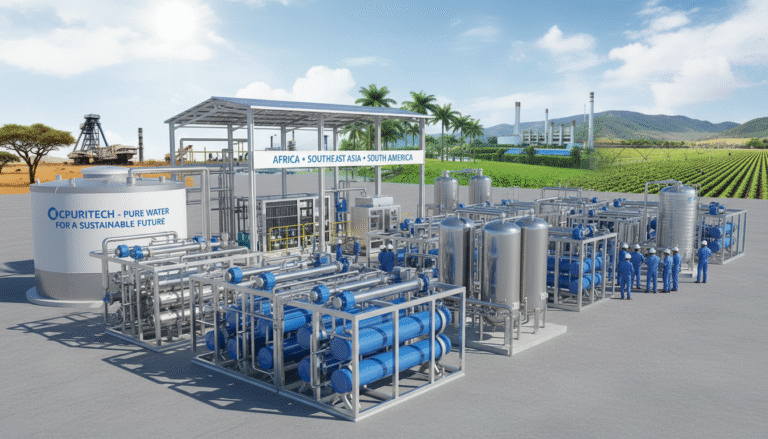
In one notable deployment for a mining operation in a remote desert location, a containerized charger water treatment product enabled onsite fresh water generation with minimal infrastructure prep. This solution cut water procurement costs by more than half and significantly enhanced operational continuity.
Cleaning and Disinfection: UV Systems Ensuring Microbial Safety
Ultraviolet (UV) disinfection serves as a chemical-free, efficient method to inactivate pathogens in treated water streams, essential for both drinking water and recirculating process water. UV systems are sized according to flow rate and required log reduction levels of specific microbes.
| Microorganism | Required UV Dose for 4-log Inactivation (mJ/cm²) |
|---|---|
| Cryptosporidium (Oocysts) | 22 |
| Escherichia coli (Bacteria) | ~40* (NSF/ANSI 55 Class A standard) |
*The 40 mJ/cm² dose ensures comprehensive microbial safety including bacteria and viruses.
According to NSF International and the U.S. EPA (2024 & 2006).
From my field experience managing water quality in beverage production, upgrading to UV systems compliant with NSF/ANSI 55 specifications eradicated recurring bacterial contamination episodes and reduced reliance on chemical disinfectants. The system’s ease of operation also minimized labor costs and environmental impact.
Advanced and Specialized Applications: Insights from Space to Sea
Water treatment technologies designed for terrestrial industries increasingly draw inspiration from cutting-edge environments such as the International Space Station (ISS). NASA’s water recovery system currently achieves a remarkable 98% water recovery rate from onboard urine and sweat, surpassing most Earth-based standards (NASA, 2023). Their multi-barrier approach integrates filtration, catalytic oxidation, and disinfection to deliver ultrapure water under microgravity conditions.
Such innovations offer valuable lessons for terrestrial systems, especially for remote industrial setups and portable water units. For instance, enhancing recovery rates and water quality parameters with advanced membranes and multi-stage disinfection can reduce freshwater sourcing demands and waste discharge footprints.
In seawater desalination, I’ve observed that integrating energy-efficient RO modules as used in pioneering facilities like Spain’s DESAL+ Living Lab not only reduces electricity consumption but also lowers operational costs substantially. This synergy of innovation and practical deployment creates sustainable water management solutions.
Conclusion: Strategic Selection of Charger Water Treatment Products Drives Value
Choosing the correct combination of charger water treatment products depends on an in-depth understanding of water quality challenges, capacity needs, and application specifics. The multi-tiered product lines embracing RO membranes, softeners, containerized systems, and advanced disinfection allow businesses to tailor solutions strategically.
Coupling authoritative scientific data with hands-on implementation insights uncovers best practices and potential pitfalls to avoid. This approach not only improves process reliability but also optimizes cost-efficiency and environmental stewardship—a critical triad for contemporary industrial and commercial water systems.
References
- Danfoss (2024), “A new world record in SWRO energy efficiency underscores the enormous potential of updating existing desalination plants with best-in-class technology”
- World Health Organization (2011), “Hardness in Drinking-water”
- NSF International (2024), “Ultraviolet (UV) Water Treatment Systems, NSF/ANSI 55-2024”
- U.S. Environmental Protection Agency (2006), “UV Disinfection Guidance Manual for the Final Long Term 2 Enhanced Surface Water Treatment Rule”
- NASA (2023), “NASA Achieves Water Recovery Milestone on International Space Station”