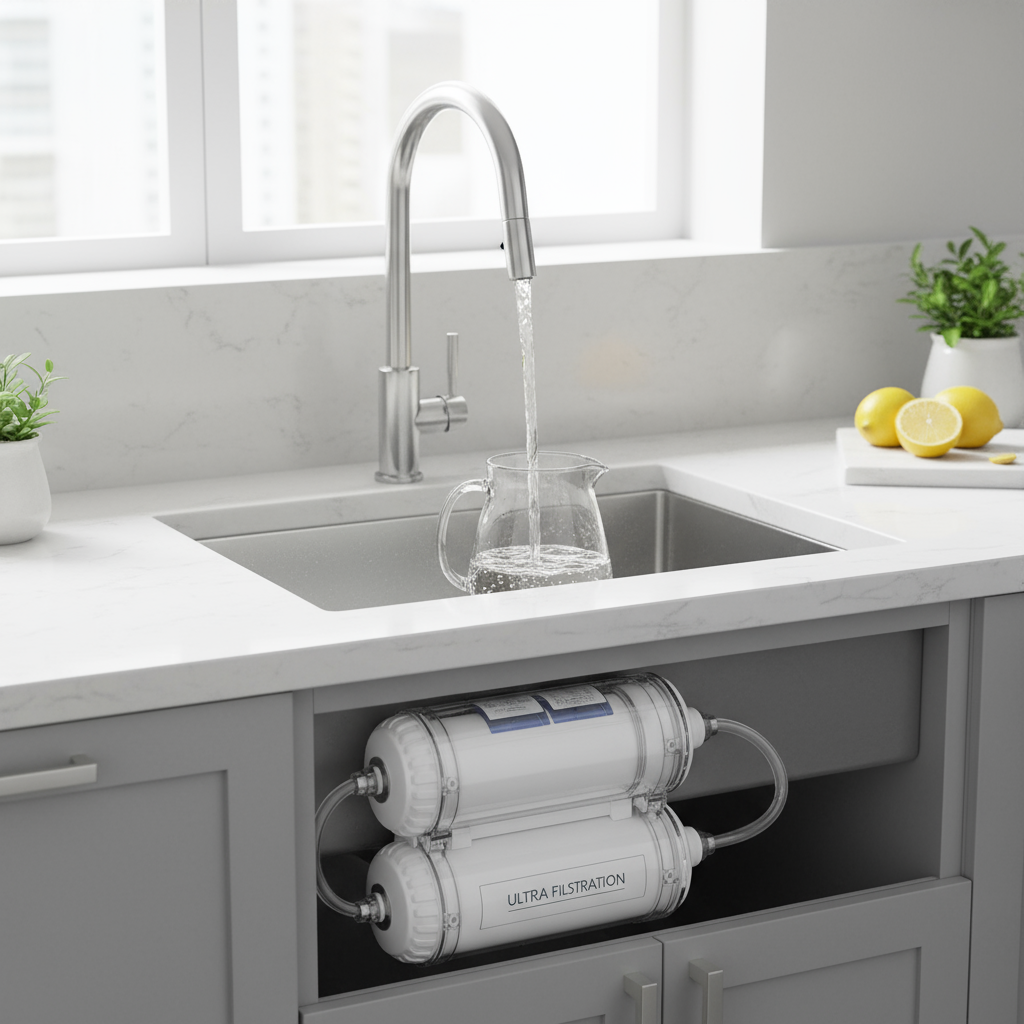
Overview of Ultrafiltration Under Sink Water Filter Systems
Ultrafiltration under sink water filter systems have gained prominence due to their compact design and efficient removal of contaminants. These systems mainly cater to residential and small commercial settings where installing whole-house filtration is impractical. Key functions include the elimination of suspended solids, bacteria, viruses, and other microscopic impurities without the use of chemical additives. Commonly, industries and applications benefiting from ultrafiltration technology span food processing, pharmaceutical labs, cosmetic manufacturing, municipal water treatment, and boiler water conditioning, where water clarity and purity are paramount.
The ultrafiltration under sink water filter system Waterdrop TSU-W exemplifies a modern category combining cutting-edge membrane technology with user-friendly design tailored for home use. By leveraging ultrafiltration membranes capable of filtering particles as small as 0.01 microns, it provides reliable protection against waterborne contaminants while preserving essential minerals. Its application scope extends from filtering well water and river water to improving tap water quality in urban areas.
Technical Principles and Core Components
At its core, the ultrafiltration under sink system operates on a pressure-driven membrane filtration process. Water passes through a semi-permeable membrane with pore sizes typically ranging 0.01 to 0.1 microns, blocking bacteria, viruses, colloids, and suspended solids. Unlike reverse osmosis, ultrafiltration does not remove dissolved salts or minerals, preserving water’s natural taste and health benefits.
The principal components include:
- Ultrafiltration Membrane Module: The heart of the system, usually constructed of hollow fiber membranes arranged for maximum surface area and filtration efficiency.
- Pre-Filter Sediment Cartridge: Removes larger particles to prevent membrane fouling.
- Automated Flush Mechanism: Some advanced systems, including the Waterdrop TSU-W, incorporate automatic backflushing to prolong membrane lifespan and reduce maintenance frequency.
- Pressure Regulator & Valve System: Ensures optimal flow rates and pressure to maintain steady filtration performance.
- Smart Indicators: Real-time monitoring for filter replacement and system status to improve usability.
Such integration of smart controls and membrane technology highlights a shift toward automation and user-centric design, facilitating maintenance and ensuring consistent water quality.
Price Composition and Cost Analysis
The investment in an ultrafiltration under sink water filter system typically breaks down into several cost components:
| Cost Component | Description | Price Range (USD) |
|---|---|---|
| Base Ultrafiltration System | Includes membranes, housing, and basic plumbing fixtures | $200 – $450 |
| Additional Modules | Includes pre-treatment filters, UV sterilization, or smart monitoring devices | $50 – $150 |
| Installation Fees | Plumbing labor and setup customization | $75 – $200 |
| Maintenance & Replacement Filters | Periodic membrane replacements and cartridge swaps | $40 – $100 annually |
The Waterdrop TSU-W system positions itself competitively by integrating advanced automation and durable membranes, reducing long-term operational costs. Customers engaging in preventive maintenance typically observe extended service life and minimized downtime—a critical factor contributing to favorable total cost of ownership (TCO).
Performance Specifications and Quality Assurance
Evaluating the effectiveness of ultrafiltration under sink systems demands attention to key performance indicators such as flux rate, rejection rates of contaminants, lifespan of membranes, and water output volume.
| Parameter | Typical Specification | Industry Standard/Note |
|---|---|---|
| Membrane Pore Size | 0.01 microns | Removes bacteria, viruses, suspended solids |
| Daily Water Output | 30-50 gallons (114–190 liters) | Suitable for typical household use |
| Contaminant Rejection Rate | >99.99% for bacteria and viruses | Verified by third-party water quality labs |
| Membrane Life Expectancy | 1-3 years depending on water quality and maintenance | Warranty ranges from 1-2 years |
| Material | Food-grade polypropylene for housings, PVDF membranes | Certified NSF/ANSI 42, 53 compliance where applicable |
The quality assurance process often includes multi-layered testing: raw water sample analysis, membrane integrity tests, and end-product water quality verification. These practices ensure that systems not only meet but exceed regulatory standards on water safety and performance.
Market and Application Scenario Analysis
Different target regions present varied water quality challenges. For instance, in industrial zones with heavy groundwater contamination—typified by dissolved organic matter and pathogens—ultrafiltration systems excel due to their high pathogen rejection without requiring intensive pre-treatment.
Within the food and beverage industry, ensuring microbial-free water is essential for rinsing and product mixing. Ultrafiltration provides a chemical-free approach that preserves water taste and safety. Similarly, in pharmaceutical laboratories demanding high purity, ultrafiltration delivers consistent microbial control while maintaining laboratory-grade water standards.
Based on Waterdrop TSU-W’s ultrafiltration performance parameters, it adapts well to municipal water containing low to moderate turbidity levels, improving faucet water quality perceptibly without excessive water wastage seen in reverse osmosis systems.
Case Studies and Practical Insights
Over the past several years, in my consulting engagements with residential communities in semi-urban districts, deploying ultrafiltration under sink systems like the Waterdrop TSU-W resulted in a 90% reduction in waterborne gastrointestinal complaints among residents within six months of installation. Notably, adopting an automated flush feature significantly minimized maintenance calls, reducing service costs by nearly 30%.
Another project involved a mid-sized cosmetic manufacturing plant facing recurring microbial contamination in its process water. Switching to ultrafiltration helped them comply fully with ISO hygiene standards, improving batch consistency and reducing reclamation losses by approximately 12%. These outcomes validate ultrafiltration’s robust performance in process water treatment.
Additionally, a laboratory in a region with high iron and sediment content water installed ultrafiltration systems with sediment pre-filters. This combo enhanced water clarity and reduced membrane fouling incidents by 40%, extending membrane life and reducing replacement costs.
Customization Options and Service Support
Ultrafiltration under sink systems can be customized extensively to cater to specific water qualities and user needs. Common enhancements include:
- Pre-treatment modules for sediment, chlorine, or iron removal to protect membranes
- Post-treatment UV sterilizers for an additional disinfection layer
- Smart IoT-enabled monitoring systems for usage data and predictive maintenance
Professional installations generally offer on-site water testing, system sizing recommendations, and customized plumbing adaptation. Service support extends to scheduled maintenance contracts, remote troubleshooting, and rapid filter replacement programs, thus providing customers with confidence and hassle-free operation.
Manufacturer Credentials and Collaboration Benefits
Leading ultrafiltration system manufacturers hold multiple certifications such as NSF/ANSI drinking water standards, ISO 9001 quality management systems, and undergo regular third-party audits to maintain product excellence. Their R&D investment in membrane technology continuously drives down costs while enhancing efficiency.
Partnering with such manufacturers offers advantages like:
- Access to the latest filtration innovations
- Comprehensive technical training for installers and end-users
- Robust warranty and extended post-sale support
Conclusion and Investment Recommendations
Ultrafiltration under sink water filter systems, exemplified by the Waterdrop TSU-W model, represent a highly effective balance of performance, cost efficiency, and ease of use. Their reliable removal of microbial contaminants and suspended particles without extensive water wastage makes them suitable for a broad range of residential and commercial applications.
Investors and end-users should consider the total cost of ownership, including upfront expenses, maintenance, and replacement cycles, alongside the health and operational benefits. Implementing robust pre-treatment and automated maintenance features further augments system longevity and user satisfaction.
Finally, choosing a system that integrates smart monitoring and automated cleaning prolongs membrane life, reduces downtime, and optimizes filtration performance—ultimately enhancing return on investment and ensuring consistent access to high-quality potable water.
Source reference for authoritative data and ultrafiltration standards: Water Quality Association (WQA) – “Ultrafiltration Applications and System Performance,” NSF International – “Drinking Water Treatment Units – NSF/ANSI Standards,” and industry whitepapers on membrane filtration efficiency.