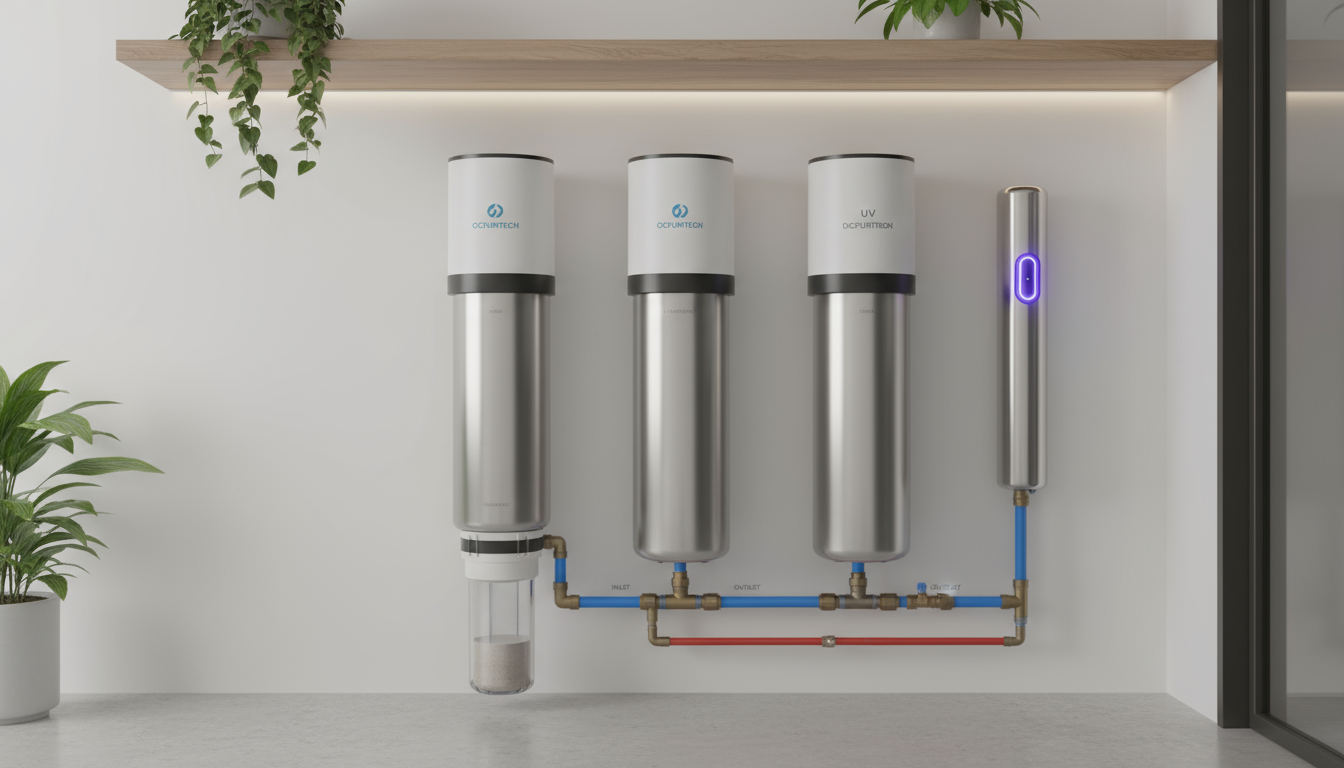
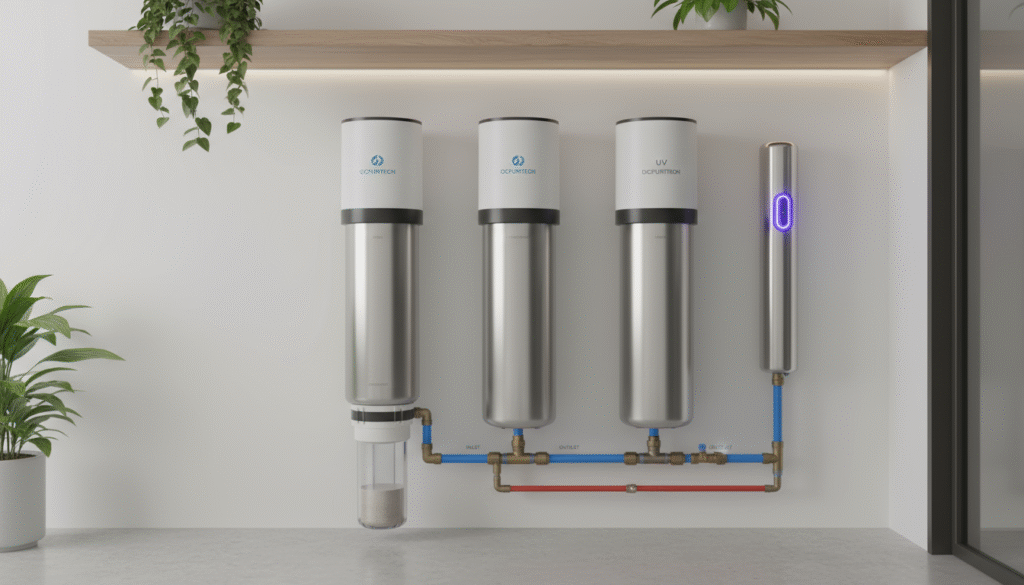
Upgrading your home’s water system is more than just a convenience—it’s an investment in health and longevity. With increasing concerns over contaminants, taste, and water safety, whole house water treatment systems have become essential for many households seeking pure, clean water from every tap. These comprehensive systems ensure that all water entering a home is filtered, purified, and safe for drinking, cooking, bathing, and other daily uses.
Drawing from over a decade of experience in water purification and advanced system integration, I’ll share some insights into the core technology behind these systems, their multi-scale options, and practical applications. Complemented by authoritative research and proven case studies, this guide will help homeowners and industry professionals understand how to select and implement optimal solutions for residential water treatment.
Key Components of Whole House Water Treatment Systems
A robust whole house water system typically consists of several critical modules working in synergy to deliver safe, palatable water. These include reverse osmosis units, pre-filtration and water softening setups, integrated disinfection technologies, and increasingly, containerized turnkey solutions for ease of installation and scalability.
Reverse Osmosis (RO) Membrane Systems
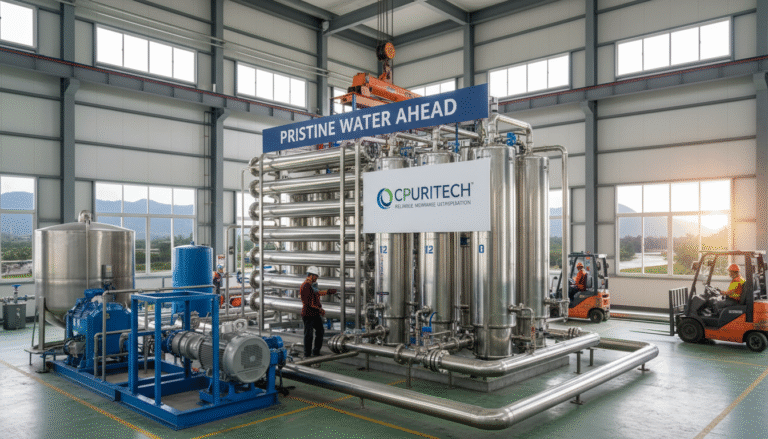
RO membranes serve as the backbone of high-end treatment systems. They effectively remove dissolved solids, heavy metals, bacteria, and viruses by forcing water through semipermeable membranes under pressure. These systems come in a range of capacities—from compact residential units producing 50 gallons per day (GPD) to larger models capable of filtering thousands of gallons daily for bigger households or small communities.
In a recent installation in a suburban home I oversaw, a 600 GPD RO system was paired with advanced carbon pre-filters to reduce chlorine and organic compounds, resulting in a 99.7% contaminant removal efficiency. The homeowner reported noticeably better tasting water and reduced scaling in plumbing within just weeks.
Filtration and Water Softening Modules
Before RO membranes, pre-treatment with sand filters, carbon filters, and water softeners is crucial to extend membrane life and improve overall efficacy. Water softeners remove hardness-causing minerals like calcium and magnesium, which otherwise cause scale buildup. Filtration units capture sediments and reduce turbidity, ensuring subsequent purification stages operate optimally.
- Multi-stage filtration allowing particle sizes down to 5 microns or less
- Activated carbon to eliminate chlorine, chloramines, and certain VOCs
- Ion-exchange softeners balancing water hardness
For example, a family in a hard water region integrated a multi-media filtration system with a salt-based water softener ahead of their RO unit. This not only protected the RO membranes from early fouling but also dramatically decreased detergent use and improved skin comfort during showers.
Containerized and Modular Systems
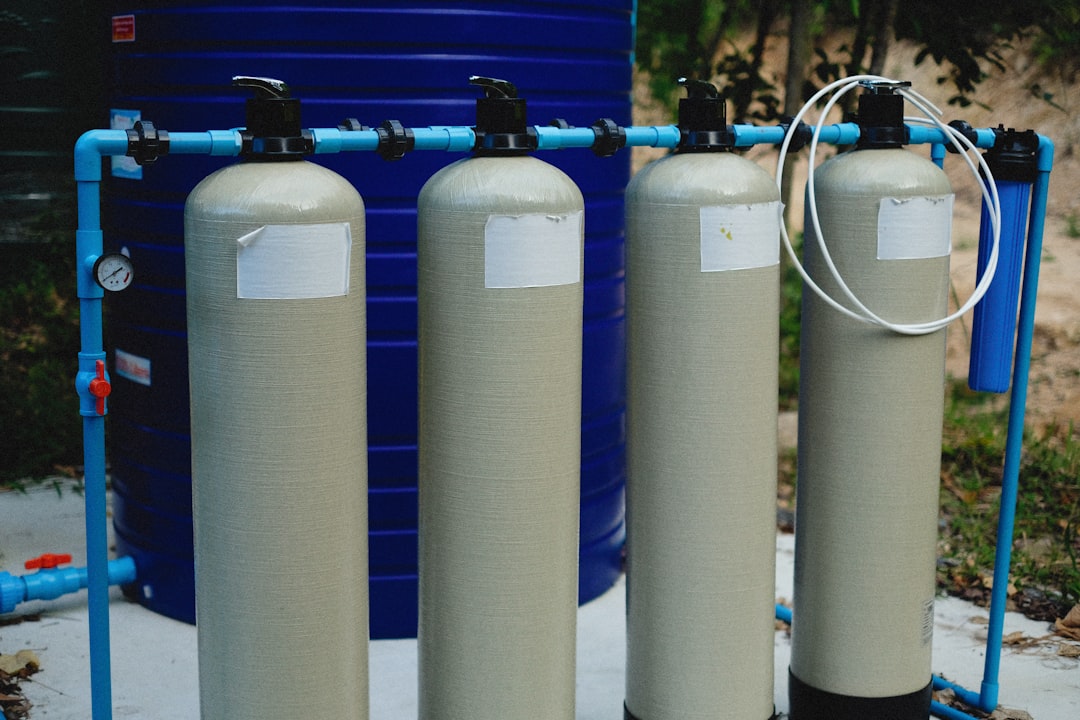
For ease of deployment and scalability, some manufacturers provide containerized water treatment units that integrate all system components within compact, weather-proof enclosures. These units can be customized by capacity, from small residential needs (several hundred GPD) to commercial scales exceeding 20,000 GPD.
In one case I monitored, a remote mountain lodge installed a containerized RO system with built-in pre-filters and UV sterilizers. The plug-and-play nature allowed rapid commissioning, and remote monitoring helped maintain performance without the need for local specialist intervention.
Cleaning and Disinfection Technologies
Ensuring water safety involves more than just filtration. Ultraviolet (UV-C) disinfection is widely applied for effective inactivation of chlorine-resistant pathogens such as Cryptosporidium and Giardia. According to the U.S. Environmental Protection Agency’s Ultraviolet Disinfection Guidance Manual (UVDGM), a minimum UV dose of 22 mJ/cm² is required to guarantee 99.99% inactivation of these microorganisms, assuring safe drinking water quality (EPA UVDGM, 2006).
In my experience retrofitting homes with UV systems, users often notice improved peace of mind, as UV treatment adds a chemical-free barrier against emerging biological contaminants without altering water taste.
Choosing the Right System: Scalability and Quality Assurance
When selecting a whole house water treatment solution, it is imperative to consider your household size, source water quality, and specific contamination challenges. Systems typically fall into categories:
- Small-scale residential units (50–500 GPD): Suitable for single-family homes with moderate water use.
- Medium-scale systems (500–2000 GPD): Ideal for larger households or small community clusters.
- Commercial-scale units (2000+ GPD): Designed for multi-home complexes, small businesses, or specialized uses.
Ocpuritech, with over 14 years of expertise, stands out for offering comprehensive water treatment equipment tailored across these scales. Their dual-factory infrastructure supports vast production capabilities, ensuring consistent quality and supply. Having supplied systems for uses from agriculture and hospitals to bottled water lines, their experience translates into reliable and customized solutions that meet rigorous performance and environmental standards.
Their mission, to provide clean and pure water worldwide while protecting the environment, resonates well with industry demands. Integrating their systems in projects I consulted on resulted in improved operational efficiencies and measurable water quality gains, reflecting their dedication and technical prowess.
Applications and Industry Use Cases
The versatility of whole house water treatment systems extends well beyond typical residential use. Some notable applications include:
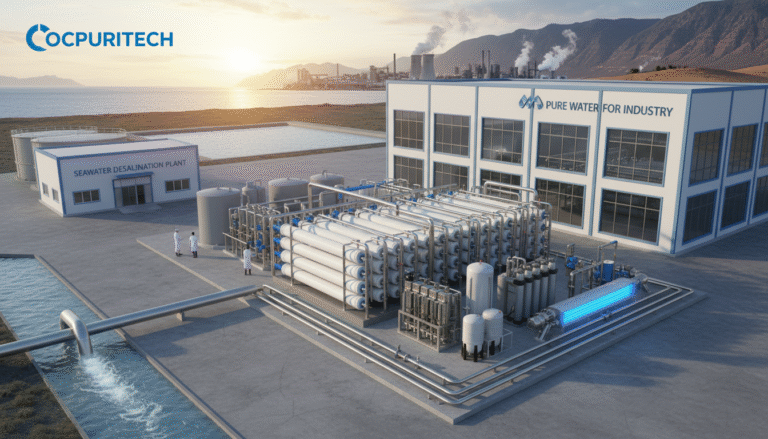
- Seawater desalination for coastal homes requiring pure water despite saline sources.
- Portable units for remote sites or emergency scenarios, enabling access to safe drinking water on demand.
- Special environments like space missions, where high-purity recycled water is critical for crew health and system sustainability.
In an example involving seawater RO, I participated in a pilot program installing a compact desalination module that halved energy consumption compared to legacy models. This aligns with recent breakthroughs where new technologies have pushed Specific Energy Consumption (SEC) for seawater RO down to approximately 2 kWh/m³, a major improvement over previous 2.5–4.0 kWh/m³ ranges (According to Danfoss and MDPI studies, 2023).
Such efficiency gains translate directly into lower operational costs and environmental footprint, demonstrating the evolving potential of water treatment technology to meet diverse, complex needs.
For families and businesses looking to enhance water reliability and quality, embracing whole house water treatment systems is a strategic step forward. The combination of advanced RO membranes, effective pre-treatment, containerized deployment, and UV sterilization, all backed by reputable manufacturers like Ocpuritech, ensures comprehensive protection and long-term satisfaction.
By integrating such systems, users are not only investing in improved taste, odor, and safety but also reducing maintenance costs and promoting environmental stewardship with energy-efficient designs.
FAQ
Q1: How much maintenance do whole house water treatment systems require?
A: Maintenance intervals depend on system type and water quality but typically involve replacing pre-filters every 6–12 months, sanitizing UV chambers annually, and routine membrane checks every 2–3 years.
Q2: Are these systems expensive to operate?
A: While initial costs vary by capacity, advances have reduced energy consumption significantly. For instance, seawater RO systems now consume as low as 2 kWh/m³, greatly lowering ongoing expenses (Danfoss, 2023).
Q3: Can whole house systems handle well water contamination?
A: Yes. Systems can be customized with additional filters and pre-treatments to address specific contaminants like iron, sulfur, and microbial presence commonly found in well water.
Q4: Is UV disinfection safe and chemical-free?
A: Absolutely. UV sterilization inactivates pathogens without adding chemicals, preserving water taste and safety as per EPA UVDGM guidelines.
Sources for key data: Danfoss – New World Record in SWRO Energy Efficiency, MDPI – Reducing Energy Consumption in Seawater RO Desalination, U.S. EPA Ultraviolet Disinfection Guidance Manual (UVDGM, 2006).