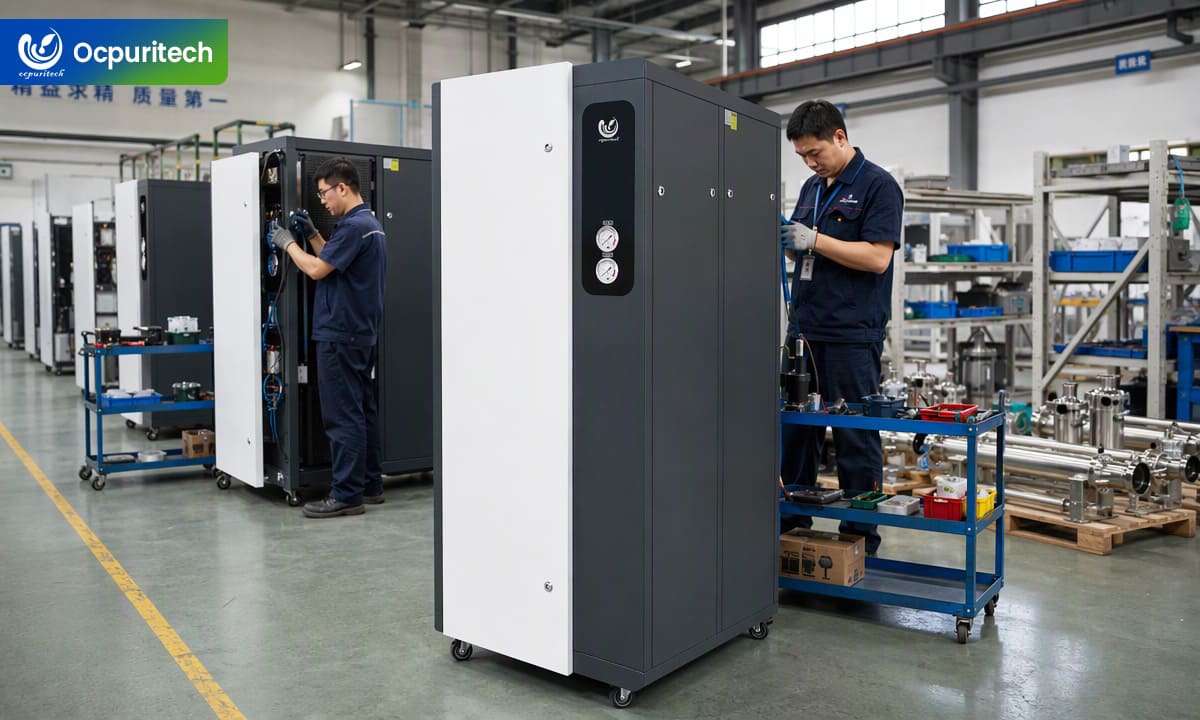
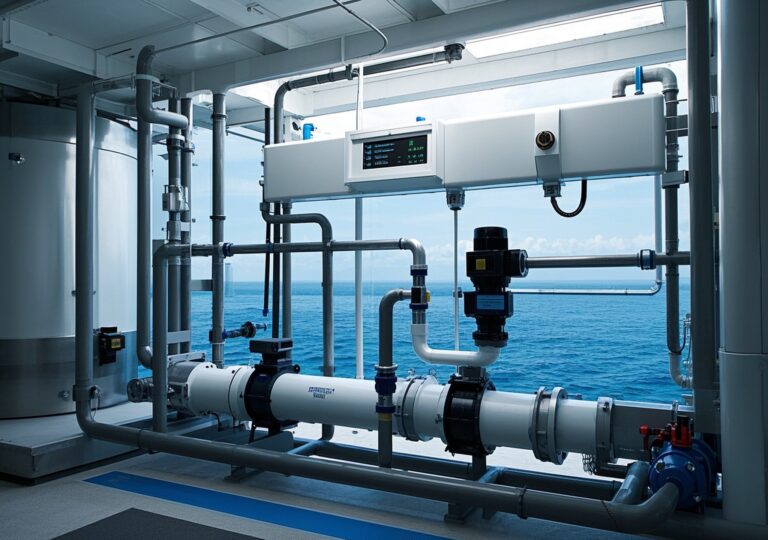
When customers approach me about a Cabinet Reverse Osmosis Plant, their first question is usually straightforward: “Can you recommend one for my needs?” But the answer isn’t that simple.
To choose the right cabinet reverse osmosis plant, you must first check your raw water quality. Then, you need to confirm your daily operating hours and installation space. Finally, you should check the internal layout to make sure you can easily change the filters later.
I have worked in the water treatment industry for 16 years. Many clients from coffee shops, hotels, restaurants, hospitals, factories, schools, and other commercial facilities come to me and say they want a cabinet reverse osmosis system. For them, choosing the right cabinet system is not just about water production—it also means easier equipment management and making the most of limited space.
However, I always stop them from buying immediately. Before choosing a cabinet RO system, there are a few rules I ask every client to check first. If you overlook them, you could end up spending a lot of money on a system that does not actually fit your application.
Why do you need a water quality report first?
You might think a 500 litre per hour machine works everywhere. However, poorly characterized feed water can lead to membrane fouling, scaling, or premature component wear if the pretreatment is not designed correctly. A water quality test should come first.
A water quality report tells you what is in your raw water and helps determine the right pretreatment. For example, city water, well water, surface water, and wastewater can require very different treatment before the water reaches the RO membrane.
I always ask my clients a simple question: Where does your water come from? A 500 litre per hour system may look the same on the outside, but the internal design can be very different. Before sizing the system, I check TDS, conductivity, hardness, turbidity, iron, pH, and chlorine levels. Without these details, I cannot design the right pretreatment system.
How Raw Water Changes System Design
The same RO capacity does not mean the same system design. The pretreatment can change significantly depending on whether the feed water comes from a municipal supply, well, surface water source, or another process.
| Water Source |
Common Problems |
Pretreatment Needed |
| City Water |
High chlorine |
Carbon filter |
| Well Water |
High hardness, iron |
Water softener, iron removal filter |
| Surface Water |
High turbidity, dirt |
Sand filter, ultrafiltration |
| Wastewater |
High TDS, chemicals |
Complex chemical dosing, special membranes |
If you use well water, you might have high hardness. High hardness can increase the risk of scaling on the RO membrane, especially when pretreatment and recovery are not properly designed. If scaling is not controlled, membrane performance can decline and membrane replacement may become more frequent.
What does the water production capacity really mean?
Many buyers just ask for a specific water capacity. However, choosing a system based only on the rated flow can leave you short of water during peak hours. What matters is how much water the facility actually needs and when that demand occurs.
Water production capacity depends on several design conditions. Check the feed-water temperature, pressure, and recovery rate first. Your daily operating hours and peak water usage also need to be considered when selecting the right size.
Clients often tell me they need a 500 litre per hour machine. This number is not enough for me to give a quote. I need to know how you will use the water. I will ask you how many hours you run the machine every day. A factory running for 8 hours is very different from a hospital needing water for 24 hours. The final capacity might be the same, but the system design will be completely different.
Key Factors Behind The Capacity
You should not just compare the capacity numbers on a quote. You must look at the design conditions.
| Design Condition |
Why It Matters |
| Water Temperature |
Lower feed-water temperature can reduce RO permeate flow. |
| Feed Pressure |
Low pressure can reduce permeate flow and affect system performance. |
| Recovery Rate |
Higher recovery can reduce water waste but must remain within the membrane’s design limits. |
| Future Expansion |
You may need more water as production or occupancy increases. |
I always tell my clients to think about the future. You might need 5 cubic meters per hour today. In three years, that demand could easily increase to 10 cubic meters per hour. Sharing this expansion plan early allows me to design the pipes and layout with room for future upgrades, which saves you money later.
What Is a Cabinet Reverse Osmosis Plant?
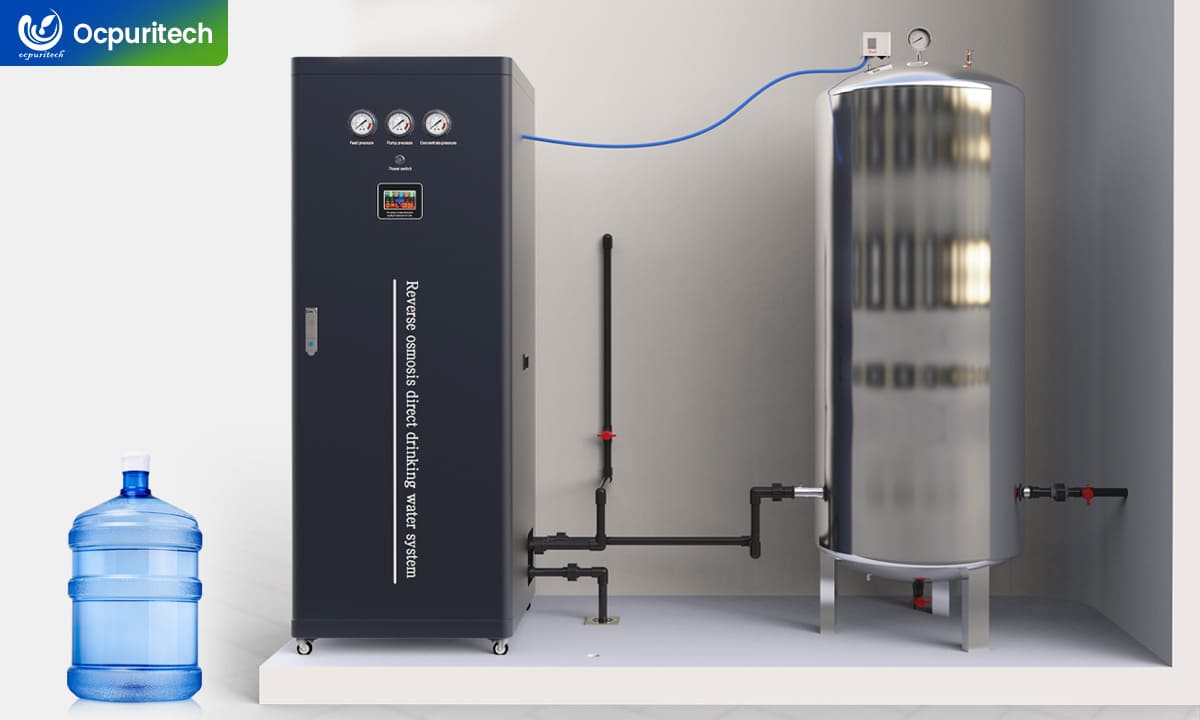
A Cabinet-Type Reverse Osmosis (RO) Plant, also called an enclosed RO system or box-type RO system, is a compact water purification unit that houses the main treatment and control components inside an enclosed cabinet.
Unlike an open skid-mounted RO system, the cabinet design keeps the pumps, membrane housings, filtration equipment, electrical controls, and instruments organized within one protective enclosure. This makes the system easier to install where floor space, equipment appearance, or component protection is important.
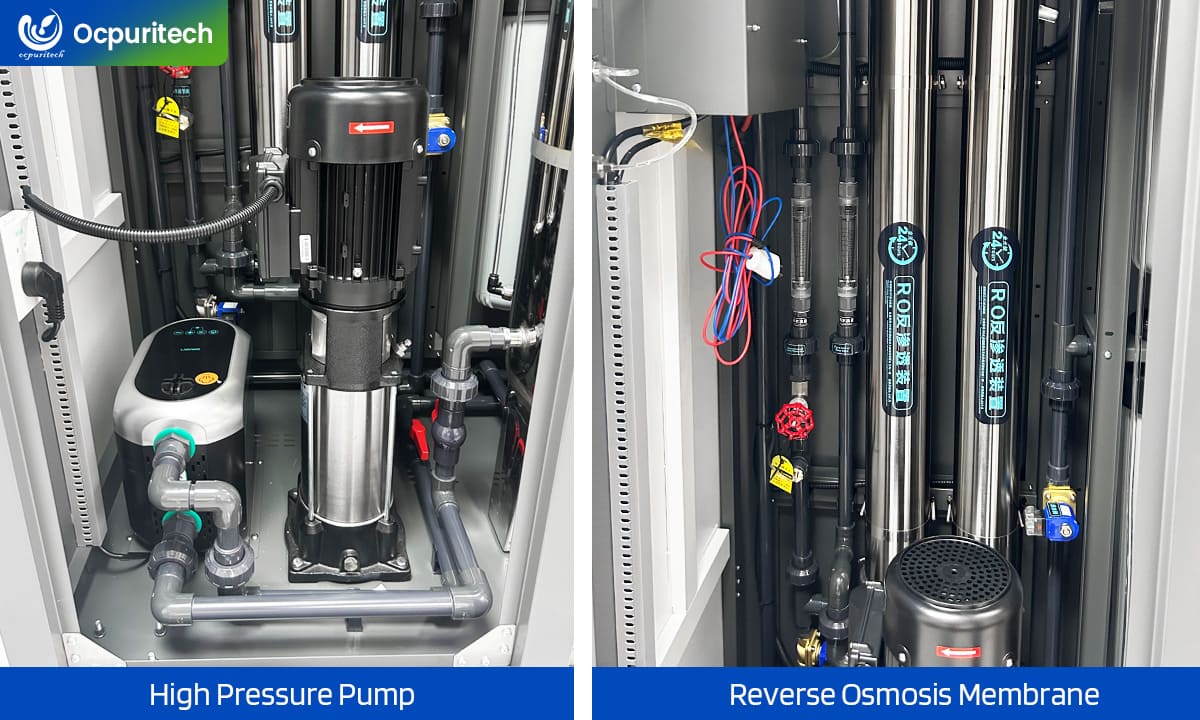
What Is Inside a Cabinet RO System?
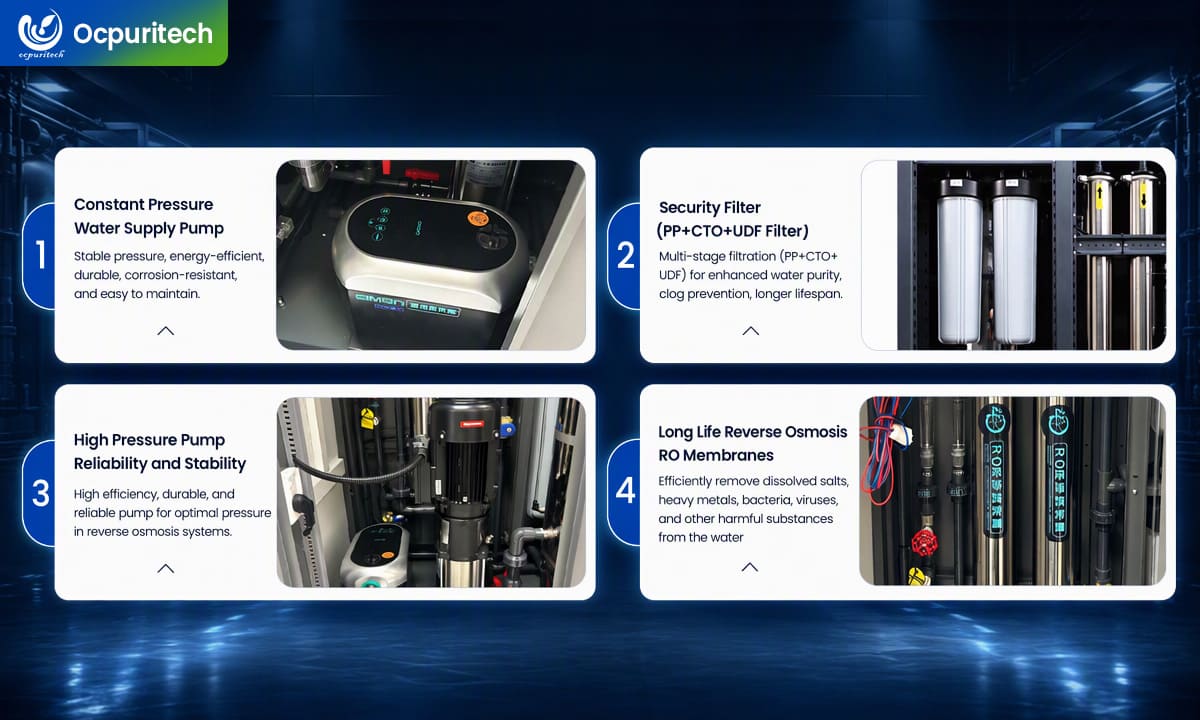
A typical cabinet reverse osmosis plant may include:
- Feed water pump
- Multimedia and carbon filtration
- 5-micron security filter
- High-pressure pump
- RO membrane vessels and membrane elements
- Electrical control system
- Optional UV, ozone, or other post-treatment
The exact configuration depends on the raw water quality, required production capacity, target water quality, and application. For example, a system treating well water may require different pretreatment from one using municipal water.
Typical Cabinet RO Specifications
| Specification |
Typical Range / Configuration |
| Capacity |
250 L/h–3,000 L/h |
| Salt Rejection |
98–99.7% |
| Recovery Rate |
50–75% |
| Cabinet Material |
SS304, SS316, or powder-coated steel |
| Feed Water |
Municipal water, tap water, or treated groundwater |
| Membrane |
4040 or 8040 spiral-wound polyamide composite |
| Control System |
Microprocessor relay or PLC + HMI |
These specifications are only typical ranges. The right cabinet RO configuration should be selected according to the actual water analysis and project requirements rather than capacity alone.
That is why I recommend checking the raw water, required flow rate, operating hours, installation space, and maintenance access before choosing a cabinet reverse osmosis plant.
How does cabinet design affect future maintenance?
A small cabinet saves space, but a crowded cabinet can make maintenance difficult and increase labor costs. A good design should give operators enough room to change filters, check pumps, read pressure gauges, reach valves, and remove the RO membranes.
Many clients like cabinet RO systems because they look clean and save space. However, I never make a cabinet smaller just for appearance. It may look great on delivery day, but maintenance can become difficult later.
Maintenance Space Checklist
I always look at the cabinet like a maintenance worker. I check several things before I finish the design.
| Component |
Maintenance Check |
Component |
Maintenance Check |
| Filters |
Can you remove them easily? |
RO Membrane |
Is there space to pull the membrane out? |
| Pumps and Valves |
Can your hands reach them? |
Electric Panel |
Is it safe and easy to test? |
Two machines can look the same from the outside but be very different inside. The layout of the pipes and pumps matters a lot. I care about how these parts fit together. A machine must be easy to use and easy to fix. Do not just look at the photo. Ask the supplier about the inside layout.
Where Is a Cabinet Reverse Osmosis Plant Suitable?
A Cabinet Reverse Osmosis Plant is often a practical choice when you need reliable RO-treated water but have limited equipment space or prefer a compact, enclosed installation. However, the application alone does not determine whether a cabinet design is suitable.
When I discuss a project with a client, I look at the actual site conditions first. A small hotel, for example, may benefit from a compact cabinet system, while a larger factory with higher water demand may need a skid-mounted configuration.
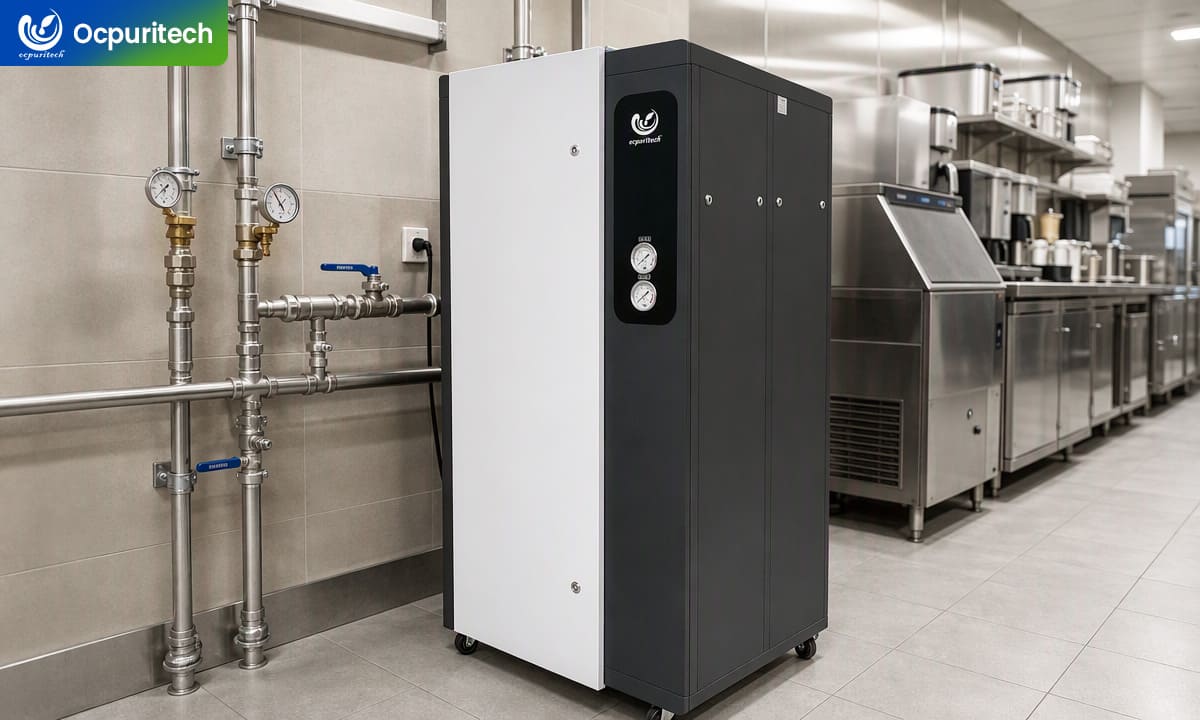
Commercial Applications
Cabinet RO systems are commonly used in facilities where space, appearance, and easy equipment management are important, including:
- Hotels and hospitality facilities
- Restaurants and food service operations
- Offices and commercial buildings
- Schools and educational facilities
- Hospitals and healthcare facilities
For these applications, a compact enclosed system can keep the pumps, membrane housings, electrical controls, and other components organized in one unit while taking up less floor space.
Small-Scale Industrial & Process Water Applications
A cabinet-mounted RO system can also be suitable for smaller industrial or process-water applications when the required capacity and pretreatment remain manageable.
Typical examples include:
- Laboratories
- Small production facilities
- General process water
- Small-scale manufacturing applications
However, I do not recommend choosing a cabinet RO system simply because the application appears to be “small.” Two facilities in the same industry can require very different systems because their raw water quality, production capacity, operating hours, and required water quality are different.
When Should You Consider a Skid-Mounted RO System Instead?
A skid-mounted RO system may be more practical when the project requires:
- Large RO production capacity
- Extensive pretreatment
- Larger pumps and piping
- Frequent maintenance or component replacement
- Significant future capacity expansion
- More open access to equipment
For example, a large factory may need multiple pretreatment stages, larger pumps, additional treatment equipment, or future capacity expansion. In this situation, a skid-mounted RO system can provide easier access to components and more flexibility for system expansion.
The choice is therefore not simply about cabinet versus skid. I recommend selecting the configuration based on the actual project conditions, including capacity, raw water quality, pretreatment requirements, installation space, maintenance needs, and future expansion plans.
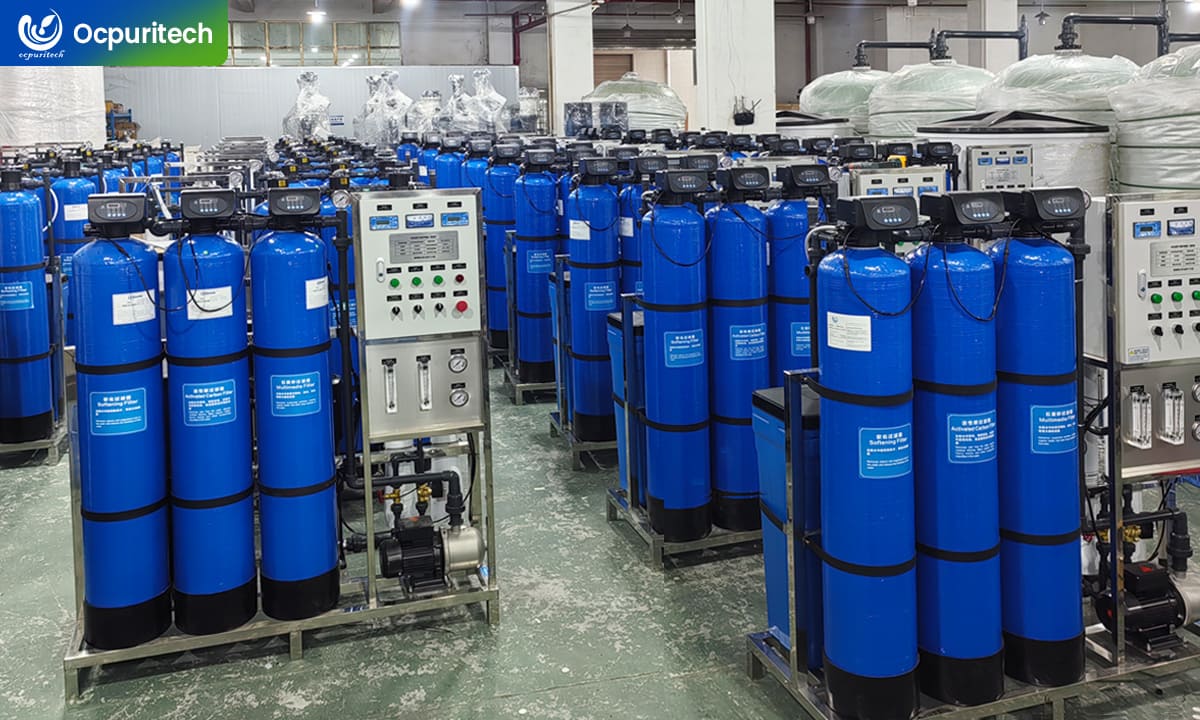
Cabinet Reverse Osmosis Plant Price: What Affects the Cost?
The price of a cabinet-type reverse osmosis system can vary significantly depending on equipment configuration and project requirements. Key factors affecting the overall cost include:
- Treatment Capacity: Required flow rate (m³/h or L/h) and the quantity/size of RO membrane elements.
- Cabinet Metallurgy: Enclosure material (powder-coated steel vs. food-grade SUS304 or corrosion-resistant SUS316).
- Core Components: Brand tier and specifications of the high-pressure pump, membrane vessels, and valves.
- Pretreatment Configuration: Quality and stages of raw water pre-filtration (sand/carbon media, water softening, or chemical dosing).
- Automation & Controls: Basic microcomputer operation versus advanced PLC with an HMI touchscreen and remote monitoring.
- Instrumentation: Integrated online sensors (conductivity/TDS meters, digital flow meters, and pressure gauges).
- Post-treatment Requirements: Optional add-ons such as UV disinfection, ozone sterilization, or polishing EDI modules.
- Customization Needs: Tailored cabinet dimensions, mobile caster setups, or site-specific pipe connections.
When comparing supplier quotations, I would not choose a system based on the purchase price alone. Check the membrane model and quantity, pump specification, pretreatment stages, cabinet material, control system, instruments, and included spare parts. Two suppliers can quote the same flow rate while offering very different system configurations.
Conclusion
A Cabinet Reverse Osmosis Plant can be a practical option when you need RO-treated water in a compact, enclosed installation. But a small footprint should not come at the expense of maintenance access or future expansion.
Before requesting a quotation, I recommend checking these points with your supplier:
- ✅ Raw water quality: Water source and recent water analysis
- ✅ Required capacity: L/h or m³/h, including peak demand
- ✅ Operating schedule: Hours per day and days per week
- ✅ Required water quality: Target permeate quality and intended use
- ✅ Pretreatment: Required filtration, softening, or other treatment
- ✅ Installation space: Available footprint, height, and access clearance
- ✅ Maintenance access: Space for filter, pump, and membrane replacement
- ✅ Cabinet material: SS304, SS316, or coated steel based on the environment
- ✅ Control system: Basic control or PLC + HMI
- ✅ Future expansion: Expected increase in water demand
A cabinet RO system should be engineered around the actual water quality, capacity, and site conditions rather than treated as an off-the-shelf appliance.
Send us your raw water analysis, required flow rate, and daily operating hours. Ocpuritech can review your project requirements and recommend a suitable RO configuration based on your water quality, capacity, installation space, and maintenance needs.
Get a Free Customized Water Treatment Solution