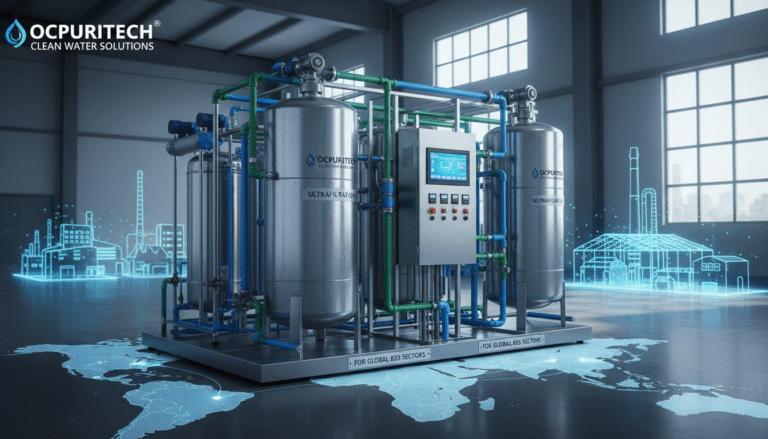
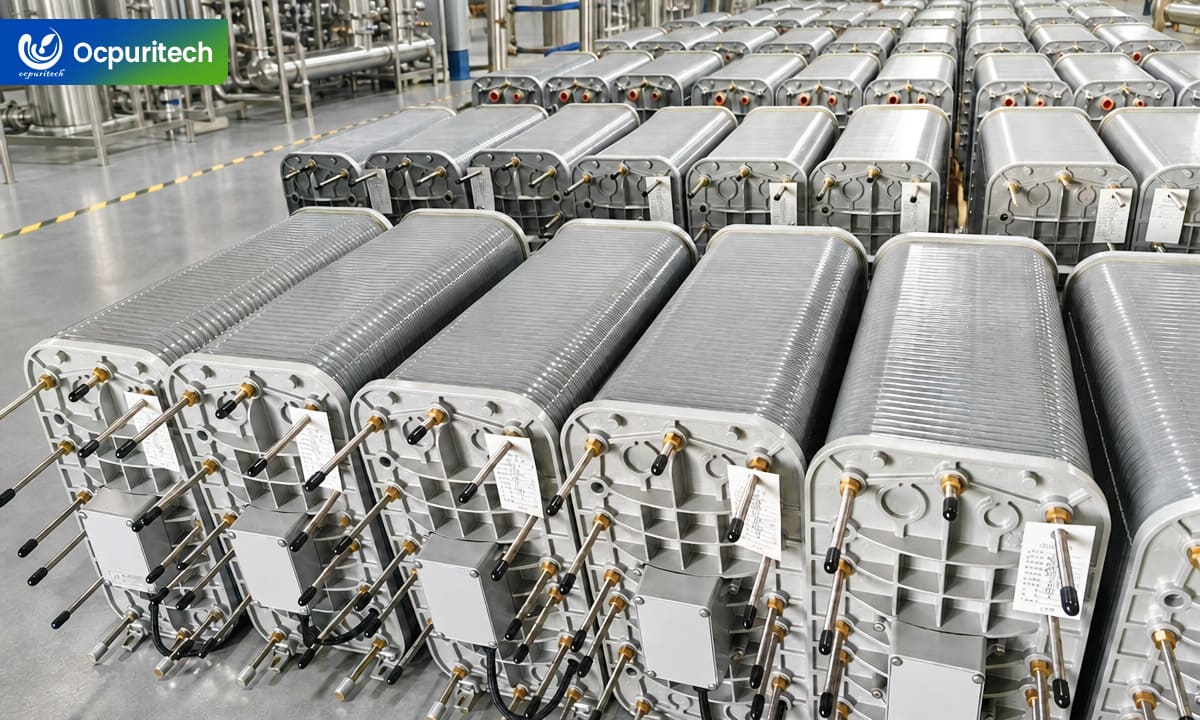
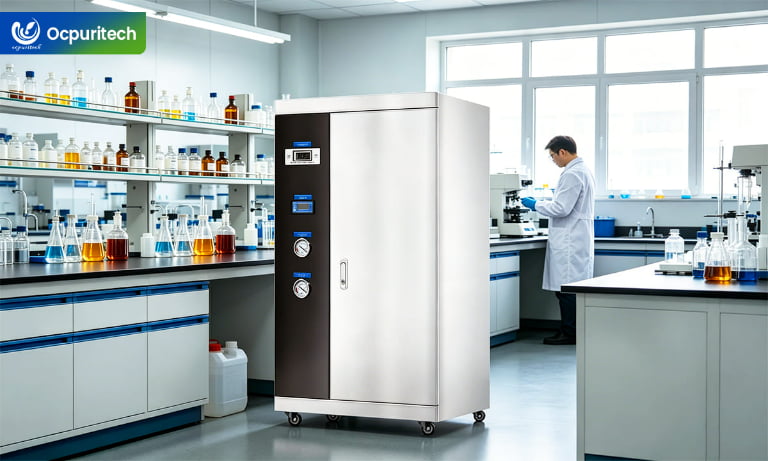
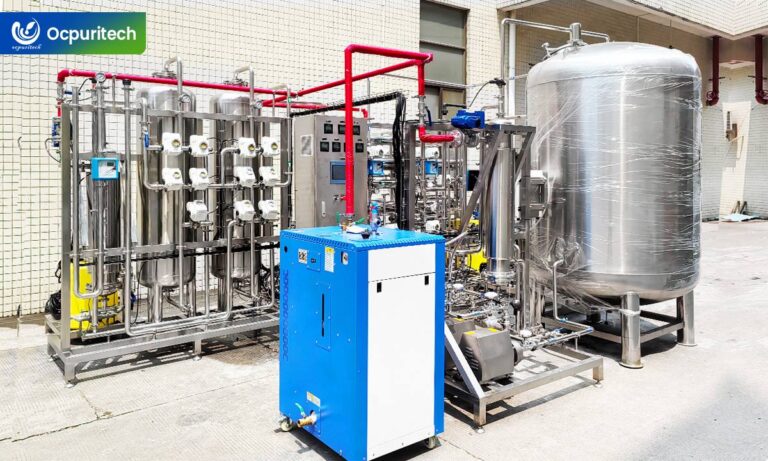
Electrodeionization system may sound like a complex water treatment technology, but the basic principle is quite straightforward. Many clients know that EDI produces high-purity water without the frequent chemical regeneration required by traditional ion exchange systems, but they are less clear about where EDI fits into the overall water treatment process.
An Electrodeionization (EDI) system is an advanced water treatment technology that combines ion exchange resins, ion exchange membranes, and a DC electric field to achieve continuous ion removal and resin regeneration without routine chemical regeneration. It offers a practical way to produce consistent high-purity water.
When clients come to me asking for an EDI system, I usually dig deeper. Who needs ultrapure water and why? Whether the system is for pharmaceuticals, labs, or semiconductors, the role of EDI is not universal. Let’s explore how it works and its place in a water treatment process.
What Role Does EDI Play in a Water Purification System?
Some clients initially see EDI as a complete water purification solution, but it is only one stage in a larger water treatment system. Understanding its role is important for designing the right system.
EDI serves as the final ion purification technology in a broader water treatment system. It removes ions and ionizable substances from water prepared by reverse osmosis (RO) or other pretreatment methods, ensuring consistent production of ultrapure water.
EDI is most effective when integrated into a system like Pretreatment → RO → EDI. Pretreatment handles suspended solids, organics, and other impurities, while RO removes the bulk of dissolved salts. EDI then takes over, refining water by removing trace ions that RO leaves behind. Without proper preparation by RO, EDI performance can degrade, as it isn’t designed to handle high ion loads.
How Does Electrodeionization Remove Ions Continuously?
Clients often wonder how Electrodeionization EDI achieves such high levels of purity without the need for chemical regeneration. Explaining its operation step-by-step helps demystify the process.
EDI removes ions using ion exchange resins and membranes, which isolate ions from water under the influence of a DC electric field. This enables continuous ion removal and resin regeneration.
Here’s a simplified breakdown of the process:
-
Ion Exchange: Water flows over ion exchange resin. Dissolved ions (cations and anions) in the water are exchanged with H⁺ and OH⁻ ions on the resin.
-
Ion Migration: Under a direct current electric field, ions migrate toward their respective electrodes.
-
Selective Membranes: Cations pass through cation-selective membranes into a concentrated brine stream, while anions pass through anion-selective membranes.
-
Resin Regeneration: H⁺ and OH⁻ ions, produced from the dissociation of water under an electric field, continuously regenerate the resins.
This is what allows electrodeionization EDI to combine ion exchange, ion migration, and continuous resin regeneration in one process.
Why Does EDI Need Pretreated Water, Like RO Permeate?
Some clients are surprised when I tell them that EDI cannot handle raw or lightly treated water. Pretreatment, especially reverse osmosis, is critical for EDI’s success.
EDI needs RO permeate water as its feed because it is designed to handle low levels of ions and impurities. Without RO, EDI would face challenges like scaling, fouling, and inefficient ion removal.
RO removes most dissolved salts and other contaminants before the water reaches the EDI stage. This prepares a cleaner feed for EDI. For instance:
-
Hardness (Ca²⁺, Mg²⁺): If not removed, it can cause scaling within EDI modules.
-
Silica: Silica is a weakly ionized compound that can bypass RO if improperly managed and clog EDI membranes.
-
CO₂: Dissolved carbon dioxide can convert into carbonic acid, adding ion loads that reduce EDI efficiency.
In some advanced applications, Double-Pass RO + EDI is recommended to ensure a higher level of feedwater purity for critical applications like semiconductor manufacturing or pharmaceuticals.
Advantages and Disadvantages of Electrodeionization
I would not describe electrodeionization technology as an “all-in-one” solution that can replace every other water treatment technology. Compared with other water treatment methods, industrial electrodeionization has its own advantages and limitations. When choosing the right water treatment technology for your application, I recommend considering the benefits and drawbacks of each method together.
Advantages of Electrodeionization
One of the main advantages of the electrodeionization process is that it does not require routine acid and caustic regeneration, making operation simpler than conventional mixed-bed ion exchange. It can remove almost all ions from water, making the resulting water suitable for demanding applications such as pharmaceutical production. The real value of electrodeionization is that it provides further ion polishing for water that has already been sufficiently treated, rather than replacing the entire water treatment process. At the same time, the ion exchange resin can be continuously regenerated during operation.
Disadvantages of Electrodeionization
Although electrodeionization technology offers many advantages, it also has some limitations. System performance may vary depending on the composition of the feed water. If the raw water still contains high levels of suspended solids, microorganisms, organic matter, or other contaminants that require specialized treatment, these issues should be addressed by pretreatment, activated carbon, ultrafiltration (UF), reverse osmosis (RO), or other suitable processes.
Therefore, when a client asks me, “Can EDI replace RO?”, I usually do not give a simple yes-or-no answer. Instead, I first look at the client’s raw water quality and final water requirements. For most typical high-purity water systems, RO and EDI perform different roles.
EDI vs. Traditional Mixed Bed Deionization: What’s the Difference?
When clients ask me to compare electrodeionization (EDI) with traditional mixed-bed deionization (DI), I always start with their operational differences and not just their performance.
The main difference between EDI and traditional mixed-bed DI lies in their operation. EDI provides continuous ion removal and resin regeneration using electricity, whereas mixed-bed DI requires periodic chemical regeneration.
| Feature |
EDI |
Mixed-Bed DI |
| Regeneration method |
Continuous (electric field-driven) |
Chemical (acid/base) |
| Chemical Use |
None |
Requires acids and bases |
| Process Continuity |
24/7 operation |
Downtime for regeneration required |
| Environmental Impact |
Minimal |
Chemical waste concerns |
| Operating cost |
Lower long-term chemical and labor demand |
Higher where chemical + labor costsare significant |
| Peak product quality |
Up to 18.2 MΩ·cm under suitable conditions |
18.2 MΩ·cm achievable, but declinesnear end of cycle |
| Water quality consistency |
Stable throughout operation |
Declines toward end of each service run |
For applications requiring constant, high-purity water production, EDI is often the better choice. However, small-scale or less-critical projects may still benefit from the simplicity and lower capital costs of mixed-bed DI.
Where Are Electrodeionization Systems Used?
Electrodeionization (EDI) systems are widely used to produce high-purity water for different industries. In my experience, they are especially suitable for applications that require stable water quality and continuous operation without chemical regeneration.
Pharmaceutical Industry: Electrodeionization systems are commonly used after RO to further remove ions and produce high-purity water for pharmaceutical production.
Electronics and Semiconductor Industry: These industries require water with very low ionic contamination. EDI systems can be used after RO to further polish the water for sensitive manufacturing and cleaning processes.
Laboratory and Biotechnology: EDI water systems can provide consistent high-purity water for laboratory testing, research, and biotechnology processes.
Power Generation: EDI systems can be used after RO to produce high-purity water for applications such as boiler feedwater, helping reduce the ionic load entering downstream equipment.
Industrial Manufacturing: Other manufacturing processes may also use EDI systems when their production requires reliable high-purity water.
From my perspective, I would not choose an EDI system simply based on the industry. I first look at the required water quality, RO permeate quality, flow rate, and application. The EDI system should be designed as part of the complete water treatment system rather than treated as a standalone unit.
How to Choose the Right Electrodeionization System?
When purchasing an EDI system, provide detailed project data, including raw water source, RO permeate quality, required flow rate, final water quality, and application. This ensures the system design meets your specific needs. Here are some things to think about to help you make accurate comparisons:
- Flow rate: How much water do you need per hour or per day?
- Feed water: Consider the source and composition of your raw water.
- RO permeate: Conductivity, hardness, silica content, and CO₂ levels of the RO permeate.
- Product water requirements: Required flow rate and final water quality, such as resistivity or conductivity.
- Control method: How the system will operate and the required level of automation.
- Application: Such as boiler feedwater, semiconductor manufacturing, pharmaceutical production, and other applications.
The more complete this information is, the better the supplier can design and recommend the most suitable RO + EDI configuration, rather than simply giving you a price for a standard EDI module. This helps achieve stable long-term system operation and efficient performance.
What are the Common Misconceptions About EDI?
One persistent misconception I encounter is the belief that EDI can replace RO. This can lead to poorly designed systems.
EDI is not a standalone solution. It works best as part of a system that includes pretreatment processes and reverse osmosis to reduce the ion load before final treatment.
Another misconception is that achieving the highest purity (e.g., 18.2 MΩ·cm) is always necessary. While EDI can produce ultrapure water, not all applications require it. For example:
EDI systems should therefore be selected according to the actual application and water-quality target rather than simply aiming for the highest possible purity.
Conclusion
Electrodeionization is an efficient technology for producing high-purity water by removing unwanted ions from the water supply. It can continuously produce consistent water quality and is widely used across industries that require high-purity water. However, its success depends on how well it is integrated into the overall water treatment system. When electrodeionization is combined with reverse osmosis (RO) and other suitable water treatment technologies, it can produce even higher-purity water.
At Ocpuritech, our water treatment experience allows us to recommend the most suitable system for your specific application and water quality requirements. We provide a range of system configurations and component options for both new water treatment projects and existing systems that need to be upgraded. If you are considering an Electrodeionization System, contact us to discuss your requirements and get a customized solution. [Get a Free Customized Water Treatment Solution]
Frequently Asked Questions About Electrodeionization Systems
What is an Electrodeionization (EDI) System?
An EDI system combines ion exchange resins, selective membranes, and a DC electric field to continuously remove dissolved ions from water — without chemicals. It works as the final polishing stage after reverse osmosis, producing ultrapure water.
Can Electrodeionization (EDI) Replace Mixed-bed DI?
Both technologies can achieve up to 18.2 MΩ·cm, but electrodeionization EDI runs continuously without regeneration downtime or chemical use. Mixed-bed deionization requires periodic offline acid-caustic regeneration.
Does an Electrodeionization System Need Reverse Osmosis?
Electrodeionization is a polishing technology, not a primary treatment device. Reverse osmosis removes 95–99% of dissolved salts first, bringing conductivity down to 1–20 µS/cm. Without that clean RO permeate as feed, hardness and silica will scale the EDI membranes and degrade product quality rapidly.
What Water Quality Does EDI Produce?
A properly designed RO + EDI system can produce multi-megohm-cm resistivity water, with the actual output depending on feed water quality, RO performance, EDI configuration, and operating conditions. Actual output depends on feed water quality and system design.
Does Electrodeionization System Use Chemicals?
No. Electrodeionization is a chemical-free water purification process. The DC electric field splits water into H⁺ and OH⁻ ions that regenerate the resin continuously during operation — replacing the acid and caustic used in conventional ion exchange regeneration. No routine acid or caustic regeneration is required.
What Water Quality Does EDI Need as Feed Water?
EDI requires pretreated RO permeate with low conductivity, hardness, silica, CO₂, and no detectable free chlorine. If the RO permeate exceeds these limits, additional treatment such as degassing, softening, or a second RO pass may be needed to prevent scaling and fouling.
How do I Choose an Electrodeionization System?
Match the system to your application, not just the flow rate. Key selection inputs: raw water analysis, RO permeate quality (conductivity, hardness, silica, CO₂), product water target (resistivity or conductivity), daily operating hours, end use and automation requirements.
How Much Does an Electrodeionization System Cost?
Electrodeionization EDI system cost depends on flow rate, RO configuration, feed-water quality, required product-water quality, automation level, component selection, and customization.