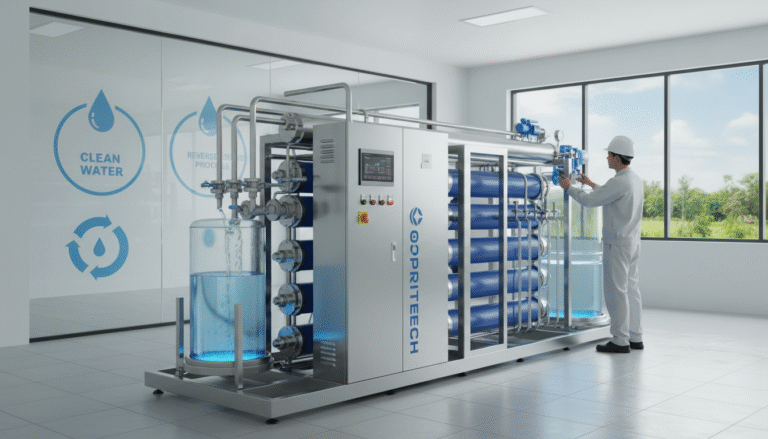
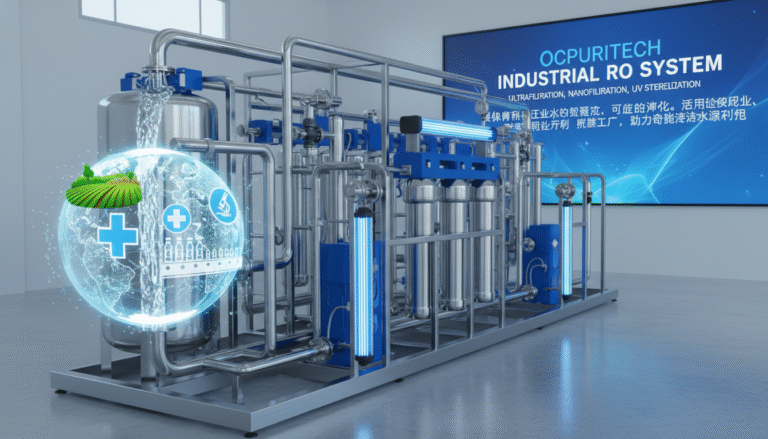
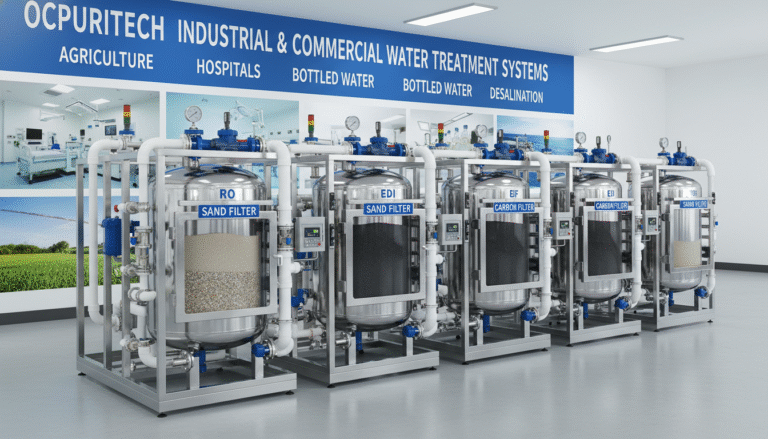
Industrial RO pretreatment is the treatment applied to feedwater before it reaches the reverse osmosis membranes. Its purpose is to control suspended solids, scaling compounds, iron, manganese, and residual oxidants that can cause membrane fouling, scaling, or chemical damage. The right pretreatment configuration depends on feedwater quality, required RO recovery, and product-water requirements—not on a fixed list of filters.
For an industrial reverse osmosis pretreatment system, common options include multimedia filtration, activated carbon filtration, water softening, chemical dosing, ultrafiltration (UF), and cartridge filtration. However, not every project needs all these treatment stages.
In this guide, we explain which water quality parameters should be tested, how different pretreatment equipment works, and how treatment flows change with municipal water, groundwater, and surface water. We also cover equipment selection, operating costs, and the information buyers should prepare before requesting a quotation.
What Is Industrial RO Pretreatment, and Why Is It Necessary?
Many industrial operations overlook the importance of pretreatment, thinking any RO system will suffice. Yet, misconfigured pretreatment systems can lead to fouling, scaling, and reduced performance over time, causing unnecessary maintenance headaches and expenses. Industrial RO pretreatment protects membranes from contaminants like suspended particles, hardness, silica, iron, manganese, and chlorine, ensuring long-term stability and efficiency of the RO system.
Pretreatment is not about adding equipment indiscriminately; it’s about addressing specific water quality risks. Tailored solutions minimize costs and maximize system efficiency.
| Contaminant |
Impact on RO Membranes |
Pretreatment Solution |
| Suspended Solids |
Can cause fouling |
Multimedia Filter |
| Hardness |
Leads to scaling |
Softener / Antiscalant |
| Iron & Manganese |
Can clog membranes |
Chemical Oxidation & Filtration |
| Chlorine |
Damages membrane material |
Activated Carbon / Chemical Dechlorination |
We assess a proposed treatment train by asking what each stage removes or controls. Unnecessary equipment adds investment and maintenance; missing treatment leaves an identified risk unmanaged. Your supplier should explain both the equipment included and the reasons for excluding other options. That explanation is more useful than the number of filtration stages in a brochure.
Which Feedwater Parameters Should You Test Before RO?
Start with a feedwater analysis for RO system design, not TDS alone. Total dissolved solids describes the overall dissolved-solids concentration, but does not identify every scaling, fouling, or oxidation risk.
Use the following parameters to frame the pretreatment discussion:
| Parameter |
Design question it helps answer |
| TDS and major ions |
What dissolved constituents must the design account for? |
| Hardness, calcium, magnesium |
Should softening or antiscalant be evaluated? |
| Alkalinity and pH |
How do water chemistry and operating conditions affect scaling? |
| Silica |
Is a separate assessment of silica-related deposition needed? |
| Iron and manganese |
Is dedicated removal required before RO? |
| Turbidity and suspended solids |
What particle-removal treatment is appropriate? |
| SDI15 (Silt Density Index) |
How effectively is particulate fouling potential controlled? |
| Free chlorine and disinfectant type |
Which dechlorination method is suitable? |
| Organics, oil, biological indicators |
Is additional source-specific treatment necessary? |
Identify the sampling location and provide seasonal results where available. One sample may not represent changing river conditions or a variable industrial water supply.
Raw-water results support equipment selection; pretreatment outlet testing checks performance. Ask the supplier to state the design water-quality range and acceptance criteria. Apply limits from the selected membrane documentation rather than treating a generic checklist as a universal specification.
What Equipment Does an Industrial RO Pretreatment System Use?
An RO pretreatment system should match treatment functions to measured water quality risks. The following equipment options serve different purposes and should be selected according to feedwater conditions.
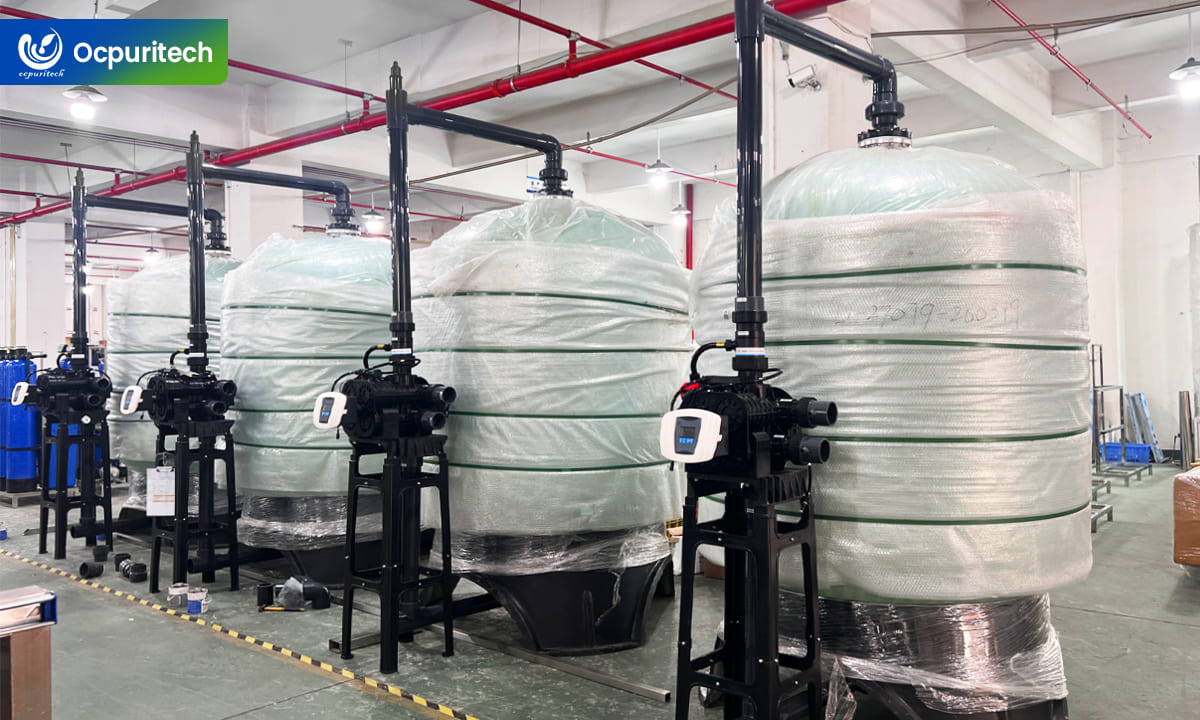
Multimedia and cartridge filtration: Multimedia filters reduce suspended-particle loading. Cartridge filters commonly provide protection immediately before RO. Specify cartridge ratings according to membrane requirements and upstream performance; cartridges should not compensate for inadequate primary treatment.
Activated carbon or chemical dechlorination: Activated carbon can remove free chlorine and certain organic compounds, but contact time and disinfectant type matter. Chloramine removal requires specific evaluation. Chemical dechlorination, such as sodium bisulfite dosing, is another option where carbon beds are impractical.
Water softeners or antiscalant dosing: Softeners reduce calcium and magnesium hardness through ion exchange. Antiscalants inhibit precipitation; they do not remove hardness. Choosing between softening and antiscalant for RO pretreatment requires the full water chemistry, proposed recovery, and chemical suitability. Moderate hardness alone does not prove that dosing will be sufficient or cheaper.
Iron and manganese removal systems: When groundwater contains elevated levels of iron or manganese, dedicated removal treatment may be necessary before RO. Depending on their concentrations and chemical forms, treatment may involve oxidation and filtration through suitable media. The configuration should be based on water analysis rather than assuming a standard multimedia filter can remove all iron and manganese.
Ultrafiltration (UF): UF can improve particulate and colloidal control when surface-water turbidity or biological loading makes conventional treatment less consistent. It can help stabilize RO feedwater SDI, but it does not remove dissolved salts or replace scale-control and dechlorination measures where these are required.
A useful quotation connects every equipment item to a specific treatment objective. A recommended configuration without a water-quality basis is not enough to compare competing proposals.
Industrial RO Pretreatment Process Flow for Different Water Sources
The pretreatment process for an industrial RO system depends largely on the source and quality of the feedwater. Because each source contains different impurities, the required treatment stages may vary before water reaches the RO membranes.
Municipal Water: Municipal Water → Dechlorination (if required) → Scale Control (if required) → Cartridge Filtration → RO
Municipal water is generally more consistent than untreated surface water. However, it may still contain residual chlorine, hardness, suspended particles, and other substances that require attention before RO treatment. A typical pretreatment configuration may include activated carbon filtration or another dechlorination method, followed by water softening or antiscalant dosing when scaling risks are identified. A cartridge filter is commonly installed as the final filtration barrier before the RO membranes.
Groundwater (Well Water): Well Water →Iron/Manganese Removal If Required → Softening Or Validated Antiscalant Treatment → Cartridge Filtration → RO
Groundwater often contains elevated levels of hardness, iron, manganese, or silica. These substances can contribute to scaling, deposits, and membrane fouling if they are not properly controlled. When iron or manganese concentrations are high, dedicated oxidation and filtration processes may be necessary. For hardness control, a water softener or antiscalant dosing system can be considered, depending on the water chemistry, RO recovery rate, and scaling projections.
Surface Water (River Or Lake Water): Surface Water → Clarification If Required → Multimedia Filtration Or Uf → Required Chemical Conditioning → Cartridge Filtration → RO
River water and other surface water sources often have greater variations in turbidity, suspended solids, organic matter, and biological activity. These conditions may change significantly with rainfall and seasonal conditions. Multimedia filtration is commonly used to reduce suspended particles.
| Water Source |
Common Issues |
Recommended Pretreatment Solutions |
| Municipal Water |
Residual chlorine, occasional organics |
Activated carbon, cartridge filters |
| Groundwater (well water ) |
High hardness, iron |
Softeners, chemical oxidation, multimedia filtration |
| Surface Water (rivers, lakes) |
High turbidity and organics |
Pre-filtration, activated carbon, ultrafiltration |
For surface water with fluctuating turbidity or biological loading, UF may be considered when conventional filtration cannot consistently meet the required RO feedwater quality.
How to Choose the Right Industrial RO Pretreatment System for Your Application?
Give suppliers the same design basis: feedwater analysis, daily production demand, operating hours, product-water requirements, proposed recovery, and installation constraints. Otherwise, the lowest quotation may simply cover less equipment or a different operating case.
Check sizing carefully. Pretreatment generally handles RO feedwater, not just product water:
RO feed flow = required permeate flow ÷ recovery expressed as a decimal.
Ask for a water balance that also identifies backwash and other auxiliary requirements. Nominal RO output alone is insufficient for sizing the complete upstream system.
- The water-quality range and operating conditions used for design.
- Treatment objectives and measurable outlet acceptance criteria.
- Included pumps, valves, instruments, controls, piping, and initial consumables.
- Chemical and cartridge requirements, with calculation assumptions.
- Maintenance tasks, shutdown requirements, and local spare-parts availability.
- Installation, commissioning, operator training, and service responsibilities.
Compare CAPEX and OPEX Before Choosing a Pretreatment System
When comparing industrial RO pretreatment quotations, buyers should consider both the initial investment and long-term operating costs. A system with a lower purchase price may require more frequent consumable replacement or higher maintenance expenses.
| Cost Category |
Typical Expenses |
| CAPEX (Initial Investment) |
Filters, pumps, tanks, chemical dosing systems, control panels, piping, and installation |
| OPEX (Operating Costs) |
Electricity, chemicals, cartridge replacements, filter media, resin regeneration (if applicable), and routine maintenance |
For a fair comparison, ask suppliers to provide separate estimates for equipment investment and expected operating expenses. Check whether installation, commissioning, initial consumables, and maintenance are included in the quotation.
>Comparing the estimated operating cost per cubic meter of RO permeate can also help, provided that feedwater quality, operating hours, system capacity, and local utility prices are based on the same assumptions.
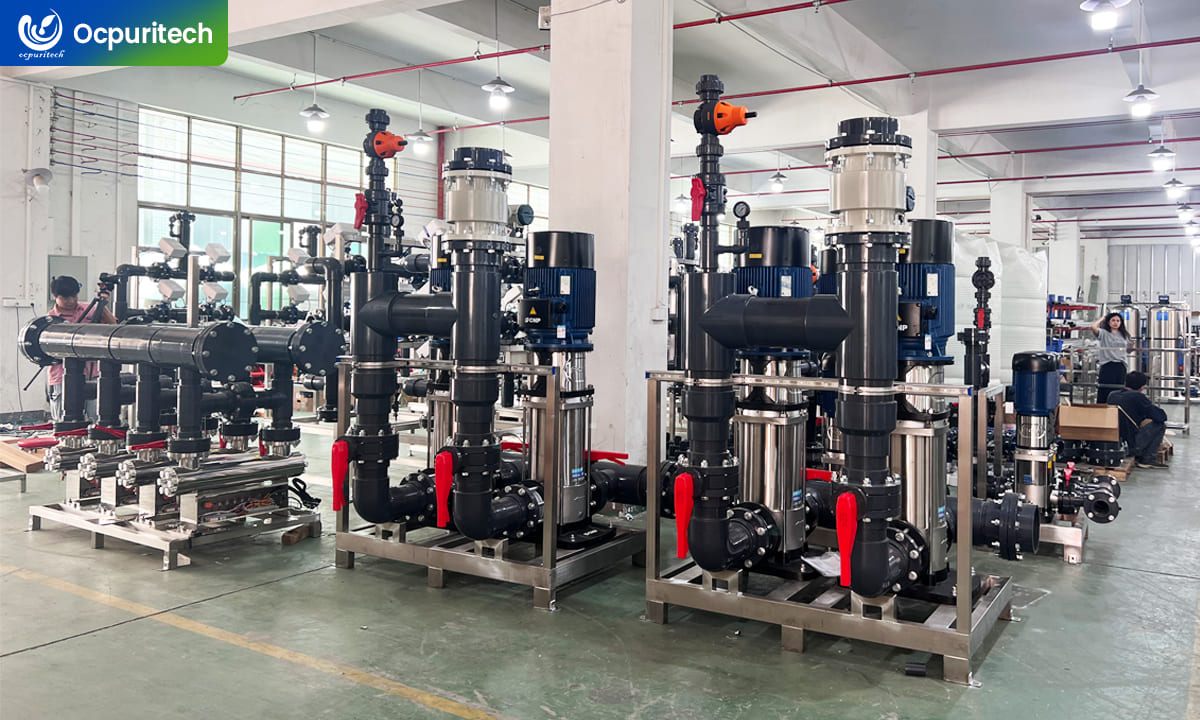
Need an Industrial RO Pretreatment Solution?
Planning a new industrial RO project or upgrading an existing system? Ocpuritech provides customized water treatment equipment and OEM/ODM solutions based on project requirements. Send us your feedwater analysis, daily water demand, operating schedule, and required product-water quality. Our team can help evaluate suitable pretreatment equipment and system configurations for your application.
Industrial RO Pretreatment FAQs
Does every industrial RO system need a water softener?
No. A softener reduces calcium and magnesium hardness, while antiscalant inhibits scale formation without removing hardness. The appropriate choice depends on feedwater chemistry, RO recovery, and operating requirements. Neither option should be selected from TDS alone.
Is ultrafiltration necessary before reverse osmosis?
Not always. Ultrafiltration can improve particle and colloid removal when surface-water quality fluctuates. Whether it is needed depends on upstream treatment performance and membrane feedwater requirements. UF does not replace softening, scale control, or dechlorination where these are required.
What pretreatment does well water need before RO?
RO pretreatment for well water may require iron and manganese removal, hardness or scale control, and cartridge filtration. Test silica as well as hardness. If an upstream treatment uses chlorine, assess dechlorination before the water reaches the RO membranes.
How should buyers compare RO pretreatment quotations?
Compare proposals using the same water analysis, feed flow, recovery, and outlet requirements. Check whether pumps, controls, consumables, commissioning, and training are included. Request operating-cost assumptions rather than choosing solely by the initial equipment price.
Provide your feedwater report, daily water demand, operating hours, required product-water quality, and installation conditions. For an existing system, include the equipment list and operating problems. These details help the supplier assess the configuration before preparing an equipment quotation.
What Factors Affect Industrial RO Pretreatment System Costs?
Industrial RO pretreatment system costs depend on feedwater quality, required treatment capacity, equipment configuration, and automation level. Buyers should also compare ongoing expenses for chemicals, replacement filters, energy, backwashing, and maintenance.