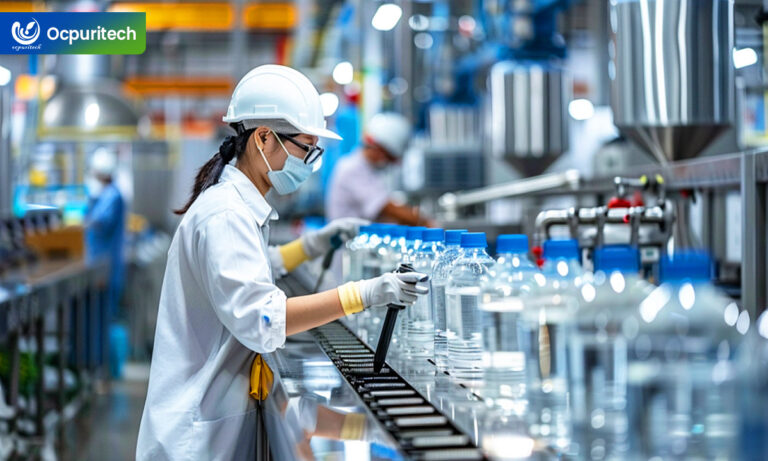
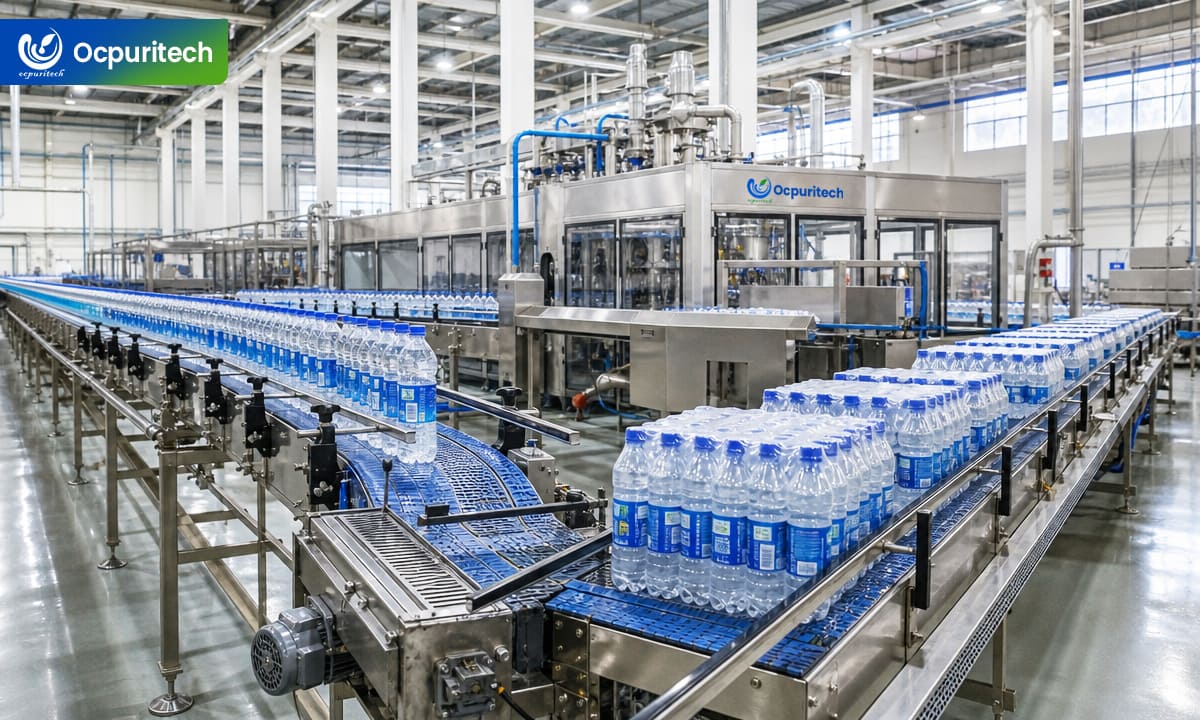
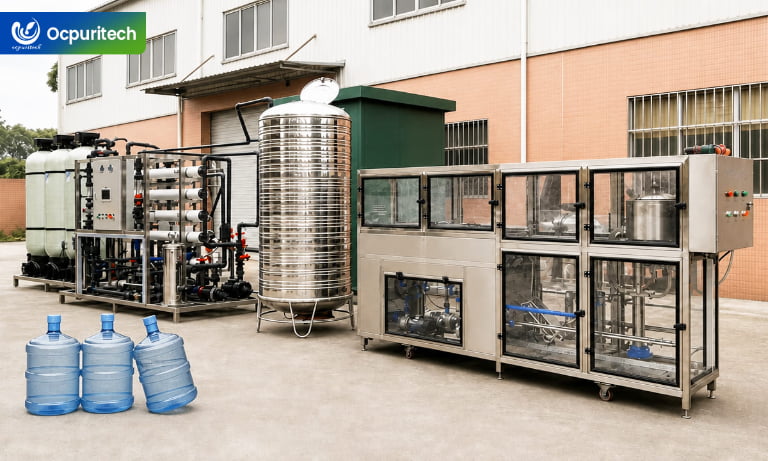
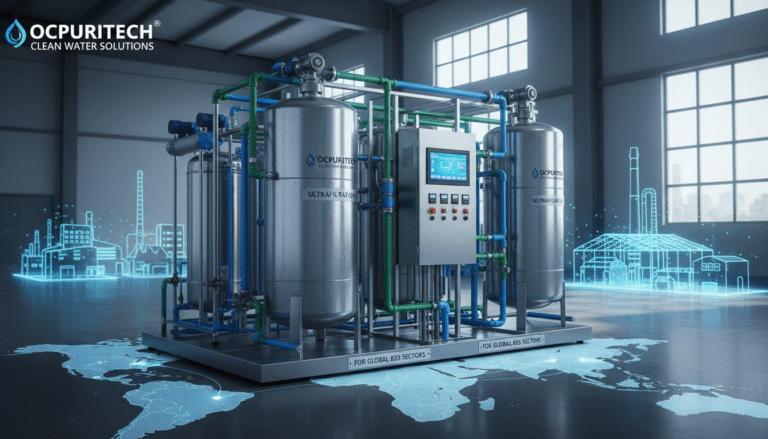
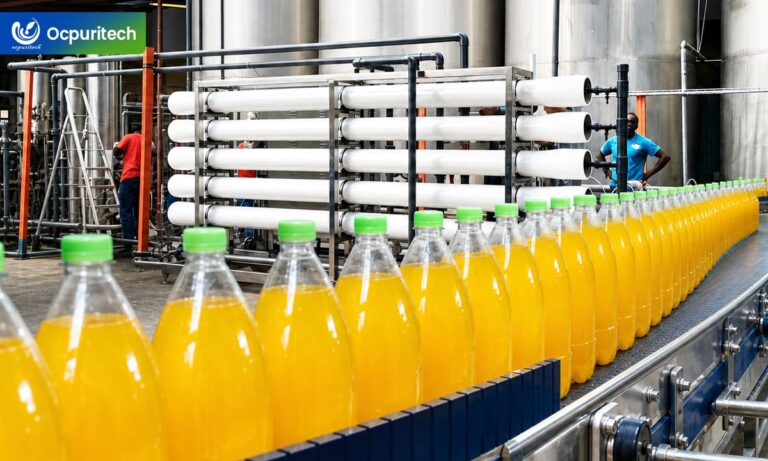
A mineral water filling line typically includes rinsing, filling, and capping equipment, but a complete production line may also require bottle blowing, labeling, coding, and packaging machines. Choosing the wrong capacity or combining incompatible equipment can cause production bottlenecks, additional costs, and installation delays.
To choose the right mineral water filling line, start with your daily production target, bottle specifications, and required automation level. Then check whether the equipment can work together at the planned production speed and confirm exactly what the supplier’s quotation includes.
In my experience, the biggest purchasing problems often come from details overlooked before ordering: incompatible bottle necks, missing auxiliary equipment, or machines with different production speeds. Checking these details early makes it easier to compare suppliers and avoid costly changes during installation.
What Is a Mineral Water Filling Line and What Does It Include?
Many buyers misunderstand mineral water filling line, thinking it’s either just one machine or a complete production line. This confusion leads to missed equipment or unrealistic budgets.
A complete mineral water bottling line includes machines for rinsing, filling, capping, labeling, and packaging. Depending on the project, it may also integrate bottle-making, water treatment, and additional end-of-line systems. A 3-in-1 filling machine handles rinsing, filling, and capping, but does not include all these other operations.
Each part of the filling line must be compatible and work efficiently together. If one machine slows down, it affects the whole process. For instance, if the filling machine is too fast for the labeler, you will experience bottlenecks. This is why I emphasize the importance of understanding each component’s role and how it fits into the entire system.
I usually start by checking whether the customer already has bottle-blowing, water-treatment, and packaging equipment. If so, the new line must match the existing conveyor heights, control signals, and production speeds. For a new plant, I ask for a clear equipment list showing what the supplier provides and what the buyer must arrange separately.
Automatic vs. Semi-Automatic Mineral Water Filling Lines: Which Is Better?
When a customer asks me whether to choose a semi-automatic or fully automatic filling line, I first want to know how many bottles they need to produce each day, how many hours the factory will operate, and how much manual handling they can manage. A fully automatic line isn’t always the better investment, especially when production demand is still uncertain.
Automatic filling lines are generally better suited to high-volume, continuous operations, reducing manual handling and maintaining production pace. Semi-automatic lines may be more suitable for lower volumes or intermittent production.
| Comparison |
Semi-automatic filling line |
Automatic filling line |
| Production pattern |
Lower volumes, short runs, or variable orders |
Higher volumes and longer, consistent production runs |
| Operator involvement |
More manual loading, transfers, or cycle control |
More connected operations, with staff still needed for supervision and replenishment |
| Initial investment |
Generally lower for a comparable production scope |
Generally higher because of additional handling and control equipment |
| Maintenance |
Depends on the machines and controls selected |
May require greater electrical and troubleshooting capability |
| Expansion |
Check which machines can be retained during an upgrade |
Check capacity reserves and compatibility with future bottle formats |
Don’t just think about today. If upgrading from semi-automatic to automatic later requires replacing most equipment, initial savings may lead to higher costs. Plan for scalability based on future needs.
How to Choose the Right Mineral Water Filling Line Capacity?
Choosing a mineral water filling line based only on its advertised BPH (bottles per hour) can lead to costly mistakes. Actual production depends on bottle size, operating hours, equipment downtime, and overall line efficiency.
For example, if your factory needs 40,000 bottles per day, operates eight hours, and achieves 85% line efficiency, the required rated capacity is approximately 5,882 BPH. A 6,000 BPH filling line could meet this target under those assumptions, but it leaves little room for increased demand or unexpected production losses.
Example Mineral Water Filling Line Capacity Selection
| Line Capacity |
Suitable For |
Typical Application |
| 1,000–3,000 BPH |
Small water businesses |
Startups, local bottled water markets |
| 4,000–8,000 BPH |
Medium-scale production |
Growing regional water brands |
| 10,000–20,000 BPH |
High-volume production |
Established bottling factories with larger distribution networks |
These are illustrative capacity ranges, not fixed industry classifications. Actual selection depends on daily demand, bottle format, operating hours, and verified line efficiency.
Capacity must also match the upstream water supply. For example, a 6,000 BPH line filling 500 mL bottles requires 3,000 L/h of product water at its rated speed. Storage, rinsing, cleaning, and other process requirements must be evaluated separately.
My recommendation: Calculate your required daily output first, then confirm operating hours, realistic line efficiency, bottle specifications, and future expansion plans. Before ordering, ask the manufacturer to verify the rated capacity and agreed acceptance conditions using your intended bottle format.
Real Project: 5,000 BPH Mineral Water Filling Line in China
For a bottled water project in Jiangxi Province, China, our customer needed to treat locally sourced mountain spring water and bottle it in 500 mL PET bottles. We designed a 5,000 BPH mineral water filling line integrated with the water treatment and packaging equipment.
| Project Details |
Specifications |
| Location |
Jiangxi Province, China |
| Production capacity |
5,000 BPH |
| Bottle format |
500 mL PET |
| Filling equipment |
3-in-1 rinsing, filling and capping machine |
| Water treatment |
Ultrafiltration (UF) and ozone disinfection systems |
| Supporting equipment |
Automatic bottle blower, laser coding and double-sided labeling machines |
| Engineering services |
Plant layout design, on-site installation guidance and operator training |
The project required more than a filling machine. We designed the water treatment and equipment layout around the customer’s spring water source and production requirements. Our team also arranged technical personnel to guide installation and provide on-site training.
For buyers planning a similar mineral water bottling line, this project illustrates why equipment selection should consider bottle specifications, actual production requirements, and the complete equipment scope—not just the advertised BPH.
Key Technical Specifications of a 3-in-1 Mineral Water Filling Machine?
When comparing a 3-in-1 mineral water filling machine, I look beyond the advertised production speed. Filling valve design, fill-level control, product-contact materials, and cleaning accessibility can all affect product consistency and long-term operation.
For instance, two machines may offer 6,000 BPH, but one may include bottle protection systems and advanced fault detection. I would check how each machine responds to bottle jams, missing caps, and downstream conveyor stops. These details often tell me more about the machine’s operating reliability than its advertised BPH.
| Specification |
Evidence to request |
Procurement risk it addresses |
| Filling method and valve design |
Operating explanation for the proposed product and bottle |
An unsuitable filling arrangement |
| Fill-level control |
Agreed fill criteria and a demonstration with the intended bottle |
Inconsistent fill results |
| Product-contact construction |
Material specifications for wetted parts and seals |
Unclear suitability for the water and cleaning process |
| Bottle handling |
Bottle drawings, neck details, and sample trials |
Difficult transfers or unsupported bottle formats |
| Capping system |
Cap specifications and closure-test requirements |
Poor closure application or leakage |
| Cleaning design |
Cleaning procedure, access points, and included equipment |
Unclear cleaning scope or difficult maintenance access |
| Detection and alarms |
A list of standard functions, options, and machine responses |
Unpriced features and poorly defined fault handling |
| Changeover |
Parts list, adjustment steps, and demonstrated procedure |
Unexpected format-change cost or downtime |
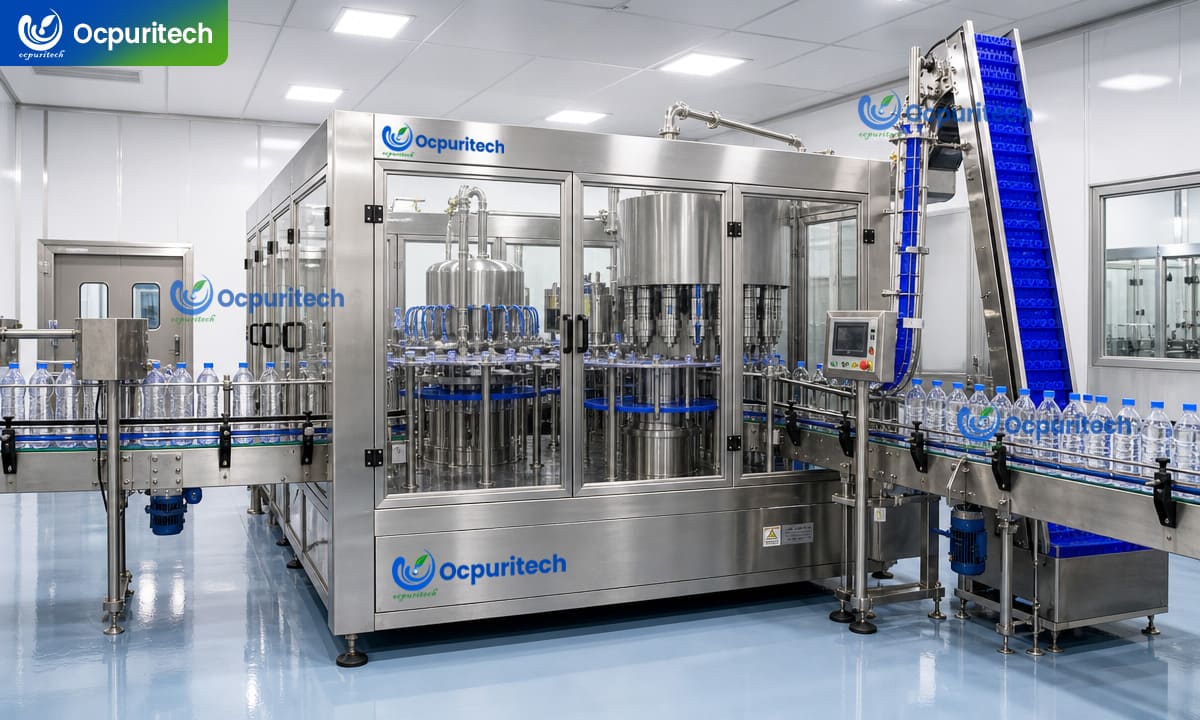
Bottle compatibility should also be verified. A machine supporting several sizes doesn’t guarantee compatibility with all neck designs or shapes. Test with actual bottle samples before investing.
How to Prevent Bottlenecks and Improve Filling Line Efficiency?
A mineral water filling line produces only as fast as its slowest component. I have seen many clients invest in high-speed filling machines only to discover their labeling or packaging equipment cannot keep up.
Balance the capacity of all line components, including bottle supply, filling, labeling, coding, and packaging. Use suitable buffer conveyors and automatic controls to coordinate equipment speeds and handle short interruptions.
For example, a 6,000 BPH filler connected to a 4,500 BPH labeler cannot sustain 6,000 bottles per hour across the complete line. Buffer conveyors help absorb temporary interruptions, but they cannot eliminate a permanent capacity mismatch.
Before purchasing, I would compare the rated and achievable speeds of the filler, labeler, packaging machine, and conveyor system. The goal is consistent output across the entire line, not just maximum filling-machine speed.
How Much Does a Mineral Water Filling Line Cost?
Clients always ask for filling line prices, but I cannot give accurate numbers without understanding their specific requirements. Equipment costs vary dramatically based on configuration, automation level, and included components.
Basic semi-automatic lines start around $50,000-100,000, while complete automatic systems range from $200,000-500,000 or more. The final cost depends on capacity, automation level, bottle compatibility, quality standards, and included auxiliary equipment.
| Cost group |
Items to clarify |
| Main equipment |
Rinsing, filling, capping, cap feeding, and specified controls |
| Upstream equipment |
Bottle blowing or feeding, water preparation, storage, and transfer |
| Downstream equipment |
Labeling, coding, inspection, packing, and any pallet handling |
| Integration |
Conveyors, transfer points, sensors, electrical interfaces, and commissioning responsibility |
| Bottle-format changes |
Change parts for every quoted bottle and cap specification |
| Site readiness |
Power connections, compressed air, pipework, drainage, and installation space |
| Delivery and startup |
Transport scope, installation, commissioning, travel responsibilities, and training |
| Continuing support |
Initial spares, wear parts, technical documents, and service terms |
This makes a mineral water bottling plant cost discussion more useful than a broad price range. It also separates equipment investment from building work, utilities, and other project costs that may sit outside the machinery contract.
Common Mistakes When Buying a Mineral Water Filling Line?
Buying a mineral water filling line based only on price or advertised BPH can lead to unexpected costs and installation delays. In my experience, the biggest purchasing risks often come from unclear technical requirements and equipment scope.
| Common Buying Mistakes |
Potential Consequences |
What to Check Before Ordering |
| Not providing actual bottle and cap specifications |
Extra change parts, compatibility problems, or production delays |
Bottle drawings, neck specifications, cap details, and sample testing |
| Not confirming the complete equipment scope |
Missing conveyors, auxiliary machines, or system connections |
Detailed equipment list, layout drawings, and supplier responsibilities |
| Not agreeing on FAT and after-sales support |
Acceptance disputes, unexpected downtime, or delayed technical assistance |
Test conditions, acceptance criteria, spare parts, and service terms |
Before paying a deposit, I would make sure the supplier’s technical agreement covers bottle compatibility, equipment scope, acceptance conditions, and after-sales responsibilities. These details are easier to clarify before manufacturing than after the equipment arrives.
How to Choose a Reliable Mineral Water Filling Line Manufacturer?
Factory size or promotional videos don’t guarantee suitability. A reliable manufacturer offers detailed plans, tailored to your needs, with clear technical documents and support guarantees.
Evaluate manufacturers based on technical capability, manufacturing quality, project experience, customer references, and long-term support commitment. The best supplier provides complete solutions tailored to your specific requirements, not just standard equipment.
At Ocpuritech, our approach focuses on understanding each client’s specific requirements and providing complete solutions rather than just selling equipment. We provide detailed technical proposals, training, and long-term support to help customers implement their projects. The configuration and service scope should be clearly defined in each proposal.
Conclusion
Choosing a mineral water filling line requires careful planning. Understand the equipment scope, select automation to suit your operation, match capacity to actual demand, and allow for future expansion.
If you are planning a new line or upgrading an existing one, share your daily production target, bottle and cap specifications, existing equipment, and factory layout with Ocpuritech. Request an itemized configuration and customized quotation so you can compare the proposed equipment against your actual production needs.