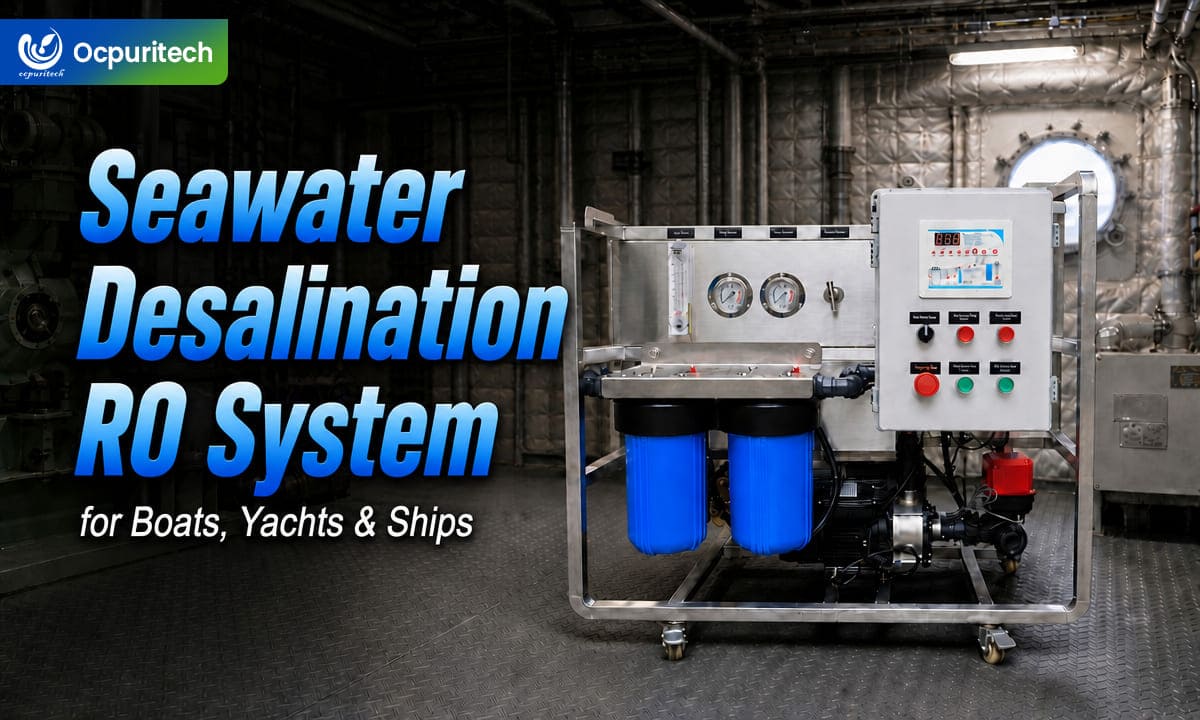
A small seawater desalination RO system transforms unlimited ocean water into safe, drinkable freshwater directly onboard. It eliminates dependence on shore tanks, bottled supplies, and unreliable port water.
For boats, yachts, and ships operating beyond coastal ranges, onboard reverse osmosis is no longer a luxury. It is essential equipment that extends voyage autonomy, reduces operational costs, and ensures crew safety.
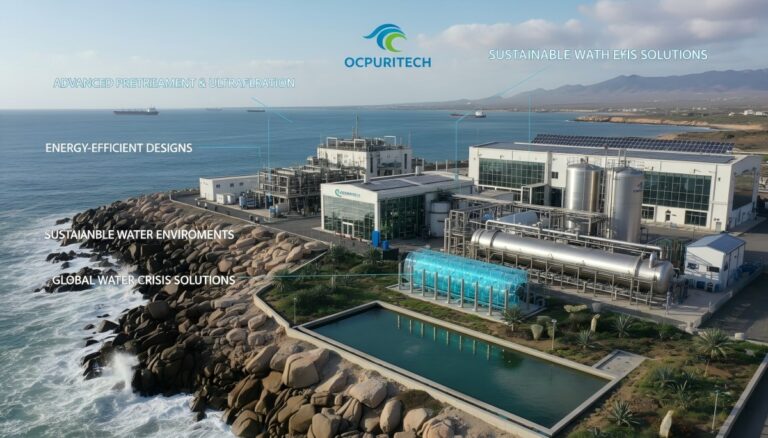
Ocpuritech designs and manufactures compact seawater desalination RO systems ranging from 60 litres per hour to 20 cubic metres per day. These units withstand the corrosive, high-vibration environment of marine vessels. With installations across Southeast Asia, the Middle East, Africa, and the Pacific, our systems serve private yacht owners, charter fleets, fishing operators, and commercial shipping lines worldwide.
Smaller and more efficient seawater desalination RO systems are now viable solutions for smaller marine vessels. These systems address critical needs like water restrictions during long journeys, operational costs, and safety concerns. Let’s explore their benefits, how they’ve evolved, and what to prioritize when choosing one.
1. What Is a Small Seawater Desalination RO System?
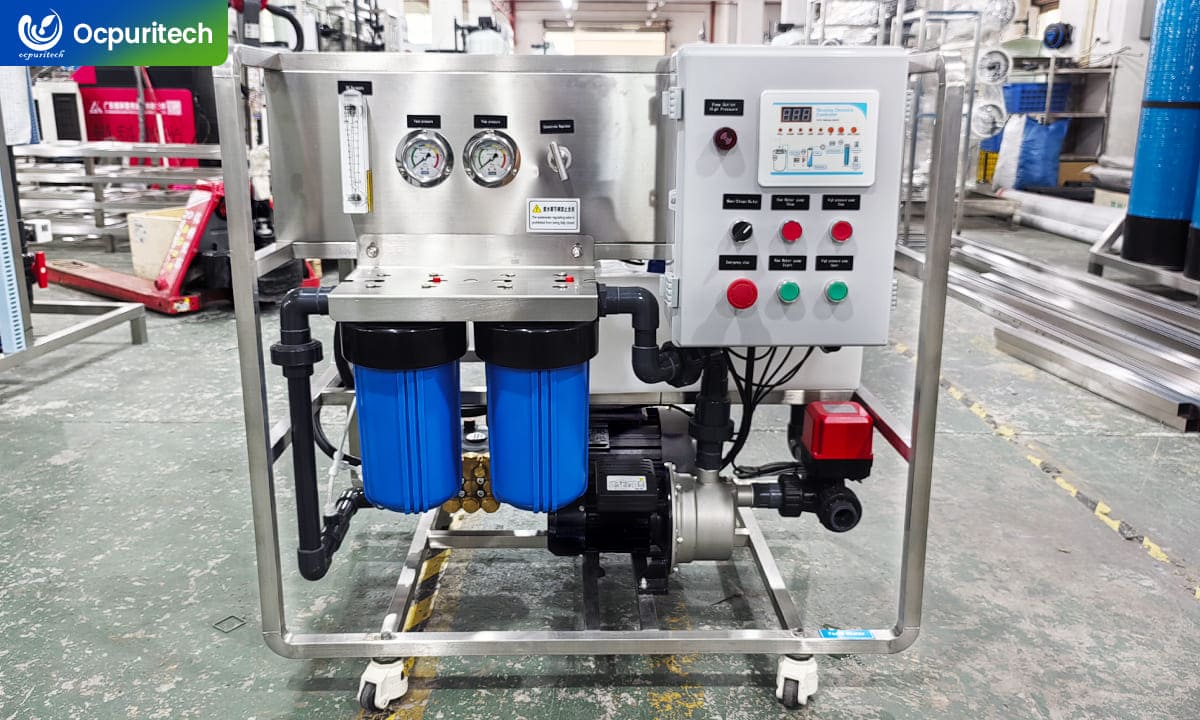
A small seawater desalination RO system—also called a marine watermaker or boat desalination unit—is a compact reverse osmosis plant installed on a vessel to produce freshwater from seawater. The system forces saline feed water through semi-permeable membranes at high pressure, typically 55–83 bar (800–1,200 psi). This process separates dissolved salts, minerals, bacteria, and impurities from pure water molecules.
The operational sequence begins when a low-pressure feed pump draws seawater through a sea strainer and multi-stage pre-filtration. A high-pressure pump then elevates the feed to the pressure required for reverse osmosis. Inside the membrane housings, pure water permeates through the membrane surface while concentrated brine discharges back to the sea.
Therefore, the crew has access to drinking water that meets World Health Organization standards (typically below 500 ppm TDS), eliminating the need to carry heavy storage tanks or rely on unreliable coastal supplies.
Compared to land-based desalination plants, marine RO systems must address unique constraints:
- ◉ Limited installation space, the system is smaller and quieter
- ◉ Variable power availability (220V / 380V / 50HZ / 60HZ / 1P / 3P)
- ◉ Corrosive salt air
- ◉ Continuous vessel vibration
Modern compact units integrate energy recovery devices, marine-grade stainless steel construction (316L and duplex alloys), and automated control to operate reliably in these demanding conditions.
Traditional freshwater storage tanks present significant limitations for marine operations. A 2,000-litre tank adds approximately two metric tons of weight. This increases fuel consumption, occupies valuable storage space, and imposes a hard limit on voyage duration.
A small seawater desalination RO system removes these constraints by generating freshwater continuously from an unlimited source—the ocean itself.
2. Technical Specifications of Small Marine RO Systems
Understanding the technical boundaries of a seawater reverse osmosis (SWRO) system helps operators match equipment specifications to vessel requirements. The table below summarises the typical operating parameters of compact seawater desalination RO systems designed for marine vessels.
Ocpuritech tailors every system to the specific vessel, so capacity, voltage, and footprint always align with operational requirements.
Key Performance Metrics Explained
◉ Energy Consumption: Without energy recovery, a high-pressure pump producing 60 litres per hour can draw 1.5–2.0 kW. With energy recovery technology, the same output requires approximately 240 watts—an 80% reduction.
This efficiency gain enables small units to run directly from a vessel’s 12V or 24V battery system. Larger vessels benefit from significantly reduced generator hours and fuel costs.
◉ Recovery Rate: The recovery rate indicates the percentage of feed water converted to product water. Marine RO systems typically achieve 10–45% recovery, depending on feed water temperature, salinity, and membrane configuration. Higher recovery rates reduce energy consumption but require careful management to prevent membrane fouling.
◉ Membrane Lifespan: With proper pre-filtration and regular automatic freshwater flushing, marine RO membranes typically last three to five years. Feed water quality, operating pressure, and maintenance discipline directly influence membrane longevity.
3. How a Small Seawater Desalination RO System Works
Understanding the operational stages of a marine reverse osmosis system helps vessel operators optimise performance, troubleshoot issues, and extend equipment lifespan. The process follows a clear sequence from raw seawater to potable water.
Stage 1: Intake and Pre-Filtration
A low-pressure feed pump draws seawater through a sea strainer, which prevents large debris, marine life, and floating objects from entering the system. The water then passes through multi-stage pre-filtration, typically 25-micron and 5-micron cartridge filters. These remove sand, silt, and suspended particles that would otherwise foul the RO membrane surface.
Pre-filtration is critical because membrane fouling represents the primary cause of performance degradation and premature failure. Operators should inspect and replace pre-filters according to the manufacturer’s schedule—more frequently in turbid or high-sediment waters.
Stage 2: High-Pressure Pump
The pre-filtered seawater enters a high-pressure pump that elevates the feed to 55–83 bar. This pressure overcomes the natural osmotic pressure of seawater (approximately 27 bar for 35,000 ppm TDS). Water molecules pass through the semi-permeable membrane while salts and impurities remain on the concentrate side.
High-pressure pumps for marine applications use either plunger-type or axial-piston designs, both engineered for continuous duty in corrosive environments. Leading manufacturers include Grundfos and Danfoss, whose pumps are specifically rated for marine reverse osmosis applications.
Stage 3: Reverse Osmosis Membrane
Inside the membrane housings, pressurised seawater contacts the RO membrane surface. The membrane—typically a thin-film composite (TFC) material manufactured by DuPont FilmTec, LG Chem, or Vontron—allows water molecules to pass while rejecting dissolved salts, bacteria, viruses, and organic compounds.
Modern seawater RO membranes achieve 99.7%+ salt rejection under standard conditions, producing permeate with TDS levels well below 500 ppm. The concentrated brine stream, carrying the rejected salts, discharges back to the sea through a dedicated outlet.
Stage 4: Energy Recovery
Energy recovery represents the most significant advancement in modern low energy seawater desalination systems. In traditional SWRO systems, the high-pressure brine stream contains significant hydraulic energy that would otherwise be wasted. By integrating energy recovery devices, modern small seawater desalination RO systems can significantly reduce power consumption while maintaining stable freshwater production.
Energy recovery devices—such as pressure exchangers or Clark pumps—capture this pressure and transfer it to the incoming feed water. This technology reduces overall energy consumption by up to 80%, enabling smaller power supplies, lower operating costs, and reduced heat generation.
Stage 5: Post-Treatment (Optional)
The permeate water undergoes post-treatment to ensure safety, taste, and stability. Common post-treatment stages include:
- ◉ Remineralisation: Adding minerals back to improve taste and prevent corrosion of storage tanks and distribution piping
- ◉ UV Sterilisation: Neutralising any remaining bacteria or viruses with ultraviolet light
- ◉ Chlorination: Maintaining a residual disinfectant in the storage tank to prevent bacterial regrowth
The complete cycle from seawater intake to drinking water production can operate continuously with minimal operator intervention. Our automatic seawater desalination systems can be equipped with PLC control, automatic flushing, and water quality monitoring functions, ensuring reliable operation onboard.
4. Desalination RO Systems: Applications by Vessel Type
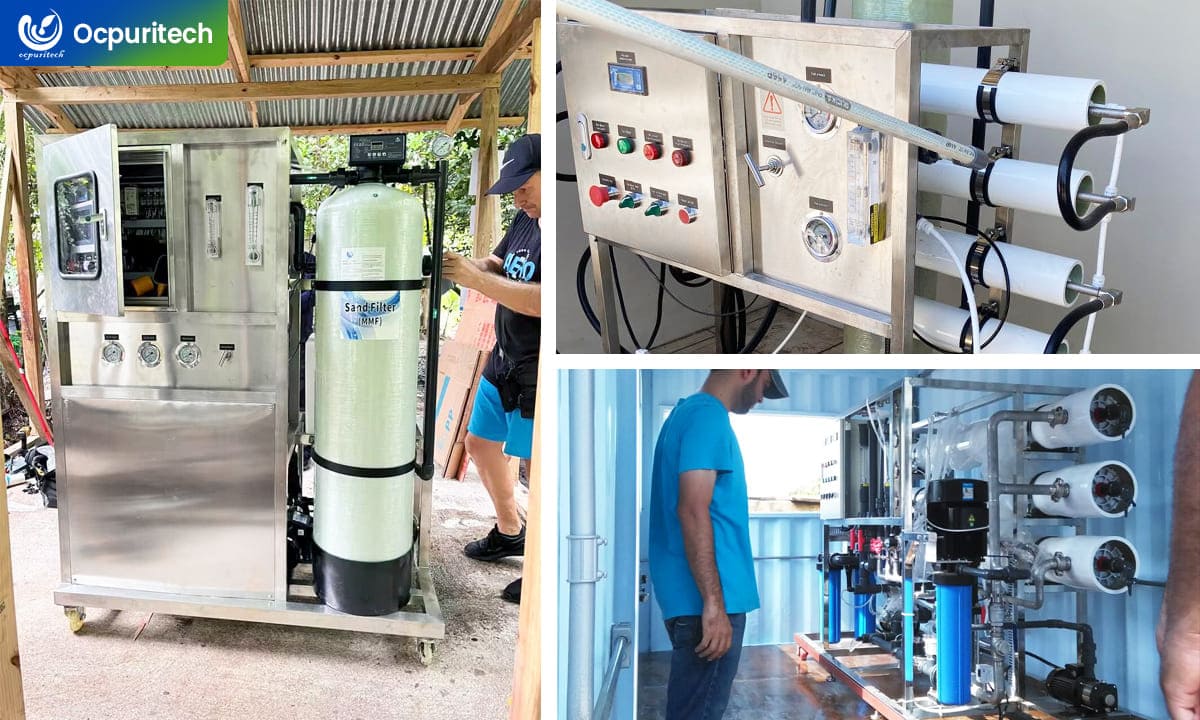
Different vessels have different freshwater requirements based on onboard space, power supply, and operating conditions. Seawater desalination reverse osmosis systems should be properly selected according to vessel type and daily water demand.
Yacht Desalination Systems for Private and Luxury Yachts
Private and luxury yachts require compact, quiet, and energy-efficient freshwater solutions. Our yacht desalination systems help owners produce fresh water directly from seawater, reducing dependence on marina supplies and extending offshore cruising capability.
Unlike commercial ships, yachts have limited technical space and stricter comfort requirements. Therefore, a suitable yacht desalination system should be designed with compact components, vibration reduction, and efficient power consumption.
Boat Desalination Systems for Sailing and Fishing Boats
A reliable boat desalination system provides continuous freshwater production for sailing boats and fishing vessels operating away from shore. We customize capacity, power supply, and configuration based on onboard space and daily water requirements.
Ship Desalination Systems for Commercial Vessels
Commercial ships and offshore vessels require stable freshwater production for long-term operation. Our ship desalination systems are designed with marine-grade components, efficient RO technology, and customized configurations for demanding marine environments.
5. Why is Customization Critical for Marine Desalination Systems?
In the past, seawater desalination was seen as impractical for small boats, mainly due to high energy use, bulky designs, and maintenance difficulties. But the industry has made great strides.
Advances in RO membranes, energy recovery devices, and automation enable small SWRO systems to be efficient, compact, and easy to operate.
Modern systems achieve high efficiency using advanced technologies like energy-saving high-pressure pumps, durable RO membranes, and automated flushing capabilities. They minimize power consumption, operate quietly, and are easy to maintain. Even vessels with limited space and power can now benefit from compact and portable seawater desalination solutions designed for marine applications.
Breaking Down Technological Advancements in SWRO Systems:
Operational Cost Impact:
Beyond direct energy savings, efficient marine RO systems generate secondary benefits:
- ◉ Reduced generator runtime: Less wear, lower maintenance, and extended service intervals
- ◉ Lower heat output: Reduced cooling load in engine compartments
- ◉ Quieter operation: Enhanced guest comfort on charter and leisure vessels
- ◉ Longer component life: Lower thermal and mechanical stress on pumps and membranes
6. Marine Watermaker vs. Freshwater Storage: A Total Cost Analysis
Many vessel operators initially evaluate small seawater desalination RO systems against the apparent simplicity of large freshwater tanks. A comprehensive cost analysis reveals why onboard desalination consistently delivers superior long-term value.
The Hidden Costs of Water Tanks
Weight Penalty: Every litre of stored water adds one kilogram to vessel displacement. A 2,000-litre tank increases fuel consumption, reduces speed, and degrades handling characteristics. Over a typical cruising season, the additional fuel cost alone can exceed several thousand dollars.
Space Consumption: Tankage occupies valuable storage space that could accommodate provisions, equipment, or revenue-generating cargo. On commercial vessels, this represents a direct opportunity cost.
Quality Degradation: Stored water can develop bacterial contamination, algae growth, or unpleasant taste after extended storage. Regular tank cleaning and water treatment add operational burden and cost.
Range Limitation: Tank capacity imposes a hard limit on voyage duration, forcing vessels to alter routes or schedule port stops specifically for water replenishment.
The analysis demonstrates that small seawater desalination RO systems typically achieve payback within 18–36 months through eliminated water procurement costs and reduced fuel consumption. Thereafter, the system generates pure operational savings while providing unlimited voyage autonomy.
7. What Should You Consider When Choosing a Water Treatment System?
Many buyers focus solely on production capacity, but that approach can lead to mismatched systems. Choosing the right SWRO system involves understanding specific vessel requirements.
Factors like crew size, daily water needs, voyage duration, power supply, and installation space must drive your selection.
For example, private yachts may prioritize quiet operation and compact design, while commercial boats might focus on reliability and durability. A skilled supplier should provide tailored solutions based on these varied needs.
Key considerations when selecting SWRO systems:
- ◉ Daily water demand based on crew size.
- ◉ Available onboard power supply.
- ◉ Space limitations for installation.
- ◉ Compatibility with local seawater conditions (temperature and salinity).
- ◉ Ease of operation and maintenance.
8. Seawater RO System Installation and Maintenance Tips
Proper installation and regular maintenance directly influence the performance, reliability, and service life of marine RO systems. Plan the system layout carefully, install the high-pressure pump on vibration isolators, keep seawater filters easily accessible, and arrange hoses to prevent sharp bends. Sufficient clearance around components should be maintained for convenient inspection and servicing.
The pre-filtration system protects RO membranes by reducing contaminants and preventing premature fouling. Filter cartridges should be inspected regularly and replaced according to their service life. Our seawater desalination systems feature automatic freshwater flushing to help extend membrane lifespan. Each unit includes a clear maintenance plan and remote technical support to ensure reliable long-term operation.
Breaking Down Technological Advancements in SWRO Systems:
Critical Maintenance Rule: Never allow the system to sit stagnant for extended periods. Run the system at least once per week, even in port, to prevent biofouling and maintain membrane hydration.
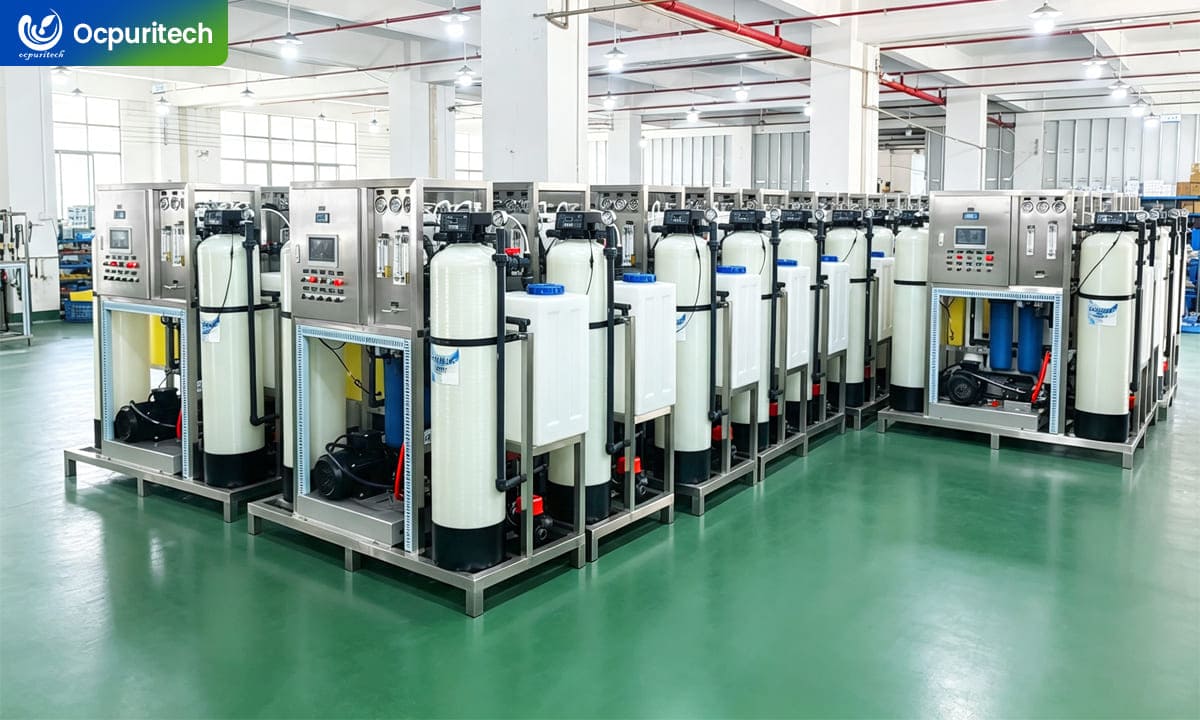
9. Why Choose Ocpuritech for Your Marine Desalination Needs
From the marine projects we have handled, I found that many buyers initially focus only on capacity. However, after installation, energy consumption and maintenance usually become the factors that determine satisfaction.
Direct Manufacturing: We design and build every system in our own facilities, eliminating trading-company markups and ensuring direct communication with the engineers who specify and assemble your equipment.
Marine-Grade Construction: All components use 304/316L stainless steel, duplex alloys, and corrosion-resistant materials specifically selected for saltwater environments.
Full Customisation: Capacity, voltage, footprint, automation level, and control interfaces are tailored to your vessel’s exact requirements.
Global Support: With installations across more than eighty countries, we maintain spare parts inventory and provide remote technical support to keep your system operating wherever you sail.
Proven Performance: Our small seawater desalination RO systems operate reliably in the challenging marine environments of the Red Sea, Persian Gulf, South China Sea, and Pacific Ocean.
10. Request a Custom Quote — We Reply Within 24 Hours
Ready to equip your vessel with a reliable small seawater desalination RO system? Choosing the right system and supplier ensures not only freshwater production but also sustainable, safe operations in any sea conditions. Our marine engineering team will review your requirements and respond with a tailored recommendation and quotation within 24 hours.
[Get instant Quote →]
Frequently Asked Questions
Q1. How Much Water Does a Seawater RO System Produce?
Output ranges from 60 litres per hour for compact yacht units to 20 m³ per day for commercial ship systems. Ocpuritech engineers size each system based on crew count, vessel type, and operational patterns.
Q2. Is the Water From a Marine RO System Safe to Drink?
Yes. Properly configured seawater desalination RO systems produce pure water below 500 ppm TDS, meeting WHO drinking water standards. Optional UV sterilisation and remineralisation further enhance safety and taste.
Q3. How Long Do Marine Reverse Osmosis Membranes Last?
With proper maintenance, 3–5 years. Regular pre-filter replacement, freshwater flushing after use, and avoidance of chemical or thermal damage extend membrane lifespan significantly.
Q4. Can a Marine Watermaker Operate in Brackish Water?
Brackish water (lower salinity than seawater) requires lower operating pressure and may allow higher recovery rates. Consult Ocpuritech engineers for brackish-water-specific system design.
Q5. What is the Difference Between Seawater Desalination And Brackish Water Desalination?
The main difference is salinity, seawater has very high TDS (10,000-35,000 ppm), brackish water has lower TDS (3,000-9,000 ppm)
Q6. Do You Provide Installation Support?
Yes. Ocpuritech offers installation supervision, commissioning assistance, and operator training for all marine RO systems. Remote technical support is available globally.