Choosing the right deionized water system for your laboratory isn’t just about buying equipment. It’s about creating a stable, long-term water purification solution that supports precise experiments.
The right deionized water system must match your specific water quality requirements, daily usage volume, and installation conditions. Start by identifying your Type I, II, or III water needs, then select appropriate RO+DI technology combinations for optimal performance and cost efficiency.
Selecting the right DI water system directly impacts experimental accuracy, instrument longevity, operational costs, and laboratory efficiency. Let's dive deeper into how to make the best choice.
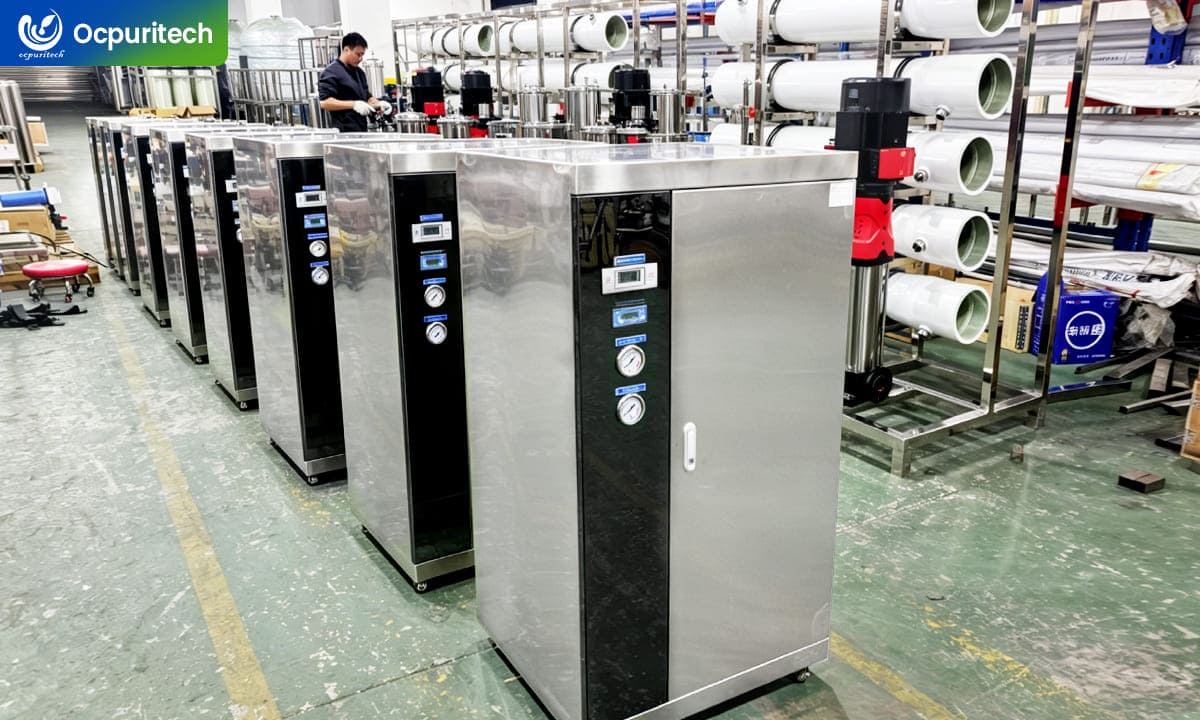
Factors to Consider When Choosing a Deionized Water System
Identifying laboratory water quality standards, usage volume, and installation constraints is the cornerstone of system selection for long-term efficiency and reliability.
Assessing water quality needs (e.g., Type I for ultrapure water), daily consumption, and installation conditions ensures the system meets accuracy, cost-effectiveness, and space constraints.
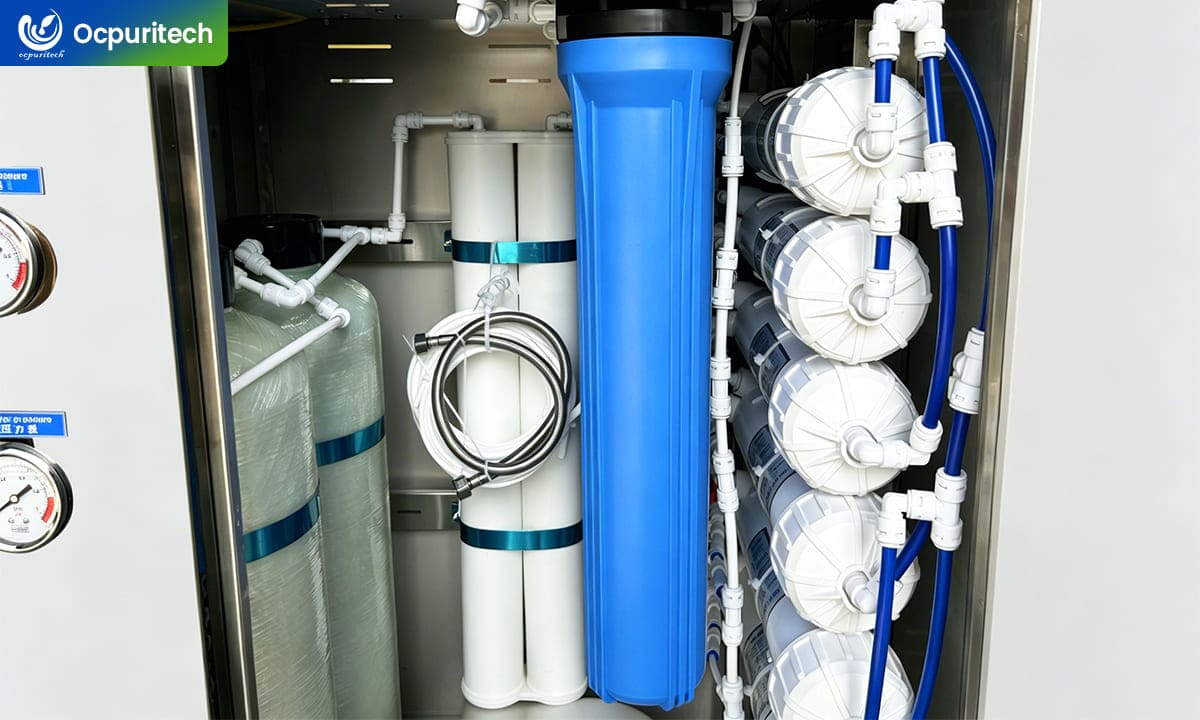
Lab Deionized Water Purity Grades Comparison
| Water Type |
Resistivity (25°C) |
Conductivity |
TOC (Total Organic Carbon) |
Typical Applications |
| Type I |
18.2 MΩ·cm |
~0.055 µS/cm |
< 10 ppb |
HPLC, ICP-MS, molecular biology, critical analytical work |
| Type II |
1–15 MΩ·cm |
0.1–1.0 µS/cm |
< 50 ppb |
Buffer preparation, microbiology media, general lab use |
| Type III |
0.5-1 MΩ·cm |
1–50 µS/cm |
Not strictly controlled |
Glassware rinsing, feed water for Type I/II systems, autoclaves |
There are 3 critical dimensions to assess when selecting a deionized water filter:
- ◉ Water Quality Needs: Type I is used for sensitive applications like HPLC. Type II supports general experiments, and Type III suits cleaning processes. Misalignment can lead to inefficiencies.
- ◉ Daily Usage & Peak Capacity: A system’s daily output must match lab demand, ensuring uninterrupted operations during peak usage.
- ◉ Space & Operation Conditions: Evaluate installation space, environmental conditions, and maintenance accessibility. Factors like electricity and water supply should align with system requirements.
By thoroughly understanding these factors, you prevent common pitfalls like over-purchasing high-grade systems or under-specifying for crucial needs. It is therefore essential to take the right decision using specific needs-driven guidelines.
What Drives Long-Term Costs in Lab Water Systems?
The real expense of laboratory water systems lies in their lifecycle cost, not the initial purchase price, with maintenance directly impacting both performance and cost. To optimize these long-term expenses, look for features that enhance workflow efficiency, alleviate maintenance burdens, and guarantee the long-term reliability of your laboratory deionized water system.
Key factors influencing lifecycle costs include RO membrane replacement, DI resin longevity, energy consumption, required maintenance, and downtime risk. Systems with real-time monitoring reduce long-term costs.
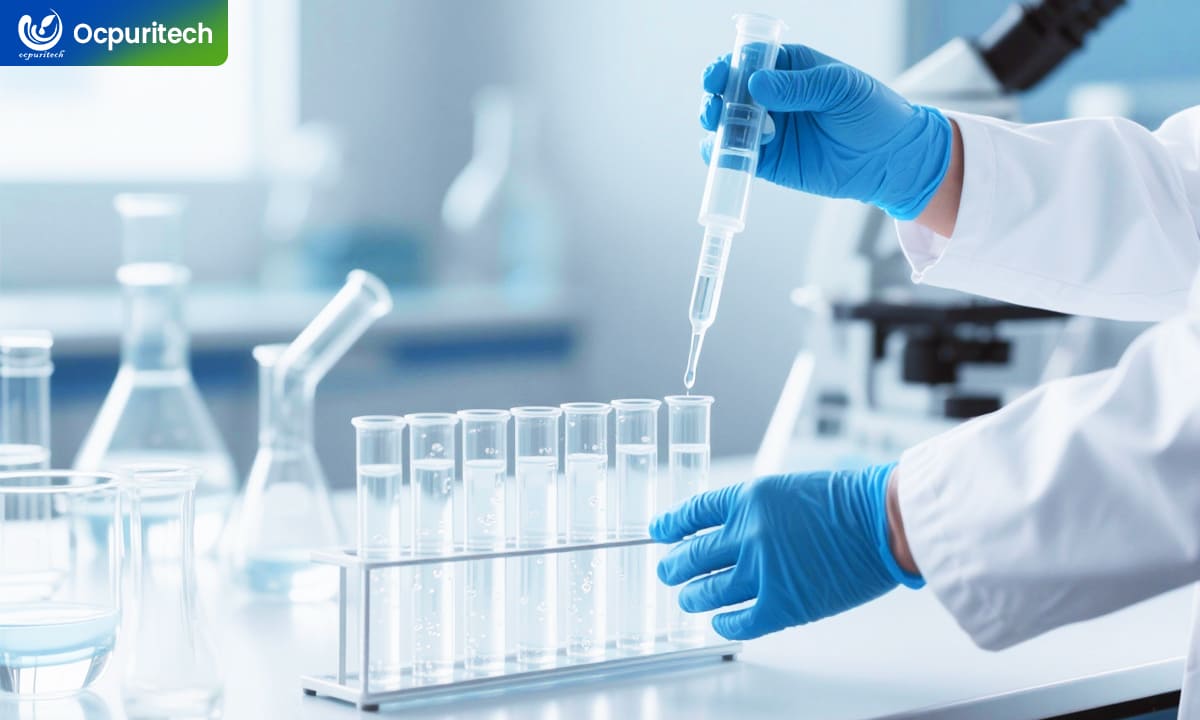
Best deionized water system long-term cost control depends on:
- ◉ RO Membrane and Resin Longevity: Frequent replacements inflate operational costs. Advanced water purification systems minimize such trends.
- ◉ Energy and Water Efficiency: High-energy systems consume more resources over time, making cost savings and sustainability paramount. Therefore, choosing a system capable of achieving high recovery rates is particularly crucial
- ◉ Automation and Monitoring: Features like real-time water quality monitoring reduce errors, ensuring reliable operation. Look for recorded data and control systems to ease maintenance efforts.
- ◉ Maintenance and Downtime: Lower downtime means higher lab productivity.
In my experience, prioritize those with features like real-time water quality monitoring, automated controls, and data recording. These investments ensure long-term efficiency and accuracy.
How Does a Deionized Water System Work?
Deionized water systems purify water by removing charged ions, lowering conductivity, and achieving laboratory-grade or ultrapure water standards.
Deionization utilizes ion exchange technology , where cation and anion resins remove charged impurities and replace them with water molecules and achieve high-purity water standards.
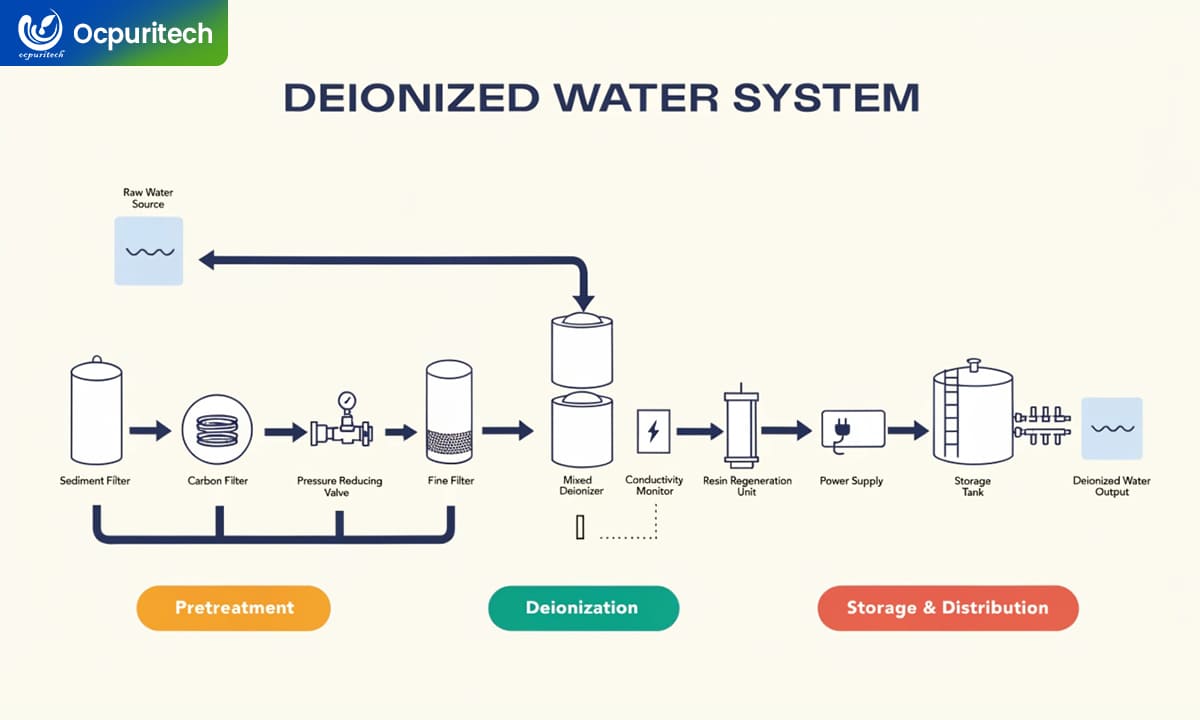
The process involves:
- ◉ Cation Exchange Resin: Removes positively charged ions like Ca²⁺ and Mg²⁺, releasing H⁺.
- ◉ Anion Exchange Resin: Removes negatively charged ions like Cl⁻ and SO₄²⁻, releasing OH⁻.
- ◉ Final Reaction: H⁺ and OH⁻ combine to form H₂O, completing purification.
In addition, equipment performance depends heavily on water pre-treatment. Systems with reverse osmosis (RO) pre-treatment avoid resin degradation, emoves most dissolved solids, ensuring stable water quality and reducing replacement frequency.
Advanced systems may incorporate electrodeionization (EDI) for continuous resin regeneration, to regenerate resins electrically without chemicals, ensuring continuous operation and lower maintenance costs—vital for advanced pharmaceutical or biotechnological labs.
Why is the RO + DI Combination Ideal for Most Laboratories?
RO + DI systems are highly efficient. Without proper pre-treatment, raw water quality destabilizes resin performance, increasing costs and reducing system reliability.
Combining RO and DI maximizes water purity , minimizes resin replacement frequency, and ensures long-term system stability.
Here’s why the combination works:
- Reverse Osmosis System: Removes 97-99.5% solids, organic matter, and microbes, forming a robust pre-treatment stage. Reduces load on DI resin.
- Deionized System: Refines water further by enhancing electrical resistance to meet high purity and ultrapure standards. Ensures laboratory-grade water.
This dual-stage configuration prevents water quality fluctuations, reduces resin consumption, and optimizes lifecycle costs. For high-end applications, EDI systems integrated with RO + DI offer continuous operation, minimal maintenance and cutting replacement costs.
How do RO, DI, and Distilled Water Systems Compare?
RO, DI, and distilled water systems are unique purification methods tailored to distinct laboratory needs rather than interchangeable technologies.
Reverse osmosis (RO) removes 97-99.5% dissolved solids and impurities, deionization (DI) removes ions, and distillation uses evaporation for water purification, albeit with lower efficiency.
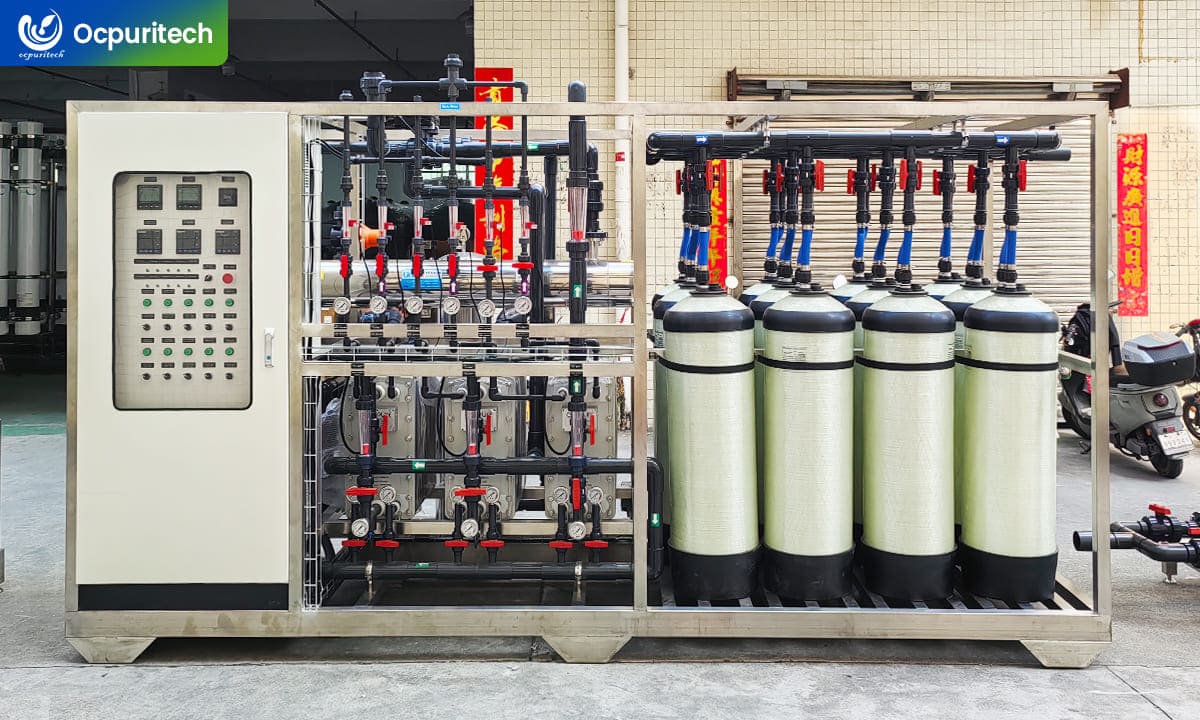
Here’s how the water purification technologies compare:
| Purification Type |
Efficiency |
Applications |
Cost |
| Reverse Osmosis (RO) |
Removes solids, organics, and microbes |
Basic experiments, pre-treatment |
Moderate |
| Deionized Water (DI) |
Removes charged ions for high-purity water |
Precision for sensitive experiments. |
Medium |
| Distilled Water |
Uses evaporation |
Limited modern use |
High |
While distilled water has declined due to energy inefficiency. Modern laboratories typically prefer RO and DI systems due to their scalability, efficiency, and ability to meet diverse application needs.
What’s the Water Purification Systems Fit for Your Laboratory?
Selecting the right system depends on your laboratory’s application needs. Matching water purity with experimental accuracy ensures reliability.
For basic experiments, RO or standard purification systems works best. Advanced setups like HPLC require RO + DI or EDI systems for ultrapure water.
Knowing the differences can assist you in choosing the system that is most suitable for your requirements for purity and workflow:
- Basic Cleaning: RO water or simple purification systems.
- Research Labs: RO + DI for consistent precision.
- High-Sensitivity Analysis (e.g., ICP): Ultrapure water systems.
- Biotech or Pharma Labs: EDI or advanced RO + DI systems.
Recognizing application requirements first ensures matching technology to performance needs, saving costs and maximizing efficiency.
| Technology |
Water Quality |
Production Rate |
Maintenance Needs |
Environmental Impact |
| lon Exchangex (IX) |
1-10 MΩ·cm |
Batch, downtime during resin regeneration |
Weekly monitoring |
High waste chemicals, severe pollution |
| Reverse Osmosis (RO)+Deionization (DI) |
5–15 MΩ·cm |
Semi-continuous, short downtime for DI resin refresh |
Monthly monitoring |
Moderate brine and chemical waste |
| Electrodeionization (EDI) |
15-18 MΩ·cm |
Continuous, no downtime, stable 24h operation |
Quarterly monitoring |
Low waste, eco-friendly |
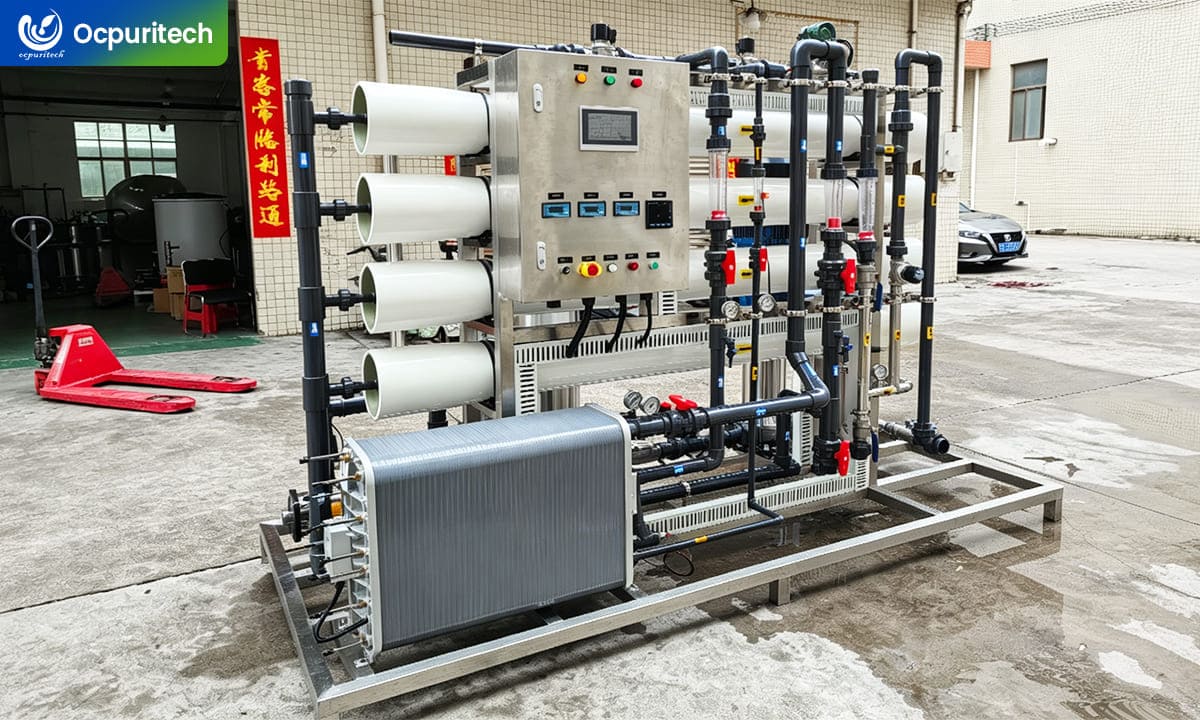
Ion Exchange (IX) Systems
Ion exchange systems are low-cost solutions for labs with small water demands. Their simplicity makes them ideal for basic applications, but hidden costs can accumulate over time.
Delving deeper: Ion exchange systems use resin beds to remove ions from water. The upfront investment is low, and the systems are easy to operate. However, resin regeneration involves frequent replacement or chemical treatment. This adds time, labor, and chemical handling risks. For labs with minimal water usage and tight budgets, IX could be a practical solution. But for high-demand or precision applications, its hidden costs might outweigh initial savings.
Reverse Osmosis (RO) + Deionization (DI)
RO+DI systems offer balanced performance by combining RO’s pre-treatment capabilities with DI’s purity enhancement. This synergy makes them ideal for mid-sized labs needing stable water quality.
Digging deeper: RO effectively reduces incoming ion loads, prolonging the DI system’s life. This combination minimizes the frequency of resin replacement while maintaining water purity. Its versatility makes it suitable for research and testing labs with moderate water demands. However, RO membranes require periodic cleaning and replacement, which adds maintenance costs. For most scenarios, RO+DI achieves an optimal mix of affordability, reliability, and water quality.
Electrodeionization (EDI) Systems
EDI systems are ideal for labs requiring high-purity water with minimal downtime. Despite higher initial costs, EDI’s chemical-free regeneration makes it reliable and cost-effective long-term.
Understanding EDI: EDI uses electricity instead of chemicals to regenerate resins. This eliminates the need for chemical handling, making it safer and reducing maintenance efforts. It’s especially suited for pharmaceutical, biotech, or analytical labs with high-frequency and high-purity water needs. While the upfront investment is significant, the system’s low operational costs and uninterrupted water flow often balance the equation over time.
Ocpuritech Practical Advice for Laboratory Buyers
Therefore, if you are looking for a reliable deionized water system for your laboratory, the most critical step is not choosing the highest-specification product, but selecting a well-designed RO+DI or EDI system tailored to your actual application needs.
Conclusion
In short, choosing a laboratory deionized water system is not about adopting the most advanced technology. The priority should be assessing your purity requirements (Grade I/II/III), flow rates, usage patterns, and space constraints. Focus on efficiency—such as purity monitoring and easy maintenance—and select the appropriate technology ( IX, RO + DI systems, or EDI ) to ensure a reliable water treatment solution.
As a premier manufacturer, Ocpuritech designs and produces customized laboratory deionized water systems for different application scenarios, ranging from compact systems for small laboratories to advanced RO + DI and EDI ultrapure water systems for high-precision research environments. For specific laboratory requirements, we can provide tailored system design based on application needs. Featuring automation, these systems ensure regulatory compliance, minimal maintenance, and excellent scalability, delivering a stable, consistent, and cost-effective water supply.
FAQ
Q1: What is a Deionized Water System?
Deionized water, commonly referred to as DI water, is purified water from which impurity ionssuch as sodium, iron, copper, calcium, chloride, and other mineral ions-have been removed through an ion-exchange resin. In other words, all ions in the water are removed except for hydrogen ions (H+) and hydroxide ions (OH-), which result from the ionization of electrolytes dissolved in the water. That is to say, the dissolved electrolytes in the water have been effectively removed.
Q2: Can Humans Drink Deionized Water?
It is safe to drink, but it should not be used as your primary source of drinking water. Deionized water lacks essential minerals, which the human body needs to maintain bone health, muscle function, and heart health. Consuming deionized water over a long period can lead to the dilution of essential electrolytes in the body.
Q3: Is Deionized Water the Same as H₂O?
No, they are not the same thing. H₂O is the chemical formula for a pure water molecule (a chemical identity), which refers strictly to a compound composed of two hydrogen atoms and one oxygen atom. Deionized water (a processed liquid mixture primarily made of H₂O) refers to water from which almost all dissolved, charged particles (ions) have been removed; while it is highly enriched with H₂O, it is not exclusively chemically pure H₂O.
Q4: What is the Lifespan of DI Resin?
The lifespan of deionization (DI) resin varies from 9 to 12 months. Its lifespan is primarily determined by the following two factors:
Inlet Water Quality: The higher the Total Dissolved Solids (TDS) content in the incoming water, the faster the resin is depleted.
Volume of Water Processed: The greater the volume of water passing through the filter cartridge, the faster the resin beads exchange ions, leading to quicker exhaustion.
Q5: What is the Difference Between Type I, II, and III Water?
Type I (Ultrapure): Resistivity reaches the 18.2 MΩ - cm limit with virtually no impurities. Used for high-precision analysis like HPLC and DNA testing. Must be used immediately.
Type II (Analytical): Resistivity of 1.0-15.0 MΩ- cm. Used for preparing standard chemical reagents, buffers, and microbiological media.
Type III (Primary): Typically produced by reverse osmosis (RO). Used for rinsing glassware, filling autoclaves, or as feed water for Type l/ll systems.