Ultrapure water is essential in many industries. Its extremely high-quality water that has undergone rigorous treatment to remove impurities and contaminants, surpassing the standards for drinking water. Understanding its importance can save time and money.
Our ultrapure water systems is produce water with resistivity exceeding 18.2 MΩ·cm at 25°C crucial for industries like semiconductor manufacturing, pharmaceuticals, and power generation. These sectors rely on high-quality water to prevent costly production issues.
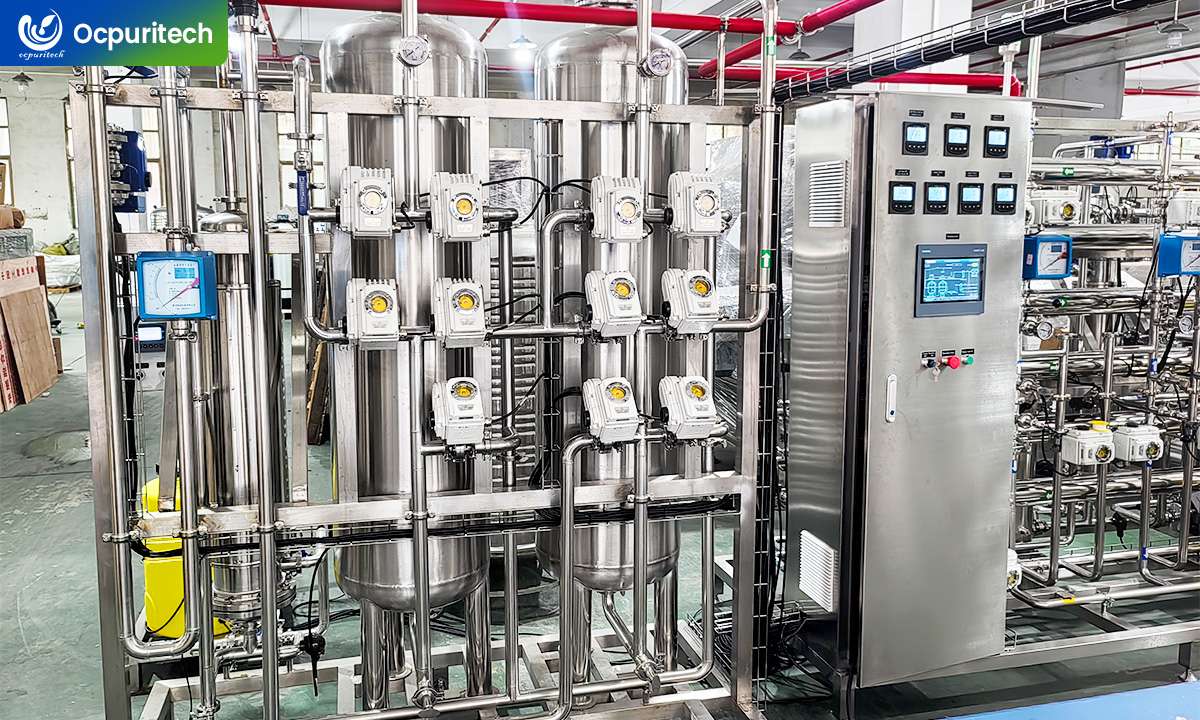
Therefore, choosing the right ultrapure water system is not simple. Many factors need to be considered. I often tell my clients that the quality of ultrapure water depends on the specific application. For instance, in semiconductor manufacturing, even the tiniest impurity can cause significant production failures. It's essential to address this from a practical standpoint. I strive to provide customized solutions that meet the necessary standards for resistivity, TOC, and particle count. This way, clients can avoid wasting time on unsuitable systems.
1. What is Ultrapure Water?
Ultrapure Water is a type of highly purified water with a purity far higher than that of ordinary distilled or deionized water. Extremely low conductivity/high resistivity: Resistivity of 18.2 MΩ·cm (25°C), conductivity of 0.06 µS/cm, as it contains virtually no conductive ions (such as Na⁺, Cl⁻, etc.).
This type of purified water is impurity-free: All minerals, organic matter (TOC <1 ppb), microorganisms (bacteria/endotoxins), particles (filtered to below 0.2 µm), and dissolved gases (such as CO₂, O₂) are removed.
But, regular tap water measures 0.001-0.05 MΩ·cm resistivity, while reverse osmosis water achieves 0.1-1.0 MΩ·cm
The table below outlines the differences between ultrapure water and common water qualities
| Type |
Resistivity (MΩ·cm) |
Impurity Content |
Use |
| Tap water |
0.001-0.05 |
High (ions, microorganisms) |
Daily life |
| Distilled water |
0.1-1 |
Moderate (small amount of ions) |
General experiments, medical |
| Deionized water |
1-10 |
Low (few ions, organic matter may remain) |
Industrial cleaning, chemical processes |
| Ultra-pure water |
≥18.2 |
Nearly zero |
High-end technology, precision experiments |
2. Why is Ultrapure Water Critical for Semiconductor Manufacturing?
Tiny impurities cause huge microchip defects. Do you worry about low yields? A custom semiconductor ultrapure water system targets specific contaminants to keep your lines running perfectly.
Therefore, ultrapure water is critical because prevent semiconductor failures by removing microscopic particles and dissolved gases. They maintain high resistivity and low TOC levels. This pure water washes silicon wafers safely, ensuring no minerals or bacteria ruin the delicate microchips during manufacturing.
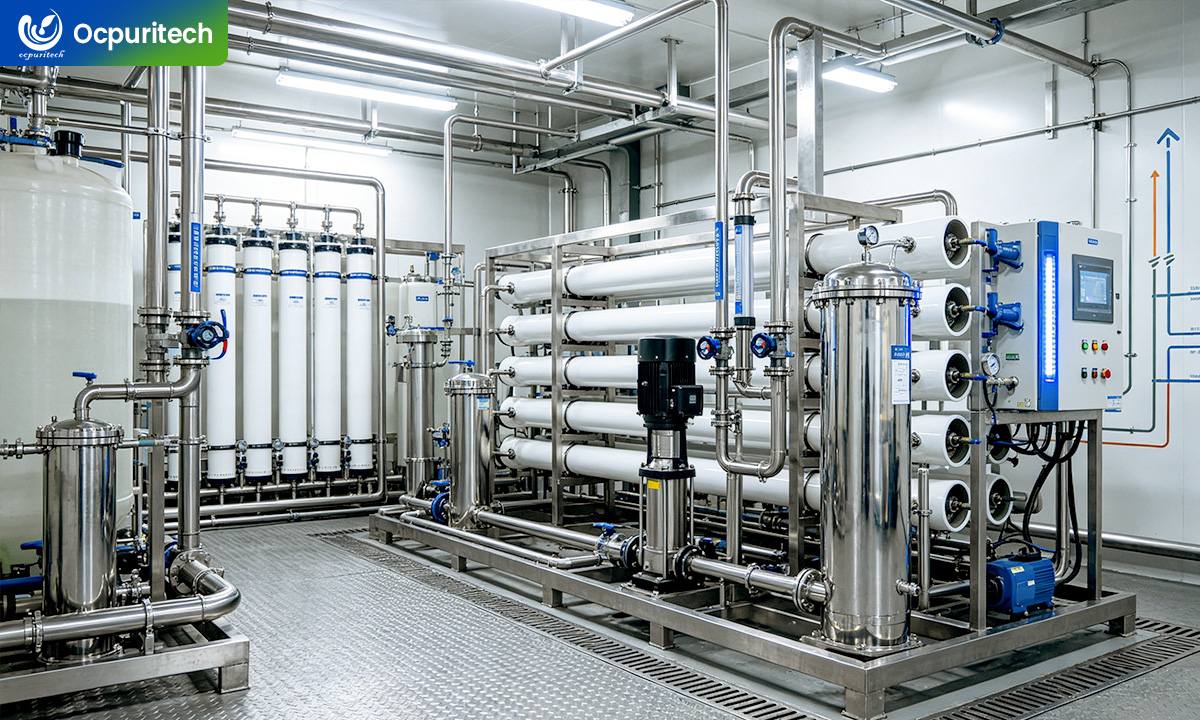
At Ocpuritech, I talk to many clients who face real production risks. Water quality must be perfect in semiconductor manufacturing. Even one tiny particle can destroy a whole batch of microchips. You cannot rely on basic online guides to solve this. Instead, you need a custom solution based on exact metrics.
Key Water Quality Metrics for Semiconductor Production
We must look at specific numbers to protect your production line. We design systems to hit strict targets. Here is a clear breakdown of what we control:
| Metric |
Why It Matters |
Target Level in Ultrapure Water |
| Resistivity |
Measures dissolved salts. High resistivity means no ions. |
18.2 MΩ.cm |
| TOC (Total Organic Carbon) |
Measures organic matter. Organics cause defects. |
< 1 ppb |
| Particle Count |
Measures solid dirt. Particles scratch delicate wafers. |
Near zero |
We do not just give you a machine when we build your system. We make sure it meets these exact needs. You might waste time and money if you buy a generic system. I look at your specific factory needs to build a system that guarantees safety. This stops failures before they happen.
3. Technology Combinations for High-Performance Ultrapure Water Systems?
High energy costs hurt your profits. Are your maintenance bills too high? Using the right mix of water treatment technologies drops costs and boosts quality.
Top-performing industrial ultrapure water systems combine Reverse Osmosis (RO) with Electrodeionization (EDI). RO removes most dissolved solids, while EDI polishes the water to remove the remaining ions. This combination maximizes water quality, lowers energy use, and cuts down on maintenance costs.
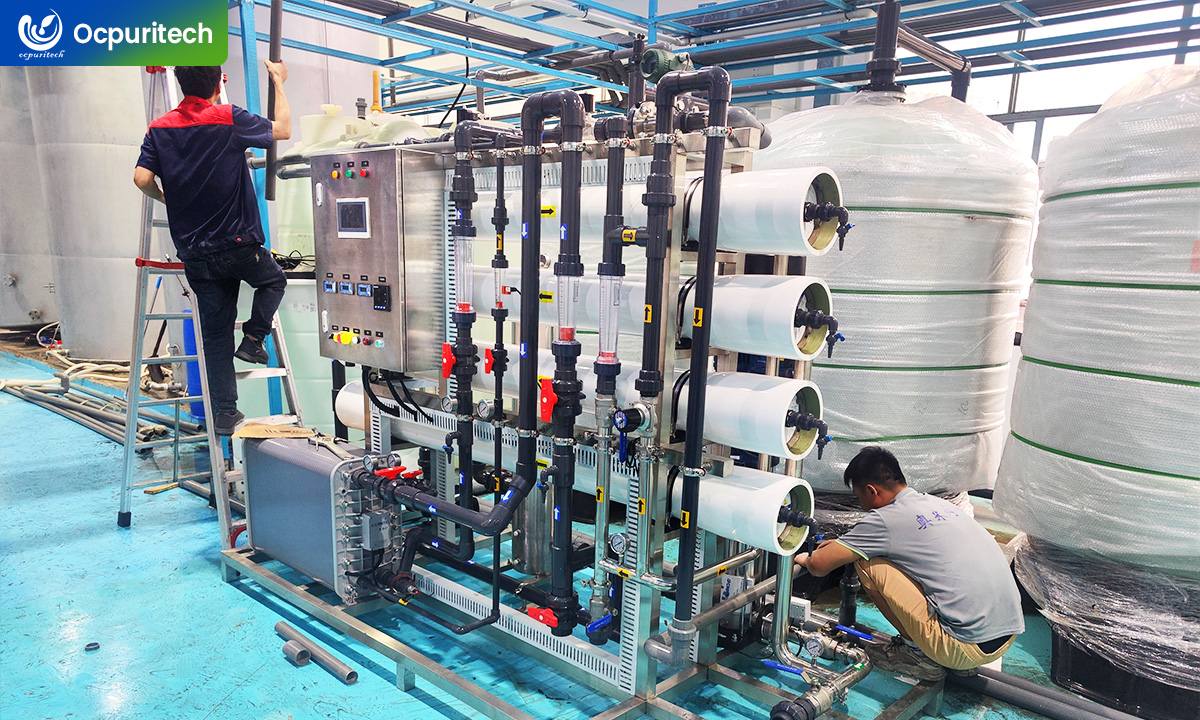
Many middleman tell you to just buy an EDI unit. I know from my experience that this is not enough. The secret to a great system is how different parts work together. We optimize the system based on your raw water source and how much water you need every day.
Core Components of Complete Ultrapure Water Treatment Process
You need a step-by-step process. A simple setup will fail quickly if your source water is very dirty. Here is how we combine technologies for the best results:
-
Pretreatment: Sand filtration removes particles greater than 5 microns, carbon filtration eliminates chlorine, and water softening reduces hardness to below 1 ppm. Protects RO membranes from damage.
-
Reverse Osmosis (RO): Removes 97-99% of dissolved salts, reducing total dissolved solids from 500 ppm to 5-25 ppm.
-
Electrodeionization (EDI): Removes final trace ions using electricity. No chemical cleaning needed , maintaining 90%+ recovery rate.
-
UV Oxidation: UV ultraviolet light has a powerful sterilizing function, capable of breaking down organic molecules and reducing the total organic carbon (TOC) content to below 1 ppb, thereby ensuring the purity of the water.
-
Polishing Resin: Further reduces the ion concentration, effectively removes TOC from the water, lowers the organic content, and buffers fluctuations in the feed water quality, resulting in more stable output water quality.
4. Why Is Continuous Monitoring Crucial for Ultrapure Water Systems?
Sudden breakdowns stop your whole business. Are you guessing if your water is safe? Continuous monitoring finds small problems early before they become expensive disasters.
Continuous monitoring is crucial because it tracks water conductivity and TOC levels in real time. This ensures the water quality stays perfectly stable. Tracking these numbers helps you find early signs of wear, allowing you to fix parts and extend the system lifespan.
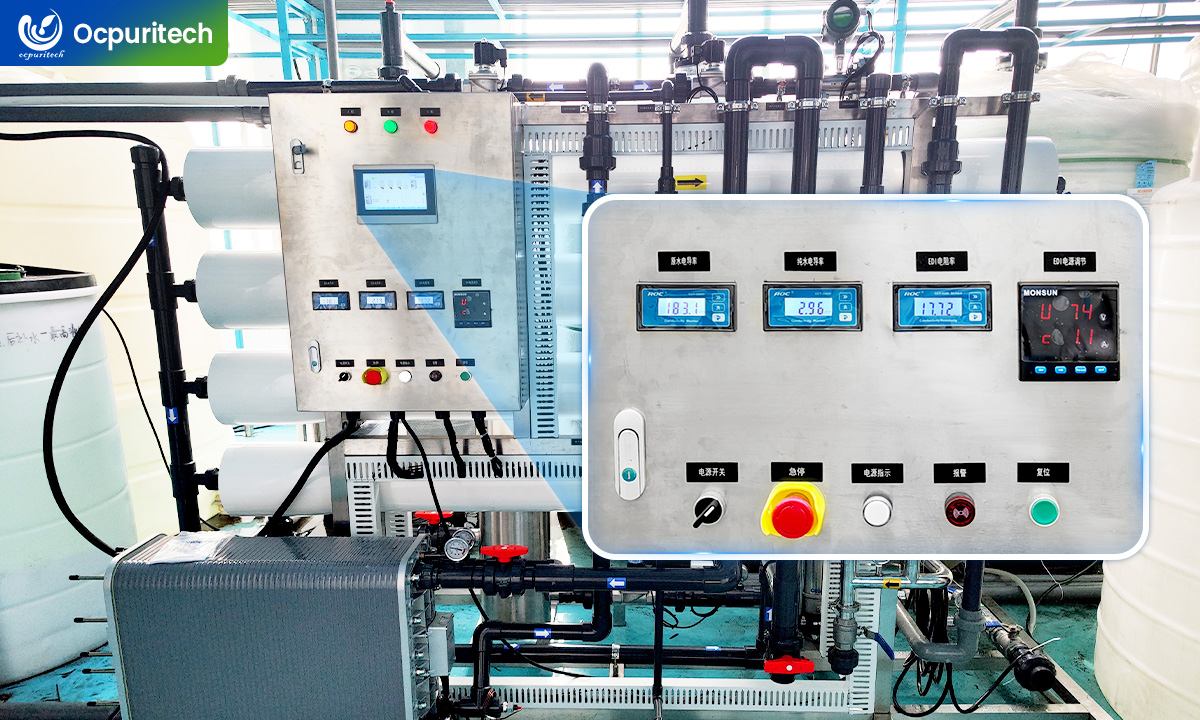
We do not just sell you a machine. The real value we provide at Ocpuritech is ongoing technical support and maintenance guidance. I have seen many companies ruin good equipment over the last 15 years because they did not monitor it. Basic articles often miss deep operational skills.
Essential Monitoring Tools for Ultrapure Water Equipment
Simple daily testing helps you grasp real-time system conditions:
| Monitoring Tool |
What It Does |
Why You Need It |
| Conductivity Meter |
Checks for tiny amounts of salt. |
Warns you if RO membranes fail. |
| TOC Analyzer |
Watches for organic spikes. |
Prevents bacterial growth in pipes. |
| Flow Meter |
Measures water speed and volume. |
Shows if filters are getting blocked. |
I will show you how to read these meters. We know we need to clean the RO membranes if conductivity goes up. We might need to check the UV sterilizer if TOC rises. This proactive approach stops sudden shutdowns. It keeps your factory running smoothly and makes your equipment last many years longer.
5. What Are the Key Applications for Ultrapure Water?
Ultrapure water is essential in many industries because even the slightest amount of contamination can cause serious consequences.
As a result, ultrapure water treatment are used to produce water with high resistivity, minimal TOC, and negligible particles, making them essential for industries such as semiconductors, pharmaceuticals, and power generation. Below are some applications and industries where ultrapure water is required for operations:
-
Semiconductor & Electronics Industry: In semiconductor manufacturing, the stakes are high. The quality standards are strict. Even the tiniest impurity can disrupt the production of microchips, costing millions. It ensures each component meets stringent technical specifications, avoiding costly production disruptions.
-
Pharmaceutical & Biotechnology Industry: Ultra purified water ensure that the pharmaceutical process meets strict hygiene standards, with the produced water free from endotoxins, microorganisms, and chemical impurities. At the same time, it is widely used in laboratories, cosmetics and personal care product production, as well as in the manufacturing of sterile solutions.
-
Power Plants: Power plants use ultrapure water to prevent scaling and corrosion in boilers and turbines. Poor water quality can lead to energy inefficiency and costly equipment damage. Ultrapure water system in power plants protect critical equipment. They reduce the chance of scaling in boilers and improve efficiency in steam generation processes.
| Industry/Field |
Application |
Industry/Field |
Application |
| Semiconductor manufacturing |
Integrated circuit/chip cleaning, photolithography process |
Pharmaceutical/Bio Lab |
Pharmaceutical/cell culture, PCR/HPLC analysis |
| Chemical industry |
High-pressure boiler water, nuclear power plant, electric power |
Precision instruments |
Mass spectrometry/ICP-MS/environmental monitoring and testing equipment |
| Other fields |
Food and beverage raw materials, cosmetics, electronics |
Medical equipment & dialysis |
Hemodialysis/medical equipment cleaning |
6. How Ultrapure Water Systems Optimize Your Entire Production Line?
Wasted resources drain your budget. Are you spending too much on inefficient setups? A smart water system improves your whole factory flow and saves money.
Ultrapure water systems optimize production lines by matching the water output exactly to your factory needs. A properly sized system reduces water waste, saves energy, and fits your budget. This long-term planning prevents resource waste and boosts overall manufacturing efficiency.
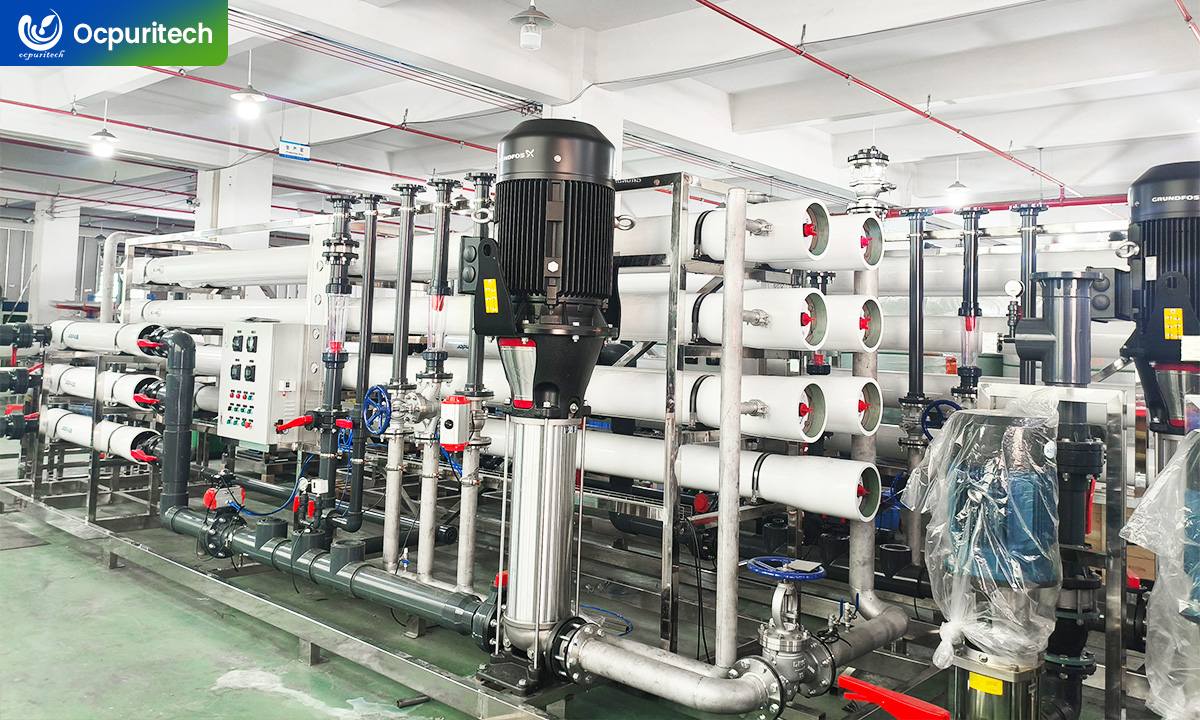
You make a big business decision when you choose a water system. I always look at the big picture. We want to improve your overall production efficiency. A system that is too big wastes your money. A system that is too small slows down your work.
Core Optimization Strategies for Water Treatment
We provide overall factory solutions instead. This prevents waste and gives you the best return on your investment.
| Optimization Area |
Common Mistake |
Our Solution |
| System Sizing |
Buying a system that is too large. |
Customizing capacity to match daily needs. |
| Water Recovery |
Throwing away all wastewater. |
Reusing RO reject water for other factory needs. |
| Budget Planning |
Only looking at the purchase price. |
Calculating long-term energy and parts costs. |
I use my experience to give you advice that looks at the future. I want to help you make the best decision for your budget. We do not just give you generic information. We give you a complete, high-efficiency plan. This long-term view is our unique value. It gives you peace of mind and makes your business stronger.
Conclusion
Ultrapure water systems are essential for high-tech industries. Their precision ensures compliance, efficiency, and cost savings, all critical to success. Contact Ocpuritech to learn how we can help you reduce costs, optimize your production line, and achieve long-term success through customized technology and water quality monitoring.