Water treatment plays a pivotal role across diverse industrial and commercial sectors, ensuring the availability of clean, reliable water resources essential for production, safety, and compliance. Industrial plants for water treatment integrate advanced technologies to purify, soften, disinfect, and recycle water, tailored to the specific demands of various applications — from large-scale seawater desalination to ultrapure water for semiconductor manufacturing. This article delves into core systems such as reverse osmosis (RO) membranes, filtration and softening units, containerized plants, and UV disinfection technologies. It also emphasizes the industrial significance of modular product lines designed to address differing capacities and operational contexts.
Reverse Osmosis Membrane Systems: Energy-Efficient Purification for Diverse Capacities
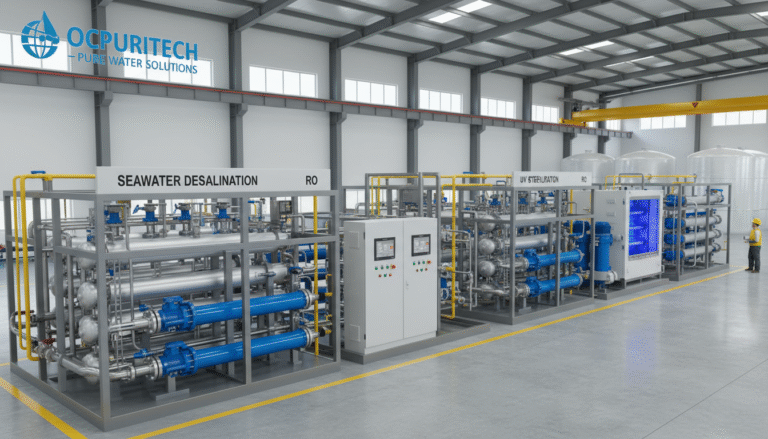
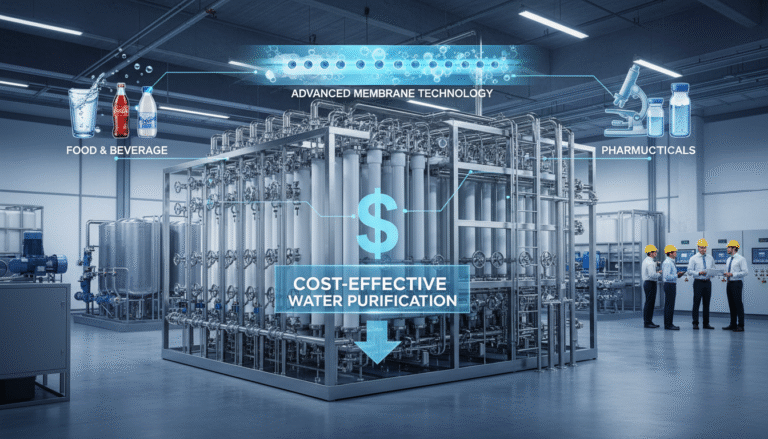
Reverse osmosis (RO) membrane systems have become the backbone of modern water purification plants due to their high efficacy in removing dissolved salts, organics, and microbes. These systems typically feature multi-stage membranes operated under high pressure. Available in multiple capacity ranges — from compact units producing mere hundreds of liters per hour to industrial installations handling thousands of cubic meters daily — RO plants are adaptable across industries.
State-of-the-art seawater reverse osmosis (SWRO) plants deploy innovations like isobaric energy recovery devices (ERDs) and axial piston high-pressure pumps, achieving specific energy consumption (SEC) values below 2 kWh per cubic meter of water. This represents a nearly 90% improvement compared to early SWRO technologies from the 1970s, which consumed up to 9 kWh/m³, highlighting both ecological and cost advantages in modern systems.
From my experience overseeing the retrofit of a mid-scale desalination plant in a coastal industrial park, integrating best-in-class membranes and energy recovery systems reduced operational energy costs by over 40% within one year, proving that upgrading existing infrastructure yields substantial benefits.
Filtration and Softening Systems: Ensuring Water Quality for Sensitive Applications
Filtration units remove suspended solids, turbidity, and particulate contaminants, while softening systems address hardness by eliminating calcium and magnesium ions to prevent scale formation. These technologies are indispensable in preparing feedwater for delicate industrial processes.
A robust filtration and softening line often incorporates multimedia filters, activated carbon beds, and ion exchange resins, scalable to small modular units for localized demands or large centralized facilities supplying entire industrial complexes. In sectors like semiconductor manufacturing, water quality standards are exceptionally stringent, requiring ultrapure water with a resistivity of up to 18.2 MΩ·cm at 25°C, total organic carbon (TOC) below 1 ppb, and near-undetectable particulate counts.
In a pharmaceutical manufacturing plant I consulted on, the implementation of multi-stage softening combined with advanced filtration ensured compliance with ASTM and SEMI standards, resulting in a 30% reduction in product rejects linked to water impurities over 18 months.
Containerized Systems: Flexible, Modular Solutions for Remote and Specialized Needs
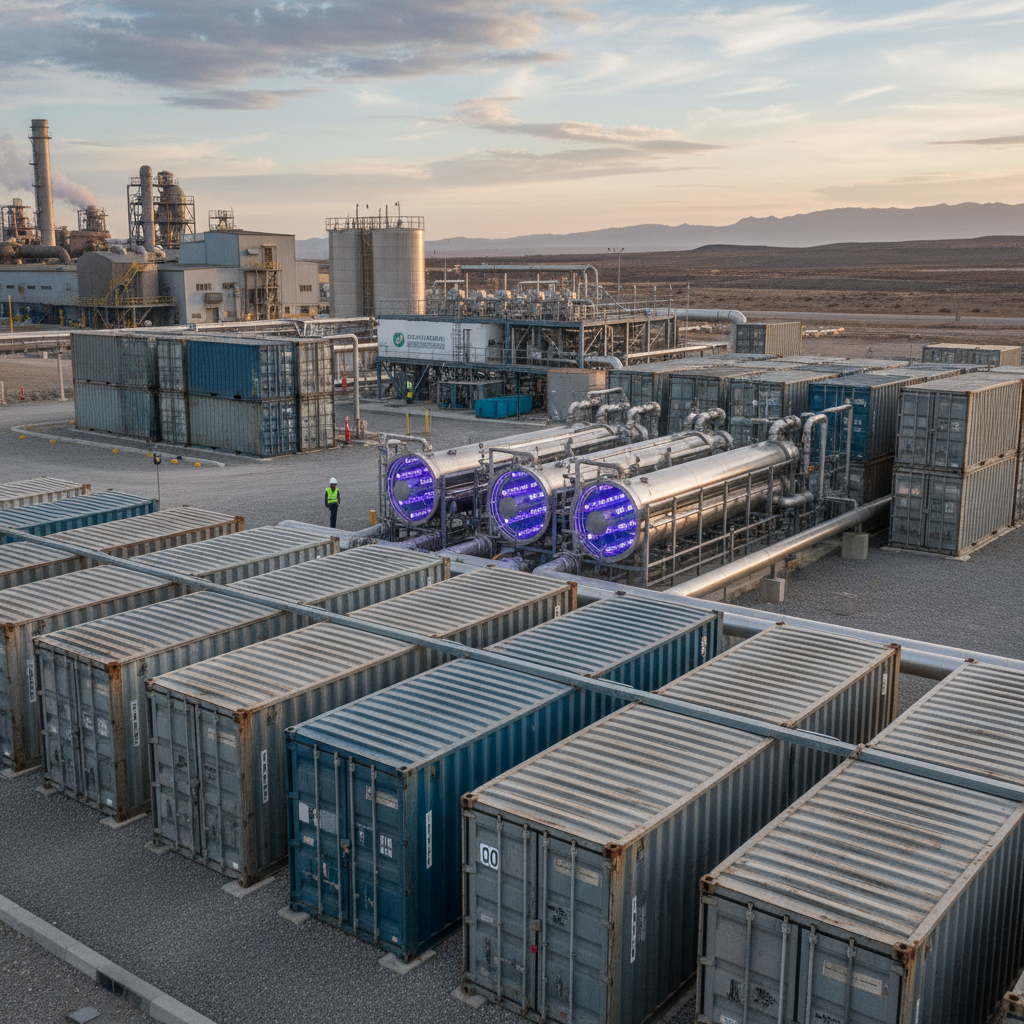
Containerized water treatment plants present a compact, modular alternative that integrates desalination or filtration technologies into prefabricated units housed within standard shipping containers. These systems are ideal for rapid deployment in remote locations, disaster relief efforts, temporary industrial sites, or environments with limited infrastructure.
Seawater desalination container units typically accommodate capacities from a few cubic meters per day to several hundred, facilitating flexible scalability. Their plug-and-play design simplifies installation and relocation. For example, in offshore oil platforms and remote mining operations, containerized RO units serve as essential freshwater sources, circumventing logistic challenges associated with water supply.
Having deployed several containerized purification plants in arid regions, I observed that these systems dramatically improve operational continuity and reduce water procurement costs, while their modular nature supports phased capacity expansion aligned with site development.
Cleaning and Sterilization Systems: UV Disinfection for Safe and Effective Pathogen Control
Ultraviolet (UV) disinfection systems have become a cornerstone for the removal of chlorine-resistant pathogens such as Cryptosporidium and Giardia. UV-C lamps administer germicidal doses of UV light, disrupting microbial DNA and ensuring safe water quality without chemical additives.
Current NSF/ANSI 55-2024 Class A standards mandate a minimum UV dose of 40 mJ/cm² to achieve at least 4 log (99.99%) inactivation of resilient microbial contaminants. Systems are designed for continuous dose verification to maintain efficacy. The appeal of UV disinfectors includes their compact footprint, low energy consumption, and lack of disinfection byproducts, making them attractive for both industrial water treatment and portable water purification.
At a food processing facility where I provided consultancy, replacing chlorine-based disinfection with UV units led to a significant decrease in chemical usage and improved taste profiles of the treated water, while enhancing microbial safety in compliance audits.
Manufacturing Excellence: Quality and Innovation in Water Treatment Equipment
Leading manufacturers of plants for water treatment emphasize rigorous quality control, advanced material selection, and continuous innovation. Their expertise spans decades, ensuring equipment reliability and compliance with international standards such as ASTM, NSF, and SEMI.
Well-established companies support customers throughout project lifecycles — from system design and modular product lines to installation, maintenance, and technical support. This comprehensive approach lowers lifetime operating costs and fosters trust in critical water infrastructure, especially across industries where water purity directly impacts product quality and regulatory compliance.
Application Scenarios: Meeting Diverse Water Needs Across Industries and Environments
Industrial water treatment systems find applications across a wide spectrum:
- Seawater desalination for municipal and industrial water supply in arid coastal regions, providing a drought-proof alternative to groundwater.
- Portable water treatment units for emergency relief and military use, ensuring safe drinking water in remote or impacted areas.
- Highly sophisticated ultrapure water systems in semiconductor fabs and pharmaceutical plants, meeting exacting chemical and particulate thresholds.
- Recycling and wastewater reuse in heavy industries, tightly integrating filtration, biological treatment, and advanced disinfection.
- Specialized systems designed for unique environments such as spacecraft or offshore facilities, where compactness and reliability are paramount.
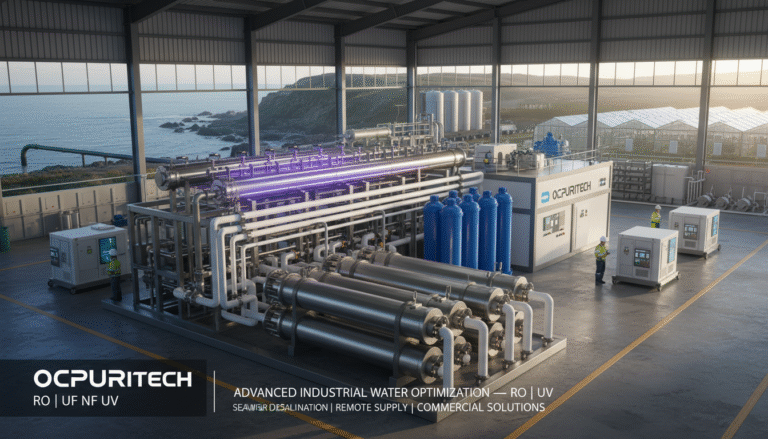
Throughout my consultancy engagements, the alignment of system selection with precise operational demands emerged as a key success factor. In one instance, a manufacturing plant implemented a hybrid system combining RO with UV disinfection and softening modules to simultaneously conserve water, reduce chemical use, and meet product water quality requirements — achieving a payback period under three years.
Concluding Perspectives: Addressing Growing Industrial Water Demands Through Innovation
Global industrial water demand is projected to increase significantly by 2030 and beyond, with estimates indicating a 20-25% growth by 2050. This surge stems from expanding manufacturing sectors, population growth, and heightened quality standards. According to the World Resources Institute and the World Bank, efficient water treatment and recycling technologies are vital to bridging the widening supply-demand gap.
“Global water demand is expected to rise 20 to 25 percent by 2050, exacerbating water stress. Efficient treatment and recycling reduce freshwater dependence and ensure operational continuity.” – Source: World Resources Institute, World Bank
From my perspective, the adoption of advanced membrane technologies, energy-efficient componentry, high-performance filtration, and robust disinfection systems collectively represents the pathway to sustainable industrial water management. Facilities embracing these integrated solutions not only safeguard their operations but also contribute substantially to environmental stewardship and regulatory compliance.