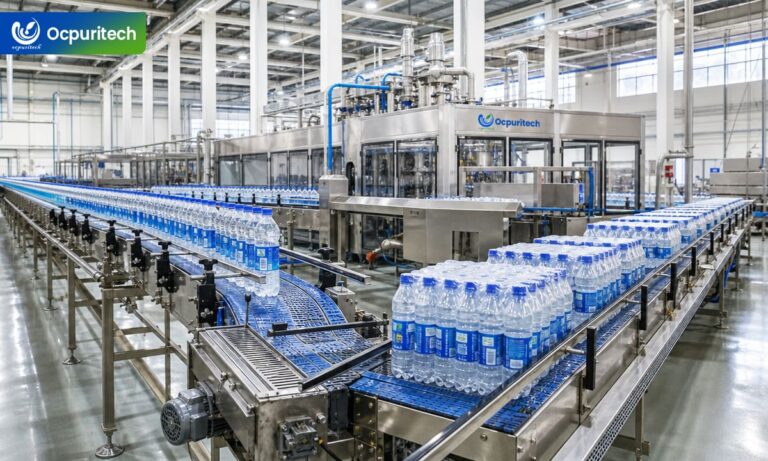
When clients contact us about building a 5 gallon water bottling production line, they usually start with one direct question: "Which 5 gallon water bottling machine should I buy?"
After 16 years of designing, manufacturing, and servicing bottled water projects across 80+ countries, I can tell you that choosing the filling machine is just one piece of a much larger puzzle.
A successful 5 gallon water bottling production line is not simply a collection of machines bolted together. It is a complete engineering project.
The design must consider several factors, including raw water quality, production capacity, factory space, investment budget, and future growth plans.
Many investors focus on equipment price and output speed when they start planning. But a truly well-designed production line must do more than meet today's targets — it must run reliably for years, keep operating costs low, and scale as your market grows.
So before you build a 5 gallon water bottling production line, you need to settle one core question first:
In other words, your goal is not simply to purchase individual machines, but to develop a turnkey 5 gallon water bottling plant that covers water treatment, barrel washing, filling, packaging, and future expansion.
Start From Market Demand, Not From Equipment Selection
In practice, many clients start by searching for a 5 gallon water bottling machine online and comparing prices from different suppliers. However, based on our project experience, the first step should not be choosing a machine — it should be understanding your production requirements.
Before we design any bottled water bottling production line, we always ask the client two questions:
- 1. How many barrels per day do you plan to produce?
- 2. Where do you see your market growing in the next 3 to 5 years?
Production capacity drives every downstream decision — water treatment system size, filling machine speed, barrel washer configuration, storage tank volume, and factory layout.
For example, a small business just entering the bottled water industry might only need 100 to 300 barrels per day (BPH). A compact, semi-automatic line can handle that volume economically. But a company with established distribution channels supplying a large city may need 600 to 1,200 BPH or more, with fully automated washing, filling, and capping.
In our projects, we have found that successful equipment planning is not about choosing the largest capacity or the lowest price. It is about finding the right balance between current production needs, operating costs, and future expansion plans.
A Complete 5 Gallon Water Bottling Production Line Is More Than a Filling Machine
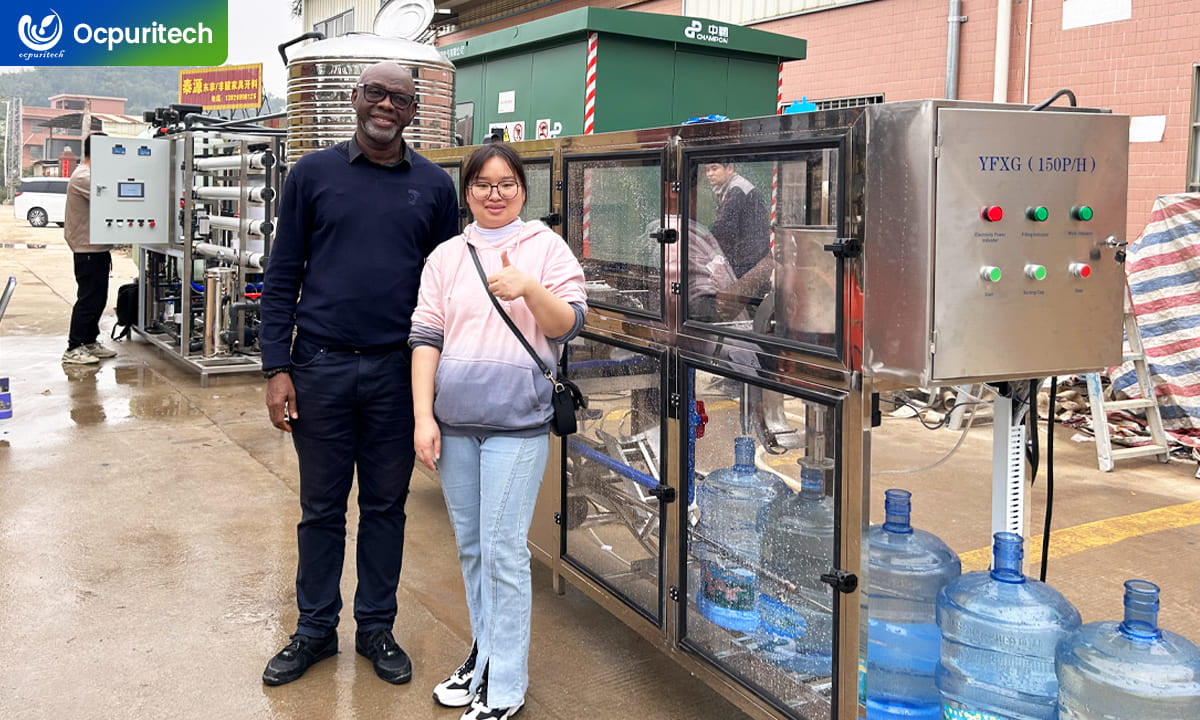
First-time entrants to the bottled water industry often think a 5 gallon water bottling production line consists of a barrel washer, a filling machine, and a capping machine. In commercial production, the reality is far more complex.
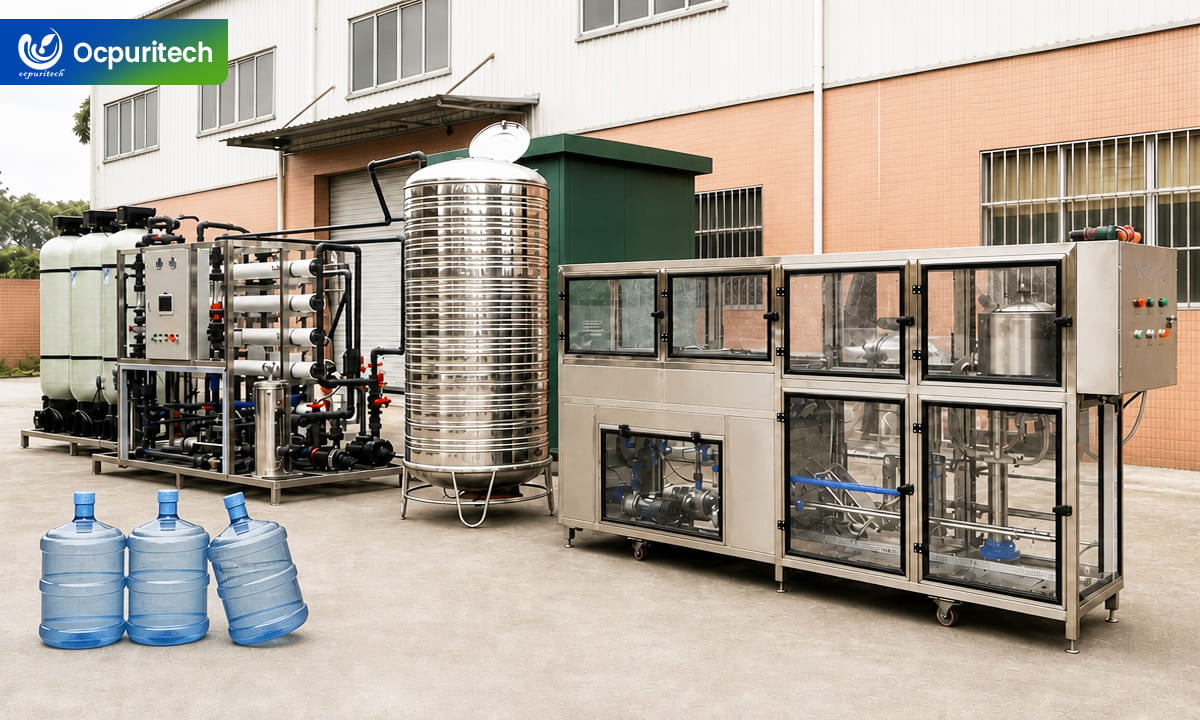
A complete line is a continuous production system. A commercial 5 gallon water bottling system is designed as an integrated production solution, combining water purification, barrel cleaning, filling, capping, and packaging processes. From the moment raw water enters your factory to the moment finished barrels leave for distribution, the product passes through seven critical stages:
- Raw water intake — municipal supply, well water, or surface water
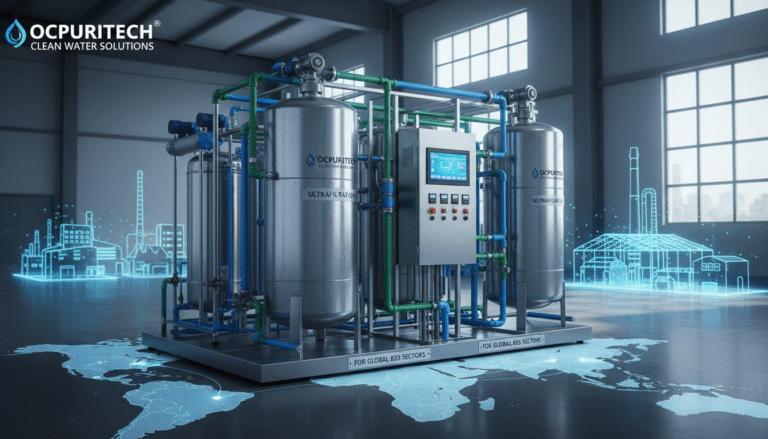
- Water treatment — multimedia filtration, activated carbon, softening, reverse osmosis (RO), UV and ozone disinfection
- Barrel washing and sanitizing — external rinse, internal wash, chemical sanitizing, pure water rinse
- Filling — automatic volume-controlled filling
- Capping — sealed cap application to prevent contamination
- Labeling — brand labels and traceability codes
- Packaging — shrink wrapping, bagging, and palletizing
Each stage directly affects final product quality and production efficiency. If you focus only on the filling machine and ignore front-end water treatment or barrel washing, even the fastest filler cannot guarantee stable, compliant output.
Raw Water Treatment: The Foundation of Bottled Water Quality
When building a 5 gallon water bottling production line, many clients think about the filling machine first. But the water treatment system is actually the foundation of the entire project. Without compliant water, nothing downstream matters.
Why You Must Test Your Raw Water First
Different water sources vary dramatically:
| Water Source |
Typical Challenges |
| Municipal tap water |
Chlorine, chloramines, variable TDS |
| Groundwater / well water |
High hardness, high iron, high TDS, minerals |
| Surface water (river, lake) |
High turbidity, organic matter, bacteria |
| Seawater / brackish water |
Very high TDS (10,000–45,000 ppm), requires SWRO |
Each source demands a different treatment configuration. That is why we always recommend clients conduct a raw water test before specifying any equipment. A typical test report should include: TDS, hardness, pH, turbidity, iron content, and microbial count.
Based on the results, your treatment system may include:
- Multimedia filter — removes suspended solids and particulate matter
- Activated carbon filter — removes chlorine, organics, and odor
- Water softener — reduces hardness to protect downstream RO membranes from scaling
- Reverse osmosis (RO) system — removes dissolved salts, reducing TDS to 10 ppm for purified water
- UV sterilizer — destroys bacteria and viruses
- Ozone generator — provides residual disinfection and improves biological stability
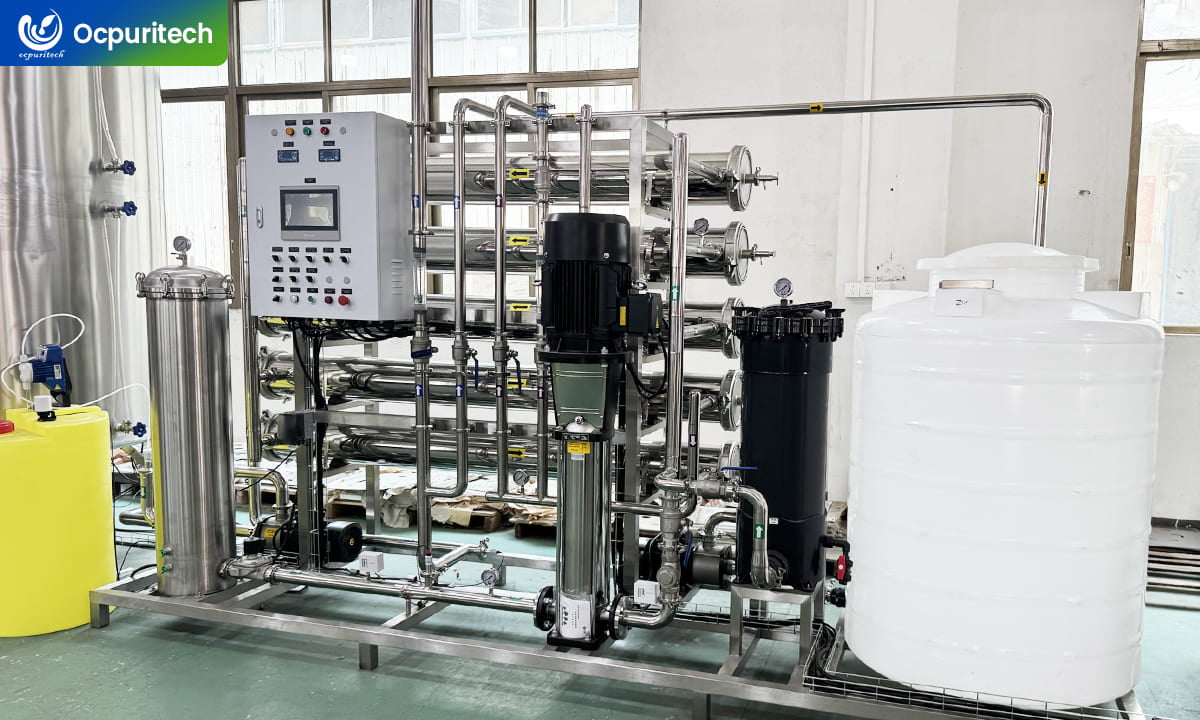
For example, if your local water source has high hardness (above 150 ppm as CaCO₃), a softener or antiscalant dosing system is essential before the RO stage. If TDS is above 500 ppm, the RO system becomes the critical purification step. If turbidity exceeds 5 NTU, multimedia filtration must be enhanced.
Therefore, no single standard design works for every region. A correctly designed water treatment system is the foundation that ensures your filler runs smoothly and your product meets local drinking water standards.
Need help designing the right water treatment system for your 5 gallon bottling project?
Our engineering team can evaluate your raw water conditions and recommend a suitable purification solution, including filtration, RO treatment, UV sterilization, and ozone disinfection based on your production requirements.
5 Gallon Barrel Washing and Sanitizing: Where Product Safety Is Decided
Unlike single-use PET bottles, 5 gallon barrels are returned, washed, and reused. This makes barrel washing one of the most critical stages in your bottled water production line.
The Complete Barrel Washing Process
A proper barrel wash cycle includes multiple stages:
- External rinse — removes dust and dirt from the barrel surface
- De-capping — automatically removes used caps
- Internal washing — high-pressure spray with cleaning agent
- Sanitizing — chemical or hot water sanitizing to kill residual bacteria
- Pure water rinse — final rinse with RO-treated water to remove all chemical residues
Many clients focus on filling speed when selecting equipment, but in our experience, the most common bottled water quality problems do not come from the filler. They come from inadequate barrel washing.
If barrels are not properly cleaned and sanitized, the result is microbial contamination, off-tastes, customer complaints, and potential product recalls. A reliable 5 gallon water bottling production line needs not just an efficient filler, but a robust, multi-stage barrel washing system.
How to Choose the Right 5 Gallon Filling and Capping Equipment
The filling machine is usually the most discussed piece of equipment in a 5 gallon water bottling production line, because it directly determines production capacity. But choosing the right one requires more than comparing price and maximum speed. Many customers searching for 5 gallon water bottling machine price focus only on the initial investment. However, the real cost should include energy consumption, maintenance, spare parts, and long-term operating performance.
Match Capacity to Your Market
In our experience, typical capacity ranges include:
| Capacity Tier |
Output Range (BPH) |
Typical Configuration |
Reference Price Range* |
| Entry / startup |
100–300 BPH |
Semi-automatic or basic linear |
~$20,000–$50,000 |
| Mid-range |
300–600 BPH |
Fully automatic linear |
~$50,000–$120,000 |
| High-volume |
600–1,500 BPH |
Rotary / multi-channel |
~$120,000–$200,000+ |
Match Automation Level to Your Labor Cost
- Semi-automatic machines suit small businesses with lower daily output (under 300 BPH). Lower upfront investment, simpler operation and maintenance.
- Fully automatic lines suit larger operations (600+ BPH). They reduce labor dependence, improve consistency, and lower long-term labor costs — especially important in regions where labor costs are rising.
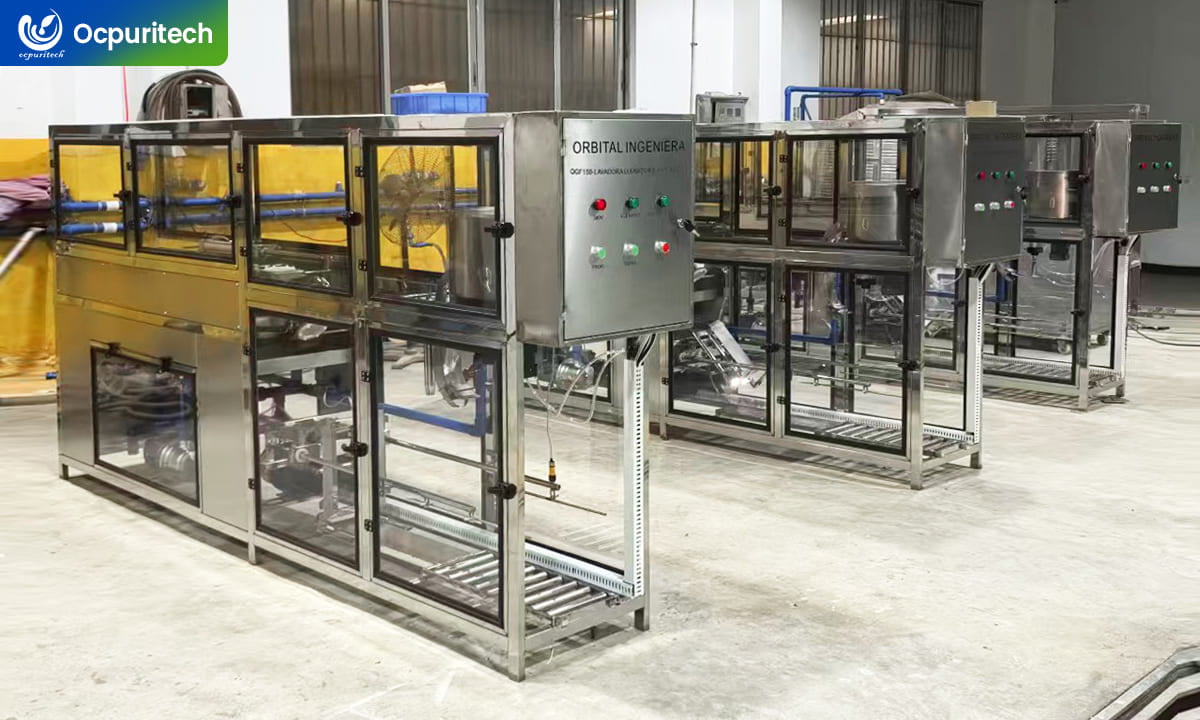
For companies requiring higher output and lower labor dependence, an automatic 5 gallon water filling machine can improve production consistency and reduce manual operation.
Check Material and Component Quality
Key parameters to evaluate:
- Contact surfaces: Food-grade stainless steel (304 or 316L) for all parts touching water
- Filling accuracy: Industry-standard systems achieve ±10 ml variance or better
- Control system: PLC-based with HMI interface for data tracking
- Power supply: Typically 220V/380V, 50Hz (verify with your local electrical standard)
- Compressed air: 0.6–0.8 MPa for pneumatic components
We recommend clients evaluate the value a machine creates over its full service life, not just the price on the invoice. Our engineers can help you calculate the most suitable filling speed and automation level based on your daily output target, labor cost, and future expansion plan.
Factory Layout Planning: The Hidden Factor in Production Efficiency
Beyond equipment selection, factory layout is one of the most overlooked factors in building a 5 gallon water bottling production line.
In real projects, we have found that many production efficiency problems are not caused by the equipment itself. They are caused by inadequate facility planning.
What a Proper Layout Must Include
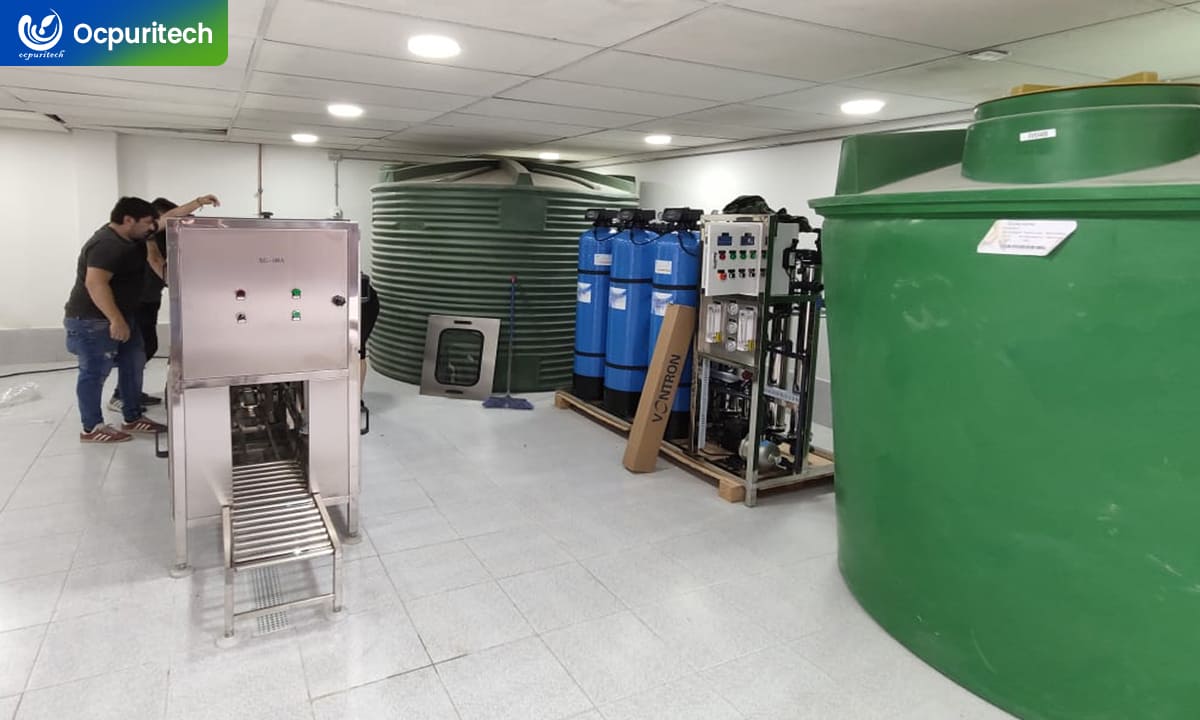
A well-planned 5 gallon water bottling factory needs dedicated zones for:
- Raw water treatment area — filters, RO skid, UV/ozone, storage tanks
- Empty barrel storage — clean, dry, protected from contamination
- Barrel washing zone — de-capping, washing, sanitizing stations
- Filling and capping zone — the core production island
- Finished product storage — sealed, climate-controlled
- Equipment maintenance access — clearance for CIP (Clean-In-Place), filter changes, and membrane replacement
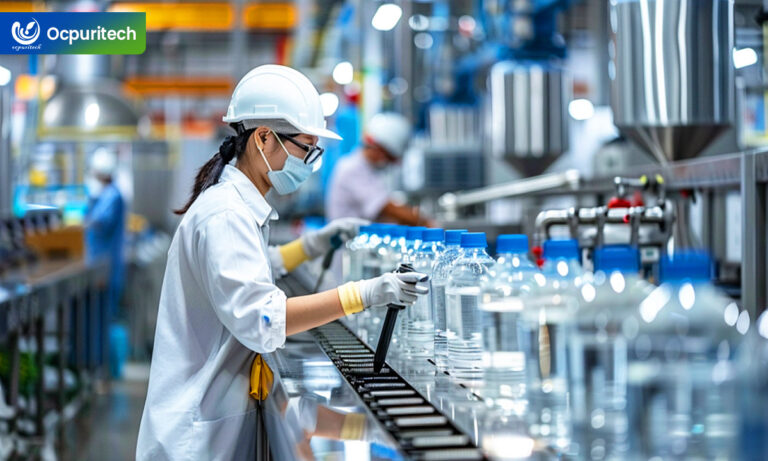
- Quality control area — sampling and testing station
If the layout is poorly designed, you may face increased barrel transport distances, lower labor efficiency, cross-contamination risks between clean and dirty zones, and difficult maintenance access.
We always recommend clients provide their factory floor plan and dimensions before we finalize the equipment list. Designing the line to fit your space — rather than forcing your space to fit the equipment — prevents costly retrofits during installation.
Beyond Equipment Price: Understanding Long-Term Operating Costs
In our experience, price is usually the most discussed topic during equipment procurement. However, for a bottled water factory designed to operate for years, the equipment purchase price is only one part of the total investment.
The costs that truly affect your profit margin are long-term operating costs:
| Cost Category |
What It Includes |
Why It Matters |
| Energy consumption |
RO pump power, heating for sanitizing, air compressor |
Directly tied to per-barrel production cost |
| Labor cost |
Operators, maintenance technicians, QC staff |
Rises over time; automation offsets this |
| Maintenance and spare parts |
RO membranes, filter cartridges, seals, valves |
The largest hidden cost over 5 years |
| Downtime loss |
Lost production during breakdowns or CIP cycles |
Often exceeds the repair cost itself |
| Water recovery |
Concentrate/brine disposal and wastewater treatment |
Affects both cost and environmental compliance |
For example, an RO system with a 75% recovery rate wastes less water than one running at 50%. Over a year of continuous operation, that difference translates to thousands of gallons of saved water and lower utility bills.
Therefore, when selecting a 5 gallon water bottling production line, we should focus on its total lifecycle value rather than only the initial purchase price.
What to Prepare Before Consulting a Bottled Water Bottling Production Line Manufacturer
To help us design the most accurate production plan for your project, we recommend clients prepare the following information before their first consultation:
1. Raw Water Report
- Water source type (municipal, well, surface, seawater)
- Basic water quality parameters: TDS, hardness, pH, turbidity, iron content
- If no test report is available, we can recommend a testing protocol
2. Target Production Capacity
- Daily output target (barrels per day)
- Hourly output target (BPH)
- Future expansion plan (3–5 year horizon)
3. Factory Space Information
- Total available floor area (m² or sq ft)
- Ceiling height (minimum 3 m / 10 ft recommended for overhead conveyors)
- Floor plan sketch with dimensions
- Door widths and access routes for equipment delivery
4. Market Positioning
- Distribution model: community delivery, commercial supply, or large brand production
- Target product type: purified water, mineral water, or spring water
- Local regulatory requirements for bottled water
5. Budget Range
- Total project budget
- Phase 1 vs. future phase budget allocation
The more detailed this information, the more precisely we can design a 5 gallon water bottling production line that fits your actual needs — and the faster you will receive an accurate quotation.
Frequently Asked Questions
How much does a 5 gallon water bottling production line cost?
Based on industry reference data, a complete 5 gallon water bottling production line ranges from approximately $20,000 for a basic semi-automatic setup to over $200,000 for a fully automated high-capacity line (600–1,500 BPH). The final price depends on water treatment complexity, automation level, production capacity, and customization. Contact us with your water report and capacity target for an itemized quotation.
How much space do I need for a 5 gallon water bottling production line?
A compact semi-automatic line (100–300 BPH) typically requires 50–100 m² (540–1,080 sq ft). A fully automatic line (600–1,200 BPH) with complete water treatment and packaging may need 200–500 m² (2,160–5,380 sq ft). Always include maintenance access and future expansion space in your layout plan.
What water treatment is needed for 5 gallon bottled water?
The treatment configuration depends on your raw water source. A typical system includes multimedia filtration, activated carbon filtration, water softening or antiscalant dosing, reverse osmosis (RO), UV sterilization, and ozone disinfection. If your water source is seawater or brackish water, a seawater desalination system (SWRO) may be required. Always test your raw water before specifying equipment.
Can I upgrade my 5 gallon water bottling production line later?
Yes — if the line is designed with modular expansion in mind. We recommend choosing a filler frame that supports additional filling heads and a layout that allows adding washing stations or a labeling machine without major reconstruction. Discuss your 3–5 year growth plan with your manufacturer during the initial design phase.
How long does it take to install and commission a 5 gallon water bottling production line?
For a standard configuration, installation and commissioning typically take 2–4 weeks on-site, depending on line complexity, factory readiness, and utility connections. Turnkey projects that include civil works and utility installation may take longer. We provide on-site installation support and operator training for all our bottled water production lines.
Conclusion: Building a 5 Gallon Water Bottling Production Line Means Building a Complete System
Building a 5 gallon water bottling production line is not simply purchasing a filling machine. It is a comprehensive engineering project involving water treatment, equipment configuration, production flow design, factory layout, and long-term operations management.
From our experience as a water treatment and bottled water production line manufacturer with 16 years in the industry — 10,000+ systems delivered, 80+ countries served, and 7,000+ custom solutions — the most successful projects are not always the ones with the largest budgets. They are the ones designed around the client's actual conditions: local water source, market demand, target capacity, investment budget, and growth plan.
As an experienced 5 gallon water bottling production line manufacturer, we do not just supply equipment. We help customers build a bottled water production solution that is reliable today and flexible enough for future expansion from project planning, equipment selection, installation, and commissioning.
Ready to Build Your 5 Gallon Water Bottling Production Line?
Send us your raw water report, target capacity, and factory floor plan. Our engineering team will design a complete production line tailored to your specific conditions — including water treatment, barrel washing, filling, capping, and packaging — with an itemized quotation and layout drawing.
Contact Ocpuritech today for a customized 5 gallon water bottling production line solution.
About the Author
This article is written by the engineering team at Guangzhou Aomi Water Purification System Manufacture Co., Ltd. (brand: Ocpuritech). With 16+ years of experience in commercial and industrial RO water treatment system manufacturing, we have delivered 10,000+ water treatment solutions — including 4,000+ custom systems — serving 4,000+ clients across 80+ countries. Our factory is located in Jiangmen, Guangdong, China, with offices in Guangzhou. We hold ISO 9001 and CE certifications, and our systems produce over 500 million gallons of pure water daily worldwide.