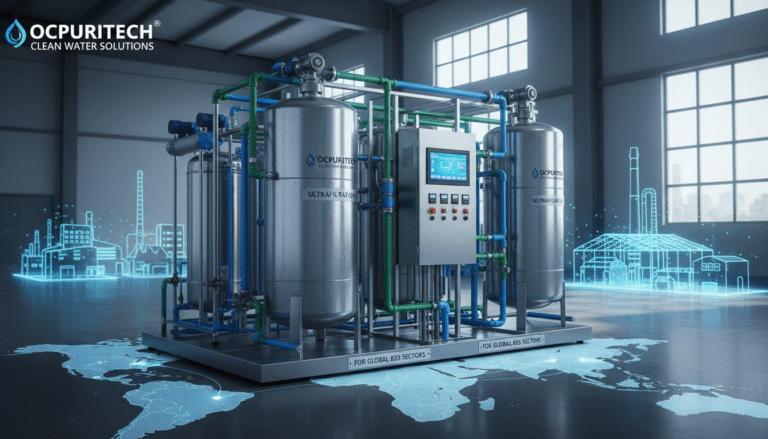
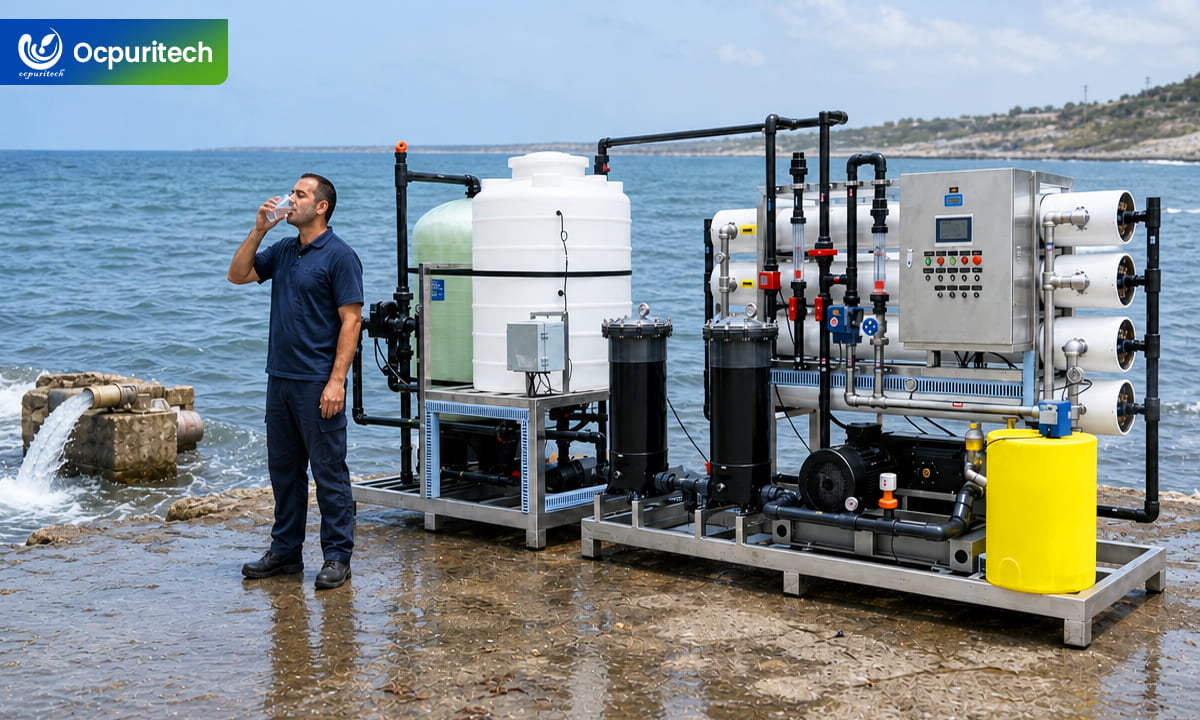
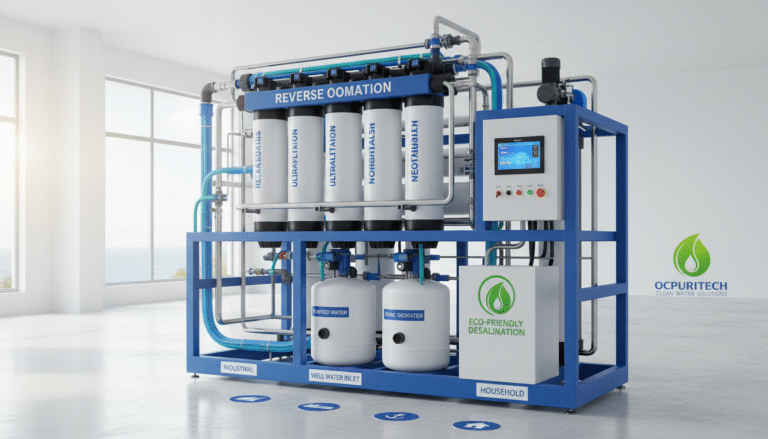
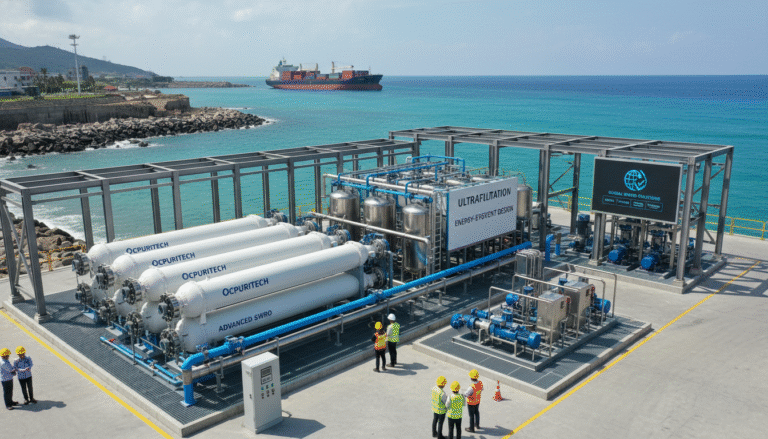
A machine to turn seawater into drinking water—commonly known as a Seawater Reverse Osmosis (SWRO) desalination system—is designed to remove dissolved salts, minerals, and other contaminants from seawater and produce fresh water for drinking and other uses.
Using reverse osmosis (RO) technology, a properly designed SWRO system can treat seawater with TDS levels of up to around 45,000 ppm. However, producing safe drinking water depends on more than the RO membrane itself—the pretreatment process, system configuration, operating conditions, and final water-quality requirements all need to be properly matched to the project.
In this guide, I’ll explain how a machine to turn seawater into drinking water works, how seawater is converted into potable water, what affects system capacity and cost, and the key specifications I recommend checking before purchasing a seawater desalination system.
How Does a Machine Turn Seawater Into Drinking Water?
First, it is important to understand why seawater needs desalination. Desalination machines are designed to convert seawater into potable water. Salt makes seawater undrinkable — typically 30,000–45,000 ppm TDS versus the WHO guideline of ≤500 ppm. Conventional sand filters and carbon systems remove particles and sediments, but they cannot remove dissolved salts.
Seawater reverse osmosis (SWRO) solves this with pressure, not heat.
High-pressure pumps force seawater — typically at 55–70 bar (800–1,000 psi) — through a semi-permeable RO membrane. The membrane passes water molecules while blocking salt ions, bacteria, viruses, and other dissolved contaminants. The result: two separate streams.
- Permeate (product water): TDS reduced to 10–200 ppm, 99%+ salt rejection
- Concentrate (brine): Rejected salts discharged back to sea or managed onsite
The process reverses natural osmosis — instead of water moving toward higher salt concentration, applied pressure forces it in the opposite direction. That is why the technology is called reverse osmosis.
What Does a Complete Seawater Desalination System Include?
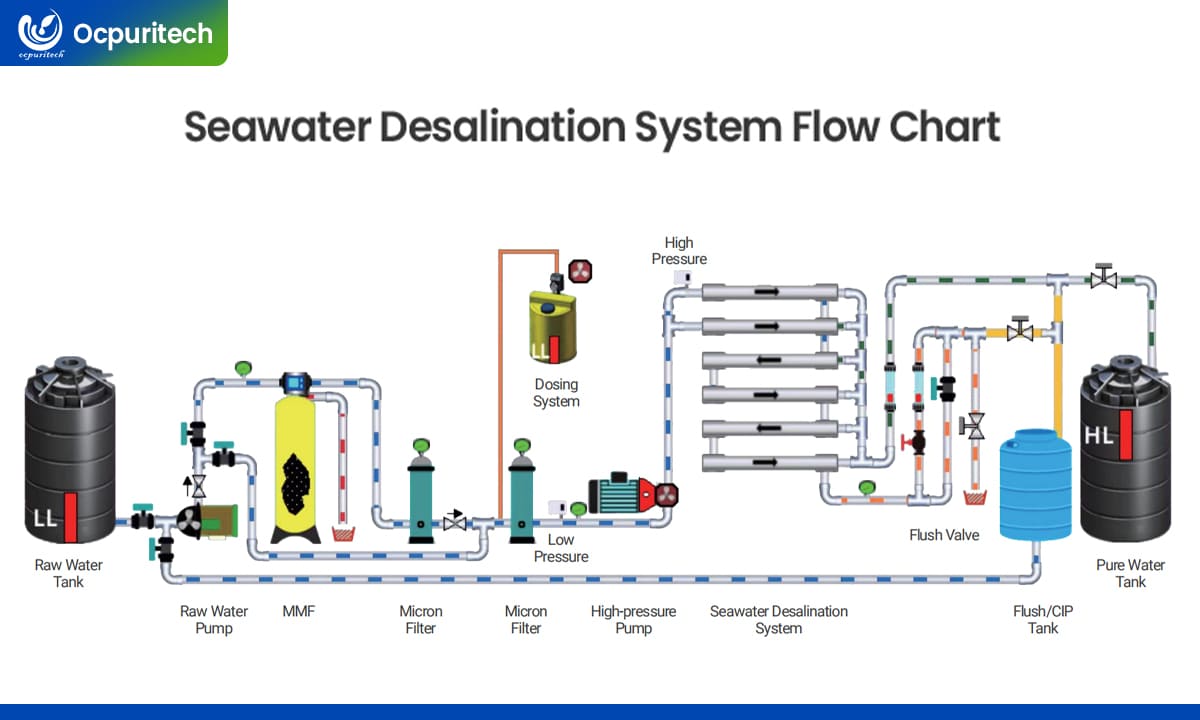
A seawater-to-drinking-water machine is not a single device. It is an engineered system with six integrated stages:
| Stage |
Key Component |
Purpose |
| Seawater Intake |
Submersible pump, strainer, intake pipe |
Draws raw seawater at consistent flow rate |
| Pre-treatment |
Multi-media filter, activated carbon filter, cartridge filter (5 µm), antiscalant dosing |
Removes suspended solids, chlorine, and fouling agents; protects RO membranes |
| High Pressure Pump |
Stainless steel centrifugal pump (55–70 bar) |
Provides operating pressure to overcome osmotic pressure |
| RO Membranes Unit |
SWRO membranes (8040 elements, e.g., Dow FILMTEC SW30XLE) |
Core salt separation — 99.4%+ rejection at rated pressure |
| Energy Recovery Device (ERD) |
Pressure exchanger or turbocharger |
Recovers 40–60% of pump energy from brine stream; reduces energy to 2.5–3.5 kWh/m³ |
| Post-treatment |
pH adjustment (CO₂ dosing), remineralization, UV disinfection, chlorine dosing |
Stabilizes water chemistry; meets local drinking water standards |
Can Desalinated Seawater Actually Be Consumed as Drinking Water?
Many people wonder if the water produced can be consumed safely. Is it fully ready for human consumption?
Yes, after additional post-treatment processes such as pH adjustment, mineral balancing, and disinfection, desalinated water meets health and safety standards for drinking water.
Raw RO permeate from SWRO achieves ≥99% salt removal, making it technically safe. However, ultra-pure permeate with very low TDS (10–50 ppm) is slightly acidic and corrosive to distribution pipes without remineralization. Post-treatment addresses this:
- pH correction: CO₂ stripping or lime dosing raises pH to 7.0–8.0
- Mineral rebalancing: Calcium and magnesium addition (target 50–150 ppm hardness) improves taste and prevents pipe corrosion
- Disinfection: UV sterilization (254 nm) + residual chlorine dosing eliminates any biological risk in the distribution system
The output is water that is indistinguishable from — and often cleaner than — treated municipal water. Multiple large-scale SWRO plants operate in the Middle East, Spain, Australia, and the Caribbean supplying millions of people daily.
How Much Drinking Water Can a Seawater Desalination Machine Produce?
In practice, the answer depends on the system size and application. A seawater RO system can produce anywhere from a few cubic meters to thousands per day, tailored to specific project requirements. In the same way, production capacity depends on membrane area, operating pressure, temperature, and system recovery rate.
Here is a practical sizing reference across commercial and industrial scales:
| System Scale |
Daily Capacity |
Flow Rate |
Typical Applications |
| Compact Marine Watermaker |
0.5–5 m³/day (130–1,300 GPD) |
20–200 LPH |
Boats, yachts, ships, offshore platforms, remote projects |
| Small Commercial SWRO |
5–50 m³/day (1,300–13,000 GPD) |
200–2,000 LPH |
Small resorts, island communities, remote facilities |
| Industrial SWRO System |
50–500 m³/day (13,000–130,000 GPD) |
2,000–20,000 LPH |
Hotels, coastal factories, aquaculture farms, military bases |
| Municipal SWRO Plant |
500–5,000 m³/day |
20,000–200,000 LPH |
Island municipalities, coastal cities, large industrial parks |
| Mega-Scale Desalination Plant |
5,000+ m³/day |
200,000+ LPH |
Metropolitan water supply, large municipal projects |
Hence, when considering a desalination system, the critical question is not “how big is the machine?” but rather, “how much fresh water do I need daily?”
For instance, a project needing just 5 cubic meters of water daily differs significantly from one requiring 500 cubic meters. Device selection must reflect those specific needs.
What Does a Seawater-to-Drinking-Water Machine Cost to Run?
Energy is the dominant operating cost. SWRO without energy recovery consumes 6–10 kWh/m³. With a pressure exchanger ERD, energy consumption drops to 2.5–3.5 kWh/m³ — the benchmark for modern, efficient SWRO design.
Total cost of ownership (TCO) breakdown for a 100 m³/day SWRO system:
| Cost Item |
Typical Range |
Notes |
| Capital cost (CAPEX) |
$80,000–$200,000 |
Varies by pre-treatment complexity, materials, automation level |
| Energy cost |
$0.25–$0.50/m³ |
At $0.10/kWh grid rate with ERD |
| Membrane replacement |
$0.05–$0.15/m³ |
5–7 year membrane lifespan at proper operating conditions |
| Chemicals (antiscalant, CIP |
$0.05–$0.10/m³ |
Depends on seawater quality |
| Labor and maintenance |
$0.10–$0.20/m³ |
Automated systems reduce this significantly |
| Total OPEX |
$0.45–$0.95/m³ |
All-in production cost per cubic meter of drinking water |
Note: These are indicative ranges. Actual figures require site-specific water quality analysis (TDS, SDI, temperature, biofouling potential) and local energy costs. Request an engineering quotation with your water quality data for accurate project pricing.
What I Would Consider Before Buying a Seawater Desalination Machine
If I were responsible for a desalination project, my focus would not be on the device’s price first but on understanding the essential requirements.
- Feed water quality: What are your actual seawater parameters? Total Dissolved Solids (TDS), SDI, temperature, turbidity how?
- Daily water needs: How much freshwater is required daily? How many hours will the system operate?
- Intended use of produced water: Drinking water, food-grade production, industrial process water, or irrigation each require different post-treatment configurations.
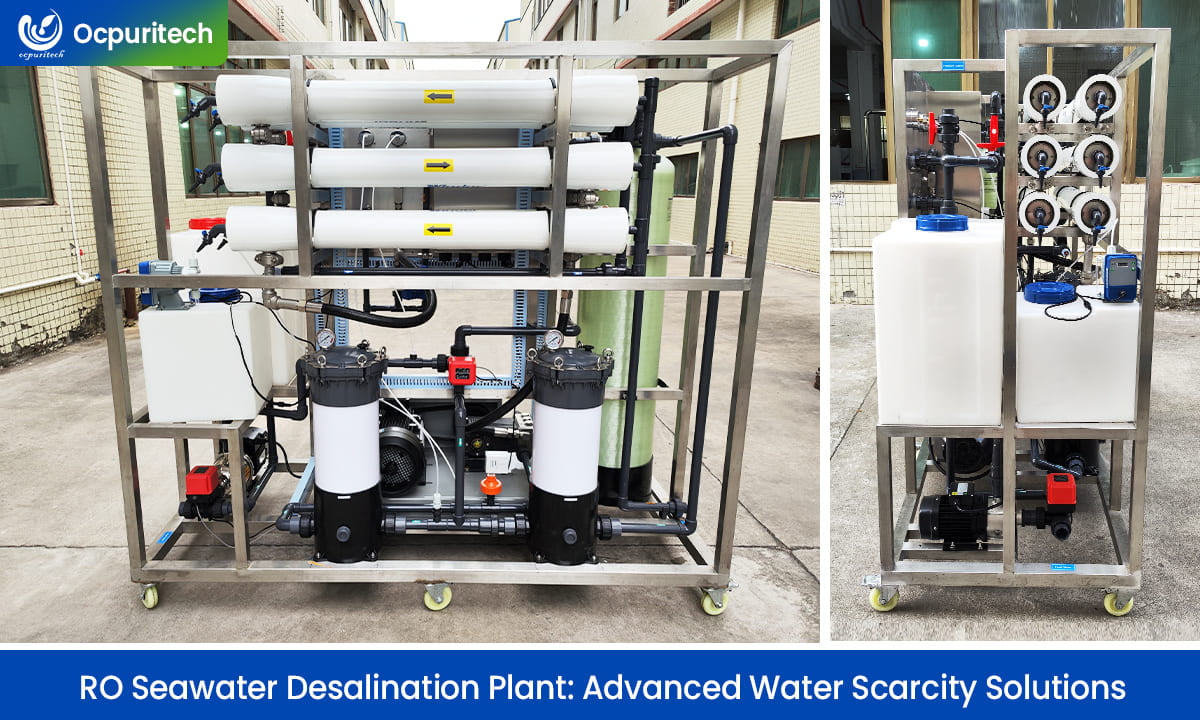
- Installation environment: Marine installation (corrosion-resistant materials, vibration tolerance), island or coastal land-based (containerized vs. building-integrated), or mobile/containerized deployment.
- Long-term operational costs: What are the costs for power consumption, membrane replacements, and maintenance?
- Energy availability and cost: Grid power, diesel genset, or solar/hybrid?
Clarifying these questions is crucial before comparing equipment and suppliers.
Where Are Seawater to Drinking Water Machines Used?
- Marine and offshore: Cargo ships, cruise vessels, offshore oil platforms, naval vessels — producing onboard freshwater from surrounding seawater, eliminating dependence on shore-side supply
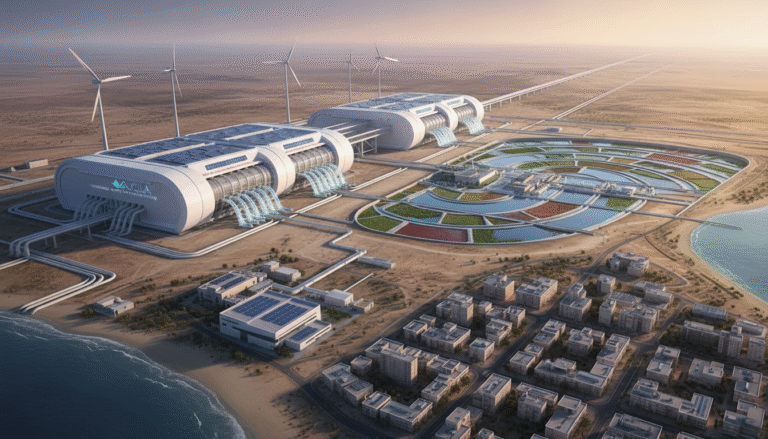
- Island communities and coastal municipalities: Locations surrounded by seawater but lacking freshwater aquifers — SWRO provides a reliable, independent water supply
- Coastal hotels and resorts: High-volume freshwater consumers in locations where water trucking is expensive and supply unreliable
- Industrial manufacturing: Food and beverage processing, pharmaceutical production, textile dyeing, and electronics manufacturing requiring consistent water quality
- Aquaculture and agriculture: Marine fish farms and coastal greenhouse operations needing large volumes of clean process water
- Emergency and humanitarian response: Rapid-deployment containerized SWRO units for disaster zones, military operations, and remote camps
- Off-grid and solar-powered installations: Communities without reliable grid power can combine SWRO with solar PV and battery storage for a fully autonomous water supply
My Take: The Machine Exists, but the System Design Matters More
So, if you ask me, “Can a machine turn seawater into drinking water?” my answer is yes, machines that turn seawater into drinking water are real, commercially available, and cost-effective at scale.
But if you plan to buy one, don’t think of it merely as a machine. See it as a complete water treatment solution. Quality of seawater determines pre-treatment, freshwater demand influences RO capacity, intended use shapes post-treatment, and the installation environment dictates design.
Ultimately, when clients approach me with, “I need a machine to convert seawater to drinking water” the first four questions I ask are always:
- What is your seawater source — What is the TDS and SDI?
- How many cubic meters of freshwater do you need per day?
- What will the water be used for — drinking, industrial, or both?
- Where will the equipment be installed — marine, land-based, or containerized?
Those four answers give me a starting point for determining: pre-treatment complexity, membrane selection, pump pressure, post-treatment requirements, energy system, and total project cost.
At Ocpuritech, we have delivered 4,000+ custom water treatment systems across 80+ countries over 16 years. We do not sell machines. We engineer complete water solutions sized to your project from first principles.
Conclusion
Oceans hold 97% of the world’s water. The technology to unlock it has existed for decades. What separates a successful desalination project from a failed one is never the machine — it is always the engineering behind it.
The technology works. The question is whether your system is matched to your seawater, your demand, and your installation environment.
Tell us your project parameters — we will send you a preliminary system design and budgetary quotation within 24 hours. [Get a Free Engineering Consultation from Ocpuritech →]
Frequently Asked Questions
Q: How long does it take a seawater desalination machine to produce drinking water?
A: Most industrial SWRO systems reach steady-state production within 30–60 minutes of startup. The RO process itself is continuous — once operating pressure is established, permeate production is immediate and ongoing.
Q: What is the typical lifespan of a seawater desalination machine?
A: With proper maintenance, SWRO system frames and pressure vessels last 15–20+ years. RO membranes typically require replacement every 5–7 years under normal operating conditions. High-quality high-pressure pumps have service lives exceeding 10 years.
Q: Can a seawater desalination machine run on solar power?
A: Yes. Solar-powered SWRO is technically viable and increasingly cost-effective. Key design considerations include battery storage for overnight operation, variable-frequency drives (VFDs) to handle fluctuating solar input, and system sizing for worst-case irradiance days. We have supplied solar-SWRO hybrid systems for island projects in Southeast Asia and East Africa.
Q: How much maintenance does a seawater desalination machine require?
A: Routine maintenance includes daily visual checks, weekly pre-filter cartridge inspection and replacement, monthly CIP (Clean-In-Place) membrane flushing, and quarterly performance testing. Annual tasks include pump seal inspection and membrane performance normalization testing. Most industrial systems can be maintained by a trained onsite operator with remote support from the manufacturer.
Q: What is the minimum seawater TDS a desalination machine can handle?
A: Standard SWRO membranes are designed for feed water TDS of 32,000–45,000 ppm. For lower-salinity sources — brackish water (1,000–15,000 ppm TDS) — Brackish Water RO (BWRO) systems operate at significantly lower pressure (10–20 bar) and lower energy consumption (0.5–1.5 kWh/m³), substantially reducing capital and operating costs.
Q: How do I get a quote for a seawater desalination machine?
A: Submit your project parameters: daily water demand, feed water TDS and location, intended water use, installation type, and energy source. With this data, we can provide a preliminary system design and budgetary quotation within 24 hours. [Contact Ocpuritech for a free engineering consultation →]